 New York Know
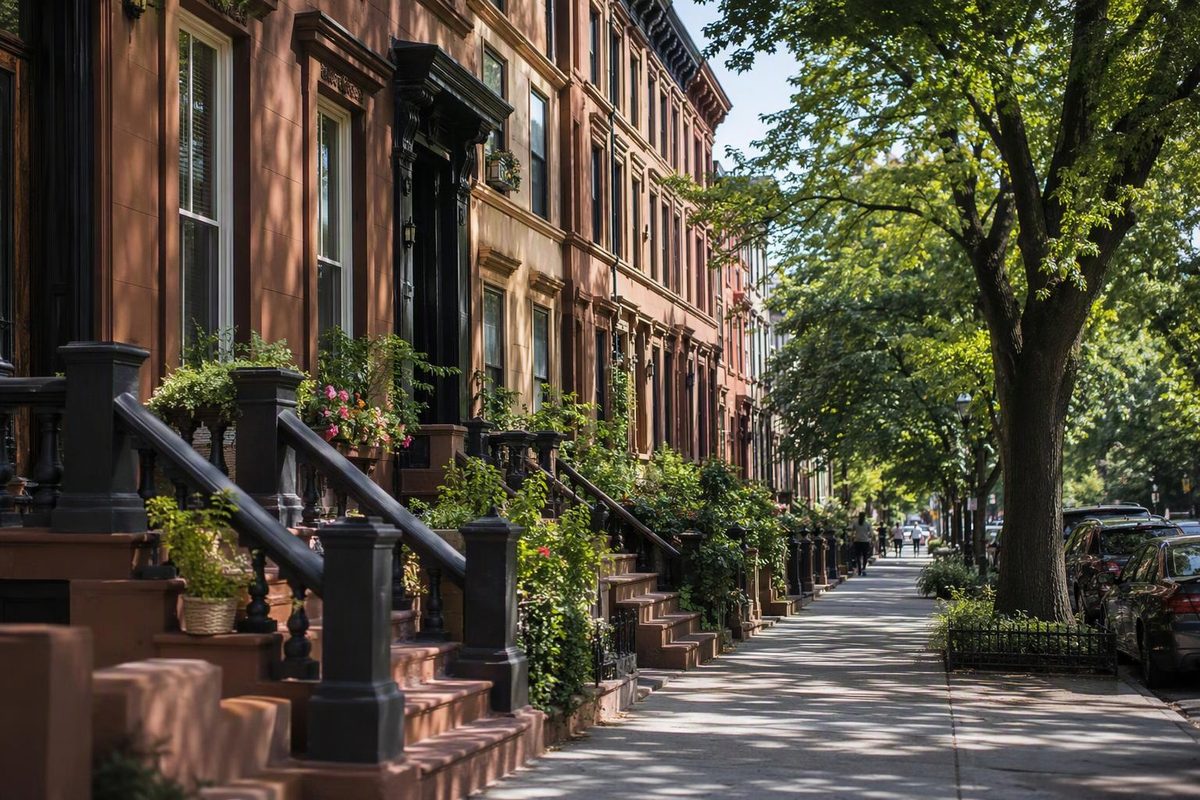
Bedford-Stuyvesant—usually shortened to Bed-Stuy—is a good Brooklyn choice for a slow half-day built around residential architecture, Black cultural institutions and a meal. Choose it for neighborhood depth rather than skyline views or a string of major attractions.
For a first visit, concentrate on the streets between Fulton Street and the Stuyvesant Heights historic area. The route below connects a community hub, brownstone blocks, a Southern restaurant and a historic library without trying to cover the entire neighborhood.
Get oriented: Bed-Stuy is bigger than its historic district
Bed-Stuy occupies a broad area of central Brooklyn. For rough orientation, think Classon Avenue on the west, Flushing Avenue on the north, Broadway along the northeastern/eastern side and Atlantic Avenue on the south. Those are neighborhood guideposts, not a single boundary defining every historic district within it. Restoration’s neighborhood overview uses these streets to describe the area.
The name brings together Bedford and Stuyvesant Heights. Brooklyn Public Library’s historical source packet traces its growth from farmland to a residential neighborhood, followed by substantial Black settlement from the South and Caribbean during the twentieth century.
The architecture is part of that history, not separate from it. The Historic Districts Council describes buildings constructed largely between 1870 and 1920, with Italianate, Neo-Grec, Queen Anne and Romanesque Revival styles among the mix. African American and Caribbean American residents subsequently established deep community roots in these streets. HDC’s neighborhood guide provides architectural background and individual building notes.
A compact Bed-Stuy walk
Allow about three hours with lunch and a library stop. The suggested route is roughly 1½–2 miles, depending on your brownstone detours. These are planning estimates, not a timed tour.
Start: Nostrand Av station on Fulton Street, normally served by the A and C. Finish: Utica Av station on Fulton Street, normally served by the A and C. See the MTA’s C line station guide.
1. Fulton Street and Restoration Plaza
From Nostrand Av, walk east along Fulton Street to Restoration Plaza, between New York and Brooklyn avenues. The complex was rehabilitated in 1972 from the former Sheffield Farms Milk Bottling Plant and serves as a community and cultural hub—not a conventional sightseeing attraction. Restoration’s plaza page explains its history and role.
The Billie Holiday Theatre, at 1368 Fulton Street, offers a reason to build your visit around a scheduled event. Founded in 1972, it presents and promotes Black theater and performing arts. Check its program before choosing your day; do not assume you can walk in for a performance or tour. See the theatre’s official site and history.
2. Tompkins Avenue to MacDonough Street
Continue east to Tompkins Avenue and head north to MacDonough Street, then turn east toward Lewis Avenue. This shifts the walk away from Fulton Street and into the residential blocks that make an unhurried visit worthwhile.
Look for differences in window bays, cornices, stoops and building materials rather than treating every house as the same brownstone. Brick, terra-cotta and pale limestone also feature in Bed-Stuy’s architectural mix.
These are people’s homes. Keep photographs on the public sidewalk, leave entrances clear and do not climb stoops for a better angle.
3. Lunch on Lewis Avenue
Peaches Kitchen & Bar, listed by its operator as Peaches Lewis, is at 393 Lewis Avenue. Its Southern-influenced menu includes shrimp and grits, cornmeal-crusted catfish, turkey meatloaf and a fried chicken sandwich, making it a practical sit-down anchor for this route. Check the operator’s location page for current menus and hours.
4. Macon Library and the Stuyvesant Heights blocks
Walk north on Lewis Avenue to Macon Library, at 361 Lewis Avenue, at Macon Street. Opened in 1907, this Carnegie library retains original fireplaces, oak paneling and wooden benches. Its Dionne Mack-Harvin African American Heritage Center holds material on African American history and culture. BPL lists the branch as fully accessible; check Macon Library’s hours before relying on an indoor visit.
Continue east along Macon Street toward Stuyvesant Avenue, then turn south. Take a short detour onto MacDonough Street or Decatur Street if you want more time with the architecture. The Landmarks Preservation Commission’s district map shows the original Stuyvesant Heights district and its 2013 extension.
Finish at Fulton Street and Utica Av station. The MTA lists entrances at both Utica and Stuyvesant avenues and identifies the station as ADA accessible on its C line map. For step-free subway access, use Utica Av for both arrival and departure and shorten the walk to Macon Library and the surrounding historic blocks. Check elevator status through the MTA website before traveling.
Prefer a park start?
For a greener version, begin at Bedford-Nostrand Avs on the G, walk east along Lafayette Avenue to Herbert Von King Park, then follow Tompkins Avenue south to join the route at MacDonough Street. Skip Restoration Plaza on this version rather than adding backtracking.
The park sits between Marcy and Tompkins avenues, and Greene and Lafayette avenues. NYC Parks lists playgrounds, public restrooms and an outdoor amphitheater; check the calendar for performances rather than expecting one on arrival. See the official park page and G line station guide.
Should you stay in Bed-Stuy?
Consider it if you want residential surroundings and expect to spend meaningful time in Brooklyn. Choose a more central base if your short first trip revolves around Midtown landmarks, Broadway and frequent returns to your room.
The exact lodging address matters more than the Bed-Stuy label. A place near Fulton Street’s A/C stations offers a different Manhattan journey from one near the G, which runs through Brooklyn and Queens and requires a transfer for Manhattan. Compare the walk to the station and the route home after your evening plans. Our first-trip neighborhood guide helps weigh those tradeoffs.
The MTA line pages describe normal weekday service, not every weekend or late-night pattern. Check current MTA service information before setting out. For this outing, keep Bed-Stuy as the main half-day; do not treat DUMBO, Williamsburg and Prospect Park as nearby stops to squeeze into the same walk.