 New York Know
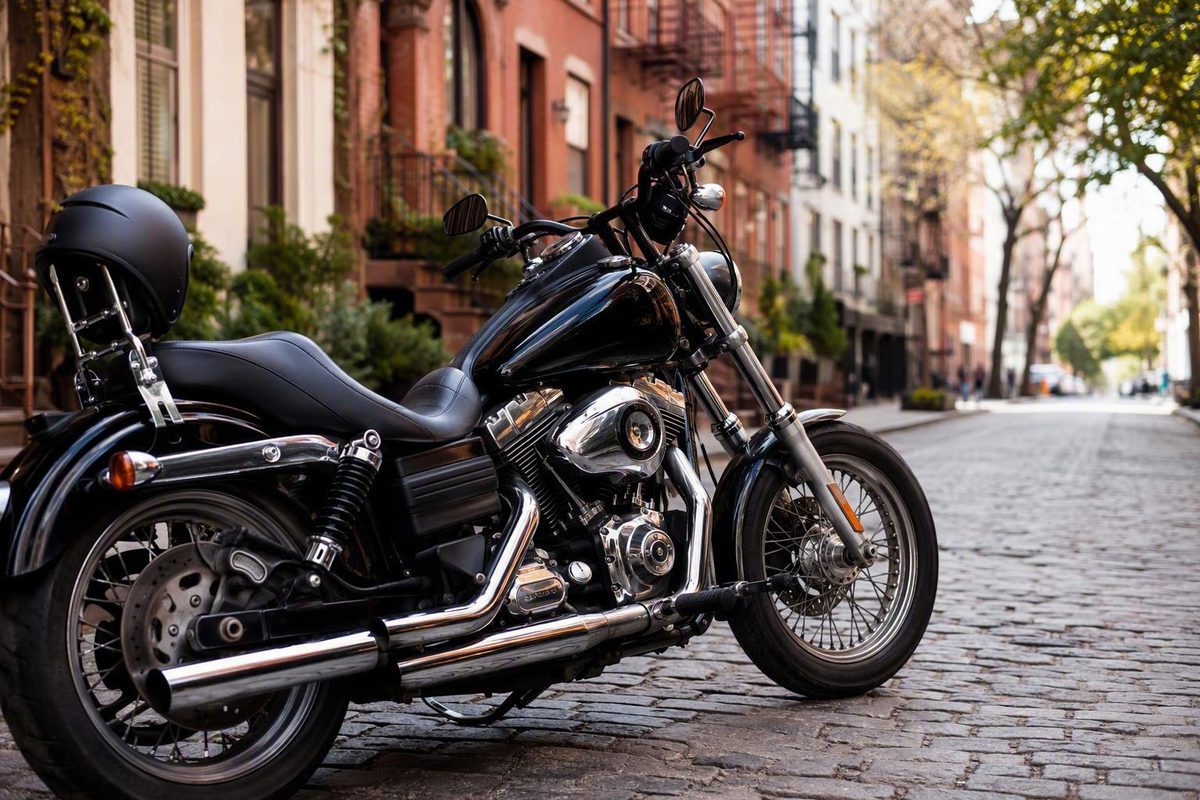
There is no single best battery for every Harley-Davidson. For most stock motorcycles, the most defensible starting point is a manufacturer-confirmed, direct-fit AGM battery that matches the original battery’s dimensions, polarity, terminal layout, amp-hour capacity, and cold-cranking requirement.
OEM Harley-Davidson, Odyssey, Yuasa, Deka, Big Crank, and MotoBatt are possible candidates, but this is not a tested ranking. Exact fit and verified specifications matter more than brand popularity or the highest advertised CCA.
The short answer: choose by fitment, not by a universal ranking
Before comparing batteries, record the motorcycle’s complete year, model, submodel, and engine configuration. A battery suggested for one Dyna, Softail, Touring model, or engine setup is not automatically suitable for another.
| If you want… | Where to start | What to confirm |
|---|---|---|
| A straightforward stock replacement | Direct-fit OEM-style AGM | Exact model-year fit, size, terminals, Ah, and CCA |
| An aftermarket AGM | Odyssey, Yuasa, Deka, Big Crank, or MotoBatt | Manufacturer-confirmed fitment and current specifications |
| Lower weight from lithium | A model explicitly approved for the motorcycle | Charging compatibility, maintainer requirements, fit, and terminals |
Forum recommendations can identify products to investigate, but they are not controlled comparative tests. For example, one discussion concerns a modified, high-compression 2007 Dyna, while another centers on a 2019 Sport Glide. Those motorcycles and their battery needs should not be treated as interchangeable, and the reported experiences may not be typical (Harley Davidson Forums).
For a stock motorcycle, begin with direct-fit AGM choices listed for the precise bike. If the engine is modified or has higher compression than stock, ask the engine builder or relevant manufacturer what the completed starting system requires rather than assuming the original battery specification remains sufficient.
Check these specifications before comparing brands
A battery can have an impressive specification sheet and still be wrong for the motorcycle. Verify these points in current manufacturer documentation before ordering:
- Manufacturer-confirmed fitment: Match the full year, model, submodel, and engine configuration.
- Physical dimensions: Length, width, and height must suit the battery compartment and hold-down.
- Polarity: The positive and negative terminals must be on the correct sides.
- Terminal position and design: Check terminal orientation and connection style.
- Cable reach: The cables should reach their terminals without stretching or awkward routing.
- Amp-hour capacity: Match the motorcycle manufacturer’s Ah requirement.
- Cold-cranking amps: Meet the specified starting requirement, including any additional demand identified for a modified or high-compression engine.
- Electrical compatibility: Confirm that the battery chemistry suits the motorcycle’s charging system and the charger or maintainer you plan to use.
Retailer category placement is only a starting point. Likewise, a claim that one product replaces a familiar battery group does not conclusively establish its dimensions, terminal arrangement, cable clearance, or suitability for a particular motorcycle.
The Batteries Plus Harley-Davidson lookup asks shoppers to complete their motorcycle details and organizes the search by model. It does not rank the batteries or identify a suitable product without more information, but its structure reinforces a useful point: “Harley-Davidson” alone is not enough to select a battery.
Do not let one large number dominate the decision.
Why AGM is the best-supported starting point
AGM stands for absorbent glass mat. It is a lead-acid design in which a fiberglass mat holds the electrolyte rather than leaving it as free liquid, as in a traditional flooded battery.
Harley-Davidson says AGM batteries are original equipment on all its new motorcycles. The company also markets its AGM replacement batteries as maintenance-free, model-specific products intended to match original-equipment size and power ratings. According to Harley-Davidson’s AGM battery guidance, AGM construction offers greater vibration resistance, spill resistance, faster recharging, and more cranking capability than flooded batteries. These are manufacturer claims about AGM and Harley-Davidson’s products, not independent test results covering every battery on the market.
For a stock Harley-Davidson, that makes a direct-fit AGM the clearest starting point. It follows the manufacturer’s current original-equipment chemistry and avoids the additional charging and maintenance questions that can accompany a change in chemistry.
That does not establish that a Harley-Davidson-branded battery always provides the best price, warranty, or service life. Compare the current terms for the exact products that fit your motorcycle.
AGM candidates worth checking
This shortlist provides research leads, not universal recommendations. The aftermarket entries are supported primarily by owner discussions or retailer catalog data, so confirm every product through current manufacturer fitment information.
| Candidate | Basis for inclusion | Useful takeaway | Limitation |
|---|---|---|---|
| OEM Harley-Davidson AGM | Harley-Davidson positions its AGM batteries as model-specific OE replacements | Logical first comparison for a stock motorcycle | Manufacturer positioning does not prove the best price, warranty, or lifespan |
| Odyssey AGM | Favorable comments in Harley owner discussions | Worth investigating if an exact direct-fit model is documented | Performance and longevity comments are anecdotal |
| Yuasa GYZ | Favorable owner comments about cranking and charge retention | Another AGM line to investigate | Mixed anecdotes do not establish typical performance or fit |
| Deka AGM | Recommended by participants in a Harley forum discussion | A possible fitment-search candidate | No controlled comparison establishes superiority |
| Big Crank | Forum participants cite value and durability from personal experience | Worth comparing if current documentation confirms fit | Value and durability reports are anecdotal |
| MotoBatt AGM | A retailer catalog supplies model-level Ah and CCA figures | Shows how specifications vary within one brand | Category placement does not confirm fit for a specific Harley |
Odyssey and Yuasa receive favorable comments in a Harley Davidson Forums discussion, but the reported longevity, charge retention, and starting performance are self-reported rather than independently verified. The same discussion includes a high-compression 2007 Dyna, illustrating why a recommendation must be separated from the motorcycle and conditions behind it.
In a separate Harley forum discussion, participants recommend Deka and Big Crank, while one rider reports poor starting behavior with a particular Yuasa model. These mixed Harley battery replacement reports can help create a research list, but they cannot predict fit, performance, or battery life for another motorcycle.
MotoBatt is most useful here as a specification example. A retailer’s Harley-Davidson category lists MotoBatt AGM products spanning 14–34 Ah and 200–440 CCA. Examples include the MBTX20U at 21 Ah and 310 CCA, MBTX24U at 25 Ah and 350 CCA, and MBTX30U at 34 Ah and 440 CCA (retailer catalog). The category listing does not establish that any of those batteries fits a particular Harley-Davidson.
That range shows why shopping by brand or headline CCA is inadequate. Use a brand shortlist only after identifying the required battery specifications and locating a manufacturer-confirmed model for the exact motorcycle.
AGM or lithium: what the available evidence can and cannot settle
Harley forum participants report both positive and negative experiences: some describe strong cranking and long service, while others raise concerns about cost, heat, charger requirements, or short life. Conflicting owner anecdotes do not make lithium categorically better or worse than AGM.
Treat lithium as a conditional choice. Before buying, confirm in the battery manufacturer’s current documentation that:
- the exact battery is approved for the motorcycle;
- its dimensions, polarity, and terminals match;
- the motorcycle’s charging system is compatible;
- the intended charger or maintainer supports that lithium chemistry; and
- any operating or storage restrictions suit your riding conditions.
Do not assume that a lithium battery mentioned in a forum has been tested on the motorcycle being discussed. In the Sport Glide thread, a participant considered the NOCO NLP20 for a 2019 Sport Glide but had not installed it on that motorcycle; the favorable NOCO experience involved a different bike. It therefore does not confirm NLP20 fitment or performance for the Sport Glide (HD Forums).
For most owners of stock Harleys who want a straightforward replacement, AGM remains the better-supported first stop. Lithium becomes relevant when its benefits justify the additional fitment, charging, and maintenance checks.
Final buying checklist before you place an order
Before paying:
- Record the complete year, model, submodel, engine, and relevant modifications.
- Read and photograph the existing battery label.
- Measure the existing battery and its compartment.
- Verify polarity, terminal position, terminal design, and cable reach.
- Match the required Ah capacity and CCA.
- Confirm the exact model number and fitment in current manufacturer documentation.
- Check that your charger or maintainer supports the chosen chemistry.
- Review the current warranty, exclusions, return policy, and replacement support.
If a relatively new battery has become unreliable, have the battery and the motorcycle’s starting and charging systems assessed rather than repeatedly purchasing replacements.
Reported service life varies with the motorcycle, climate, riding frequency, storage, charging-system health, and maintainer use. An unusually long or short result reported by one rider is not a lifespan promise.
The practical buying rule is: exact fit and electrical compatibility first, chemistry second, and brand reputation third. For a stock Harley-Davidson, begin with a manufacturer-confirmed, direct-fit AGM. Compare OEM Harley-Davidson and documented aftermarket options only after you know the dimensions, terminals, polarity, Ah, and CCA the motorcycle requires.