 New York Know
Overview
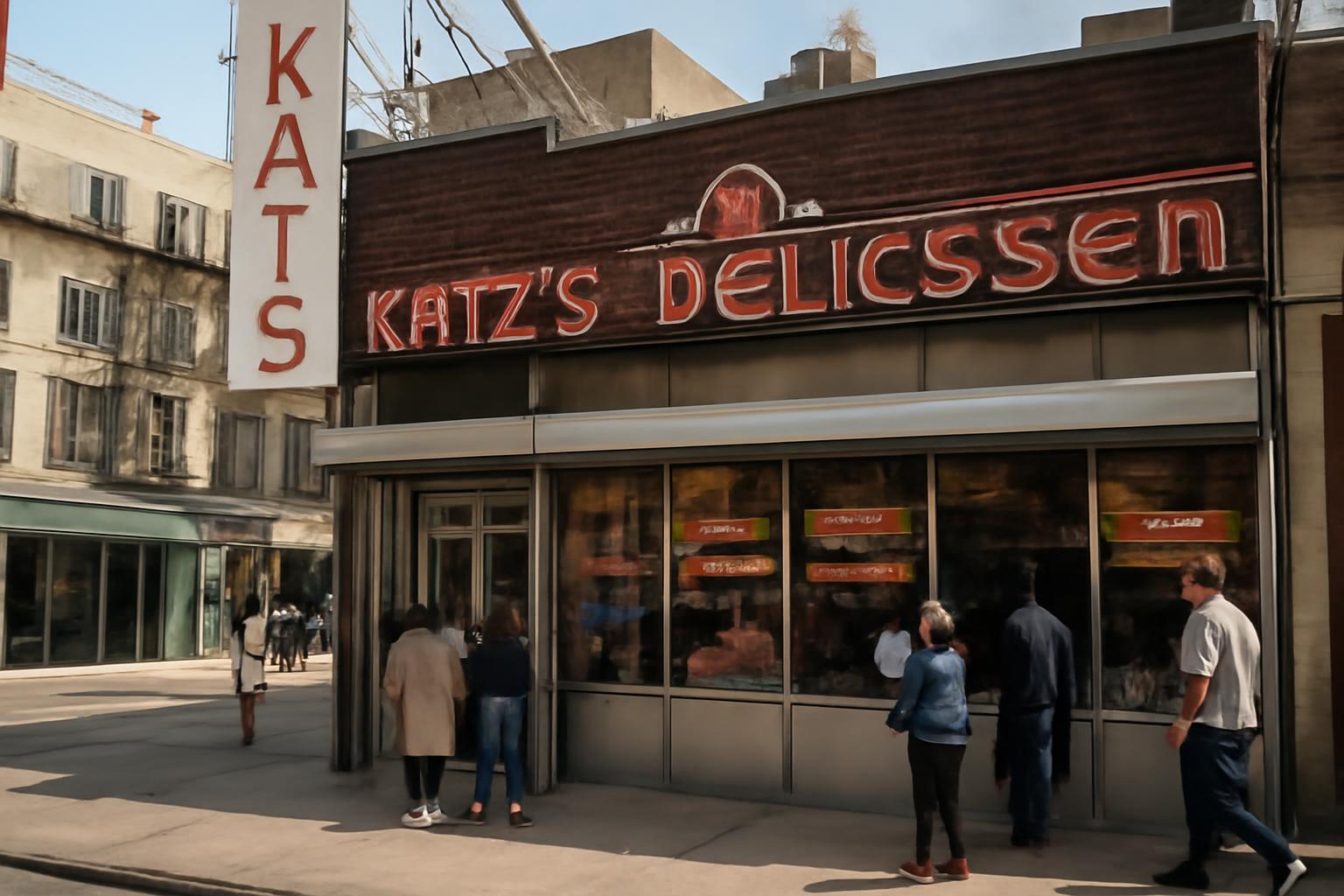
Katz’s Delicatessen has the strongest overall case among New York delis: Eater calls it “quite simply the city’s, and maybe the nation’s, best deli,” and its hand-carved pastrami is the consensus signature order. But the right pick depends on your specialty, neighborhood, and wait tolerance. Liebman’s in the Bronx, Barney Greengrass, Russ & Daughters Cafe, 2nd Ave Deli, Pastrami Queen, and David’s Brisket House each win on a different fit.
That “best” comes with a method worth stating plainly. This shortlist leans on repeated editorial support (Eater’s Jewish deli guide, The Infatuation’s deli rankings, Condé Nast Traveler’s sandwich coverage, and critic Robert Sietsema’s pastrami roundup), weighted toward food specialization, distinctiveness, and geographic usefulness. User-review listings such as Tripadvisor’s deli rankings order things differently, because crowd ratings blend food quality with convenience and expectations. Historical importance and fame count for atmosphere, but they are not treated here as substitutes for what is on the plate.
The matrix below compares the shortlist on the criteria the evidence actually supports. Prices and hours change, so treat logistics as items to verify on official channels before you go.
| Deli | Style | Location | Signature order | Best for | Supported caveat |
|---|---|---|---|---|---|
| Katz’s Delicatessen | Jewish deli, since 1888 | Manhattan | Hand-carved pastrami on rye ($28.95 on Katz’s menu) | First visit, destination meal | Sietsema notes the sandwich is not cheap and is best shared by two |
| 2nd Ave Deli | Kosher Jewish deli, founded 1954 | Kips Bay (per The Infatuation) | Pastrami sandwich | Classic sit-down deli meal | Address differs from its East Village origins; verify before going |
| Pastrami Queen | Pastrami-focused deli | Upper East Side | Pastrami sandwich | Uptown pastrami without a downtown trip | Less corpus coverage than the two leaders |
| Barney Greengrass | Appetizing and meat deli, 1908 | Upper West Side | Smoked and preserved fish; normal-sized meat sandwiches | Restrained portions, old-school room | Fish-first identity; not the pastrami destination |
| Russ & Daughters Cafe | Appetizing-shop spinoff cafe | Manhattan | Smoked fish plus chopped liver, matzo ball soup, knishes | Sit-down mix of fish and deli classics | Cafe format, not a counter deli |
| Liebman’s | Kosher deli, founded 1958 | Riverdale, the Bronx | Pastrami | Great pastrami without the Katz’s line | Requires a trip to Riverdale |
| David’s Brisket House | One-time Jewish deli, now Yemenite Muslim-owned | Nostrand Avenue, Brooklyn | Brisket sandwich | Brooklyn stop with a distinct tradition | Hours may shift for religious or other reasons, per Never Stop Traveling |
What counts as a New York City deli
“Deli” in New York covers more than one tradition, and knowing which one you want narrows your choice quickly. Never Stop Traveling describes the city as “the land of delicatessens, aka delis and salumerias,” which captures the two most common uses of the word: Jewish delicatessens built around cured and smoked meats, and Italian salumerias built around cured pork, cheeses, and heroes. Condé Nast Traveler’s sandwich coverage treats the classic Italian deli sub as its own category alongside the Jewish deli sandwich, which is a fair reflection of how New Yorkers actually use the term.
Two more formats round out the picture. Appetizing shops, a tradition tied to kosher dietary separation, specialize in smoked and preserved fish rather than meat; Eater’s guide includes Barney Greengrass, the self-styled “Sturgeon King” since 1908, and the Russ & Daughters Cafe spinoff in exactly this lane. Then there are neighborhood sandwich counters, some without seating at all. Condé Nast Traveler describes one pick where there is no seating and the sandwich is best carried to the Astoria waterfront or eaten standing on the sidewalk.
The shortlist in this guide leans heavily toward Jewish delis because that is where the editorial evidence is deepest and most consistent, from pastrami and corned beef to matzo ball soup. That lean is not a claim that Jewish delis are the only valid meaning of the word. The category also stretches across ownership traditions: David’s Brisket House in Brooklyn is a one-time Jewish deli now owned and operated by Yemenite Muslims, per Never Stop Traveling, and it belongs on any serious list. If you want an Italian hero specifically, this guide’s evidence does not support naming a specific salumeria, so treat that as a separate search.
The best delis in New York City
Each profile below states the specific case for inclusion, the order to start with, and an honest limitation, because a recommendation without a trade-off is closer to advertising than advice. Rankings in this category are genuinely subjective: Eater’s editorial consensus, The Infatuation’s specialty judgments, and Tripadvisor’s user-review ordering do not agree on a single sequence, so this list prioritizes food specialization and geographic usefulness over any pretense of an objective 1-to-7 ranking.
One craft note before the profiles. Hand carving versus machine slicing is a real distinction at the counter, and hand-cut meat is part of the appeal at the most celebrated counters, but slicing method is only one input among tenderness, seasoning, fat, and consistency. Judge the sandwich, not the tool.
Katz’s Delicatessen: the strongest overall case
If you are choosing one deli for a first visit, Katz’s is the defensible answer. Eater’s guide calls it the city’s and maybe the nation’s best deli, and Robert Sietsema writes that it is “no surprise that Katz’s produces the city’s best pastrami,” because pastrami is the focus of the entire operation. The meat is hand-cut behind a glass counter in thick, steaming slices, and Eater ranks the lineup clearly: pastrami first, roast brisket second, with corned beef lagging a bit in tenderness but not flavor.
Order the pastrami on rye. On Katz’s own menu it runs $28.95, with corned beef at $27.95 and matzo ball soup at $9.95, and the restaurant has been operating since 1888 per its own site. Sietsema’s practical advice is worth following: the hand-carved sandwich is not cheap, and one is best shared by two, washed down with a Cel-Ray soda. If you want to sample more, Katz’s local menu lists a half sandwich with matzo ball soup at $24.95 and a sandwich package for two at $80.
The trade-offs are the ones fame brings. Condé Nast Traveler frames its Bronx alternative explicitly as “great pastrami without the Katz’s line,” which tells you the line is a known cost of the experience. Katz’s is best for the diner who wants the definitive version and is willing to budget time and money for it.
2nd Ave Deli: a classic with two competing signature orders
2nd Ave Deli is the shortlist’s old-fashioned kosher standard-bearer. Eater notes it was founded in 1954 by Abe Lebewohl in the East Village, along a strip of Second Avenue known as the Yiddish Broadway for its Jewish theaters, and The Infatuation still ranks it among the best delis in NYC. That combination of lineage and current editorial support is rare, and it makes 2nd Ave a strong pick for a proper sit-down deli meal rather than a counter stop.
On the order, the sources give you a clear starting point and an honest ambiguity. The Infatuation’s advice is to order “what everyone expects you to get,” the pastrami sandwich. Corned beef is the traditional counterpart at any kosher deli of this vintage, and some diners will always argue for it, but the supplied evidence does not settle which is stronger here, so pastrami is the safer first order, with corned beef as the return-visit test.
One practical note: the name points to Second Avenue, but The Infatuation locates the deli in Kips Bay today, not at its East Village origins. Verify the current address before you build a walking route around the name. 2nd Ave Deli fits the diner who wants classic atmosphere and kosher tradition with less spectacle than Katz’s.
Pastrami Queen: a focused Manhattan pastrami pick
Pastrami Queen earns its slot on specialization and geography. The Infatuation says it “makes some of our favorite sandwiches on the Upper East Side,” and in a category where the most famous names cluster downtown, a strong uptown pastrami option changes how you plan a day. If your itinerary runs through the Upper East Side, Central Park, or the Museum Mile, this is the pick that saves you a cross-town or downtown detour.
The order is in the name: start with the pastrami sandwich. The honest limitation is coverage. Pastrami Queen appears in the evidence with less depth than Katz’s or 2nd Ave Deli, so this recommendation rests on The Infatuation’s specialty judgment rather than broad editorial consensus. That makes it best suited to the diner who values a focused, well-regarded sandwich in a convenient uptown location over the full destination-deli experience, and who is happy to keep expectations centered on the meat rather than the room.
Barney Greengrass: smoked fish and old-school range
Barney Greengrass is the pick when you want the fish side of deli tradition, or simply a sandwich sized for one person. Eater describes it as a 1908 “repository of preserved fish” on the Upper West Side, styling itself the “Sturgeon King,” and that identity, smoked and preserved fish served in a genuinely old room, is what you are traveling for.
The useful surprise in Eater’s assessment is that Barney Greengrass is also a fully functional meat deli, with pastrami, tongue, turkey, salami, and chopped liver sandwiches that are notably normal-sized, at prices Eater puts a bit below par for the category. That makes it one of the few places on this list where you can order a sandwich without planning to share it or carry half of it home, a real advantage for solo diners and anyone pacing a full day of eating.
The trade-off is the flip side of its identity. If your goal is the city’s defining pastrami experience, this is not the destination; the fish is the headline and the meat sandwiches are the supporting cast. Barney Greengrass fits an Upper West Side morning or lunch, especially paired with a walk toward Central Park or Riverside Park, for the diner who values sturgeon, restraint, and history over spectacle.
Russ & Daughters Cafe: appetizing-shop tradition in a cafe setting
Choose Russ & Daughters Cafe when you want appetizing-shop smoked fish but also want to sit down to a full deli meal. Eater notes that this spinoff from Russ & Daughters offers deli classics like chopped liver, matzo ball soup, and potato knishes alongside the fish, which makes it the most complete bridge on this list between the two Jewish food traditions: the meat deli and the appetizing counter.
That range is the reason to pick it over a meat-first deli. A group split between smoked salmon loyalists and matzo ball soup traditionalists can order across both menus at one table, which is harder to do at a specialized counter. The cafe format also means table service rather than the queue-and-carve theater of a classic deli, a plus for a longer, unhurried meal and a minus if the counter ritual is part of what you came for.
The limitation is definitional: this is a cafe built on an appetizing-shop legacy, not a cured-meat destination, so pastrami pilgrims should look elsewhere on this list. It is best for a Lower Manhattan sit-down meal where fish leads and the deli classics fill out the table. Confirm the current address and hours on official channels before you go.
Liebman’s: the Bronx alternative to Katz’s line
Liebman’s answers the most common objection to the most famous name on this list. Condé Nast Traveler puts it plainly: “If you want great pastrami without the Katz’s line, it’s Liebman’s in the Bronx.” For a diner whose real question is whether the famous deli is worth its wait, this is the directly supported alternative, not a consolation prize.
The credentials run deeper than convenience. Eater describes Liebman’s as a kosher Riverdale institution founded in 1958 by the Dekel family and still flourishing under the same ownership. More than six decades of continuous family operation is its own kind of pedigree, and the kosher status matters practically for diners who need it, since Katz’s fame does not answer that requirement. Order the pastrami; that is the specific strength both sources point to.
The trade-off is geography. Riverdale sits at the northwest edge of the Bronx, well off the Manhattan tourist spine, so Liebman’s works best as a deliberate trip or a stop on a day already headed that direction, not a spontaneous detour from Midtown. For Bronx locals, diners keeping kosher, and anyone who does not want to spend time waiting in the Katz’s line, it is the strongest supported choice on this list. Verify hours before making the trip.
David’s Brisket House: a Brooklyn brisket tradition
David’s Brisket House is the shortlist’s Brooklyn anchor and its clearest example of how deli tradition moves between communities rather than dying out. Never Stop Traveling describes it as “yet another top NY invention: a one-time Jewish deli that is now owned and operated by Yemenite Muslims serving serious sandwiches to a primarily African American clientele,” located on Nostrand Avenue in Brooklyn.
The case for going is twofold. First, the food: “serious sandwiches” is the source’s judgment, and brisket is the house identity, which gives you a signature order distinct from the pastrami-first pattern of the Manhattan picks. Second, the continuity itself: this is deli culture as a living neighborhood institution rather than a preserved museum piece, and eating there is a different and equally legitimate version of the New York deli experience.
The practical caveat comes from the same source. Never Stop Traveling advises checking websites for opening times, which may change due to religious or other considerations, and that advice applies with particular force here. David’s Brisket House is best for a Brooklyn day, a diner curious about where deli tradition actually lives now, or anyone who wants brisket rather than pastrami as the main event.
Choose by style, location, and experience
Once you know the shortlist, the choice usually comes down to three questions: where will you be, what experience do you want, and how much waiting will you accept. Geography sorts the list cleanly. Downtown Manhattan gives you Katz’s and Russ & Daughters Cafe. Midtown-adjacent, 2nd Ave Deli sits in Kips Bay per The Infatuation. Uptown, Pastrami Queen covers the Upper East Side and Barney Greengrass the Upper West Side. Outside Manhattan, Liebman’s holds Riverdale in the Bronx and David’s Brisket House holds Nostrand Avenue in Brooklyn. Since walkable days work better than cross-borough zigzags, pick the deli that fits the neighborhood you are already planning around rather than forcing a detour.
Experience is the second sort. The classic counter theater, hand-carved meat and a line to match, belongs to Katz’s; Condé Nast Traveler’s framing of Liebman’s as the way to get great pastrami “without the Katz’s line” makes the wait trade-off explicit. A quieter sit-down meal points to 2nd Ave Deli or Russ & Daughters Cafe, and an old-room, fish-forward morning points to Barney Greengrass. At the other end of the spectrum, Condé Nast Traveler reminds you that some of the city’s best sandwich counters have no seating at all, so a takeout-and-walk plan is a legitimate format, not a compromise.
For matching a deli to an occasion, the supported contrasts break down roughly like this:
- Destination meal worth planning around: Katz’s, with time and appetite budgeted for the line and a shareable sandwich
- Sit-down classic with less spectacle: 2nd Ave Deli or Russ & Daughters Cafe
- Solo lunch or lighter appetite: Barney Greengrass, whose sandwiches Eater calls notably normal-sized
- Lower-wait pastrami or kosher requirement: Liebman’s in Riverdale
- Brooklyn stop or brisket-first order: David’s Brisket House
Because current hours are not verified in this guide’s evidence, treat these as fit judgments, not scheduling facts. Confirm whether your pick serves the meal you have in mind on the day you plan to go.
Oversized icons versus more restrained portions
Sandwich size is a real planning variable, not a novelty, and the evidence splits the shortlist into two portion philosophies. On the oversized end, Robert Sietsema is direct about Katz’s: the hand-carved sandwich is not cheap at $28.95, and one is best shared by two. Condé Nast Traveler makes the same point about the city’s premium sandwich spots generally: yes the sandwiches are expensive, but you can plan to share. Read together, the practical move at the icons is to order one sandwich for two people, add a soup or latkes, and treat the total as a shared meal rather than judging the single-sandwich price in isolation. Katz’s own menu supports that math, listing matzo ball soup at $9.95 and a sandwich package for two at $80.
On the restrained end, Eater singles out Barney Greengrass for notably normal-sized sandwiches at prices a bit below par, which makes it the natural pick for a solo diner, a lighter lunch, or a day with more than one eating stop planned. Neither philosophy is better; they answer different situations. A shared oversized sandwich is an event, a normal-sized one is a meal, and mistaking one for the other is how visitors end up either overfed at noon or underwhelmed by a split half. Decide which you want before you get to the counter.
Plan your visit with current information
The single most important step after choosing a deli is verifying its current details on official channels, because this category changes in ways that editorial lists do not capture. Never Stop Traveling’s advice applies to the whole shortlist: visit the deli’s own website to check opening times, which may change due to religious or other considerations. That caution is not theoretical for kosher establishments like 2nd Ave Deli and Liebman’s, where holiday closures follow a different calendar than most restaurant listings assume.
The second trap is assuming a famous brand equals a permanent restaurant you can walk into. Carnegie Deli is the sourced example: its own site currently emphasizes deli and desserts shipped nationwide and points visitors to Madison Square Garden and pop-ups for where it is “serving sky-high sandwiches next.” A brand can be alive and beloved while operating as a shipping business and event presence rather than a conventional sit-down deli. Before traveling to any name you remember from years past, confirm on the official site that a walk-in location exists at the address you expect.
Before you commit to a trip, run through a short verification pass on the deli’s official website or by phone:
- Hours and address for the specific day, including holiday and religious-calendar closures
- Operating format: walk-in restaurant, counter takeout only, pop-up, or shipping-first brand
- Ordering and payment: counter versus table service, pickup procedures, accepted payment methods
- Seating and access: whether seating exists at all, plus step-free entry, restrooms, and any reservation or large-group policy
- Current menu prices, since figures like Katz’s $28.95 pastrami are snapshots from Katz’s menu, not guarantees
- Dietary fit: kosher certification, vegetarian, vegan, pescatarian, or gluten-free options
On dietary needs specifically, the evidence supports only scattered data points, not a venue-by-venue database. Eater identifies Liebman’s as kosher, and Condé Nast Traveler notes that at one of its recommended sandwich spots almost every sandwich has a veggie alternative, with tuna and salmon options for pescatarians. Those examples show accommodations exist across the category, but they do not tell you what any specific deli offers this month. The same honesty applies to accessibility, restrooms, and reservations: this guide’s sources do not verify those details per venue, so confirm them directly rather than assuming.
None of this verification work is a reason to overthink the choice itself. The shortlist holds up: Katz’s for the definitive pastrami experience, Liebman’s when you want that pastrami without the line, 2nd Ave Deli and Russ & Daughters Cafe for sit-down tradition, Barney Greengrass for fish and sane portions, Pastrami Queen for the Upper East Side, and David’s Brisket House for Brooklyn brisket. Pick the one that fits your neighborhood plan and appetite, spend five minutes on its official site, and go eat.