 New York Know
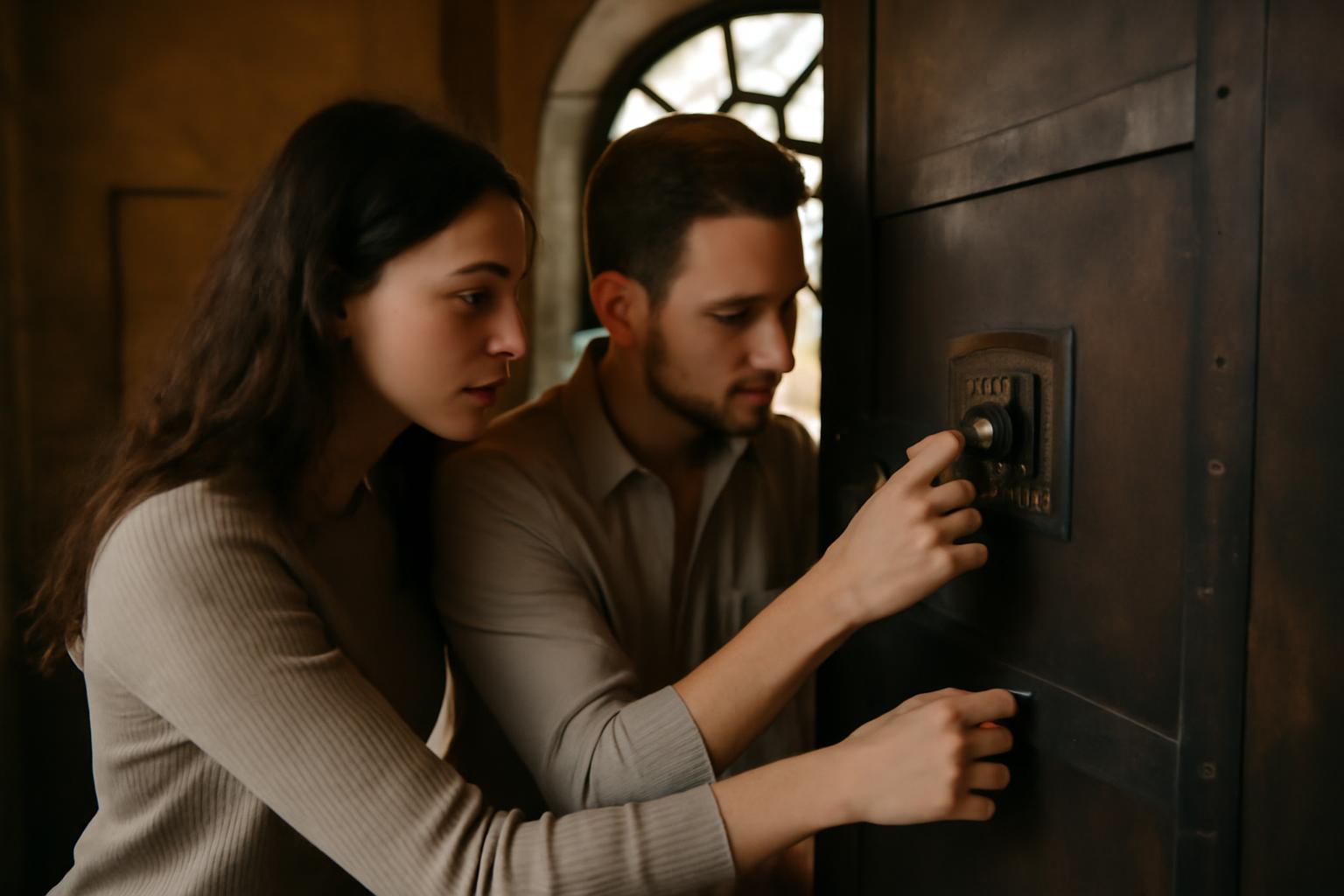
If you want a date activity that feels more memorable than “grab a drink and see what happens,” an escape room is one of the strongest active options you can build into a New York trip. It gives the date a shape. You have a clear start time, a built-in challenge, and an easy reason to keep talking afterward. For visitors, that matters because a good date in NYC is not only about chemistry. It is also about energy, timing, weather, and how much of the day you want to spend moving versus actually enjoying yourselves.
That is why the escape room date idea works especially well when you use it as part of a neighborhood-based day instead of treating it like the only event that matters. In practice, the smartest version is simple: spend part of the day walking one area, use the room as an indoor anchor, and leave enough room afterward for dinner, dessert, or a short scenic walk nearby. The date then feels like one coherent piece of the trip rather than a separate booking that forces you to crisscross the city.
This article stays focused on that version: not “the most extreme room possible,” but the kind of escape room date that works for couples, first dates, and travelers who want something playful, time-bounded, and easy to fit into a walking-first New York plan.
Why Escape Rooms Make a Great Date Idea
The biggest advantage of an escape room date is that it removes the hardest part of many early dates: dead air. You are not sitting across from each other trying to manufacture perfect small talk on command. You are immediately looking, noticing, laughing, guessing, and reacting together. Lost Games describes that shared task as one reason escape rooms work so well as dates: they act as an icebreaker, create novelty, and give couples instant conversation material during and after the game in its pros-and-cons guide.
That structure also turns vague attraction into something more observable. You see whether the two of you actually like solving things together. You notice who talks through ideas, who searches carefully, who gets flustered, and who stays light when a theory turns out to be completely wrong. That does not make an escape room a reliable compatibility test, and it should not be treated like one. But it can give you a fast, low-stakes look at communication style and whether collaboration feels energizing or irritating. The Everygirl makes that case explicitly, while still grounding it in anecdote rather than science, in its argument for escape rooms as a first-date format.
Another reason the format lands well is that it creates a shared story almost automatically. Passive dates can be pleasant but forgettable. You may enjoy the restaurant, but a week later the night can blur into every other decent dinner. An escape room usually leaves at least one specific memory behind: the clue one person spotted first, the lock both of you overcomplicated, the useless theory you defended for ten minutes, or the last-minute sequence that suddenly made the whole room click.
That story-making quality is especially useful on trips. Travelers often want something that feels like an event without swallowing an entire evening. A room with a defined session time gives you exactly that. It is long enough to feel like you did something real, short enough to pair with the rest of the day, and indoor enough to rescue plans when weather turns ugly.
There is also a subtle emotional benefit. A lot of dates place all the pressure on conversation. That can be lovely when the energy is already there, but it can be tiring when both people are nervous. Escape rooms spread the attention out. Instead of “performing” for each other nonstop, you are jointly focused on objects, clues, patterns, and decisions. That often lowers self-consciousness. People who feel stiff over drinks sometimes relax the moment there is a shared task in front of them.
For couples who already know each other, the appeal is a little different. The room becomes a compact team project. That can be refreshing on a trip packed with logistics, lines, and decisions. Rather than debating what to do for hours, you book one session, show up, and spend the next chunk of time trying to solve a contained problem together. In a city that can easily make everything feel overplanned or overcomplicated, that kind of contained fun is valuable.
So the case for the escape room date idea is not that it replaces every other date format. It is that it solves several common date problems at once. It breaks the ice, gives the time a narrative arc, creates material for conversation afterward, and fits neatly between other parts of the day. That mix is hard to beat, especially when you are traveling.
Pros and Cons for Couples
The upside for couples is straightforward. Escape rooms are structured enough to help if conversation is still warming up, interactive enough to feel different from dinner or drinks, and collaborative enough to create real conversation material after the game. They also give you a built-in sense of progress. Even if you do not finish, you usually unlock something, connect something, or solve a few stages together. That partial win often feels better than a passive date that was perfectly pleasant but left no real memory behind.
They can also reveal practical strengths in a flattering way. One person may be better at noticing physical details. The other may be better at patterns, codes, or keeping track of what has already been tried. A good room rewards different forms of attention, so couples do not have to be “puzzle geniuses” to enjoy themselves. Often the fun comes from combining incomplete ideas rather than having one brilliant answer person.
The downside is that the same features that make escape rooms lively can also make them stressful. A timer energizes some people and tightens others up immediately. If one person hates being rushed, the clock can change the mood from playful to tense.
That last point is worth taking seriously. “Escape room” can describe a wide range of experiences. Some rooms are almost entirely mental. Others may involve crouching, moving objects, scanning a dark space, handling louder effects, or working in a tighter environment than one partner enjoys.
The good news is that most of the common drawbacks can be managed in advance. You can choose a lighter theme instead of horror. You can pick moderate difficulty instead of “expert only.” You can agree before you begin that hints are part of the fun, not a sign of failure. You can also plan a second stop afterward so the date is not over the second the timer ends.
That is the real distinction between a good and bad escape room date. The problem is rarely “escape rooms are stressful” in the abstract. The problem is usually a mismatch between the room, the people, and the expectations. A date-friendly room can feel playful, collaborative, and funny. The wrong room can feel like unpaid labor under mood lighting.
A useful mindset is to treat the game as a shared experience, not a referendum on intelligence. If you go in trying to prove something, every missed clue can feel personal. If you go in trying to have a good hour together, the mistakes become part of the fun. Couples who enjoy the night most are usually the ones who can say, “That was chaotic, but fun,” whether they escaped or not.
Ideal for First Dates?
Yes, an escape room can be a very good first date, but only when both people actually like the premise.
That qualification matters more than the “yes.” Bumble frames escape rooms as strong first-date options because they break the ice quickly, create instant teamwork, and give you something to talk about right away, while also warning that they are not ideal for people who want a more intimate or low-key start to dating in its guide to couple escape room dates.
That is the best way to think about it. An escape room first date works when both people would rather do something together than sit through a long conversation audition. You get out of scripted small talk sooner. You learn whether the two of you can build on each other’s ideas. You leave with material that is more specific than “we both ordered drinks.”
It is also a smart choice for people who do not love conventional first-date pacing. Some daters feel much more natural when attention is shared across an environment instead of focused entirely on each other. If that sounds like you, a room can be easier than a candlelit dinner because it gives your attention somewhere useful to go.
But it is not neutral. An escape room has a personality. It is active, task-based, and time-bound. If your date prefers calm conversation, dislikes puzzles, gets anxious around timers, or simply wants something more intimate for a first meeting, then this probably is not the right move yet. That does not mean the person is boring or the date would fail. It just means the format is not universally flattering.
The smartest first-date version is not a surprise booking. Ask first. Frame it honestly: “Would you be into a playful puzzle room and then a drink or dessert after?” That phrasing helps because it signals both halves of the date. The room is the active part; the debrief is the relaxed part. If the response is enthusiastic, great. If it is hesitant, save the escape room for a later date when there is more trust and less performance pressure.
For some pairs, that later-date timing is ideal. By date two or three, the room still feels fresh, but the pressure is lower. You already know basic conversation works, so the puzzle becomes an upgrade instead of a gamble. Either way, buy-in matters more than novelty.
What to Expect on Your Escape Room Date
A typical escape room date is more straightforward than first-timers often assume. Usually, you arrive, check in, hear the room’s story setup, learn the goal, and then enter a themed environment with a countdown that is often between 30 and 60 minutes. Common puzzle types include scavenger-hunt searching, codes, riddles, and physical interactions with props or room elements, according to Bumble’s overview of what happens on an escape room date.
Most sessions follow a predictable emotional rhythm. The first few minutes are often slightly chaotic while both of you scan the room and try to decide what matters. Then comes a middle stretch where patterns emerge: one person searches, the other tests a code, both regroup, one theory collapses, and suddenly a previously meaningless object becomes important. That rhythm is part of the appeal. The date has a built-in arc instead of drifting.
From a logistics standpoint, beginner guides often advise arriving about 15 minutes early so you can handle waivers, bathroom breaks, and rules before the clock starts. Breakout Games says the game master typically briefs players, monitors the session, and offers hints when needed in its beginner guide. For first-timers, that matters because it means you are not being tossed into the room with no support.
Hints are normal, not embarrassing. In fact, many couples enjoy the game more once they stop treating hints like a moral issue. If a room stalls out completely, the date can lose momentum.
It is also worth knowing that many facilities offer private sessions for small groups, including couples, and professional operators note that players can leave the room at any time if needed for safety. Flee Escape describes 60-minute rooms, facilitator-provided hints, comfortable clothing, and the ability to exit whenever necessary in its couples guide. That is reassuring if one of you is new to the format or nervous about feeling trapped.
In practice, the date usually extends beyond the official booking. The best part often starts when you step back outside. One of you will replay the clue that now seems obvious. The other will confess to being completely certain about the wrong object. If the room was good, you walk out with specific, immediate conversation fuel. That post-game replay is one reason the format works so well on trips. The booking may be short, but the memory keeps generating material.
If you are planning the night well, assume the room itself is only the middle beat. Build around it. Leave buffer before the session so you are not racing there, and leave something low-pressure afterward so the mood has somewhere to go.
Essential Tips for Couples
The easiest way to make an escape room date feel good is to decide in advance that it is cooperative. That sounds obvious, but couples can slip into weird little rivalries the moment a timer appears. One person starts hoarding clues. The other shuts down because their idea was dismissed. Suddenly the date is less “adventure” and more “performance review.”
A better approach is the one relationship-focused venue guides keep recommending: choose a collaborative theme, stay calm, divide attention sensibly, and use each person’s strengths instead of duplicating effort. Flee Escape’s advice for couples includes exactly that kind of playbook—lighter themes, open communication, sectioning the room, comfortable clothes, and a focus on enjoying the experience together.
In real terms, that means a few habits go a long way:
- Say what you notice out loud.
- Put found objects in a visible common area when possible.
- If you try a code, tell the other person what you tried.
- If one of you is better at patterns and the other is better at searching, lean into that.
- If frustration rises, pause and reset instead of pushing harder in the wrong direction.
One of the most useful couple skills in a room is visible thinking. Escape rooms reward narration. “I found a key.” “This symbol matches that poster.” “I already checked this drawer.” “This cannot be for that lock because it is four digits, not three.” The more externalized your thinking is, the less duplicated effort and silent annoyance you get.
Another good rule is to separate urgency from panic. The clock is real, but the stakes are not. When couples begin treating every second like a crisis, they stop noticing obvious things. If you feel the room getting tense, zoom out. Ask: What have we solved? What remains unsolved? What objects have not been used yet? That kind of reset often works better than frantic searching.
It also helps to decide how you will use hints before the session starts. That keeps the game flowing without turning the hint system into autopilot. Pride is rarely the thing that makes a date funnier or more romantic.
Clothing matters a little too, though not in a dramatic way. You do not need special gear, and you definitely do not need to dress like you are going hiking. But comfortable shoes and easy movement are better than an outfit that makes crouching, reaching, or standing for a while annoying. If the evening includes a walk afterward, practical comfort matters even more.
Then there is the part many people underrate: the debrief. Couples get more value from the room when they plan a soft landing afterward. That could be dumplings, cookies, cocktails, a bench by the water, or just a slow walk toward the subway. The point is to give the shared experience somewhere to settle. Without that second beat, the room can feel like a closed event. With it, the room becomes the story you now get to replay together.
A few post-game prompts can help if conversation stalls:
- What clue should we have seen sooner?
- When did you think we were definitely not getting out?
- What were you convinced mattered that clearly did not?
- Which part did each of us actually do well?
- Would we choose a harder room next time or an easier one?
Those questions work because they keep the mood playful rather than evaluative. You are not grading the other person. You are reliving the funniest, messiest parts of the hour.
If romance is part of the goal, remember that tension is not the same as intimacy. You do not need the hardest room, the darkest theme, or the highest stress level to create connection. Usually the sweeter version is a room that gives you enough challenge to cooperate, enough momentum to laugh, and enough leftover energy to enjoy the rest of the evening.
And finally, do not make “escaping” the only definition of success. The best date outcome is not a leaderboard photo. It is leaving the room liking each other more than when you entered.
Choosing Date-Friendly Themes and Formats
Not every room is equally well suited to a date. Theme matters more than many first-timers expect.
For most couples, lighter immersive stories are a safer bet than gore, jump scares, or ultra-dark survival plots. One clear example is Utah venue The Escape Date, which markets private experiences for 2 to 8 players and emphasizes that its rooms avoid horror and gore, with themes like Christmas Catastrophe, The Escape Motel, Showtime Magic, and Tick Tock’s Circus on its overview page. That is just one operator, not a universal template, but it illustrates the kind of tone that tends to work well for dates: playful, story-led, and immersive without feeling punishing.
The same logic applies to room format. Neither style is automatically more romantic. The better choice is the one that keeps both of you engaged rather than leaving one person idle.
When you are evaluating room descriptions, a few filters help:
- Is the room truly workable for two, not just technically bookable?
- Does the theme sound fun to both people?
- Is the difficulty moderate enough for the mood you want?
- Are there physical or sensory elements you should ask about first?
- Does the venue seem comfortable giving hints to keep the pace moving?
That last question matters because “good for a date” is partly about pacing.
Theme can also shape the emotional tone of the whole night. Horror can work if both of you actively want it, but it narrows the appeal. Fear may intensify the experience, yet it does not automatically make it better for romance.
If you are unsure, err toward lighter, clearer, and slightly easier. A medium room that keeps you both involved is a much better date than an “epic challenge” that leaves one of you silent and the other irritated.
At-Home Escape Room Dates for Travelers
Sometimes the best escape room date idea is the version that requires no extra transit at all. If you are staying in a hotel suite, apartment rental, or roomy Airbnb, an at-home escape setup can give you much of the same teamwork energy with more privacy and less scheduling friction.
The easiest path is a print-and-play kit. One detailed date-night review describes using the Rebel Revolt kit for a couple’s game at home: the file cost $29, required printing and cutting 12 pages, and took roughly 40 to 60 minutes of prep before play, with a laptop used for hints, music, and the timer, as described in this Rebel Revolt walkthrough.
The mood control is part of the charm. You can play in socks, order dessert, pause briefly if needed, and skip the cross-city commute entirely.
A DIY version is possible too, though it takes more effort. Escape Room Geeks explains that building a home game starts with a short storyline and then layers in clues, props, and a puzzle flow; the author notes that the process can be time-intensive and says his first build took nearly a month of planning, while also describing a nonlinear design that lets multiple players solve different threads in parallel in its DIY tutorial. For a traveler, that full production is usually more than you need, but the design principle is still helpful: keep the story simple and make the clues easy to handle in a small space.
A few envelopes, one notebook, a hidden message, a simple number code, and a final reveal are enough. The goal is not to imitate a commercial room perfectly. The goal is to create a private shared challenge with a little ceremony around it.
If you want easy puzzle formats, Lock Paper Escape suggests approachable options such as jigsaw clues, balloons with hidden hints, mirror messages, acrostics, book clues, and basic ciphers in its DIY puzzle guide. Those ideas are useful because they can be scaled down fast. A hotel-room version might use a printed riddle tucked inside a guidebook, a simple Caesar cipher on stationery, and a final code that “unlocks” dessert or tickets you already planned to use.
A few practical rules make at-home versions better:
- Favor good lighting over “atmosphere.”
- Keep all clue materials visible and easy to organize.
- Avoid overly fiddly cutting, folding, or hidden-object chaos unless you know you both enjoy it.
- Use a short timer so the game feels lively without taking over the night.
- Make the ending worth it, even if the prize is small.
That final reveal can be delightfully simple. A pastry run. A museum reservation confirmation. A handwritten note. A tiny gift. The point is to end with something that turns the puzzle into a gesture, not just a task.
For travelers in particular, the at-home route works best on one of two nights: the tired night when you still want to connect but do not want another crowded venue, or the weather-disruption night when you need a plan B that still feels intentional.
Planning Escape Rooms into Your NYC Itinerary
For visitors, the smartest way to use an escape room in New York is to make it serve the day you already want to have. That matches the broader walking-first approach New York Know recommends: choose a base that fits how you move, group sights by area, and spend less time crossing the city just to say you did more in its NYC planning guidance.
That principle matters because escape rooms are best used as anchors, not detours. Instead of asking, “What is the most famous room anywhere in the city?” ask a more useful question: “What kind of room would fit naturally into the area where we are already spending the afternoon or evening?” For travelers, that is usually the better decision. The shorter the pre-date commute, the better your energy is when you arrive.
A Lower Manhattan example makes the pattern easy to picture. New York Know’s walking-first downtown outline describes a route that starts near the harbor, moves through the Financial District, turns east toward the Seaport, and finishes in Chinatown or nearby, keeping the day compact and sequential instead of zigzagging all over the island in its Lower Manhattan walking guide.
The larger lesson is not “do Lower Manhattan.” It is “think in sequences.” A visitor-friendly NYC date usually feels best when it has one fixed anchor and one flexible second act. The escape room is the fixed anchor. The second act is whatever the neighborhood makes easy: dessert, a bar, a river walk, bookstore browsing, dumplings, or a simple walk back toward your hotel.
This is especially helpful for first-time visitors because New York can tempt you into overprogramming. You look at the map, everything seems close enough, and suddenly the day includes three neighborhoods that each deserved their own half day. That planning style can drain the romance out of an evening before it even starts. If the room is on the opposite side of the city from the rest of your day, the activity may still be good, but the lead-up feels like logistics.
A neighborhood-first escape room strategy solves that. Start with your base and the natural shape of the day:
- If your hotel is downtown and your walking day is downtown, keep the room downtown.
- If your day is centered around Midtown, book something that does not require a late extra cross-town move.
- If you know you get tired after a lot of walking, choose a room near where you plan to eat so the night gets simpler as it goes on, not harder.
- If weather looks uncertain, make the room the early evening anchor and leave the outdoor part for before or after, depending on conditions.
Even without naming specific venues, you can use these filters to book more intelligently. Look for a session that is near your hotel base, near the day’s neighborhood, or near the place you already expect to end up. The less “special transit” the date requires, the more it feels integrated into the trip.
This also helps with timing. By late afternoon or early evening, you are ready for an indoor reset. You have already built context in the neighborhood. Then, once the room ends, you can decide whether the night keeps going or winds down.
That flexibility is a major advantage in New York. Some nights you will want the room to be the main event plus dessert. Other nights it will be a lively middle act before a longer dinner. If you have planned by area, both versions stay easy.
There is a psychological benefit too. The walk there, the transition afterward, the street energy outside, the choice to wander a little before heading back—those are the pieces that make it part of the trip memory rather than just another reserved time slot.
So when you plan an escape room date in NYC, do not start by hunting for the most dramatic marketing or the hardest room. Start with the day. Start with your base. Start with the neighborhood you want to understand on foot. Then choose the room that fits that shape with the least friction. In New York, ease is often more romantic than spectacle.
Can just two people do an escape room date?
Usually, yes. Many venues allow private couple bookings or other small-group sessions, but “two people allowed” is not quite the same thing as “this room plays especially well with two.” That is why it helps to check room descriptions and ask directly. A clear example is The Escape Date, which advertises private rooms for 2 to 8 players on its site. The practical takeaway is simple: couple-sized sessions are common, but room fit still matters.
Is an escape room fun if you don’t escape in time?
It can be, absolutely. If you treat the room as a shared challenge instead of a pass-fail exam, not escaping often still leaves you with the best parts: the teamwork, the dumb mistakes, the lucky breakthroughs, and the conversation afterward.
Are escape rooms good for first dates?
Often, yes. They are especially good when both people like active plans, mild pressure, and having something to do besides talk nonstop. Bumble presents them as memorable first dates because they speed up interaction and give you an immediate shared experience. The Everygirl makes a similar argument from personal experience, though more as anecdotal dating advice than hard relationship evidence. So the fair conclusion is not “guaranteed compatibility,” but “a fast, playful way to learn how it feels to do something together.”
What tips help couples succeed?
Choose a lighter theme, keep expectations generous, and talk through everything you notice. Split the room naturally instead of both hovering over one clue. Use hints before pride turns into silence. Plan something easy afterward so the game has a second act. And if one of you is clearly better at searching while the other is better at interpreting patterns, let that happen. The best couples in escape rooms are rarely the smartest.
How to set up a DIY escape room date?
Keep it smaller than your first instinct. Start with a short story and build three to five simple puzzles around it: a hidden message, a book clue, a jigsaw-style reveal, an acrostic, or a basic cipher. Lock Paper Escape’s puzzle ideas are useful here because they rely on ordinary materials rather than elaborate props, as shown in its DIY roundup. Add a timer, a playlist, and a small final reward, and you have something that feels thoughtful without becoming a full-scale production.
An escape room works well in New York for the same reason a good walking day works well: it gives the day structure without forcing you to overbuild it. Choose a room that suits the two of you, fit it into one neighborhood instead of across several, and leave time afterward to replay the funniest parts. Done that way, the escape room date idea is not just a reservation. It becomes part of the trip memory you actually keep.