 New York Know
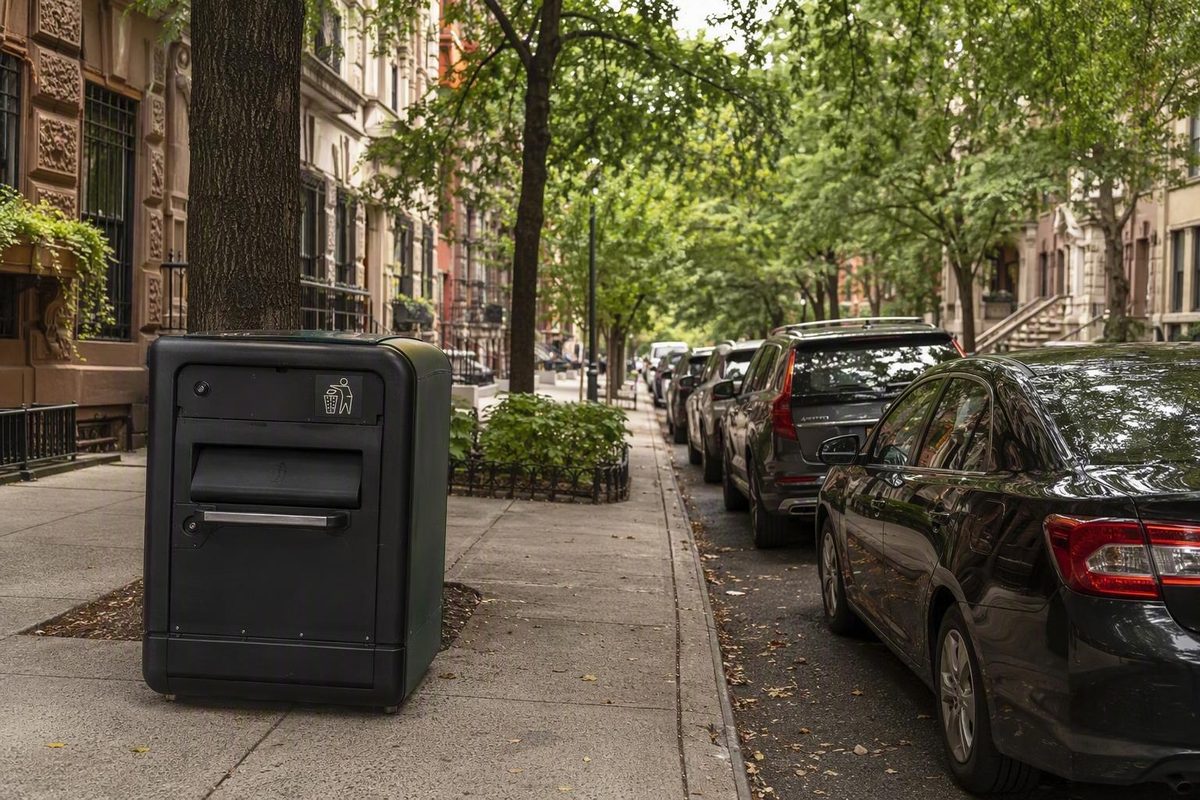
Mandatory Empire Bins have coincided with a drop of up to 55% in nearby rat sightings where the program is live in West Harlem, while the draft plan would remove as many as 1,460 Upper West Side parking spots—10.38% of the district’s legal curb parking, the highest share among NYC’s 59 community districts. For visitors, the practical split is clear: walking conditions should improve as loose trash bags move off sidewalks, but drivers visiting Central Park West, the American Museum of Natural History, or Lincoln Center should budget for a garage rather than assume difficult-but-possible curb parking will remain available.
The Familiar Visitor Advice Is Still Partly Right
The received wisdom is that New York sidewalks are a trash-bag obstacle course, rats emerge around curbside piles, and visitors simply learn to route around both. It also holds that street parking near major Upper West Side sights is hard in the same general way that it is hard across Manhattan.
That description remains accurate on blocks where containerization has not arrived. Most neighborhoods still lack firm rollout dates, and a scheduled installation is not the same as an operational one. Loose bags, leaking waste, and sidewalk obstructions will not disappear citywide at once.
Nor will Empire Bins eliminate rats. The city explains that trash feeds rats and other pests, but sightings reported through 311 are not a census of the rat population. Containerization is one sanitation intervention, and the evidence does not prove that bins alone caused the reported decline.NYC’s Environment & Health Data Portal connects sanitation, pests, public space, and health.
The parking part of the conventional advice is also right for now: curb parking is already scarce near the Upper West Side’s major attractions. The change is that “hard to find” may become structurally tighter as the city assigns curb segments to permanent waste infrastructure. That is more consequential than an unusually busy afternoon or one block’s street-cleaning restrictions.
Cleaner Sidewalks And Less Parking Are The Same Policy
Empire Bins are large, locked containers placed in the street and assigned to residential buildings. Authorized building staff or waste managers use access cards, and DSNY empties the bins mechanically with side-loading trucks. Their purpose is to replace piles of loose residential garbage bags on sidewalks.
The building rules determine where permanent curb use is likely:
| Building Size | Container Rule | Curb Effect |
|---|---|---|
| 1–9 units | Secure-lidded movable bin, no more than 55 gallons | Normally no permanent Empire Bin |
| 10–30 units | Choice of Empire Bin or smaller wheeled bins | Depends on building choice |
| 31+ units | Assigned stationary Empire Bins | May replace curb parking |
These are the city’s residential containerization categories.NYC311 explains the building rules and rollout. A 40-unit building belongs in the stationary-bin program. A 20-unit building can choose wheeled containers instead. A six-unit building follows the small-building rules.
Several bins can occupy a curb segment formerly used by one or more cars, so 66,000 projected Empire Bins do not equal 66,000 parking spaces. The evidence establishes no universal bin-to-space ratio. One reported West 85th Street layout placed about 14 bins where seven cars could park, but that block is an illustration, not a conversion formula.Gothamist reported the West 85th Street layout.
That distinction matters in Brooklyn, where about 1,700 bins are planned but no defensible parking-loss total has been published. It also matters citywide: the draft review projected approximately 66,000 bins and as many as 29,842 affected legal spaces, not one space per bin.
Choose a neighborhood and trip mode; the checker compares its sanitation status, rat evidence, and known parking impact.
Select where you are going and whether you will mainly walk or drive. Unknown figures remain unknown rather than being inferred from bin counts.
The maximum is 10.38% of legal curb parking and assumes all eligible 10–30-unit buildings choose Empire Bins; 3,211 bins are contemplated.
All Four Neighborhood Cases
| Area | Status | Rat Evidence | Parking / Bins |
|---|---|---|---|
| Upper West Side | Planned | — local measured change | −950 to −1,460 spaces; 3,211 bins in maximum case |
| Downtown Brooklyn / CB2 | Installing from fall 2026 | — | ~1,700 bins; parking loss — |
| West Harlem | Live pilot / first full district | Up to −55% nearby sightings; separate report −25% in 311 sightings | District parking total — |
| Not Yet Scheduled | No firm date | — | — |
A dash (—) means the supplied evidence gives no defensible figure. “~” marks an approximate reported count.
Sources: DSNY draft figures reported by West Side Rag and Brownstoner; NYC311 rollout guidance; ABC7NY’s West Harlem 311-sighting report.
The Upper West Side Faces The Sharpest Parking Tradeoff
The citywide draft maximum is 29,842 legal curbside spaces, about 1.52% of New York’s roughly 1.96 million legal on-street spaces, for a contemplated network of approximately 66,000 Empire Bins.Time Out summarized the draft citywide projection and bin network.
That citywide percentage understates what an Upper West Side driver could experience. Manhattan’s projected share is 6.42%, versus 2.49% in the Bronx, 1.65% in Brooklyn, 0.58% in Queens, and 0.10% on Staten Island. The draft Upper West Side figure is 10.38%, the highest percentage among the city’s 59 community districts.The New York Post reported the citywide and borough projections.
For Manhattan Community District 7, the maximum scenario calls for 3,211 Empire Bins replacing 1,460 legal parking spaces. It assumes every eligible building with 10 to 30 units chooses stationary bins. If most buildings in that optional group instead use wheeled containers, the effect would be closer to 950 spaces.West Side Rag reported both Upper West Side scenarios and their assumptions.
The range is therefore about building choices, not competing counts of completed removals. The difference between 950 and 1,460 spaces is substantial, and the final figure remains unknown. Site design and participation decisions are still being made.
For a visitor renting a car, that uncertainty is not a reason to expect the best-case outcome. The reliable plan is to price a garage near the sights on the day of the trip and treat curb parking as a possible bonus. The cited evidence supplies no garage price, so no responsible dollar budget can be given here.
Walking visitors get the other side of the trade. Containers shift household waste from the pedestrian path to designated curb infrastructure. That should reduce the need to squeeze around bag piles, especially on collection nights, although actual conditions will depend on overflow, illegal dumping, maintenance, and whether buildings deposit waste correctly.
West Harlem Supplies The Strongest Evidence For Walkers
Manhattan Community District 9, including the West Harlem pilot area, is the first fully containerized community district. West Side Rag, citing the DSNY draft plan, reported reductions of up to 55% in nearby rat sightings during the pilot.
A separate ABC7NY report cited a 25% decline in 311 rat sightings during a West Harlem containerization program. The supplied evidence does not show that the 25% and 55% figures use the same dates, boundaries, baseline, or definition.ABC7NY reported the 25% change in 311 sightings.
Both figures should be described as changes in reported sightings, not direct measurements of the rat population. Other changes could have contributed. Even with that limitation, West Harlem offers stronger evidence than a projected citywide benefit: the containers are live, and a sanitation-related outcome was measured around them.
The evidence supports a narrow verdict. Containerization can make waste less accessible than loose sidewalk bags and has coincided with a substantial decline in nearby rat sightings. It does not establish that every containerized block will see a 55% decline, or that Empire Bins eliminate rats, odors, leaking waste, litter, overflow, illegal dumping, or obstructions.
For a walking trip through West Harlem, the program is no longer theoretical. For an Upper West Side trip, the sanitation gain and parking loss remain planned at district scale, with some containers already installed in northern portions but no districtwide installation date established in the cited neighborhood reporting.
Downtown Brooklyn Is Next, But Its Parking Number Is Unknown
Brooklyn Community District 2 covers Downtown Brooklyn, Boerum Hill, Brooklyn Heights, Dumbo, Vinegar Hill, Fort Greene, Clinton Hill, and the Brooklyn Navy Yard. Approximately 1,700 Empire Bins were expected to begin arriving in fall 2026.
Buildings with 31 or more units must use stationary bins. Buildings with 10 to 30 units can choose them or standardized wheeled containers. At the reported stage, DSNY had visited 450 midsized buildings, and about 50 had chosen Empire Bins. The city was also testing shared containers for multiple smaller properties on one block.Brownstoner reported the schedule, outreach figures, and shared-bin test.
Those 50 choices were an early snapshot, not a final participation rate. Shared bins could also change how many curb installations a block needs.
Most importantly, 1,700 is a bin count, not a parking-space count. The supplied reporting gives no reliable estimate of spaces to be removed in Community District 2. Applying the West 85th Street layout or the Upper West Side district ratio to Brooklyn would fabricate a result from unlike blocks.
A walking itinerary through Downtown Brooklyn, Brooklyn Heights, or Dumbo may therefore encounter installation work and changing trash-setout patterns as the rollout proceeds. A driving itinerary should not attach a numeric parking loss to the program until district site plans or a DSNY parking calculation provide one.
The Rollout Will Remain Uneven For Years
NYC311 lists six additional community districts for expansion by the end of 2027 and gives a broader goal of full citywide trash containerization by the end of 2031. Reporting on the draft review says implementation or modeled effects may extend into 2032.
The topic brief identifies the political target as 100% citywide containerization by the end of 2031, while the Upper West Side-specific draft timeline runs to June 2032. Those dates can describe different milestones, but neither creates a firm installation date for every neighborhood.
That leaves four distinct visitor conditions:
| Status | What It Means |
|---|---|
| Piloted or operational | Bins are being used and effects can be observed |
| Installing | Containers are arriving, but block conditions may vary |
| Planned | Draft impacts exist, but work is not districtwide |
| Not scheduled | No firm neighborhood date is supplied |
A proposal is not an installation. A projected parking loss is not a completed conversion. A scheduled district may not have final public block locations, and installed containers may precede full participation by eligible buildings.
This is why the old mental map will age unevenly. West Harlem already offers evidence of cleaner, less rat-prone streets around the pilot. Downtown Brooklyn is entering installation. The Upper West Side has the city’s sharpest projected proportional parking loss but no cited districtwide installation date. Most other neighborhoods still lack firm dates.
The 29,842-Space Figure Is A Ceiling, Not A Current Count
The draft maximum of 29,842 spaces is not a count of parking already removed and not a guarantee of the final total. It depends on participation, detailed locations, environmental review, and installation decisions district by district.
The citywide figure is also geographically uneven. Averaging the change to 1.52% masks Manhattan’s 6.42% projection and the Upper West Side’s potential 10.38% change. A community-district estimate is more useful for planning than a five-borough average, though even a district estimate cannot identify the exact curb space available beside a destination.
The supplied evidence does not provide a verified citywide count of completed parking conversions. It also does not fully explain the methodology converting approximately 66,000 proposed bins into the maximum parking impact.
An older 2023 concept was reported as potentially displacing roughly 150,000 spaces, about 10% citywide and as much as 25% on some blocks.ABC7 documented the 2023 estimate for the earlier containerization concept. That is not the current Empire Bin projection. The 2026 maximum is about one-fifth as large, but the supplied sources do not fully document which design, eligibility, routing, or modeling changes account for the difference.
Plan The Trip Around The Mode You Will Actually Use
For a walking trip, check whether the neighborhood is operational, installing, planned, or unscheduled. Operational West Harlem has the clearest measured result: rat sightings fell by as much as 55% nearby. Elsewhere, cleaner sidewalks are a reasonable program goal, not yet a measured neighborhood outcome.
For a driving trip to the Upper West Side, do not translate “1.52% citywide” into a negligible local effect. The relevant draft scenario is 950 to 1,460 spaces, with the maximum equal to 10.38% of legal curb parking. Reserve or budget for a garage near the museum, park, or performance rather than building the itinerary around circling for a space.
For Downtown Brooklyn and adjacent Community District 2 neighborhoods, expect about 1,700 bins in the rollout but treat the parking impact as unknown. No sourced figure supports converting that bin total into lost spaces.
For a neighborhood not yet scheduled, the old sidewalk advice may remain accurate longer: collection-night bag piles can still shape a walking route, while containerization is not yet a sound reason to predict less parking. The program’s target reaches to 2031, and Upper West Side draft timing reaches June 2032.
The policy does not produce a single citywide travel rule. It changes the balance block by block: less loose waste in pedestrian space, more fixed sanitation infrastructure at the curb. West Harlem shows why walkers can benefit. The Upper West Side projection shows why drivers should stop treating curb parking near Central Park West as a dependable part of the plan.