 New York Know
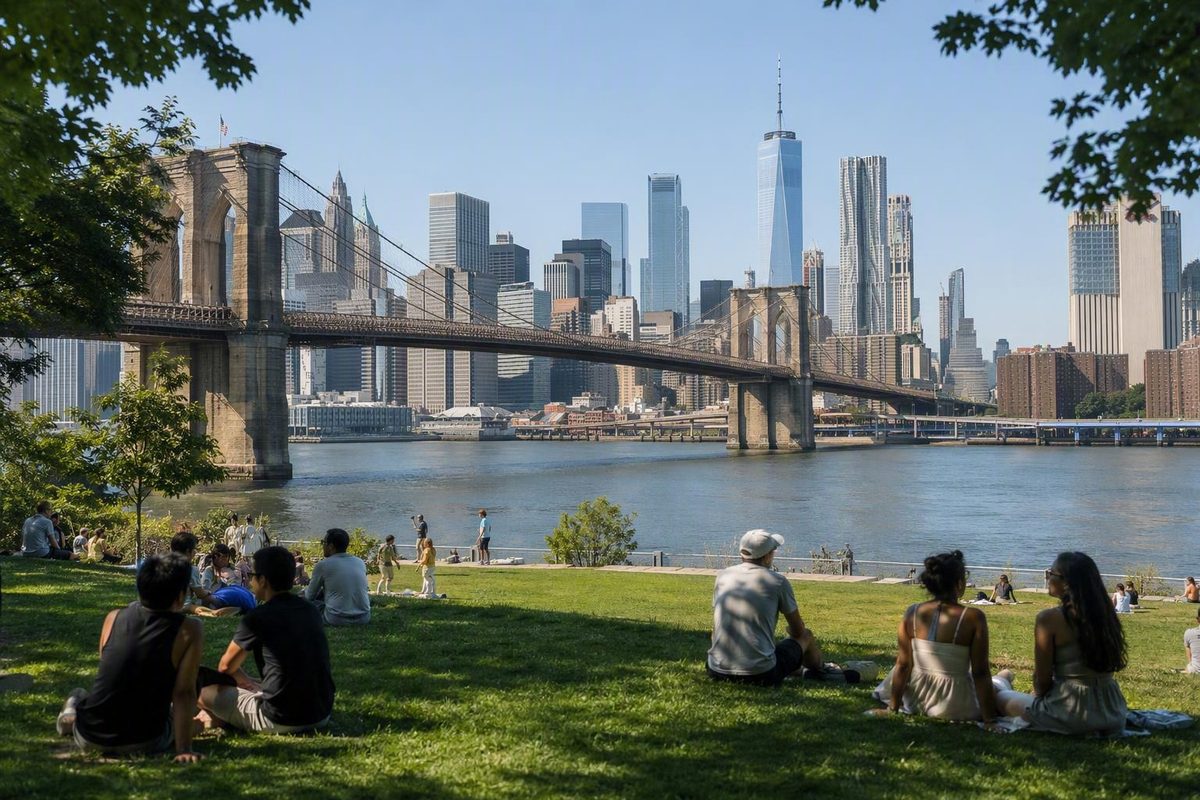
Start by choosing a Brooklyn cluster, not a borough-wide checklist
Brooklyn is too large and varied to cover meaningfully in one day. A plan that jumps from the Brooklyn Bridge to Prospect Park, Williamsburg, and Coney Island may look efficient on a map, but it leaves little time to experience any neighborhood. The more practical approach is to choose one compact geographic cluster, combine its walks, cultural stops, parks, and food, and save distant areas for another outing.
This follows New York Know’s walking-focused planning method: group nearby sights into days that make sense on foot, reduce time spent crossing the city, and leave enough room to understand the neighborhood around the attractions.
For most visitors, the choice comes down to four primary clusters:
| Cluster | Choose it for | Natural components |
|---|---|---|
| Brooklyn Heights–DUMBO–Brooklyn Bridge Park | Landmark views and a practical first visit | Brooklyn Bridge, waterfront paths, Jane’s Carousel area, Washington Street, Brooklyn Heights Promenade |
| Brooklyn Museum–Brooklyn Botanic Garden–Prospect Park | Museums, gardens, picnics, and green space | Museum visit, garden walk, park time |
| Williamsburg–Greenpoint | Food, shopping, cafés, breweries, and nightlife | Vintage shops, galleries, waterfront parks, dinner, evening venues |
| Coney Island | Beach, boardwalk, amusements, and a contrasting side of Brooklyn | Boardwalk, rides or arcades, classic food, optional Brighton Beach extension |
Choose the waterfront cluster if recognizable views and a straightforward sequence matter most. Choose central Brooklyn if you want culture and green space in the same area. Choose Williamsburg and Greenpoint if eating, shopping, and going out matter more than major landmarks. Choose Coney Island when the beach-and-boardwalk experience is the purpose of the trip rather than an extra stop.
These are planning categories, not an objective ranking. The repeated appearance of DUMBO, Williamsburg, and Coney Island in visitor guides shows that they are commonly visited; it does not make any of them the correct choice for every traveler.
Interest-led alternatives can replace one of the four clusters. Bushwick may make more sense for street art, Fort Greene for current arts programming, Green-Wood for landscape and history, Sunset Park for a food-led exploration, or Red Hook for a less standard waterfront outing.
The important word is replace. A focused Bushwick afternoon will usually make more sense than using Bushwick as a brief transfer between Prospect Park and Williamsburg. Green-Wood or Sunset Park can become the center of a day instead of another pin added to an already crowded route.
Brooklyn Heights, DUMBO, and the waterfront: a practical first-visit cluster
This cluster combines several widely recognized Brooklyn views with a route that can remain largely on foot. A coherent sequence can include the Brooklyn Bridge, DUMBO, Brooklyn Bridge Park, the Jane’s Carousel area, the Washington Street view of the Manhattan Bridge, and the Brooklyn Heights Promenade.
The Brooklyn Bridge opened in 1883 and connects Manhattan with Brooklyn. A leisurely crossing with photography stops has been estimated at approximately 35–45 minutes, while individual pace and crowding can change the total (Chasing Lenscapes’ bridge itinerary).
For broader planning, allow roughly 30–60 minutes one way. A family guide estimates about 30 minutes for adults and 45 minutes with children and sightseeing stops, while another supplied account places a longer DUMBO-to-Lower Manhattan walk at approximately 45–60 minutes (Mommy Poppins’ family bridge guide).
Choose the bridge direction by what comes next
Neither direction is universally better.
- Manhattan to Brooklyn creates a natural arrival in DUMBO. After crossing, you can move toward the waterfront, eat, rest in the park, and continue toward Brooklyn Heights.
- Brooklyn to Manhattan keeps the Lower Manhattan skyline ahead for much of the crossing. It works well when Brooklyn is the beginning of the day and Manhattan is the destination afterward.
- Skip the crossing if a long, exposed walk would make the rest of the outing less enjoyable.
Some travel writers recommend early morning in the hope of lighter crowds, while another supplied guide reports that the bridge can remain busy even early or late. Morning is a strategy, not a guarantee. Sunset can bring changing light over the skyline, but it may also attract more walkers and photographers.
Access depends on the entrance. The supplied guides describe both ramp and stair approaches, so stroller and wheelchair users should identify the exact entrance they intend to use and confirm its current condition before departure. Do not assume that a general statement about the bridge applies to every approach.
The family guide reports that there are no bathrooms on the bridge and identifies Brooklyn Bridge Park’s Pier 1 as a nearby Brooklyn-side option. Because facilities can close or change, confirm availability before relying on it—especially when traveling with children or anyone who needs predictable restroom access.
A practical waterfront sequence
If you cross from Manhattan, descend toward DUMBO and use the Washington Street view as a brief photography stop rather than the center of the outing. The street remains part of an active neighborhood, and other visitors may be trying to take the same photograph.
From there, move toward the waterfront and Brooklyn Bridge Park. The Jane’s Carousel area is a useful orientation point even if you do not plan to ride. It places you near waterfront views, park paths, seating, and connections to the rest of DUMBO. If the carousel matters to your group, confirm its current schedule, ticketing, and access arrangements before promising a ride.
DUMBO works best as a compact combination of waterfront walking, bridge photography, restaurants, boutiques, and park space. It is visually distinctive, but it is not a complete picture of Brooklyn. Allow enough time to move beyond its busiest photography locations.
From the park, continue toward the Brooklyn Heights Promenade for an elevated perspective across the harbor and Lower Manhattan. For a longer day, begin farther south in Cobble Hill or Brooklyn Heights and let the promenade lead toward the park and DUMBO.
If you cross from Brooklyn into Manhattan, you can finish around Lower Manhattan rather than retracing your route. A walking-first Lower Manhattan plan can help turn the crossing into the beginning of a second compact neighborhood walk instead of another disconnected transfer.
Lower-walking variation
Arrive directly in DUMBO rather than crossing the bridge. Complete a short loop through the Washington Street area, the waterfront, and the Jane’s Carousel surroundings. Sit in the park, have a meal, and leave by subway or ferry instead of adding both the promenade and bridge.
This version preserves much of the cluster’s visual appeal while reducing distance and weather exposure. It does not remove every access issue: confirm live station-elevator status, ferry service, slopes, stairs, and restroom availability for the exact route you plan to use.
Brooklyn Museum, Brooklyn Botanic Garden, and Prospect Park: culture and nature in one area
Brooklyn Museum, Brooklyn Botanic Garden, and Prospect Park form a compatible central Brooklyn cluster. They are close enough to build a coherent day, but each can absorb substantial time. The most comfortable plan usually treats two as primary stops and the third as optional.
Brooklyn Museum holds broad permanent collections covering local and international art and also hosts temporary exhibitions. Do not build a trip around an exhibition mentioned in an older guide: temporary shows change. Check the museum’s current calendar, opening status, admission arrangements, coat-check rules, and accessibility information before visiting.
The museum can be a useful rain, cold, or extreme-heat option, but it should not be treated as an automatic fallback without checking its current status. A closure day, timed-entry policy, or sold-out program can still affect the plan.
Brooklyn Botanic Garden is described as a 52-acre site with multiple garden environments, including Japanese and rose gardens (Visit Brooklyn’s parks and culture guide). The experience changes substantially by season. Cherry blossoms, roses, and other floral displays have limited, weather-sensitive periods, so no particular bloom should be guaranteed.
Confirm current conditions, opening hours, admission, reservations, and area closures directly with the garden. A visit outside peak flowering periods can still offer landscape and plant collections; it simply should not be presented as the same experience as a seasonal display.
Prospect Park provides the flexible part of the cluster. It can support a short walk, a picnic, or several hours outdoors. Named areas in the supplied evidence include Long Meadow, the wooded Ravine, and Nethermead. Select one based on your route and available time rather than trying to connect every landscape in a single visit.
Three ways to pace the cluster
Culture-focused visit: museum plus garden
Begin with the museum while your attention is fresh, then move to the garden for a slower outdoor finish. This works for travelers who want two substantial institutions and do not mind planning around two admissions. Keep Prospect Park optional.
Mostly outdoor day: garden plus park
Use the garden as the structured attraction, then move into Prospect Park for walking or a picnic. This provides variety without requiring a second museum-length visit. It is more suitable in mild weather than during rain, high heat, or strong wind.
One paid venue plus a relaxed walk
Choose either the museum or garden and leave the rest of the day open for the park. This is the easiest version to shorten and the simplest for a limited budget or slower pace.
Do not copy admission prices from undated itineraries or old travel articles. Prices, suggested-admission arrangements, discounts, and timed-entry policies can change. Check the selected venue for the date and visitor category that apply to you.
Williamsburg and Greenpoint: food, shopping, breweries, and an evening by the river
Williamsburg and Greenpoint work well as an afternoon-to-evening cluster because their appeal comes from neighborhood walking rather than one dominant attraction. Instead of scheduling every hour, choose a loose sequence: shopping or galleries first, food and waterfront time later, then an optional brewery, bar, performance, or other evening venue.
Recurring activities include:
- looking for street art and visiting galleries;
- stopping at independent cafés;
- browsing vintage and specialty shops;
- walking through waterfront parks;
- visiting a seasonal food market;
- trying a brewery or taproom;
- having dinner before a cocktail bar, performance, or nightlife venue.
L Train Vintage, Awoke Vintage, and Beacon’s Closet are examples that have appeared in visitor recommendations. Treat them as starting points rather than fixed itinerary anchors: shops can move, close, or change hours and inventory.
A practical flow is to start while retail and gallery spaces are more likely to be open. Choose one or two shopping streets or a small group of galleries rather than zigzagging across both neighborhoods. Pause at a café, move toward the river later in the day, and finish with dinner. Decide only then whether you still want an evening venue.
Domino Park is one Williamsburg waterfront option. A supplied visitor guide describes amenities including a playground, dog run, volleyball court, and playing field, but access to a particular facility or program can change (Anoushka Probyn’s Brooklyn activity guide).
Smorgasburg can be a food-market possibility, not a guaranteed stop. Its operating dates, days, locations, and vendor lineup are seasonal and can change. Confirm the organizer’s current calendar for your travel date. If the market is not operating, choose a neighborhood restaurant rather than abandoning the cluster.
Brooklyn Brewery, Other Half Brewing, Wild East Brewing, and Threes Brewing illustrate the brewery and taproom scene represented in the supplied guides. Their inclusion does not establish that every location, tour, tasting, or taproom remains available. Check each business for current addresses, age policies, reservations, events, and service format.
North Brooklyn is particularly suitable when food and evening plans are meant to shape the route. It is less suitable for someone who wants several major museums or historic landmarks in one compact day. That is a planning distinction, not a judgment about authenticity: Williamsburg and Greenpoint represent their own neighborhoods, not the entire borough.
Coney Island: make the beach and boardwalk a separate outing
Coney Island offers a contrasting Brooklyn experience centered on the beach, boardwalk, amusement attractions, arcades, midway games, and classic food. Its character and location make it better suited to a dedicated half or full day than to the end of a DUMBO, Williamsburg, or Prospect Park itinerary.
The Cyclone and Wonder Wheel are two longstanding amusement landmarks. The supplied evidence describes the Wonder Wheel as having both fixed and sliding cars, creating different ride experiences. The same account dates Nathan’s Famous at Coney Island to 1916 (Travel Nation’s Coney Island account).
A named attraction is not necessarily an operating attraction on the date of your visit. Beach use, amusement rides, arcades, and individual vendors may be seasonal or affected by weather and maintenance. Check the relevant operators before traveling.
Decide what kind of Coney Island day you want
For a beach-led visit, make the sand and boardwalk the principal activities. Confirm current beach conditions and any operational restrictions before planning time in the water.
For an amusement-led visit, identify the rides or arcades that matter most and confirm their operating calendars, ticket rules, height requirements, accessibility, and weather policies. Individual amusements may not share identical hours.
For a low-commitment visit, walk the boardwalk, eat, and choose rides or games only after seeing what is open. This reduces the risk of organizing the entire day around one seasonal attraction.
Brighton Beach can be an extension for visitors who still have time and energy. Treat it as optional rather than an automatic continuation. Additional walking, weather exposure, and the return journey may be more than some travelers want after several hours at Coney Island.
Before leaving, check current transit service, station accessibility, operating calendars, and ticket requirements. Do not rely on an old blog’s exact subway line or journey estimate: service changes, weekend work, station access, and your starting point can alter the practical route.
Most importantly, let Coney Island replace another major cluster. Combining it with the Brooklyn Bridge waterfront or North Brooklyn usually turns the day into a chain of transfers with little room for delays or rest.
Beyond the standard circuit: art, history, food districts, and unusual stops
Brooklyn’s familiar visitor circuit is only a starting point. If bridges, waterfront photographs, and amusement rides do not match your interests, build the day around another theme.
The supplied evidence is stronger for northern and central Brooklyn than for many southern and eastern neighborhoods. The suggestions below are therefore interest-led alternatives, not a claim of borough-wide completeness.
Bushwick for street art and galleries
Bushwick can anchor an art-focused outing. Murals may appear on working businesses and residential streets rather than in a purpose-built outdoor museum. Stay on public routes, avoid blocking entrances or loading areas, and do not treat residents or workers as part of a photograph.
Murals can be painted over, while galleries can change programs or locations. Rather than depending on an old “definitive” mural route, look for current gallery listings or choose a guided art walk if interpretation matters to you.
Fort Greene for current cultural programming
BRIC Arts Media is an evidence-supported cultural lead for Fort Greene. The value of a visit depends on what is happening that day, so check its current program for exhibitions, performances, screenings, or public events.
If nothing aligns with your schedule, use Fort Greene as the beginning of a neighborhood walk rather than forcing a venue into the itinerary.
Green-Wood for landscape, architecture, and history
Green-Wood Cemetery can appeal to visitors interested in historic landscapes, architecture, memorial art, or a slower outdoor walk. It is substantial enough to become the central stop in a day.
Confirm current entrances, visitor rules, hours, tours, terrain, and accessibility before going. Pair it with one nearby meal or neighborhood walk rather than treating it as a quick detour between distant attractions.
Sunset Park for food-led exploration
The supplied evidence points to Asian food as one reason visitors explore Sunset Park. That is a planning theme, not a current restaurant list.
Research options according to the cuisine, dietary needs, and price range you want. Choose one anchor restaurant or bakery and leave time to explore nearby rather than scheduling several full meals.
Red Hook for a less standard outing
Red Hook is worth researching if you want an alternative to Brooklyn’s standard sightseeing circuit. The evidence here is not detailed enough to support a stop-by-stop itinerary, and transportation deserves particular attention.
Treat Red Hook as a primary destination, not a casual add-on. Confirm transit or ferry options, venue hours, and walking conditions before deciding whether it fits your day.
New York Transit Museum for an indoor alternative
The New York Transit Museum is a distinctive indoor option associated with historic subway cars. A museum built around historic transit equipment may raise venue-specific access questions, so confirm current ticketing, entry procedures, hours, age guidance, and accessibility before visiting (Atlas Obscura’s Brooklyn guide).
Unusual Brooklyn ideas
Brooklyn Superhero Supply Company, Sunshine Laundromat, House of Wax, Robotic Church, and Bellocq Tea Atelier have appeared in unusual-attraction guides. Before visiting, verify that each is still operating, open to the public, suitable for your group, and located where you expect. Some unusual venues may function primarily as shops, bars, event spaces, or appointment-based destinations rather than conventional attractions.
Ready-made Brooklyn plans for a half day, one day, or two days
These plans are intentionally modular. Each includes an optional component that can be removed when weather, fatigue, queues, or appetite changes the day.
Half-day waterfront plan
- Cross the Brooklyn Bridge or arrive directly in DUMBO.
- Walk through DUMBO to Brooklyn Bridge Park.
- Pause around Jane’s Carousel and the waterfront viewpoints.
- Continue toward the Brooklyn Heights Promenade.
- Optional: add the Washington Street Manhattan Bridge photograph if it does not require inconvenient backtracking.
If you arrive from Manhattan and plan to spend the rest of the outing in Brooklyn, Manhattan-to-Brooklyn creates the cleaner flow. If you plan to finish in Lower Manhattan, reverse the direction.
Lower-walking half-day variation
- Arrive directly in DUMBO using a currently suitable transit option.
- Complete a compact loop covering the waterfront and Jane’s Carousel area.
- Choose one place to sit, eat, or have a drink.
- Leave by transit instead of crossing the bridge.
- Optional: add Washington Street only if the distance, surface, and crowd conditions suit your group.
This variation reduces distance but does not eliminate all access issues. Check elevators, ferry boarding, slopes, stairs, and restroom availability individually.
One-day waterfront plan
- Begin in Cobble Hill or Brooklyn Heights.
- Walk toward the Brooklyn Heights Promenade.
- Continue toward Brooklyn Bridge Park.
- Stop for lunch or a longer rest along the waterfront.
- Explore DUMBO and the Washington Street area.
- Cross the Brooklyn Bridge or leave by transit.
- Optional: add a longer Cobble Hill walk at the beginning, not at the end.
A published itinerary uses a similar geographic sequence through Cobble Hill, Brooklyn Heights, Brooklyn Bridge Park, and DUMBO rather than attempting to cover all of Brooklyn in one day (Vivere New York’s one-day route). Your version need not copy its restaurants, mileage, or transit instructions.
One-day culture plan
- Choose Brooklyn Museum or Brooklyn Botanic Garden as the first major stop.
- Visit the second venue only if you genuinely want two substantial admissions.
- Eat before entering Prospect Park or carry a suitable picnic.
- Add a park walk based on time, weather, and mobility.
- Optional: choose one named park area, such as Long Meadow or the Ravine.
If the museum and garden fill the day, skip the park without treating the itinerary as incomplete.
One-day North Brooklyn plan
- Start with shops, street art, or galleries in Williamsburg.
- Stop at a café rather than scheduling an early full meal.
- Move toward a waterfront park later in the afternoon.
- Continue into Greenpoint or remain in Williamsburg for dinner.
- Add one brewery, bar, performance, or other evening venue.
- Optional: visit a seasonal food market if it is confirmed for that date.
This is the most flexible itinerary, but shops, markets, breweries, and events require more current checking than established parks or museums.
Two-day first-visit plan
Day one: Brooklyn Heights, DUMBO, Brooklyn Bridge Park, and either a bridge crossing or the promenade.
Day two: choose one of the following:
- Brooklyn Museum, Brooklyn Botanic Garden, and limited Prospect Park time;
- Williamsburg and Greenpoint for food, shopping, waterfront time, and nightlife;
- Coney Island for the beach, boardwalk, amusements, or arcades.
Coney Island replaces the central or North Brooklyn cluster; it should not be squeezed onto the end of either.
Do not lock these itineraries to exact transfer times. Check live routing shortly before departure and again when leaving a major venue.
Plan for cost, weather, seasonality, mobility, and changing details
Evidence reviewed: August 18, 2026. This date reflects editorial review of the supplied material, not same-day confirmation of every venue, transit service, facility, or business. Operational details should still be checked for the date of your visit.
Free and generally low-cost ideas
Supplied visitor guides identify bridge walking, waterfront parks and promenades, neighborhood exploration, street-art viewing, Prospect Park, and seasonal beach time as free or relatively low-cost possibilities. One published waterfront route describes most of its walking as free apart from optional food, drinks, and the carousel.
“Free” applies to the core activity, not necessarily the entire outing. Transportation, food, rides, rentals, concessions, special events, and particular facilities may still cost money.
For a limited-budget day, choose one paid anchor at most. Pair a museum or garden with a park, or skip ticketed attractions and combine the bridge, waterfront, promenade, and neighborhood walking.
Indoor fallbacks
Brooklyn Museum and the New York Transit Museum are the clearest indoor alternatives in this guide. Current galleries, cinemas, shops, food venues, and unusual attractions may also work after their operating status has been confirmed.
Keep the fallback near the original cluster. Replacing a rainy DUMBO walk with an indoor venue in a distant neighborhood can create more inconvenience than it solves. Before the day begins, identify one nearby café, gallery, shop, or museum that could absorb an hour or two.
Family planning box
Before visiting with children
- Choose a route shorter than the adults’ maximum walking distance.
- Identify playgrounds, seating, food stops, and restrooms in advance.
- Confirm Jane’s Carousel hours and tickets before promising a ride.
- Expect bridge crowds and keep children close.
- Prepare for sun, wind, rain, cold, and limited shade.
- Bring water and allow time for food and sitting.
- Remember that the supplied family guide reports no bathrooms on the bridge.
- Supervise children closely around traffic, stairs, waterfront edges, ride areas, and crowded photography locations.
Mobility and access
Brooklyn cannot be labeled simply accessible or inaccessible. Suitability depends on the exact entrance, station, surface, vehicle, and venue.
For each route, confirm:
- whether the intended bridge approach uses a ramp or stairs;
- whether required station elevators are operating;
- whether ferry boarding meets the traveler’s needs;
- the condition and slope of park and neighborhood surfaces;
- step-free venue entry;
- accessible restrooms;
- seating and rest opportunities;
- wheelchair, mobility-device, and stroller policies.
A lower-walking route can still contain difficult stairs. Conversely, a longer route may be manageable if it has reliable ramps, smoother surfaces, seating, and suitable transit at both ends. Assess the complete route rather than only the attraction.
Separate enduring places from volatile recommendations
Bridges, major parks, established museums, and the botanic garden are enduring planning anchors, although their access, hours, and policies can still change.
Restaurants, bars, shops, breweries, markets, temporary exhibitions, festivals, and special events are more volatile. Verify them close to the visit and keep an alternative nearby. Date any price, schedule, or operating claim saved in your planning notes.
Check the relevant official source for:
- current hours and closures;
- admission and timed entry;
- reservations;
- transit service and elevator status;
- ferry routes and schedules;
- accessibility;
- seasonal beach and amusement operations;
- market, festival, and exhibition dates.
A paid tour can be useful when you want structured interpretation of food, history, architecture, cycling, art, or brewing. Compact clusters can also be explored independently. The value of a tour lies in its organization and context, not simply in moving between attractions.
Commercial marketplaces list Brooklyn walking, food, cycling, brewery, architecture, art, and history tours, but displayed ratings, review counts, discounts, and starting prices are snapshots rather than stable measures of quality or final cost (Tripadvisor’s Brooklyn activity marketplace). Check what is included, group size, cancellation terms, accessibility, taxes, and gratuities before booking.
Frequently asked questions about things to do in Brooklyn
What are the best things to do in Brooklyn for a first visit?
A practical first-visit cluster is Brooklyn Heights, DUMBO, and Brooklyn Bridge Park. Combine a Brooklyn Bridge crossing—or direct arrival in DUMBO—with waterfront walking, the Jane’s Carousel area, the Washington Street Manhattan Bridge view, and the Brooklyn Heights Promenade.
It is not the only worthwhile choice. Select Brooklyn Museum, Brooklyn Botanic Garden, and Prospect Park if culture and green space matter more than skyline views. Choose Williamsburg and Greenpoint for food, shopping, and nightlife, or dedicate the day to Coney Island for the beach and boardwalk.
Can I see Brooklyn in one day?
You can have a satisfying Brooklyn day, but you cannot meaningfully cover the entire borough. Choose one primary cluster and, at most, one immediately adjacent area.
A first-time day might remain entirely between Brooklyn Heights and DUMBO. A culture day can stay around the museum, garden, and Prospect Park. A North Brooklyn day can combine Williamsburg and Greenpoint. Coney Island should generally stand alone.
When should I walk the Brooklyn Bridge, and how long does it take?
Allow approximately 30–60 minutes one way. A fast walker in light conditions may need less time than a family, photographer, or visitor navigating heavy crowds. Weather and mobility also affect the total.
Early morning may bring lighter crowds, but quiet conditions are not guaranteed. Sunset offers changing light but can be busy. Choose Brooklyn-to-Manhattan if you prefer the Lower Manhattan skyline ahead; choose Manhattan-to-Brooklyn if you want the crossing to lead naturally into DUMBO.
What can I do in Brooklyn for free or on a limited budget?
Build the day around the Brooklyn Bridge, Brooklyn Bridge Park, the Brooklyn Heights Promenade, Prospect Park, neighborhood walking, or street-art viewing. Seasonal beach time may also fit a limited budget when access and conditions permit.
Food, transit, rides, special events, and concessions can still cost money. The simplest budget strategy is to choose public outdoor spaces and add only one paid venue, tour, or meal that matters to you.
What are good Brooklyn activities for a rainy or cold day?
Start with Brooklyn Museum or the New York Transit Museum, subject to current hours, tickets, and accessibility. Current gallery programs, cinemas, shops, food venues, and verified unusual attractions can provide additional indoor options.
Keep the backup geographically practical. If rain disrupts a waterfront day, choose an indoor stop near Downtown Brooklyn or DUMBO rather than crossing the borough unnecessarily.
Choose the Brooklyn experience you value most: waterfront landmarks, museums and gardens, North Brooklyn food and nightlife, Coney Island, or a less standard neighborhood. Build the day around that single cluster.
A shorter route with time to walk, eat, rest, and notice the neighborhood will usually be more practical than collecting distant attractions. Before leaving, verify current transit, access, hours, tickets, and seasonal operations.