 New York Know
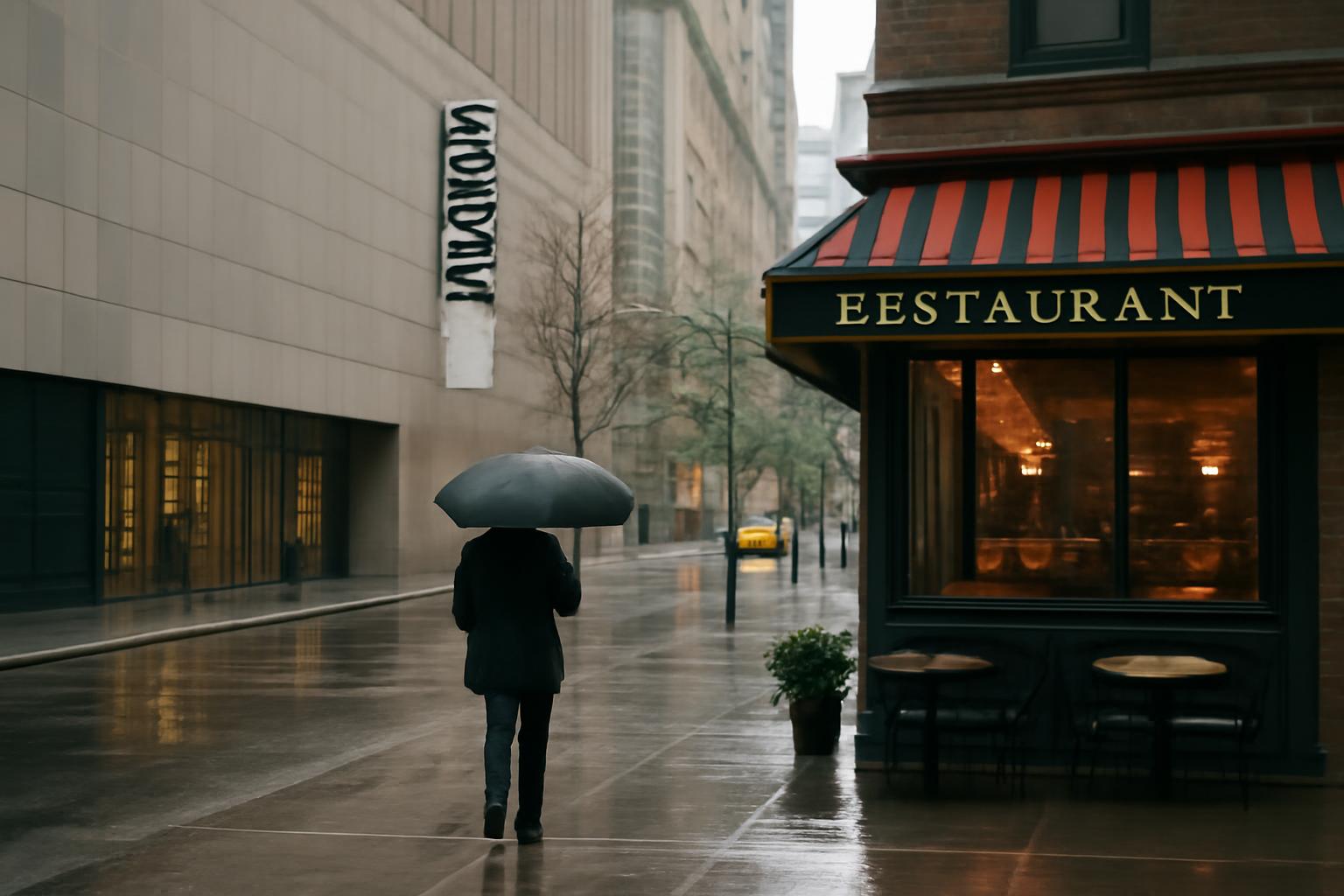
The most useful rule for deciding what to do in NYC when it rains is straightforward: choose one substantial indoor attraction, one nearby meal, and one specific backup. Do not try to preserve an outdoor-heavy itinerary by replacing every park, bridge, viewpoint, and walking tour with an indoor stop in a different neighborhood.
A rainy day becomes tiring when it is spent navigating wet sidewalks, busy station entrances, uncertain connections, and unfamiliar blocks between reservations. A better plan goes deeper in one area.
No itinerary is completely rain-proof. An indoor attraction may still require an exposed walk, an outdoor queue, or a transit connection affected by current conditions. The goal is not to avoid every raindrop; it is to reduce avoidable friction.
This guide is primarily Manhattan-focused because the most strongly supported clusters in the available material are there. The same planning method works elsewhere: choose a worthwhile anchor, keep the meal close, and identify a backup before leaving.
Start with the weather, then choose one strong indoor anchor
Begin by checking more than the chance of rain. Intensity, duration, wind, cloud level, and transportation conditions should determine how compact the day needs to be.
- Intermittent or light rain: Short neighborhood links can remain reasonable with suitable rain gear. You might connect a museum to a nearby restaurant or browse several galleries in one district.
- Sustained heavy rain: Choose one building or compact complex that can occupy several hours. Add food inside or very close to it, then remove unnecessary transfers.
- Fog or low cloud: Replace observation decks with a museum, performance, class, cinema, food hall, or indoor recreation. An enclosed viewing room does not restore a skyline hidden by cloud.
- Significant disruption: Reduce the route again. A meal near your accommodation, a local cinema, or one nearby venue may be more workable than continuing across the city.
Use three reliability labels when comparing options:
- Sheltered-core: The principal experience takes place mainly indoors, although reaching it may involve rain.
- Partly exposed: The venue, queue, transfer, or experience includes meaningful outdoor elements.
- Visibility dependent: The attraction’s main value relies heavily on clear views.
This method also reflects New York Know’s stated planning approach: group sights by area, build days that make sense on foot, and spend less time repeatedly crossing the city.
Quick comparison of rainy-day choices
The budget bands below are planning categories, not quoted prices. Potentially low covers no-admission or possibly free activities; standard means a conventional attraction ticket or paid activity; higher includes experiences where premium tickets, food, drinks, or add-ons can substantially increase the total. Verify the current final cost before booking.
Booking risk is also a planning judgment rather than a guarantee of availability.
| Activity | Neighborhood | Likely time commitment | Audience fit | Booking risk | Budget band | Indoor-reliability label |
|---|---|---|---|---|---|---|
| American Museum of Natural History | Upper West Side | Roughly 3–4 hours (Tall Girl Big World) | Families; science, animal, and natural-history interests | Moderate | Standard | Sheltered-core |
| The Met | Upper East Side | Several hours, depending on selected galleries | Art, history, and first-time visitors | Moderate | Standard | Sheltered-core |
| MoMA | Midtown | Pace dependent | Modern-art interests, solo visitors, and couples | Moderate | Standard | Sheltered-core |
| 9/11 Memorial & Museum | Lower Manhattan | Roughly 3–4 hours (Mommy Gearest) | Visitors interested in recent history and prepared for difficult subject matter | Moderate to high | Standard | Sheltered-core |
| Broadway show | Theater District | Confirm the chosen production’s running time | Couples, families, and theater fans | High | Higher | Sheltered-core |
| Color Factory | SoHo | Around 60–90 minutes (GetYourGuide) | Groups, families, and interactive-experience fans | Moderate to high | Higher | Sheltered-core |
| Chelsea galleries | Chelsea | Flexible | Art browsing and budget-conscious visitors | Low to moderate | Potentially low | Partly exposed |
| Chelsea Market | Chelsea | Flexible meal and browsing stop | Food groups and mixed interests | Low to moderate | Flexible | Sheltered-core |
| Grand Central Terminal | Midtown East | Flexible short stop | Architecture, food, and compact plans | Low | Potentially low | Sheltered-core |
| Chelsea Piers activity | Chelsea | Activity dependent | Active travelers, families, and groups | Moderate to high | Higher | Partly exposed |
| Observation deck | Midtown or Lower Manhattan | Ticket and venue dependent | Skyline-focused visitors | Moderate to high | Higher | Visibility dependent |
| Cinema | Various | Film dependent | Flexible schedules, solo visitors, and couples | Low to moderate | Standard | Sheltered-core |
Treat every time estimate as a planning range, not a promise. Security, crowds, exhibitions, arrival procedures, and personal pace can change the actual commitment.
Museums that can anchor several hours indoors
A museum works best as a rainy-day anchor when its subject matches the group. Size alone does not make a museum the right choice.
The American Museum of Natural History is a substantial family-oriented option. Dinosaurs and the life-size whale model are recognizable highlights, and the collection can support a multi-hour visit. It is especially useful when children or adults want science, animals, and natural history rather than a conventional art museum. Rain may bring larger family crowds, particularly around popular displays, so arriving near opening can make the visit easier.
The museum has both general exhibits and experiences that may require different ticket arrangements. Check its official website before departure for current admission rules, entry procedures, and what the selected ticket includes.
The Metropolitan Museum of Art is the broad art-and-history choice. Its collections cover more than 5,000 years, which is why “seeing The Met” should not mean trying to complete the entire building in one day (Tripadvisor). Choose two or three areas that genuinely interest you, allow time to pause, and leave without treating unopened galleries as a failure.
Popular exhibitions may have access arrangements different from general admission. Confirm what is included before building the rest of the day around a particular exhibition.
MoMA is a more focused choice for visitors primarily interested in modern art. Works named in the supporting material include Monet’s Water Lilies, Warhol’s Campbell’s Soup Cans, and Matisse’s The Dance (Where to Nau). It may feel more manageable than an encyclopedic museum when you want a defined art visit, although crowds and current gallery access can still affect the experience.
The 9/11 Memorial & Museum can serve as the day’s main anchor, but its subject matter is emotionally intense. That distinction matters when selecting an activity for a mixed group. It may be meaningful for visitors interested in recent history, but it is not interchangeable with a light afternoon of art, food, or entertainment. Follow it with a quiet meal or unstructured break rather than another demanding reservation.
The Guggenheim Museum combines an art visit with an architectural experience centered on its atrium and spiral walkway. It can suit visitors who care about the building and movement through it as much as individual works.
For something smaller, consider Neue Galerie, which focuses on Austrian and German art and includes Gustav Klimt’s portrait of Adele Bloch-Bauer I. Café Sabarsky adds an Austrian café experience to the visit, but a table may involve a queue. The Morgan Library & Museum is another cultural alternative when you want a more contained stop rather than a huge institution.
There is no universally best rainy-day museum:
- Choose the American Museum of Natural History for dinosaurs, science, natural history, and a substantial family-oriented visit.
- Choose The Met for maximum breadth across art and history.
- Choose MoMA for a more concentrated modern-art experience.
- Choose the 9/11 Memorial & Museum when the group is prepared for emotionally difficult recent history.
- Choose the Guggenheim when architecture is part of the appeal.
- Choose Neue Galerie or the Morgan when a smaller cultural stop better suits your energy.
Once you have selected the museum, avoid adding another major institution across town. One deep visit, a nearby meal, and a flexible backup are usually enough.
Museum-free choices: Broadway, comedy, jazz, movies, and live events
Visitors who do not want another museum still have several strong indoor tracks: Broadway, comedy, jazz, cinemas, concerts, arena events, and live television tapings.
A Broadway performance can serve as a fixed two-to-four-hour anchor, depending on the production. Confirm the running time, start time, intermission information, and entry procedures for the chosen show. Show lotteries and TKTS booths are possible ticket approaches, but neither price nor availability should be assumed (Family Travel Magazine). A lottery is an opportunity, not the foundation of a dependable itinerary.
Comedy works particularly well as an evening plan. It is less useful as an all-day anchor, so combine it with dinner or another compact activity in the same area. Check the selected club’s current age rules, minimum-purchase policy, performance length, and seating procedure before booking.
For jazz and cocktails, Bemelmans Bar is a distinctive example. It is in the Carlyle Hotel and is known for Ludwig Bemelmans murals, evening piano, and later jazz. The available guidance also warns of cover charges at relevant times and comparatively expensive drinks, so do not treat it as a low-cost drop-in (May Cause Wanderlust).
Red Rooster’s Sunday Gospel Brunch combines a meal and performance in a downstairs venue. Because it can be popular, it is better suited to advance planning than to an improvised same-day fallback.
Angelika and Village East are downtown examples associated with arthouse or independent-film programming, but the current screening schedule matters more than the venue name. A movie can be a practical fallback when an immersive attraction sells out or a long museum visit no longer appeals.
For sports, concerts, and large-scale events, consult the current Madison Square Garden calendar rather than treating the building as a generic attraction. An arena event can be a firm anchor; a tour is a separate experience with its own schedule and admission arrangements.
A live television taping is more unusual but less dependable. Applications for some programs may be allocated by lottery, and standby admission is not guaranteed. Do not cancel a confirmed activity merely because you have applied for tickets.
A simple selection rule helps:
- Cinema: Choose it for schedule flexibility and a relatively easy same-day decision.
- Broadway, concert, or arena event: Choose it when you want a firm ticketed anchor around which to organize the day.
- Jazz or comedy: Use it as an evening plan paired with a nearby meal.
- Television taping: Treat it as a bonus if confirmed, never as the only plan.
Interactive attractions, classes, and active indoor play
Not every indoor experience requires quiet observation. Separate immersive attractions from physical recreation, then choose according to the group’s energy.
Immersive and interactive attractions
Color Factory is a multisensory SoHo attraction incorporating visual displays, sound, taste, smell, photo stations, and a ball pit. It works better as a shorter anchor followed by a nearby meal than as the basis of an entire sightseeing day.
ARTECHOUSE and ARTE Museum New York are digital-art alternatives. Choose them when the format appeals to you, not simply because the installations photograph well.
If a specific time is important, reserve it and identify a nearby untimed alternative rather than assuming same-day admission.
Puzzles, classes, and creative activities
An escape room is a timed, team-based puzzle experience. Themes and difficulty levels vary, making operator selection important. A room designed for experienced adult players may not suit a first-time family group.
Cooking classes, virtual-reality sessions, and board-game cafés offer different degrees of participation. A class provides structure but generally requires a fixed commitment. A board-game café may be more flexible, although reservations, game fees, table rules, and food requirements depend on the operator.
These options work best when selected for the group rather than used as interchangeable “indoor activities.” Someone who wants conversation and a meal may prefer a board-game café; someone who wants a structured shared challenge may prefer an escape room or class.
Physical recreation
Chelsea Piers is associated with indoor activities including bowling, climbing, skating, golf, swimming, and field sports. That does not establish that every activity is publicly available at all times or included in one pass. Verify the specific activity, booking arrangement, equipment requirements, and what the selected admission covers (Where to Nau).
Other museum-free categories include:
- Indoor mini golf
- Bowling
- Climbing
- Skating
- Virtual reality
- Cooking classes
- Board-game cafés
- Trampoline or movement facilities
For families, the range extends from hands-on science museums and creative classes to play spaces, trampolining, mini golf, and interactive exhibits. These categories cover very different energy levels, as reflected in Mommy Poppins’ family-oriented indoor guide.
Do not infer toddler, teen, height, footwear, health, or supervision suitability from the category alone. Check the selected operator’s current participation rules and accessibility information before booking.
Low-energy stops for food, architecture, books, shopping, and wellness
A rainy day does not have to revolve around a major attraction. Food halls, architecture, libraries, galleries, and wellness can support a slower plan.
Chelsea Market occupies a former Nabisco factory and contains food vendors, shops, and rotating retail or event spaces. It is useful for a meal and browsing, particularly when paired with another Chelsea activity. By itself, however, it is better treated as a flexible stop than as a complete sightseeing day.
Grand Central Terminal offers architecture, shops, restaurants, and a market in one recognizable indoor setting. Tours may be offered, but current schedules and booking arrangements require verification. You can also visit without turning the terminal into a checklist: look around, eat, and use it as the center of a short Midtown plan. These features of Chelsea Market and Grand Central are summarized in a broader rainy-day culture and architecture guide.
The Stephen A. Schwarzman Building of the New York Public Library is free to enter, and the supporting material describes exhibitions, programs, and tours. Ordinary visitors cannot borrow books there. Do not assume access to the Rose Main Reading Room, because visitor rules and tour windows can change.
In Lower Manhattan, the Oculus operates as both a World Trade Center transit hub and a retail destination. It can support browsing or a lower-intensity follow-up after the 9/11 Museum. That does not mean every arrival route, station entrance, or onward connection will be sheltered.
Eataly Flatiron is a food-focused option with restaurants, takeout counters, groceries, desserts, and pasta. It can work for a mixed group that wants several choices without committing to a formal multi-course meal.
Chelsea gallery browsing can be inexpensive, and many galleries may offer free entry. Yet “the galleries are free” is too broad a planning assumption. Check each gallery’s hours, admission policy, current exhibition, and appointment requirements. Because the links between galleries are outdoors, this is better suited to intermittent rain than to a day when you want to minimize every exposed transfer.
Other low-energy choices include:
- Afternoon tea
- Dim sum
- A long lunch
- Bookstore browsing
- A bathhouse or spa
- Hotel-based wellness
- A café paired with a library or architectural stop
If considering Wall Street Bath and Spa, limit expectations to the facilities supported by the available description: sauna, steam room, cold plunge, and an optional platza treatment. That account also warns that metal body piercings may become hot in high-temperature rooms, so confirm the facility’s current safety guidance before using them (May Cause Wanderlust).
Five neighborhood clusters that reduce unnecessary wet travel
A neighborhood cluster is not a promise of a covered route. Station entrances, building access, outdoor exposure, and service conditions vary. The purpose is to reduce distance and unnecessary transfers.
1. Upper West Side
Use the American Museum of Natural History as the main multi-hour anchor. Plan a meal nearby and keep the remainder of the day deliberately light.
A workable structure is:
- Arrive near museum opening.
- Focus on the exhibits that matter most to your group.
- Eat in the surrounding neighborhood.
- Use a nearby cinema, confirmed indoor play option, or hotel rest as the backup.
Do not schedule a distant Lower Manhattan or Brooklyn headline attraction afterward merely because it is indoors. The museum already provides enough substance for the day.
2. Midtown East and Midtown South
Begin at Grand Central Terminal, where architecture, food, retail, and transportation functions occupy the same complex. Then consider the Schwarzman Building as a cultural extension, subject to current visitor access.
SUMMIT One Vanderbilt should remain conditional. Its enclosed and immersive components do not remove its dependence on skyline visibility. If low cloud obscures the view, switch to the library, a cinema, a meal, or another sheltered-core experience rather than trying to justify an expensive ticket.
This is also a useful area for a short plan because Grand Central can function as the anchor, meal location, or fallback without requiring an ambitious itinerary.
3. Chelsea
Chelsea supports several energy levels:
- Browse a small set of preselected galleries.
- Eat at Chelsea Market.
- Reserve a specifically confirmed nearby immersive attraction.
- Book an individual Chelsea Piers activity for physical recreation.
These stops are not connected by a fully covered route. Choose two rather than trying to complete every category, and account for outdoor links.
Gallery browsing plus Chelsea Market creates a flexible, potentially lower-cost combination. A reserved recreation or immersive experience creates a firmer anchor, but it also makes timing and ticket conditions more important.
4. Lower Manhattan
Build the day around the 9/11 Memorial & Museum, then move to the Oculus or consider Brookfield Place as a lower-intensity follow-up. Keep the meal in the same general district.
The emotional character of the museum should shape what follows. Quiet food, rest, or unstructured browsing is generally more coherent than another dense historical attraction.
Some outdoor exposure may still be required depending on your route, entrance, and follow-up choice. Select the option that creates the least inconvenient transfer for your group rather than assuming the district forms one continuous indoor complex.
5. Theater District and Midtown West
Choose one fixed entertainment anchor:
- Broadway
- Comedy
- A cinema
- A Madison Square Garden event
Then eat in the same general area. Confirm the actual entrance before setting the route rather than assuming all attractions described as “Midtown” are adjacent.
Neighborhood coherence matters more in poor weather than collecting the largest possible number of attractions. Avoid exact walking-time promises: the practical route changes with entrances, mobility, crowds, construction, transportation conditions, and the intensity of the rain.
Tickets, crowds, budgets, and last-minute backups
Organize your choices by booking risk rather than making assumptions about walk-in access.
High booking risk
These are generally better selected in advance:
- Popular Broadway productions
- Major concerts and arena events
- Immersive attractions with timed entry
- Cooking and other scheduled classes
- Sunday Gospel Brunch
- Popular timed museum exhibitions
- Specific Chelsea Piers activities
Advance booking does not eliminate every problem. Read cancellation terms and confirm the exact time, entrance, and ticket type.
Moderate booking risk
These may have same-day availability, but it should not be assumed:
- General museum admission
- Comedy shows
- Jazz venues
- Escape rooms
- Mini golf
- Observation decks
- Guided architecture or terminal tours
- Spa and wellness appointments
If the preferred time matters, reserve it. If flexibility matters more, identify an untimed backup nearby.
Flexible candidates
Possible same-day fallbacks include:
- Cinemas, subject to current screening times
- The Schwarzman Building, subject to visitor access
- Chelsea Market or another food hall
- Grand Central browsing
- Selected Chelsea galleries
- The Oculus
- A long meal
- Hotel rest followed by an evening event
“Flexible” does not mean guaranteed. Hours, private events, screenings, capacity, and admission policies can change.
Broadway lotteries and television-taping applications belong in a separate category: opportunities, not plans. Do not leave the day empty while waiting for an uncertain result.
Major museums may become busier in wet weather, so arriving near opening is a reasonable strategy. If the forecast changes overnight, decide early rather than waiting until midday, when timed choices may be more limited.
Use budget bands, not fragile price lists
No-admission or potentially free: The Schwarzman Building, Grand Central architecture, and selected Chelsea galleries can keep admission costs low. Food, transportation, tours, or special exhibitions may still add expense.
Standard ticketed: General museum admission, cinema tickets, some comedy shows, and ordinary recreation bookings often fit this planning category, although actual totals vary by venue and date.
Higher-cost: Broadway, premium live entertainment, immersive attractions, observation experiences, wellness, classes, drinks at upscale music venues, and arena events can require a larger budget.
Do not treat a marketplace “from” price as an official or final amount. Dates, ticket types, taxes, fees, and demand can change the total. The same caution applies to ratings, availability messages, and “likely to sell out” labels.
Before leaving, verify:
- Official opening hours
- Ticket and timed-entry rules
- Closure or weather notices
- Age, height, clothing, and supervision restrictions
- Accessibility information relevant to your group
- Exhibition or activity availability
- Current subway and transportation conditions
- The correct entrance and arrival instructions
Ready-to-use rainy-day plans for two hours, half a day, or an evening
These are templates, not races. Remove stops when rain, fatigue, mobility needs, or transportation problems increase friction.
Two-hour Midtown plan
Anchor: Grand Central Terminal Meal: Inside the terminal or immediately nearby Optional extension: Schwarzman Building
Browse Grand Central’s architecture and indoor businesses, then have a meal, coffee, or snack without changing neighborhoods. If time and current visitor access allow, continue to the Schwarzman Building.
Do not promise yourself access to a particular reading room. Treat the library’s available public spaces and exhibitions as the extension.
If the weather worsens or the library is not practical, remain at Grand Central longer or finish after the meal.
Half-day Chelsea plan
Anchor: Selected galleries or a confirmed immersive attraction Meal: Chelsea Market Backup: Another nearby gallery, café, or flexible indoor stop
For a potentially lower-cost version, choose a small set of galleries and verify that they are open. For a firmer schedule, reserve a nearby immersive experience whose current address and admission arrangements you have confirmed.
Eat at Chelsea Market afterward. Keep the final part flexible rather than making a cross-town booking merely to fill another hour.
If energy remains, add one nearby stop. If an exposed transfer feels unpleasant, linger over food or return to your accommodation.
Family plan
Anchor: American Museum of Natural History Meal: Nearby Backup: Indoor play, cinema, or hotel rest
Use the museum as the day’s substantial activity, focusing on the exhibits that matter most to the family. Schedule a nearby meal rather than another major attraction.
Keep the backup flexible because children’s energy can change after a long museum visit. Do not promise a specific walk-in play space without checking its current capacity, age rules, and reservation requirements.
Lower Manhattan plan
Anchor: 9/11 Memorial & Museum Follow-up: Oculus or Brookfield Place Meal: In the same general district
Allow the museum to set the pace and recognize that its subject matter may be emotionally demanding. Follow it with food, browsing, or a quiet break rather than another intense reservation.
The route may still include outdoor exposure. Choose the follow-up requiring the least inconvenient transfer for your group.
Museum-free evening
Anchor: Broadway, comedy, jazz, cinema, or an arena event Meal: In the same neighborhood Backup: A current film screening or unreserved meal
Reserve one principal event and organize dinner around it. Do not combine a Broadway performance with distant pre-show sightseeing that creates arrival stress.
If using comedy or jazz as the anchor, verify current cover charges, minimum purchases, age rules, and start times. If the ticketed event falls through, use a nearby cinema or meal as the specific backup.
Foggy-day replacement plan
If you planned SUMMIT, Edge, the Empire State Building, or One World Observatory, check visibility before committing. Observation decks may have enclosed viewing areas, but fog and low cloud can substantially reduce the value of the skyline experience. One rainy-day guide specifically advises against One World Observatory when conditions are foggy or heavily rainy (Family Travel Magazine).
Replace the deck with:
- A museum
- A Broadway or comedy performance
- A cooking or creative class
- A cinema
- A food hall
- An immersive attraction
- Bowling, climbing, skating, or another indoor activity
These plans work because each has one clear center. A deeper day in one area is usually more workable than several disconnected indoor reservations.
What can adults do in NYC when it rains besides visiting a museum?
Adults can choose Broadway, comedy, jazz, cinema, concerts, arena events, escape rooms, cooking classes, bowling, climbing, indoor mini golf, board-game cafés, afternoon tea, dim sum, a spa, or a long meal.
For a dependable evening, reserve one show or event and eat nearby. For flexibility, choose a cinema or food hall. For a social activity, consider an escape room, class, bowling, or jazz venue.
Are NYC observation decks worth visiting in the rain?
Sometimes, but only when visibility remains adequate. Observation decks may include enclosed viewing areas, yet the main attraction is still the skyline. Fog, low cloud, and heavy rain can make the experience poor value.
Classify observation decks as visibility dependent, not sheltered-core. Check conditions shortly before booking or before the applicable cancellation deadline. If visibility is poor, replace the deck with a museum, performance, class, food hall, or indoor recreation.
What rainy-day activities work for families with children?
Strong family categories include the American Museum of Natural History, hands-on science museums, interactive attractions, indoor play spaces, cooking classes, bowling, climbing, mini golf, skating, trampolining, virtual reality, and children’s theater.
Choose according to energy level and attention span. A large museum can anchor much of the day, while mini golf or an immersive attraction may suit a shorter outing. Check each operator’s current age, height, footwear, health, and supervision rules rather than assuming every indoor activity suits every child.
Which rainy-day activities should I book in advance?
Prioritize advance booking for Broadway, popular immersive attractions, scheduled classes, Sunday Gospel Brunch, major arena events, escape rooms at a specific time, wellness appointments, and timed museum exhibitions.
General museum admission, comedy, jazz, and active recreation can also benefit from reservations when the forecast is poor. Treat Broadway lotteries, television-taping applications, and standby processes as uncertain opportunities rather than confirmed plans.
How can I minimize outdoor walking on a rainy day in NYC?
Choose one substantial anchor, a meal, and a backup in the same neighborhood. Use one main journey to reach the area, then avoid unnecessary cross-town moves. Check the exact entrance for each venue and station rather than relying only on the neighborhood name.
Useful clusters include the American Museum of Natural History and the Upper West Side; Grand Central and the Schwarzman Building; Chelsea galleries and Chelsea Market; the 9/11 Museum and the Oculus; or a Theater District show with a nearby meal.
Rain should narrow the route, not ruin the day. Choose one indoor experience with enough substance to justify the trip, keep food and a backup in the same area, and abandon visibility-dependent or partly exposed plans when conditions make them poor value. Verify current tickets, hours, access rules, and transportation conditions before leaving, then enjoy one neighborhood instead of spending the day crossing a wet city.