 New York Know
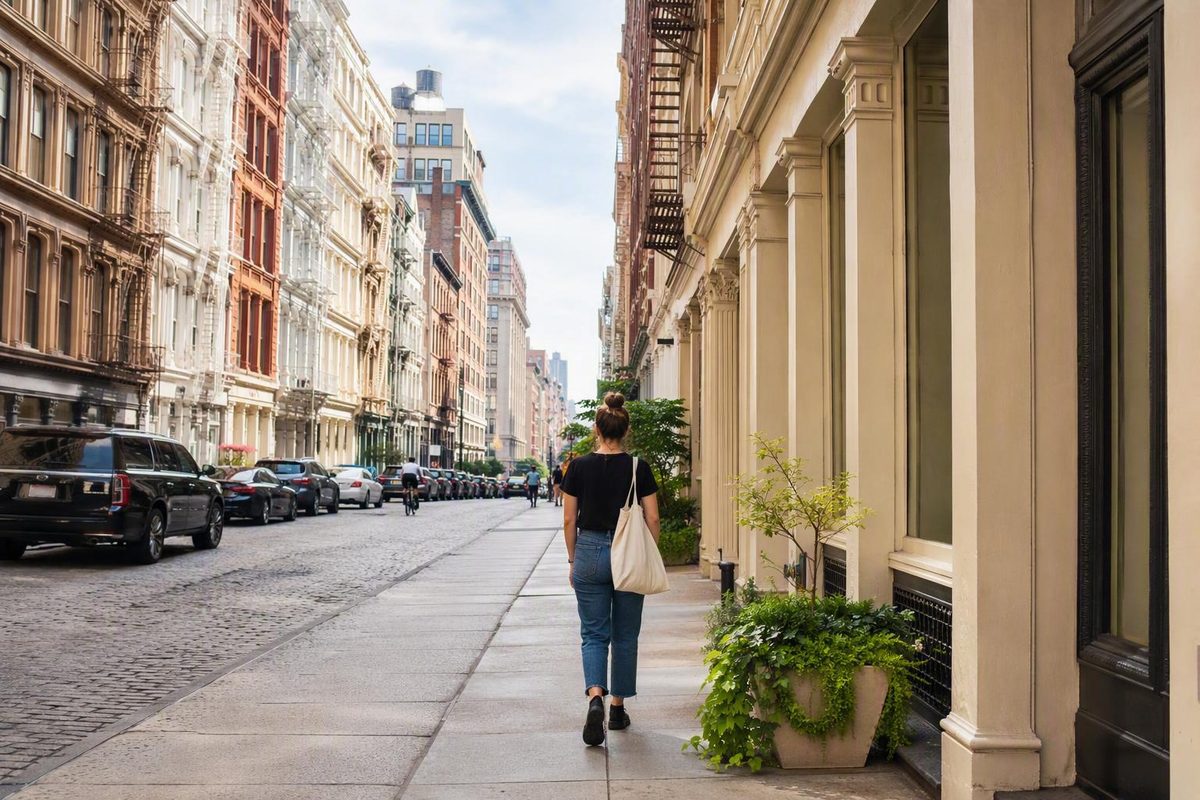
Start here: what counts as SoHo and what is worth prioritizing
This guide covers SoHo in Manhattan, not Soho in London. The name means South of Houston Street, and Houston is pronounced HOW-stin, not like the Texas city.
For planning, use Houston Street to the north, Canal Street to the south, Lafayette Street to the east, and West Broadway to the west as the working area. Published definitions vary: some put the eastern edge at Crosby Street and extend the western edge toward Sixth Avenue. That is why maps may disagree about whether a business is in SoHo or immediately beside it. A neighborhood overview explains the name, pronunciation, and competing boundary definitions.
The uncertainty matters less than it first appears. SoHo is compact, and its defining experience is not a chain of major monuments. It is a street-level walk through cast-iron facades, former industrial buildings, art spaces, bookstores, shops, and food stops.
For a first visit, prioritize four things:
- Walk the architecture streets, using Greene Street as the spine and adding short turns onto Mercer, Wooster, Broome, Prince, and Spring.
- Choose one cultural experience, such as The Drawing Center, the Judd Foundation, an established installation, or several galleries.
- Browse selectively, concentrating on one or two streets or store categories rather than attempting every retail corridor.
- Leave room for food or coffee somewhere that fits naturally into the route.
This approach works whether or not you care about shopping. Retail time can be replaced with an installation, gallery, bookstore, conventional museum, or slower architecture walk.
Nearby Nolita, NoHo, Chinatown, Tribeca, Greenwich Village, and Hudson Square can extend the day, but they are not part of the core SoHo route. Several frequently recommended venues lie just beyond the working boundary; those are labeled as adjacent extensions below.
The guiding principle is simple: group stops into a walkable area instead of crossing Manhattan repeatedly. That reflects New York Know’s stated approach to neighborhood-based trip planning.
Walk SoHo’s cast-iron streets before doing anything else
Use Greene Street as the main north–south spine. Beginning near Canal Street and moving north toward Houston creates a clear progression and reduces backtracking.
Treat this as an editorial route, not a timed promise. Traffic lights, photography, shopping, mobility needs, weather, and spontaneous stops can all change the pace.
From Canal Street:
- Walk north on Greene Street.
- Use Broome or Grand Street for a short eastern detour toward Broadway.
- Return west and continue north on Greene.
- Add a parallel section of Mercer or Wooster Street.
- Use Prince or Spring Street to reconnect with your next art, shopping, or food stop.
- Finish near Houston Street rather than retracing the entire route.
Broadway is useful for the Haughwout Building and major retailers, but it is generally busier than the side streets. If architecture is the priority, make Broadway a short detour rather than the main walk.
What to notice as you walk
Do not concentrate only on named landmarks. Much of SoHo’s architectural character comes from repeated features across several blocks:
- Slender cast-iron columns and decorated capitals
- Tall windows arranged in regular bays
- Projecting cornices and ornamental facade details
- Large openings associated with former manufacturing and commercial interiors
- Broad, loft-like building proportions
- Street-level loading and storefront openings
- Uneven Belgian-block paving on several side streets
The buildings are often more revealing as a group than as isolated photo stops. Repeated bays and large windows evoke their industrial and commercial past, while modern storefronts show how those structures were adapted for later uses.
The neighborhood moved from manufacturing and warehousing into an artists’ loft and gallery district before becoming a major shopping and dining destination. Artists occupied underused industrial lofts, and the resulting studios, exhibitions, and performances helped establish the cultural identity that preceded today’s retail-heavy SoHo.
Buildings to locate
Commonly cited architecture stops include:
- The Haughwout Building, at Broadway and Broome Street
- The King of Greene Street, at 72 Greene Street
- The Queen of Greene Street, at 28–30 Greene Street
- 80 Wooster Street
- The Little Singer Building
The Haughwout Building is the logical eastern detour. View it from the sidewalk near Broadway and Broome, then return toward Greene unless Broadway shopping is part of the plan. A commercial architecture guide identifies these buildings and also notes the uneven paving on Crosby, Mercer, Greene, and Wooster Streets. See its landmark list and paving notes.
Because the supplied evidence does not establish a precise address for the Little Singer Building, locate it on a current map before making it a required waypoint.
Photography without blocking the street
Look upward before stepping backward. Decorative columns, cornices, and window details are often above storefront level, where signs, displays, and crowds can draw attention away from the building.
Side streets may offer cleaner angles than Broadway, particularly when delivery vehicles are absent. Keep bags, tripods, and groups out of the pedestrian flow, and do not step into the roadway for a photograph.
Street art may appear along the route, but treat it as an incidental discovery. Murals can be repainted, obscured, or removed, just as gallery shows and pop-ups can change between visits.
Mobility and paving
Crossings may also be irregular. Stable footwear is useful even if you intend to remain primarily on the sidewalks.
Do not assume the full route is step-free or appropriate for every visitor. Check indoor venues separately for entrance steps, elevators, accessible restrooms, seating, and other accommodations. If necessary, shorten the Mercer and Wooster detours, remain on smoother sidewalks, or treat Greene Street as a series of short viewing segments rather than one continuous circuit.
Choose an art route: drawing, installations, galleries, or Donald Judd
SoHo’s art choices are easiest to compare by experience. Decide whether you want a conventional exhibition, a structured visit to an artist’s preserved space, an unusual established installation, or flexible gallery browsing.
For a focused exhibition: The Drawing Center
The Drawing Center at 35 Wooster Street is a nonprofit exhibition space devoted to historical and contemporary drawing. It suits visitors who want a defined cultural stop without committing to a large encyclopedic museum.
Exhibitions rotate, so the experience depends on the current program. Third-party guides also conflict over whether admission is free, fixed-price, or based on a suggested donation. Do not rely on those descriptions as current. Check the venue’s present exhibition, admission model, hours, accessibility, and entry rules before visiting.
For a structured artist-home experience: the Judd Foundation
The Judd Foundation at 101 Spring Street preserves Donald Judd’s former living and working environment in a five-story cast-iron building. The building, installed artworks, furniture, and arrangement of space form part of the experience. The available account describes guided visits, making this the art stop most likely to determine the rest of the day’s schedule. The address, building description, and guided-visit format are documented in this SoHo guide.
Confirm current booking requirements, tour format, duration, age policies, accessibility, and arrival instructions before committing to the visit. If you reserve a time, organize the architecture walk and meal around it rather than trying to fit the tour between stores.
Choose the Judd Foundation if you are interested in how an artist lived, worked, installed art, and used architecture. Choose The Drawing Center if you prefer a changing exhibition with a potentially more flexible visit.
For an unusual short stop: established installations
The New York Earth Room at 141 Wooster Street is an established Walter De Maria installation. Its contrast with the surrounding retail district is central to the experience. Sources disagree about the precise quantity of soil, so no measurement is necessary.
The Broken Kilometer is another established Walter De Maria installation that can fit the same art-oriented walk. Its arrangement is based on repeated brass rods. Because the supplied evidence does not provide a dependable location for route planning, confirm the current address and access information before adding it.
Both installations are subject to current opening conditions. Verify whether they are accessible on your intended day and whether admission, reservations, or other entry procedures apply. The same caution applies to temporary closures and changes between exhibition cycles. This guide documents the Earth Room’s address and lists it among SoHo’s unusual art stops.
These installations work well for visitors who want something distinctive without devoting a large part of the day to a museum. Either can replace a shopping block in a two-hour or half-day plan.
For flexibility: gallery browsing
Jeffrey Deitch and galleries around Greene Street, Grand Street, and West Broadway can support a less structured contemporary-art route. This option offers variety but also the greatest day-to-day uncertainty.
Select two or three galleries near streets you already intend to walk. Exhibitions rotate, opening days vary, and spaces may close for installation, private events, or seasonal breaks. A same-day check is particularly important on Sundays, Mondays, holidays, and between shows.
Use this decision rule:
- The Drawing Center: a focused, conventional exhibition
- Judd Foundation: a structured visit centered on an artist’s home and workplace
- Earth Room or The Broken Kilometer: an unusual, contained installation
- Commercial galleries: flexible browsing with more operational uncertainty
Shop with a plan: Broadway brands versus side-street browsing
SoHo’s shopping divides broadly—but not perfectly—between Broadway and the side streets.
Broadway between Houston and Canal is the principal high-traffic corridor for major retailers. Prince, Spring, Greene, Mercer, Wooster, and Crosby Streets offer more architecture-led browsing, with a mixture of boutiques, specialty stores, books, design, and international brands.
This is a practical distinction, not a rigid classification. Broadway is not exclusively chains, and the side streets are not exclusively independent. Tenants and ownership change too frequently for either promise to be reliable.
Choose a category before choosing stores
A useful shopping plan is narrower than a directory. Decide whether you want:
- Major fashion or beauty brands
- Smaller fashion boutiques
- New or used books
- Furniture, interiors, or design
- Thrift or secondhand browsing
- Window-shopping combined with architecture
Then choose one or two streets that support that interest.
For example, walk Broadway briefly for major labels, then turn onto Prince and Greene for a calmer mix of storefronts and architecture. Alternatively, skip Broadway and move among books, design, galleries, and facades around Prince, Crosby, Wooster, and Spring.
McNally Jackson at 134 Prince Street is a convenient bookstore stop on a central east–west route. Housing Works Bookstore at 126 Crosby Street offers used books and states a social mission connected to HIV/AIDS and homelessness programs. Their addresses and roles are summarized in this neighborhood guide.
The MoMA Design Store is another design-oriented option within the broader shopping area, subject to current operating information.
Roman and Williams Guild, paired with La Mercerie, requires more geographic care. The supplied guide places it at 53 Howard Street, south of Canal Street, so treat it as an adjacent extension rather than a core SoHo stop. If you choose it, finish the southern part of the architecture route first and continue there deliberately instead of casually inserting it into a northbound itinerary.
Pop-ups, temporary markets, sidewalk vendors, and individual boutiques are less dependable than the streets themselves. Treat them as optional discoveries. If a specific retailer or market matters, check its current listing on the day of the visit.
How to shop without losing the neighborhood
Retail can consume a full day if you enter every store on Broadway. Set a boundary before you begin:
- One hour of browsing
- Two target stores plus whatever lies between them
- One category, such as books or design
- One shopping street followed by one architecture street
Visitors uninterested in shopping can substitute The Drawing Center, an installation, several galleries, a bookstore, or a longer facade walk. You do not need to buy anything to understand SoHo; the relationship between former loft buildings and modern retail is visible from the sidewalk.
Compare SoHo’s indoor and interactive attractions
Color Factory, Museum of Ice Cream, and Sloomoo Institute are commercial, ticketed interactive attractions. They can help in poor weather or suit groups seeking participatory activities, but they are not indispensable to understanding SoHo.
Compare the experience, not just the theme
Color Factory is presented as a multi-room immersive experience organized around color and interactive environments. It is commonly described as taking 60–90 minutes, although the actual visit varies with crowds, photography, and participation.
Museum of Ice Cream is a multi-installation attraction built around ice-cream-themed environments. Third-party estimates commonly allow about an hour, but entry conditions and visitor behavior can make the experience shorter or longer.
Sloomoo Institute centers on slime and tactile play. That may strongly appeal to some children and adults while being a poor match for visitors who dislike sticky textures, intense sensory input, crowds, or highly interactive environments.
Do not use old third-party ticket prices. Check each attraction’s current ticket page for date-specific pricing, fees, age rules, timed entry, refund conditions, accessibility, and opening hours.
Before booking, ask:
- Does the theme appeal to the adults as well as the children?
- How much of the day should be spent indoors?
- Is anyone sensitive to noise, crowds, textures, bright colors, or sustained stimulation?
- Does the ticket cost displace a meal or cultural stop you value more?
- Will timed entry add helpful structure or reduce flexibility?
- Does the venue’s current accessibility information meet the group’s needs?
No single attraction is automatically the best for families or the best value. Suitability depends on age, personality, budget, sensory preferences, and current operating conditions.
More conventional indoor alternatives
The New York City Fire Museum at 278 Spring Street offers a more traditional museum format in a firehouse dating from 1904. Its address puts it west of this guide’s West Broadway boundary, so treat it as a short Hudson Square extension rather than a core SoHo stop. The same source reports the approximate interactive-attraction durations above and documents the Fire Museum’s address and building date. See the comparative attraction guide.
Housing Works Bookstore is a lower-structure indoor option for browsing and taking a break. Angelika Film Center, near Houston Street, offers an alternative built around arthouse, international, documentary, or independent films, depending on the current schedule. A film can work well as an evening finish because it does not require another long Manhattan journey.
On a rainy day, link one substantial venue with a bookstore, café, or film. On a dry day, think carefully before reserving several indoor attractions; too many bookings can leave little time for the streets that distinguish SoHo.
Plan food stops by purpose, not by a universal best-of ranking
SoHo restaurant guides often repeat the same names. That repetition indicates prominence in travel coverage, not proof that a venue is objectively superior. Choose food by purpose, route position, budget, and the amount of time you want to spend sitting down.
Pastry or breakfast stop: Dominique Ansel Bakery
Dominique Ansel Bakery at 189 Spring Street is associated with the Cronut, which debuted in 2013. Its address is west of this guide’s working boundary, so treat it as a Hudson Square extension before entering SoHo or after finishing the western side of the route. The bakery’s address and the Cronut’s 2013 debut are documented in this neighborhood guide.
Do not build the visit around assumptions about a particular flavor, a short line, or guaranteed availability. If the bakery is important, verify its current hours and ordering information. Otherwise, treat it as one possible pastry stop rather than a required queue.
Planned meal: Balthazar or La Mercerie
Balthazar at 80 Spring Street is a French brasserie described by the supplied guides as operating since 1997. Its central position makes it convenient after an architecture walk or before browsing Prince and Spring Streets.
La Mercerie is located within Roman and Williams Guild, creating a natural food-and-design pairing. The supplied guide places the Guild at 53 Howard Street, south of Canal, so this option works as a deliberate adjacent extension rather than a stop within the core route. The food-and-design relationship is described in this SoHo itinerary.
Both meals may require more time and planning than coffee or counter service. Check current reservations, menus, prices, dietary accommodations, hours, and cancellation terms. Do not assume walk-in availability.
Longstanding casual stop: Fanelli Cafe
Fanelli Cafe at 94 Prince Street is repeatedly dated to 1847 in the supplied travel guides. Its location near Greene and Mercer makes it easy to add after architecture or shopping without crossing the neighborhood again. Balthazar’s address and 1997 date, as well as Fanelli Cafe’s address and 1847 date, are reported in the same comparative SoHo guide.
The date and repeated coverage make Fanelli a recognizable neighborhood reference point, not a universal recommendation. Do not rely on older claims about payment policies, menus, or waiting times.
Pastries or a garden-café setting: Ladurée
Ladurée at 398 West Broadway is described as combining a bakery with a restaurant, patio, or garden-café setting. Its western position works best when the route already reaches West Broadway. The supplied guide lists the address and describes the food-and-garden format. See its SoHo dining overview.
Position food along the route
Avoid choosing breakfast, lunch, and dessert at opposite edges of the neighborhood. Instead:
- Southern start: eat near Canal, then begin the architecture walk.
- Central pause: stop around Prince or Spring after reaching the middle of Greene Street.
- Western meal: pair West Broadway dining with western shopping or design.
- Eastern finish: eat closer to Broadway or Crosby if ending at a bookstore, film, or eastern subway station.
- Adjacent extension: visit Dominique Ansel, the Fire Museum, or Roman and Williams Guild only when the added walk supports the rest of the plan.
Confirm current business status, hours, menus, dietary accommodations, reservations, and cancellation policies before the visit.
Use one of three realistic walking-first SoHo plans
These are flexible planning frameworks, not exact completion promises. Walking speed, weather, queues, mobility, shopping, and entry procedures can change what fits. Leave transition and rest time rather than assigning every block to a named venue.
Two-hour framework: architecture plus one art stop
Best suited to: a first look, a budget-conscious visit, or a SoHo segment within a wider Lower Manhattan day.
- Enter near Canal Street and Greene Street.
- Walk north on Greene. Look for the Queen and King buildings, repeated cast-iron bays, cornices, and former industrial windows.
- Make one Broadway detour. Use Broome Street to view the Haughwout Building, then return west.
- Add a short Mercer or Wooster segment. Do not attempt both if time is tight.
- Choose one cultural stop. Use The Drawing Center or one verified installation.
- Finish near Prince, Spring, or Houston. Continue to a meal, subway, or clearly labeled adjacent neighborhood only after completing the SoHo walk.
Do not add both a substantial shopping session and a sit-down meal unless you are willing to shorten the architecture or art component.
Half-day framework: food, architecture, art, and selective browsing
Best suited to: visitors who want SoHo’s main categories without turning the outing into an all-day shopping trip.
- Begin with coffee or a light food stop near the southern or western side of the planned route.
- Walk Greene Street north.
- Use Broome for the Haughwout detour, then return toward Greene.
- Add one section of Mercer or Wooster.
- Visit one art institution or installation. The Drawing Center provides a conventional exhibition format; an installation may be a shorter stop.
- Browse Prince and Spring Streets. Limit shopping to one category or several selected stores.
- Finish at a bookstore or café. McNally Jackson works near Prince Street; Housing Works supports an eastern finish near Crosby.
- Keep a buffer for rest, a gallery that catches your attention, or a delayed meal.
If shopping is irrelevant, replace the browsing block with galleries, a second verified installation, or a slower architecture walk.
Full-day framework: one substantial art visit and one optional indoor attraction
Best suited to: visitors who want a neighborhood-scale day rather than combining SoHo with several distant Manhattan landmarks.
- Start with breakfast or pastry. If choosing Dominique Ansel, recognize that you are beginning west of the core boundary.
- Walk the southern architecture streets before retail browsing dominates the schedule.
- Make one substantial art visit. Choose the Judd Foundation or The Drawing Center.
- Stop for lunch near the route’s midpoint.
- Browse one or two retail categories. Books, design, fashion, or major brands are enough.
- Add one optional indoor activity. Choose an immersive attraction, bookstore break, galleries, or the adjacent Fire Museum.
- Leave an unassigned rest period.
- Finish with dinner or an arthouse film rather than adding a distant uptown sight.
The Judd Foundation or a ticketed immersive attraction may become the day’s fixed anchor because booking times reduce flexibility. Arrange everything else around that reservation.
Useful substitutions include:
- Replace shopping with gallery time.
- Replace a ticketed attraction with the Earth Room or bookstore browsing.
- Replace an art institution with the Fire Museum, accepting the short western extension.
- Replace a sit-down lunch with a café break if the art visit runs long.
- Drop the optional indoor attraction when the weather makes the streets more appealing.
Complete the SoHo portion before continuing into Nolita, Chinatown, Tribeca, Greenwich Village, or Hudson Square. Treat that transition as a new part of the day, not as an invisible expansion of SoHo.
Practical planning: arrival points, crowds, weather, and verification
Commonly cited subway approaches include:
- Prince Street
- Spring Street
- Canal Street
- Broadway–Lafayette
- The C or E station at Spring Street
These are planning references, not guarantees of current service, lines, elevators, or accessibility. A neighborhood guide lists these common approaches, but current MTA information should take precedence. See the subway overview.
Choose the station that supports the first stop. Canal Street works for a south-to-north architecture walk. Spring Street or Broadway–Lafayette may be more practical for a timed northern or eastern visit.
If using Canal Street, select an exit that places you near Greene, Broadway, or the eastern edge you intend to use.
Crowds and timing
Weekdays and evenings are commonly suggested for a quieter pace than peak weekend shopping periods, but no time is guaranteed to be uncrowded. Holidays, retail promotions, events, deliveries, and weather can change street conditions.
Earlier hours may make facade photography easier, but they can precede gallery and shop opening times. One workable compromise is to walk the architecture streets first and schedule indoor stops later, after checking current hours.
Weather and footwear
Wear comfortable shoes with stable soles. Uneven Belgian-block paving can make the route slower, particularly in wet conditions. In very hot or cold weather, shorten the outdoor loop rather than forcing every side-street detour.
For rain, consider this sequence:
- The Drawing Center
- Housing Works or McNally Jackson
- One ticketed interactive attraction, if appropriate
- Angelika Film Center as a longer break or evening finish
The Fire Museum can replace The Drawing Center if civic history is more appealing, but it requires a short western extension. Every version still involves outdoor transitions, so group venues by location rather than crossing the district repeatedly.
The available evidence does not establish dependable public restrooms, seating, luggage storage, or a completely step-free route. Check individual venues for facilities and accessibility. Do not arrive with luggage unless suitable storage has been confirmed separately.
Pre-visit checklist
Before leaving, verify:
- [ ] Official opening hours and unexpected closures
- [ ] Current admission prices, taxes, and additional fees
- [ ] Timed-entry or guided-tour requirements
- [ ] Accessibility, elevator access, and step-free entry
- [ ] Current exhibitions and installation access
- [ ] Restaurant reservations and cancellation policies
- [ ] Current menus and dietary accommodations
- [ ] Shop, gallery, and restaurant business status
- [ ] Subway service and station accessibility
- [ ] Weather and footwear needs
- [ ] Whether an address lies inside the core route or requires an adjacent-neighborhood extension
Architecture and established installations are comparatively stable reasons to visit. Murals, gallery exhibitions, pop-ups, markets, menus, prices, and opening hours are more volatile. Check each named venue’s own current information on the day of the visit rather than relying entirely on a third-party itinerary.
Frequently asked questions
What are the best free or low-cost things to do in SoHo?
For this walking-first guide, the most useful no-ticket activity is a self-guided architecture route along Greene, Mercer, Wooster, Broome, Prince, and Spring Streets. Looking for the Haughwout Building, the King and Queen of Greene Street, 80 Wooster Street, and the Little Singer Building gives the walk structure.
Gallery browsing, bookstores, and established installations may also fit a low-cost plan, but verify current admission and access. Do not assume The Drawing Center or any installation is free based on conflicting older descriptions.
A practical low-cost route begins near Canal and Greene, adds the Broadway-and-Broome detour, uses part of Wooster Street, and finishes with one verified gallery, installation, or bookstore near Prince or Crosby.
How much time do you need to explore SoHo?
A half day is more comfortable if you want food, an exhibition, and selective browsing. A full day can include a structured art visit, lunch, shopping, and one optional indoor attraction.
These are planning ranges, not promises. A guided Judd Foundation visit, timed interactive attraction, sit-down meal, or serious shopping session can occupy a substantial part of the day. Build the schedule around the least flexible reservation and leave room for walking and rest.
Which SoHo streets are best for cast-iron architecture?
For this route, Greene Street is the main spine. Add Mercer and Wooster for parallel views, then use Broome, Grand, Prince, and Spring as east–west links. Broadway is useful for the Haughwout Building but generally carries more pedestrian and retail traffic.
Begin near Canal and move north if you want to finish near Houston without retracing the route. Look beyond individual landmarks to the repeated columns, cornices, tall window bays, broad industrial proportions, and relationship between loft buildings and modern storefronts.
What can you do in SoHo when it rains?
Choose one substantial indoor stop instead of moving constantly among small attractions. The Drawing Center offers a conventional exhibition experience. Housing Works and McNally Jackson suit bookstore browsing, while Angelika Film Center can provide a longer break or evening finish.
Color Factory, Museum of Ice Cream, and Sloomoo Institute are ticketed interactive alternatives. Compare their themes, sensory intensity, cost, age rules, accessibility, and timed-entry conditions before booking.
The Fire Museum is another conventional option, but it lies west of the guide’s core boundary. A rainy-day route still requires outdoor transitions, so group venues by street and avoid repeatedly crossing the neighborhood.
Which subway stations are near SoHo?
Prince Street, Spring Street, Canal Street, Broadway–Lafayette, and the C or E station at Spring Street are commonly used approaches.
The most convenient choice depends on the first stop. Canal supports a south-to-north architecture walk, while Spring Street or Broadway–Lafayette may better serve a timed northern or eastern visit. Verify current service, planned work, elevator availability, and station accessibility with the MTA immediately before traveling.
Make SoHo a neighborhood walk, not a race
SoHo rewards selective planning. Walk the cast-iron streets, choose one cultural experience, browse only where it supports the route, and place food or a ticketed attraction without filling every hour.
Keep Nolita, Chinatown, Tribeca, Greenwich Village, Hudson Square, and other nearby areas as clearly labeled extensions. Before setting out, verify all volatile venue, accessibility, reservation, and transit details.