 New York Know
Overview
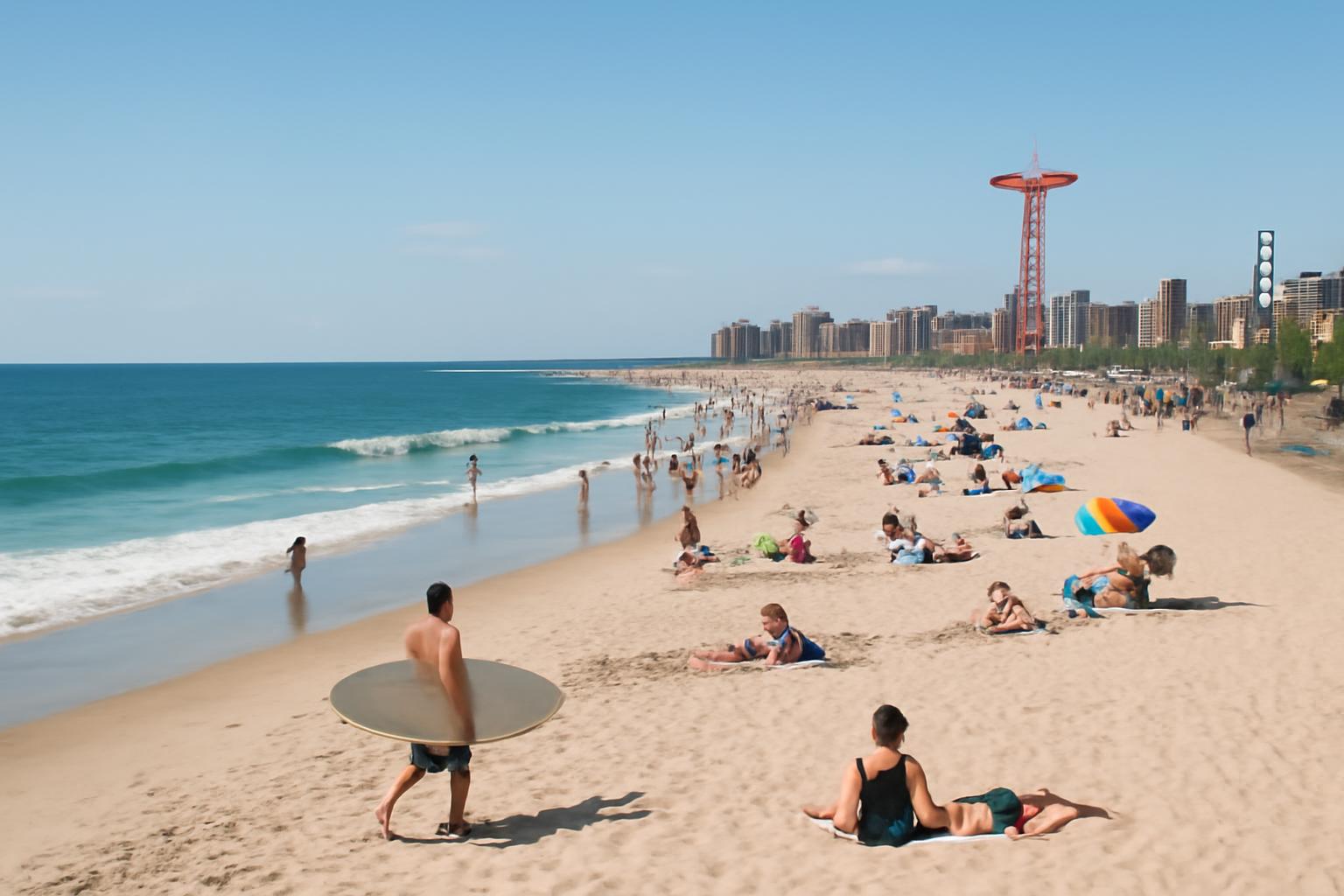
The best beach in New York City depends on what you want from the day: Rockaway Beach in Queens for surfing and an all-day boardwalk outing, Coney Island for iconic entertainment, Brighton Beach for a calmer stretch with neighborhood food, Manhattan Beach for a small family setting, Orchard Beach in the Bronx for picnics and sports, and South Beach or Wolfe’s Pond Beach on Staten Island for an active or quiet day. All of these are free public NYC Parks beaches, part of the 14 miles of beaches the agency maintains across four boroughs.
There is no single winner because these beaches are built for different outings. The quick-pick matrix below matches the most common beach-day scenarios to the strongest in-city option and names the main tradeoff you accept with each choice.
| Desired outing | Recommended beach | Strongest fit | Main caveat |
|---|---|---|---|
| Surfing, food vendors, all-day beachfront | Rockaway Beach (Queens) | Surfboard rentals and lessons, boardwalk vendors, miles of shoreline | Long beachfront; only some sections are open to swimming, so verify your section |
| Iconic NYC boardwalk energy | Coney Island (Brooklyn) | Amusement rides, famous boardwalk, activity through summer and off-season | Crowds can be overwhelming at peak times |
| Calmer sand plus neighborhood food | Brighton Beach (Brooklyn) | More tranquil than adjacent Coney Island, Eastern European food nearby | Still a busy summer beach, just relatively quieter |
| Small, family-oriented day | Manhattan Beach (Brooklyn) | Small beach where locals bring picnic baskets and barbecue | “Calmer” is relative to Brighton Beach, not a promise of empty sand |
| Picnics, playgrounds, and sports | Orchard Beach (Bronx) | Snack bars, picnic areas, two playgrounds, 26 courts | The Bronx’s only public beach, so it draws its whole borough |
| Active waterfront recreation | South Beach (Staten Island) | Boardwalk jogging, biking, kayaking, tennis, pier fishing | Plan the ferry-plus-local-transit trip in advance |
| Quiet, secluded retreat | Wolfe’s Pond Beach (Staten Island) | Small, calm, and secluded by NYC standards | Fewer entertainment options; a longer trip for most starting points |
The profiles below explain each recommendation, and the later sections cover car-free travel, public-access boundaries, and the swimming and water-quality checks worth doing before you leave.
The best NYC beaches, compared
The in-city shortlist that recurs across editorial guides and the official NYC Parks beach directory is consistent: Rockaway Beach in Queens, Coney Island and Brighton Beach in Brooklyn, Manhattan Beach in Brooklyn, Orchard Beach in the Bronx, and South Beach and Wolfe’s Pond Beach on Staten Island. What separates them is not sand quality so much as atmosphere, activities, food, and family fit.
Each profile below covers those criteria plus the swimming context and any facility highlights the evidence actually supports. Where a detail depends on current operations, such as which sections are guarded or which restrooms are open, the profile points you to the official check rather than presenting an inventory that may be out of date. Crowd descriptions here are relative comparisons drawn from local accounts, not forecasts for a specific day or hour.
Rockaway Beach: best for surfing and an all-day beach outing
Choose Rockaway when you want surfing, a full day of food and boardwalk time, or simply the most ocean-facing beach experience inside city limits. According to NYC Parks, Rockaway Beach and Boardwalk runs along the Atlantic Ocean from Beach 9th Street in Far Rockaway to Beach 149th Street in Neponsit, which makes it a long, varied beachfront rather than a single destination.
That length is the most important thing to understand before you go. Different access points serve different purposes, and the official Rockaway pages have historically listed specific numbered beach sections as open for swimming while closing others. Treat any section list you find in an older article as a snapshot, not a rule; confirm the current open sections on the NYC Parks Rockaway page before you commit to a subway stop, because arriving at a closed section can mean a long walk with your gear.
For the day itself, the supported picture is appealing. Condé Nast Traveler describes renting a surfboard or taking a lesson, then stopping at Rockaway Bazaar, and notes a plethora of food and beverage vendors along the length of the boardwalk plus local bars and restaurants blocks from the sand. NYC Parks lists public restrooms at multiple boardwalk locations, including Beach 97th Street, Beach 106th Street, and Beach 115th Street, so facilities exist along the stretch even if you should confirm which are open on your date.
A practical way to plan a Rockaway day:
- Pick your purpose first (surfing, swimming, food) and choose an access section to match.
- Check the current open swimming sections and lifeguard status on the official page.
- Note the nearest boardwalk restroom to your chosen section before you leave.
Rockaway rewards that small amount of planning. It is the one NYC beach where where you enter changes what kind of day you get.
Coney Island and Brighton Beach: one shoreline, two different outings
Coney Island and Brighton Beach share one continuous Brooklyn shoreline. NYC Parks lists them together, running along the Atlantic Ocean from West 37th Street to Ocean Parkway, yet they deliver two clearly different outings, and choosing between them is really a choice about atmosphere.
Choose Coney Island for the classic, high-energy version of an NYC beach day. NYC Parks describes it as iconic and bursting with activity throughout the summer and even during the off-season, with the famous boardwalk, amusement rides, swimming, and sunbathing all in one place. Condé Nast Traveler frames the combination of visiting the boardwalk, eating a Nathan’s hot dog, riding or watching the Thunderbolt roller coaster in Luna Park, and carving out a spot on the beach as an everyone-should-try-it New York experience. The tradeoff is the crowd that comes with all of that. A Brooklyn Rail account puts it plainly: if the overwhelming crowds at Coney Island bother you, Brighton is a much more tranquil experience.
Choose Brighton Beach when you want the same sand with less spectacle and a stronger neighborhood-food angle. Condé Nast Traveler encourages getting to know the area known as “Little Odessa,” named for the Eastern European community that gives the neighborhood its character. That makes Brighton a good fit for a beach day built around a long lunch and a slower pace rather than rides and games.
Keep the comparison relative rather than predictive. “More tranquil” describes Brighton next to Coney Island on the same day, not an empty beach; both are popular summer destinations on a shared boardwalk. The practical upside of the shared shoreline is flexibility. You can set up on the Brighton end and walk to Coney Island’s rides and food when you want them, then retreat to quieter sand afterward, all within one outing.
Manhattan Beach: best for a smaller, family-oriented setting
Choose Manhattan Beach when you want a small, family-oriented beach day rather than a boardwalk scene. NYC Parks describes it as a small, family-friendly beach east of Brighton Beach that attracts locals looking for a somewhat calmer beach than its neighbor, and notes that visitors bring full picnic baskets and set up barbecues, which tells you a lot about the intended rhythm of the day: settle in, cook, and stay.
Read the “calmer” description carefully, because it is a comparison, not a guarantee. The official language says calmer than Brighton Beach, and the Brooklyn Rail account already positions Brighton as the tranquil alternative to Coney Island. So Manhattan Beach sits at the quieter end of a busy Brooklyn shoreline, and on a hot summer weekend you should still expect substantial company on a beach with limited sand to absorb it. If your plan depends on genuine seclusion, Wolfe’s Pond Beach on Staten Island is the better match.
Where Manhattan Beach earns its place is fit. For a parent organizing a day with kids, a compact beach where picnicking and barbecuing are part of the culture is easier to manage than a long boardwalk destination. As with every profile here, the evidence supports the character of the place rather than a complete facility inventory, so confirm any specific amenity you need, such as restrooms or grill areas, with NYC Parks before you go.
Orchard Beach: best for picnics, playgrounds, and sports
Choose Orchard Beach when the group wants more than swimming: a day that mixes sand time with games, playground breaks, and a proper picnic. Condé Nast Traveler notes that Orchard Beach, long known as the “Riviera of New York,” comes with snack bars and picnic areas, two playgrounds, and 26 courts for basketball, volleyball, and handball. That facility mix is unusual among NYC beaches and makes Orchard the natural pick for large family gatherings, birthday outings, and groups with mixed ages and interests.
The setting is also distinct. NYC Parks locates Orchard Beach on Long Island Sound in Pelham Bay Park, which means calmer Sound water rather than Atlantic surf, and its directory material describes a 115-acre, 1.1-mile-long beach built in the 1930s. For a Bronx-based reader, the more important fact is simpler: NYC Parks identifies Orchard Beach as the Bronx’s sole public beach. That is both its strength and its main caveat. It concentrates the borough’s beachgoers in one place, so a sunny weekend brings the whole neighborhood, and arriving early improves your odds of claiming picnic space near the courts and playgrounds.
Plan Orchard as a full-day destination rather than a quick swim stop. The picnic-and-sports infrastructure is the reason to make the trip, and it rewards a group that comes equipped to use it.
South Beach and Wolfe’s Pond Beach: Staten Island choices for activity or quiet
Staten Island gives you two clearly different beach days, and the choice between them is straightforward: South Beach for activity, Wolfe’s Pond Beach for quiet.
Choose South Beach when you want recreation built around the waterfront rather than just time on a towel. NYC Parks describes a day where beachgoers can sunbathe with a view of the Verrazzano Bridge, bike a scenic trail, jog along the boardwalk, kayak, play tennis, or fish off the Ocean Breeze Fishing Pier. South Beach sits on Lower New York Bay and shares the Franklin D. Roosevelt Boardwalk with neighboring Midland Beach, which NYC Parks describes as tending to be the somewhat less crowded of the two, a useful fallback if you arrive and want more space.
Choose Wolfe’s Pond Beach when the entire point is escaping the scene. NYC Parks describes it directly: for people who love the ocean but think NYC’s beaches are just too chaotic, Wolfe’s Pond is a small, calm, and secluded beach that works as a retreat. It sits on Raritan Bay and Prince’s Bay on the island’s southern shore. The tradeoff is the mirror image of its appeal: you give up boardwalk entertainment, vendor density, and the easy fallback options of the bigger beaches, and for most starting points in the city it is the longer trip.
NYC Parks also lists Cedar Grove Beach at Ebbitts Street and Cedar Grove Avenue as another municipal Staten Island beach, so the borough’s public options extend beyond these two, but South Beach and Wolfe’s Pond are the clearest fits for the active-day and quiet-day scenarios.
Getting to an NYC beach without a car
Every beach on this shortlist can be planned as a car-free trip, but the honest planning unit is not “how far is the beach,” it is the full door-to-sand journey: the main ride, any transfers, the final walk to your chosen entrance, and a same-day service check. The supplied evidence does not support a reliable ranking of current travel times from Manhattan or anywhere else, so treat any specific minutes you see in older articles as unverified.
The supported mode picture is high-level but useful. Condé Nast Traveler notes you can board the NYC Ferry at Wall Street or Sunset Park for a seaside trip straight to Rockaway Beach, and that the Staten Island Ferry is the starting point for a Staten Island beach day. Subway access to Rockaway and Coney Island is long established; a Brooklyn Rail account describes taking the A train through Brooklyn to Rockaway, but that piece dates to 2003 and its route details, including summer shuttle trains and station work, are exactly the kind of information that goes stale. Use it as proof the subway trip exists, not as an itinerary.
Before you commit to a departure time, separate the journey into its parts:
- The main ride: confirm the current subway, bus, or ferry service to your beach on the operator’s site the day you travel.
- Transfers and shuttles: weekend service changes are common enough that a route that worked last month may not work today.
- The final walk: on a long beachfront like Rockaway, the distance from the station or ferry landing to your chosen open section can add meaningful time.
One practical tiebreaker: if two beaches fit your plans equally well, pick the one whose current transit service you can verify most simply. A slightly less ideal beach with a clean, confirmed route usually beats the theoretically better one reached through a chain of uncertain transfers.
What counts as a public New York City beach
Every beach recommended in this guide is a municipal NYC Parks beach, and that boundary matters for your planning. NYC Parks states that all of its beaches are free and open to the public, across roughly 14 miles of beachfront in Brooklyn, Queens, the Bronx, and Staten Island. If a beach appears in the Parks directory, you do not need a pass, a fee, or a residency to use the sand.
Two other categories often get mixed into “New York City beaches” lists, and both need a different planning frame. The first is private-community shorelines within the city’s geography. Breezy Point in Queens is the clearest example: a Quora discussion identifies it as a private community, and a local trip blog describes the beach as regulated by that private neighborhood. Beaches like this are not part of the free public system, and current visitor rules require separate verification, which is why Breezy Point gets its own answer at the end of this guide.
The second category is regional day trips. Editorial roundups often stretch “New York City” to mean “near New York City,” folding in Long Island, Fire Island, and New Jersey shore destinations. The Brooklyn Rail account notes that some Long Island beaches are reachable by walking from the LIRR and that Fire Island requires a ferry from Long Island, and Condé Nast Traveler’s regional list covers beaches within two to three hours of driving, warning that some require a rental car. Those can be good trips, but they are a different decision, with different transportation, cost, and time commitments than a same-day outing inside the five boroughs. This guide’s shortlist stays inside the public, in-city system.
Swimming season, lifeguards, closures, and water quality
The rule that shapes every NYC beach day is simple: being on the beach and being allowed to swim are two different things. According to NYC Parks, beaches are open from Memorial Day weekend through September 13, 2026, and during beach season lifeguards are on duty daily from 10:00 a.m. to 6:00 p.m. Swimming is prohibited when lifeguards are not on duty and in closed sections, which NYC Parks marks with signs and/or red flags.
Three practical consequences follow. First, an early-morning or evening beach visit is fine, but swimming outside the 10:00 a.m. to 6:00 p.m. guarded window is prohibited, so plan water time inside those hours. Second, on a long beachfront like Rockaway, a specific section can be closed to swimming even while the beach as a whole is open, so the flags and signs at your entrance are the controlling information, not the beach’s general status. Third, season dates apply per year; the September 13, 2026 end date is the current official statement, and if you are reading this in a later season you should confirm the dates on the Parks beaches page.
For same-day conditions, NYC Parks points to two official channels:
- Sign up for Notify NYC and opt in to “beach notifications” for real-time opening and closing alerts.
- Check the NYC Department of Health and Mental Hygiene’s New York City Area Beaches page for water quality information before you head out.
Water quality is the check most people skip and the one most likely to change a plan, since advisories can affect a specific beach on a specific day. Building both checks into your routine takes a couple of minutes and prevents the worst version of a beach day: arriving to find the water closed. Once you are there, obey the flags even if the water looks inviting; a closed section is closed regardless of conditions you can see.
Before you leave: a five-minute beach check
Once you have picked a beach from the matrix, a short pre-departure check protects the plan. The first two items below are official checks that NYC Parks itself recommends; the rest are planning judgments that reduce avoidable friction rather than official requirements.
- Beach status: Check Notify NYC beach notifications for real-time opening and closing alerts for your specific beach.
- Water quality: Review the NYC Department of Health and Mental Hygiene’s New York City Area Beaches page for current advisories before committing.
- Swimming window: Confirm your plan keeps water time inside the guarded daily hours of 10:00 a.m. to 6:00 p.m., and note that closed sections marked with signs or red flags are off limits.
- Transit service: Verify current subway, bus, or ferry service for your route the same day, including weekend changes and transfers.
- Facilities and accessibility: Confirm the restrooms, concessions, or other facilities you need are open at your chosen section; NYC Parks lists beach mats and beach wheelchairs at selected locations if anyone in your group needs accessible sand access.
- Crowd pressure: On hot summer weekends, plan an earlier arrival or a fallback section, especially at Coney Island and other high-energy beaches.
None of these checks takes long, and together they cover the failure points that most often derail an NYC beach day: a closed swimming section, a water-quality advisory, a disrupted train, or a missing facility you were counting on.
Can the public visit Breezy Point Beach?
Treat Breezy Point as outside the ordinary public shortlist. The supplied sources identify it as a private community, not an NYC Parks beach: a Quora discussion describes Breezy Point as a private community and notes that while most New York beaches are public, it is one of the exceptions, and a local trip blog describes the beach as quieter and regulated by the private neighborhood that surrounds it.
What the evidence does not establish is the current rule for ordinary public access, so this guide does not recommend Breezy Point as a standard alternative to Rockaway or any other public beach. If you specifically want to visit, verify current access rules with an authoritative local source before building a trip around it. For a comparable quieter ocean day with confirmed free public access, Wolfe’s Pond Beach on Staten Island is the supported choice.