 New York Know
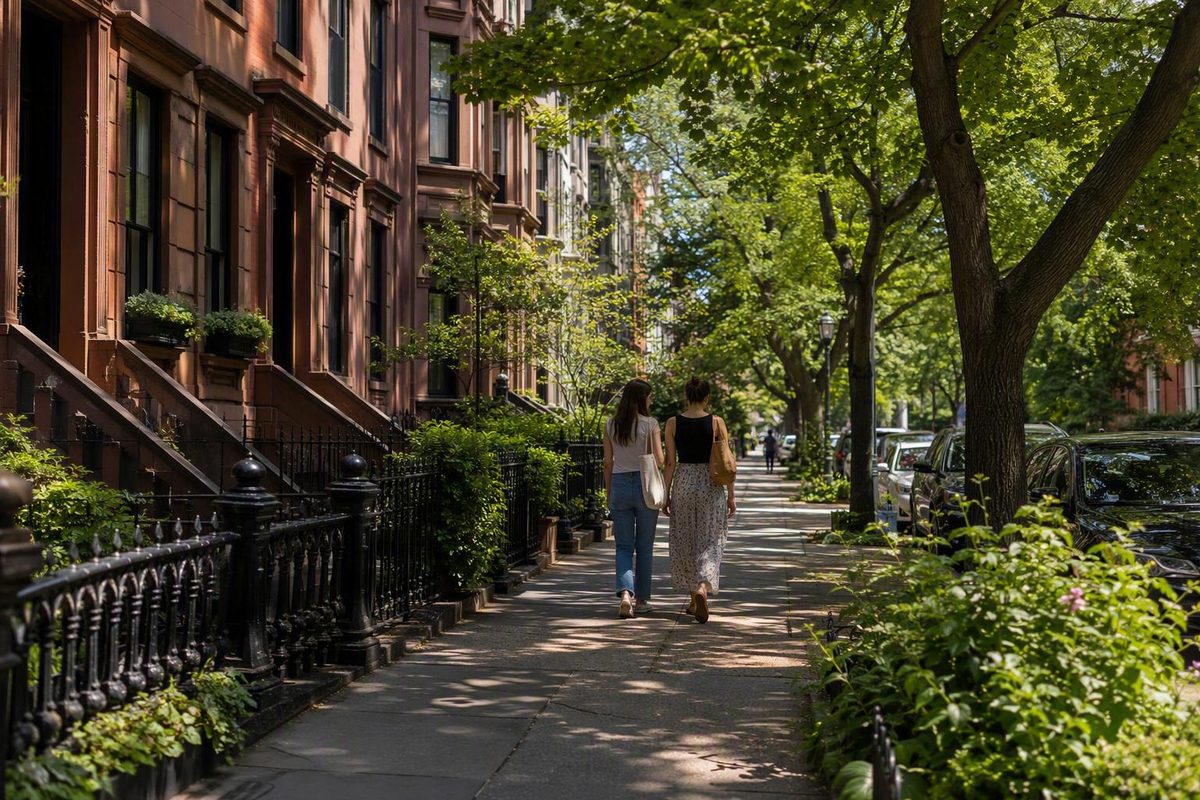
What “best” means for a New York City visitor
This guide compares neighborhoods as places to stay and explore during a visit. It is not a guide to renting, buying, schools, commuting to work, or relocating. Those decisions require different evidence about housing, services, and long-term daily life.
New York City has five boroughs—Manhattan, Brooklyn, Queens, the Bronx, and Staten Island—but borough names are too broad to function as hotel recommendations. Each contains many neighborhoods with different transit connections, attractions, hotel markets, and street environments. Condé Nast Traveler’s neighborhood overview likewise describes the city as five boroughs containing varied pockets block by block.
“Stay in Brooklyn,” for example, could mean a waterfront hotel near the Brooklyn Bridge, a nightlife-oriented base in Williamsburg, or a property much farther from a Manhattan-heavy itinerary. The same problem applies to Queens and even to broad Manhattan labels such as Midtown or downtown.
For visitors, the useful comparison criteria are:
- How closely the location matches the planned itinerary
- Which subway station is near the hotel and whether its routes serve the fixed plans
- Which attractions, restaurants, and evening activities are walkable
- Whether the surrounding blocks remain active or become subdued at night
- Whether suitable hotels are available for the dates and room requirements
- Tolerance for crowds, avenue noise, station walks, transfers, and additional transit
- The all-in lodging price after taxes, mandatory fees, and booking conditions
There is no credible universal ranking of the best neighborhoods in New York City. Visitor guides reach different conclusions because they prioritize different experiences: Midtown for landmark access, the Village for food and street life, the Upper West Side for Central Park and museums, or Williamsburg for a repeat trip organized around Brooklyn. One visitor guide explicitly frames the choice around desired atmosphere, trip length, activities, and budget rather than naming a winner for everyone.
This article uses those recurring recommendations as a starting point, then evaluates each area against itinerary fit, walking potential, evening preferences, hotel availability, and transit friction. Atmosphere and relative cost remain editorial guidance rather than precise measurements.
Terms such as “quiet,” “lively,” “premium,” and “better value” can change by block, hotel, and booking date. A room facing a busy avenue may produce a different experience from one on a side street in the same neighborhood. An apparently inexpensive hotel may also cease to be a bargain after taxes, fees, longer station walks, transfers, and several days of additional travel.
It is equally important to separate a good neighborhood to explore from a good neighborhood in which to sleep. DUMBO is a memorable waterfront destination, but that does not automatically make it the best lodging base for a trip dominated by Broadway, Fifth Avenue, and Central Park. SoHo can be rewarding for shopping and architecture while remaining poorly matched to a schedule filled with early uptown museum reservations.
The most practical strategy is walking-first rather than hotel-hopping or repeatedly crossing the city. Pick one base, group each day geographically, and use the subway for necessary transitions. That approach matches New York Know’s stated focus on choosing a base and building days that make sense on foot.
The best NYC neighborhoods by trip priority
Start with the trip you intend to take, not with a generic ranking.
| Neighborhood | Best for | Atmosphere | Nearby trip focus | Transit trade-off | Hotel-supply note | Principal drawback |
|---|---|---|---|---|---|---|
| Midtown | Short first visits, Broadway, major landmarks | Fast, busy, visitor-oriented | Times Square, Rockefeller Center, Bryant Park, Fifth Avenue, Empire State Building | Broad access, but the useful line depends on the hotel | Wide range of property types | Crowds, noise, less neighborhood atmosphere |
| Flatiron / NoMad | Mixed Midtown-and-downtown itineraries | Central and active, generally less intense than Times Square | Empire State Building, Union Square, Chelsea, Village | Useful in several directions; inspect the nearest station | Fewer choices than Midtown on some dates | Suitable rooms may be harder to find |
| Greenwich Village | Washington Square Park, cafés, comedy, downtown walking | Lively and character-led | Village streets, Union Square, SoHo | Access varies near the neighborhood’s edges | Limited within some parts | Not ideal for every Midtown-heavy schedule |
| West Village | Dining, jazz, historic streets, evenings out | Intimate, active, less gridded | Hudson River edge, nightlife, Meatpacking District | Station access depends heavily on the address | Smaller hotel inventory | Premium positioning and less direct transit from some blocks |
| Upper West Side | Central Park, museums, families, longer stays | Comparatively residential | American Museum of Natural History, Lincoln Center, park days | Longer trips to Lower Manhattan | Availability varies by date and avenue | Less convenient for downtown nightlife |
| Chelsea | Art, the High Line, markets, west-side exploration | Galleries, residential blocks, busy avenues | High Line, Chelsea Market, Meatpacking District | Strong north-south position; crosstown trips vary | Multiple property types, but block matters | Atmosphere changes noticeably across the area |
| SoHo | Shopping, architecture, dining | Stylish, commercial, crowded at shopping peaks | Nolita, Chinatown, Tribeca, Village | Strong for downtown; less direct for some uptown plans | Often positioned toward the premium end | Shopping crowds and lodging cost |
| Financial District | Downtown history, harbor sights, ferries | Busy by day, more subdued in some places at night | Wall Street, 9/11 Memorial, Battery, Brooklyn Bridge | Effective for downtown; farther from uptown | Several larger hotels | Less nightlife and weaker balance for uptown-heavy trips |
| Williamsburg | Repeat trips, restaurants, music, bars | Evening-oriented and neighborhood-led | Waterfront, dining, live music | Usefulness changes by hotel and destination | Property-specific | More limited subway-line coverage than central Manhattan |
| DUMBO | Skyline scenery, bridge access, waterfront stops | Visitor-heavy around major viewpoints | Brooklyn Bridge Park, Jane’s Carousel, bridge | Convenient for some downtown plans | Limited hotel choice | Excellent excursion does not always equal efficient base |
| Brooklyn Heights | Promenade views, calmer evenings | More residential in character | Promenade, Brooklyn Bridge, waterfront | Better matched to downtown than many uptown plans | Limited compared with Midtown | Less nightlife and fewer visitor-oriented hotels |
| Long Island City | A hotel-specific Queens alternative | Mixed commercial and residential pockets | Queens waterfront, Gantry Plaza State Park | Can be direct or inconvenient depending on station | Must be assessed property by property | Additional walking, transfers, or late-night friction |
Those are broad travel-guide characterizations, not current price findings; compare the complete cost for the same dates and room conditions. New York on My Mind describes these areas in similarly qualified cost and inventory terms.
Midtown is the practical default for a short first trip built around Broadway and major landmarks. Midtown is broad, however, and should not be treated as synonymous with Times Square. A hotel near Bryant Park, Grand Central, or the Empire State Building can feel different from one amid the busiest theater-district blocks.
Flatiron and nearby NoMad provide a central alternative for visitors splitting time between Midtown and downtown. The Village prioritizes restaurants, historic streets, cafés, music, and evening atmosphere. The Upper West Side favors park and museum days, while Chelsea and SoHo support west-side and downtown exploration.
The Financial District works best when Lower Manhattan history, memorial sites, ferries, and the harbor dominate the schedule. Williamsburg is more convincing for a Brooklyn-led repeat visit than for a first trip packed with Manhattan reservations. DUMBO and Brooklyn Heights prioritize scenery, while Long Island City should be judged by the precise hotel-to-station route rather than by the borough name.
Midtown or Flatiron: the strongest first-trip bases
Midtown remains a recurring recommendation for first-time sightseeing because many familiar destinations sit within the same broad part of Manhattan. Depending on the hotel, visitors may be able to walk to Times Square, Broadway theaters, Rockefeller Center, Fifth Avenue, Grand Central Terminal, Bryant Park, or the Empire State Building. A visitor-focused lodging guide similarly recommends Midtown for major sights and Flatiron for central access with less of Midtown’s intensity.
But Midtown and Times Square are not interchangeable. Times Square concentrates theaters, attractions, hotels, visitor services, and transit options. That concentration is useful when a performance ends late or a trip lasts only a weekend. It is also Midtown at its most intense: bright, crowded, noisy, commercial, and potentially tiring.
Choose Midtown if:
- The visit is short and the landmark list is ambitious.
- The trip includes multiple Broadway performances.
- Several timed reservations are in Midtown.
- Returning to the hotel between activities is valuable.
- Immediate convenience matters more than historic street atmosphere.
Look elsewhere if the ideal evening involves a small restaurant, café, jazz venue, neighborhood bar, or quieter walk rather than another major attraction. Visitors who dislike dense crowds or want the hotel surroundings to feel distinct from the sightseeing core may prefer Flatiron, the Village, or the Upper West Side.
Flatiron offers a useful compromise. It sits south of the Midtown core and places a traveler within walking or transit reach of the Empire State Building, Chelsea, Union Square, Greenwich Village, SoHo, and Lower Manhattan. It is particularly effective when the itinerary is divided between Midtown and downtown.
One travel guide estimates walks from Flatiron of approximately 10–15 minutes to Penn Station, 10 minutes to the Empire State Building, 20 minutes to Times Square, and 25 minutes to Washington Square Park. These are rough orientation figures, not guaranteed journey times; the published Flatiron estimates vary with the exact starting point, route, pace, entrances, and crowds.
Flatiron’s main limitation is hotel choice. The same guide notes that the neighborhood has relatively few hotels compared with broader Midtown, so suitable rooms may be harder to find for a particular date, group size, or budget.
The station still matters more than the neighborhood label. A hotel beside a station with a direct route to several fixed plans may outperform one that looks more central on a map but requires repeated transfers. Check the station entrance, walking route, likely transfer points, and evening return rather than relying on a generic “central Manhattan” description.
Verdict: Choose Midtown for the shortest landmark-focused trip, especially one with several Broadway plans. Compare Flatiron or NoMad when access to both Midtown and downtown matters but Times Square’s intensity does not.
The Village, Chelsea, and SoHo: character, food, art, and downtown walking
Greenwich Village and the West Village are closely connected, but they are not interchangeable hotel labels. Visitors can walk between them, and travel guides often discuss them together, yet their street patterns, station access, boundaries, and hotel inventory differ. A property advertised as “Village” lodging may sit closer to Union Square, the Meatpacking District, or SoHo than expected.
The wider Village area is associated with Washington Square Park, historic streets, cafés, independent dining, comedy, jazz, nightlife, and LGBTQ+ history. In the West Village, the Stonewall Inn, Julius’, Marie’s Crisis, and the Village Vanguard connect that street atmosphere to both LGBTQ+ and music history, as detailed in Condé Nast Traveler’s neighborhood guide.
This area suits food-focused visitors, couples, confident walkers, and travelers who want an active evening close to the hotel. It also supports a less scheduled style of travel: exploring side streets, stopping for coffee, and choosing dinner without making a long return journey from Midtown.
The trade-offs are smaller hotel inventory, premium positioning, and imperfect convenience for some Midtown-heavy plans. Hotels within the West Village can be scarce, while properties marketed as Greenwich Village may sit near the neighborhood’s edges. A beautiful address is not necessarily a practical one if every fixed reservation requires a transfer and a long station walk.
Chelsea is the art-and-west-side option. Its visitor anchors include galleries, the High Line, Chelsea Market, restaurants, nightlife, and access to the Meatpacking District. It can work as a compromise between Midtown convenience and downtown street life, particularly when the itinerary includes both Penn Station or Broadway and the Village or SoHo.
Chelsea does not provide one uniform experience. The gallery district, residential side streets, waterfront edge, and busy avenues have different rhythms. Check whether the hotel is near the part of Chelsea you intend to use and whether its nearest station supports the rest of the itinerary.
SoHo is the shopping-and-architecture option. Cast-iron façades and cobblestone streets create a recognizable setting, while the location supports walks into Nolita, Chinatown, Tribeca, and the Village. Restaurants and cafés make it possible to build an unhurried downtown day without repeatedly using transit.
Do not assume SoHo will be quiet or inexpensive. Shopping-oriented crowds can fill its principal streets, and visitor guides commonly place its lodging toward the premium end. A side-street hotel may feel removed from the busiest retail blocks, but that is a block-level distinction rather than a neighborhood-wide guarantee.
A practical downtown walking day begins at Washington Square Park, moves through Greenwich Village, and continues south or southeast into SoHo. Add meals, shopping, or a detour into Nolita rather than racing between landmarks. One published route suggests four to six hours for Greenwich Village and SoHo, depending on food stops, shopping, breaks, and pace; the same walking guide recommends combining areas only when they are genuinely adjacent.
The hotel decision should still come down to the address. Identify the nearest station, test routes to fixed plans, and examine the walk home after dinner. “The Village,” “Chelsea,” and “SoHo” are useful starting labels, not substitutes for route planning.
Upper West Side or Upper East Side: parks, museums, and quieter evenings
The Upper West Side is a strong choice for visitors who want Central Park, the American Museum of Natural History, and a comparatively residential atmosphere. It works particularly well for longer stays, when returning to calmer streets may matter more than walking to Times Square in a few minutes.
For families, the case is practical rather than absolute. Proximity to the park creates opportunities for breaks, while the natural-history museum provides an obvious anchor for a museum day. That does not prove that every block or hotel is universally family-friendly; it means the neighborhood’s park access, museum focus, and quieter evening character align with many family itineraries.
The trade-off is distance from Lower Manhattan and parts of downtown nightlife. A Financial District morning, SoHo afternoon, and Lower East Side dinner can produce a long day from an Upper West Side base. The location works better when Central Park, the museum, Lincoln Center, or nearby restaurants receive meaningful time.
The Upper East Side is the Museum Mile and luxury-oriented alternative. It places visitors near Central Park and major institutions including the Metropolitan Museum of Art and the Guggenheim. It is a logical choice for a museum-centered trip, a Fifth Avenue focus, or travelers seeking a more polished hotel environment.
Its limitations are local rather than universal. Some areas have less late-night activity, and convenience changes by avenue and station. A hotel that appears close to Central Park may still involve an appreciable walk to the most useful subway route. Conversely, a property farther east may offer better north-south service but be less convenient for a park entrance or museum morning.
Choose between the two sides according to the actual priorities:
- Choose the Upper West Side for the American Museum of Natural History, west-side park access, Lincoln Center, or a relaxed longer stay.
- Choose the Upper East Side for Museum Mile, Fifth Avenue, luxury-oriented lodging, or repeated visits to east-side museums.
Map the hotel against the relevant museum entrance, not merely the museum name, and inspect the route to the next activity. Central Park is a destination rather than a convenient crosstown shortcut for every itinerary. A first-time visitor guide makes the same practical distinction, associating the Upper West Side with natural history and the Upper East Side with Museum Mile.
Financial District and Lower Manhattan: a compact base for downtown history
The Financial District concentrates Wall Street, the 9/11 Memorial and Museum, One World Trade Center, Battery Park, the Manhattan approach to the Brooklyn Bridge, and harbor departures serving the Statue of Liberty and Ellis Island. That concentration makes it a strong base for a trip weighted toward history, memorial sites, ferries, and the waterfront.
It also connects naturally with Chinatown, the Seaport, and Brooklyn. A visitor can devote one day to the Financial District and harbor, another to Chinatown and nearby downtown neighborhoods, and another to the Brooklyn Bridge and DUMBO without repeatedly traveling through Midtown.
The disadvantages are equally clear. Lower Manhattan is less central for some Midtown and uptown plans, and its nightlife is more limited in places than in the Village, Lower East Side, or Williamsburg. The area is not devoid of restaurants or evening activity, but travelers seeking music venues, bars, and late dinners immediately outside the hotel may prefer another base.
Some visitor guides characterize Financial District hotels as comparatively reasonable, particularly among larger or name-brand properties. That is not a current or guaranteed price advantage. Business demand, weekends, holidays, room types, and booking conditions can reverse any broad pattern. The claim is best treated as a reason to compare, not a reason to assume; one first-time visitor guide presents the same combination of attraction density, larger hotels, limited nightlife, and possible relative value.
A coherent walking day can begin near the Battery or harbor. Move through Bowling Green and the older street grid toward Wall Street, continue to the memorial and transportation spaces around the World Trade Center, and then make one deliberate turn east toward the Seaport. Finish around Chinatown or along the East River, depending on dinner plans and energy.
A comparable published route allocates roughly three to five hours to the Financial District before substantial museum visits, a ferry, or a long meal. Its duration is a planning boundary rather than a promise: timed admission or an extended harbor stop can turn the same compact geography into a full day.
For a detailed version of that sequence, New York Know’s walking-first Lower Manhattan day follows the harbor, Financial District, memorial spaces, one eastward turn, and a finish near Chinatown or the East River without unnecessary zigzagging.
This distinction matters. The Financial District can be one of the city’s strongest sightseeing areas without being the right lodging base for every trip. If most reservations are downtown, staying there reduces friction. If the schedule is evenly divided among Broadway, Central Park, the Village, and Lower Manhattan, Flatiron or Midtown may provide better balance.
Williamsburg, DUMBO, and Brooklyn Heights: when Brooklyn is the better fit
Brooklyn is not one hotel district. Williamsburg, DUMBO, and Brooklyn Heights provide different experiences and different routes into Manhattan.
Williamsburg suits repeat visitors and travelers prioritizing restaurants, live music, bars, independent businesses, waterfront time, and neighborhood exploration. It works best when evenings in Brooklyn are genuinely part of the trip—not when the hotel is selected only in the hope of finding a cheaper room.
Its main limitation is route dependence. Williamsburg has more limited subway-line coverage than central Manhattan, and the useful route changes with the destination. A hotel that works well for a Manhattan trip near Union Square may be awkward for the Upper West Side or Financial District. The property-to-station walk also matters, particularly after a late evening. A neighborhood guide aimed at prospective residents likewise notes both Williamsburg’s dining and music appeal and its limited subway-line coverage.
DUMBO is the scenery-led choice. Brooklyn Bridge Park, Jane’s Carousel, bridge access, industrial streets, and close skyline views make it an accessible introduction to Brooklyn. It works especially well as a half-day excursion connected to a Lower Manhattan itinerary.
Its signature visitor experience is the Brooklyn Heights Promenade, with the Brooklyn Bridge and waterfront nearby. It may appeal to travelers who want Brooklyn scenery without making nightlife the center of the stay.
DUMBO’s quality as a destination does not automatically make it an efficient hotel base. Visitors can enjoy the views and bridge access for several hours, then return to a Manhattan hotel aligned with the rest of the itinerary.
For a simple Brooklyn walking route, begin on the Manhattan side of the Brooklyn Bridge, cross into Brooklyn, continue through DUMBO, and finish in Brooklyn Bridge Park. Allow three to five hours, with additional time for a meal, photography, the promenade, or a long waterfront stop. That sequence and range come from a five-area walking guide that treats DUMBO as an accessible introduction to Brooklyn.
Use this decision rule:
- Stay in Williamsburg for an atmosphere-led repeat trip with substantial Brooklyn dining and nightlife.
- Compare DUMBO for immediate waterfront sights and Brooklyn Heights for a more subdued setting.
- Stay in Manhattan when most booked activities are there and reducing transfers is the priority.
Do not assume Brooklyn lodging is cheaper. Compare the complete room price, station walk, transfer count, and route home for the actual dates. A lower headline rate can be poor value if it makes every day less convenient.
Long Island City and other alternatives outside the Manhattan core
Long Island City is a Queens alternative for visitors who want to remain within reach of Manhattan while considering a different hotel market. It is associated with East River and skyline views, with Gantry Plaza State Park as a notable waterfront destination; a multi-borough visitor guide highlights both Long Island City’s skyline outlook and Gantry Plaza State Park.
The neighborhood must be evaluated hotel by hotel. A property close to a useful station with a direct route to several planned destinations can work well. A hotel involving a longer walk, extra transfer, or inconvenient late-night return can introduce daily friction. “Long Island City” on a booking page does not reveal enough; the station, route, and property entrance are the operative details.
Astoria is worth exploring for restaurants, food traditions, and a neighborhood-oriented atmosphere. It can suit a repeat visitor whose itinerary genuinely includes Queens. It is not the automatic base for a landmark-heavy first trip without route-specific analysis.
New Jersey waterfront options require a separate category. Jersey City and Weehawken may provide Manhattan skyline views and access by PATH train or ferry, but they are not New York City neighborhoods. They can still enter a hotel comparison if the traveler evaluates fares, operating patterns, transfers, and the exact late-evening return.
The hidden cost of a distant room is cumulative. Extra walking to the station, an additional transfer in each direction, and inconvenient returns for afternoon breaks may seem minor once. Repeated over several days, they consume time and reduce flexibility. That matters most on a weekend or short first visit.
Nor should an outer-borough hotel be assumed cheaper. Compare:
- The total room charge for identical dates
- Taxes and mandatory fees
- Bed configuration and cancellation terms
- Door-to-door routes to the top three planned destinations
- Transfer count and station walk
- The journey after the latest evening reservation
- The practicality of returning to the hotel during the day
Airport-area lodging belongs in another category. It generally makes sense for an early departure, late arrival, disrupted connection, or similarly inconvenient flight timing—not for ordinary sightseeing. JFK and LaGuardia are in Queens, but proximity to either airport does not imply convenience for Manhattan attractions; a first-time lodging guide also treats airport hotels mainly as a response to difficult flight schedules.
Consider Long Island City when a specific hotel provides a meaningful all-in advantage and a direct route to the itinerary. If the savings are slight or the route adds repeated transfers, a more central base may preserve more valuable trip time.
How to choose your neighborhood in five practical steps
The best hotel decision begins with the itinerary rather than a list of fashionable neighborhood names.
1. List every fixed plan. Include Broadway performances, timed museum visits, observation decks, ferries, tours, restaurant reservations, sporting events, and arrival or departure constraints. Record the time as well as the location; a late dinner changes the importance of the route home.
2. Put the destinations on a map and group them. Useful clusters include Midtown, Central Park and the museum areas, Lower Manhattan, the Village and adjacent downtown neighborhoods, and Brooklyn or Queens. Do not force a distant attraction into a day merely because there is an empty hour.
3. Choose the area nearest the largest concentration of fixed plans. The goal is not the geometric center of New York City. It is the location that simplifies the greatest number of important journeys. A Financial District hotel may be ideal for ferries, memorial sites, and a DUMBO day even though it is not central to Manhattan. Midtown may win when Broadway and Fifth Avenue dominate.
4. Inspect the exact hotel’s transportation. Find the nearest stations, entrances, station walks, likely transfers, and routes to several destinations. Then test the return after the latest evening plan. A station serving several directions may offer useful flexibility, but a direct route to the itinerary’s three most important stops can matter more than the number of lines shown on a map. Do not treat scheduled journey times as guarantees; waiting, service changes, crowds, transfers, and walking pace affect the result.
5. Compare like-for-like lodging prices. Use the same dates, number of guests, bed requirements, taxes, mandatory fees, and cancellation conditions. Decide whether any difference justifies the added travel. A room is not better value simply because its headline rate is lower.
Trip length should influence the result. For a weekend or short first visit, prioritize convenience because there is little time to recover from inefficient routing. On a longer or repeat trip, a neighborhood with more atmosphere and a less central location can become worthwhile.
Apply a walking rule as well: build each day around one primary area. Combine two only when they are adjacent and the group can comfortably sustain the distance. Midtown and the southern part of Central Park may fit together for energetic walkers; Greenwich Village and SoHo connect naturally. The Financial District and Upper West Side generally do not belong in the same walking sequence.
Finally, inspect the block. Look for late-night venues, loading areas, major avenues, the hotel entrance, and the actual station walk. Read recent property-specific comments for recurring noise patterns without generalizing one report to the whole neighborhood. Two hotels carrying the same neighborhood label can provide very different stays.
In practical terms, the method produces decisions such as:
- Midtown for a Broadway-heavy weekend
- Flatiron or NoMad for a mixed Midtown-and-downtown itinerary
- The Village for food, historic streets, and evenings close to the hotel
- Upper West Side for Central Park and museum days
- Financial District for Lower Manhattan, ferries, and downtown history
- Williamsburg for a repeat trip centered on Brooklyn atmosphere
There is no single winner among the best neighborhoods in New York City. Midtown is the efficient choice for a short, landmark-heavy first trip; Flatiron provides centrality with less Times Square intensity; the Village prioritizes food and character; the Upper West Side favors parks and museums; the Financial District serves a Lower Manhattan focus; and Williamsburg fits a Brooklyn-led repeat visit.
The final choice depends as much on the hotel address and subway station as on the neighborhood name. Once the base is chosen, build geographically compact days around it and let walking reveal the transitions between neighborhoods.
What is the best neighborhood in New York City for a first-time visitor?
Midtown is the most practical default for a short first visit centered on Broadway and major landmarks. It provides substantial hotel choice and places many familiar sights nearby. Flatiron or NoMad may be better when the itinerary includes both Midtown and downtown and the traveler wants less Times Square intensity.
The better answer ultimately depends on the fixed plans. A first-time visitor focused on the Statue of Liberty, the 9/11 Memorial, and the Brooklyn Bridge may prefer Lower Manhattan, while a park-and-museum itinerary could justify the Upper West Side.
Is it better to stay in Midtown or near Times Square?
Times Square is part of Midtown, but it represents the district at its busiest. Stay close to Times Square when Broadway access, late show endings, and immediate visitor infrastructure outweigh concerns about crowds and noise.
Choose another part of Midtown—such as around Bryant Park, Grand Central, or farther south—when landmark access still matters but sleeping amid the theater district does not. Compare the precise routes and block rather than assuming every Midtown hotel is equally convenient.
What is the best NYC neighborhood for families and museums?
The Upper West Side is the strongest general choice for a trip centered on Central Park and the American Museum of Natural History. Its comparatively residential atmosphere and park access can also suit longer stays.
Choose the Upper East Side instead for Museum Mile, the Metropolitan Museum of Art, the Guggenheim, and Fifth Avenue. Neither side is universally better for every family; the deciding factors should be the museums on the itinerary, the hotel’s station, and the group’s tolerance for downtown travel.
Is it practical for a first-time visitor to stay in Brooklyn or Queens?
Yes, when the exact hotel has a useful route to the itinerary. DUMBO or Brooklyn Heights can work for downtown-oriented plans, Williamsburg for a trip that genuinely includes Brooklyn evenings, and Long Island City for a property-specific combination of all-in cost and transit access.
For a short, Manhattan-heavy first visit, added station walks and transfers may outweigh a modest room discount. Compare complete prices and door-to-door journeys before choosing an outer-borough base.
Which New York City neighborhoods are easiest to explore on foot?
Midtown, the Financial District, Greenwich Village, SoHo, Chelsea, DUMBO, and Brooklyn Heights all support compact walking routes, but they provide different kinds of days. Midtown concentrates landmarks; the Financial District concentrates history and memorial sites; the Village and SoHo combine streets, food, and shopping; Chelsea follows a west-side arts corridor; and DUMBO pairs naturally with the Brooklyn Bridge and waterfront.
The most walkable plan is not necessarily the area with the shortest distances. It is the day with a clear sequence, limited backtracking, realistic breaks, and a subway ride only when the next neighborhood is no longer naturally adjacent.