 New York Know
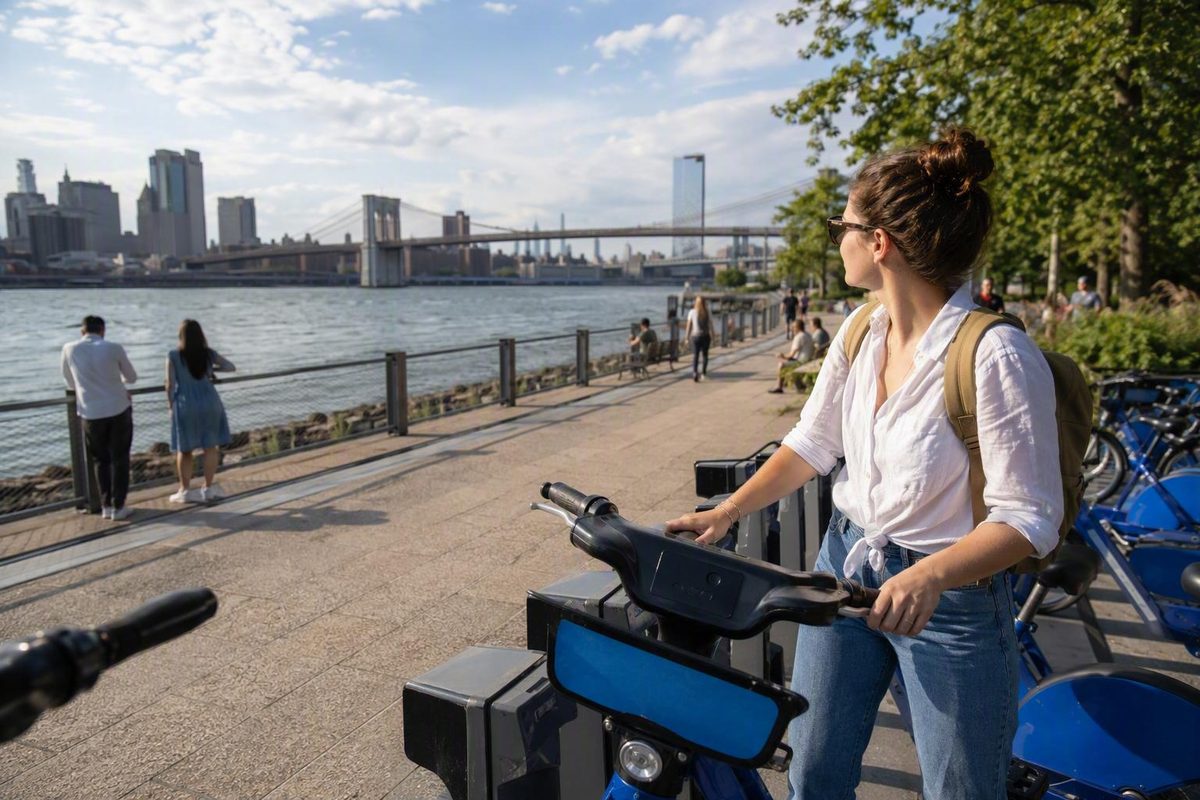
The Citi Bike Day Pass is worth it for tourists planning at least six useful, sub-30-minute classic-bike rides in one day. Six $4.99 single rides cost $29.94, versus $25 for the pass. However, six $3 subway trips cost only $18, so the pass wins on price against single bike rides—not transit. Long rides and e-bike use can erase its $4.94 advantage quickly.
Citi Bike currently lists the Day Pass at $25, a single classic-bike ride of up to 30 minutes at $4.99, classic-bike overtime at $0.41 per minute, and Day Pass e-bike use at $0.41 per minute. Check the current Citi Bike prices and terms before purchasing because rates are subject to change.
Enter your rides, bike type, minutes, and riding days; the calculator compares your estimated totals.
Default example: six 20-minute classic-bike rides on one riding day.
The pass estimate assumes six classic-bike rides of 20 minutes, with no overtime. One $25 pass is counted for this riding day.
| Rides per day | $4.99 singles | $25 Day Pass | $3 subway trips | Pass vs. singles |
|---|---|---|---|---|
| 1 | $4.99 | $25.00 | $3.00 | Costs $20.01 more |
| 2 | $9.98 | $25.00 | $6.00 | Costs $15.02 more |
| 3 | $14.97 | $25.00 | $9.00 | Costs $10.03 more |
| 4 | $19.96 | $25.00 | $12.00 | Costs $5.04 more |
| 5 | $24.95 | $25.00 | $15.00 | Costs $0.05 more |
| 6 | $29.94 | $25.00 | $18.00 | Saves $4.94 |
| 7 | $34.93 | $25.00 | $21.00 | Saves $9.93 |
| 8 | $39.92 | $25.00 | $24.00 | Saves $14.92 |
| 9 | $44.91 | $25.00 | $27.00 | Saves $19.91 |
| 10 | $49.90 | $25.00 | $30.00 | Saves $24.90 |
| 11 | $54.89 | $25.00 | $33.00 | Saves $29.89 |
| 12 | $59.88 | $25.00 | $36.00 | Saves $34.88 |
Assumptions: one $25 pass per riding day; $4.99 per single bike ride; $3 per subway trip; $0.41 for each classic-bike minute over 30; and $0.41 for each e-bike minute. The e-bike model applies the same listed per-minute charge to the pass and single-ride estimates. Taxes, transfers, group use, and other fare arrangements are not calculated.
For classic rides over 30 minutes, the pass total includes listed overtime. The exact single-ride overage total is not established by the article evidence, so the displayed singles figure is a minimum base total.
Source: current figures cited in the article from Citi Bike pricing and Day Pass terms; subway fare supplied in the topic brief. Prices are subject to change.
Six Classic-Bike Rides Beat Singles, but Not the Subway
The base-price break-even point is unusually sharp:
| Classic-bike rides in one day | Single rides | Day Pass | Subway trips | Lowest cost |
|---|---|---|---|---|
| 4 | $19.96 | $25.00 | $12.00 | Subway |
| 5 | $24.95 | $25.00 | $15.00 | Subway |
| 6 | $29.94 | $25.00 | $18.00 | Subway |
| 8 | $39.92 | $25.00 | $24.00 | Subway |
| 9 | $44.91 | $25.00 | $27.00 | Day Pass |
These comparisons assume separate classic-bike rides lasting no more than 30 minutes. They also treat each subway journey as a separate $3 fare without applying transfers or other fare arrangements.
Five singles cost $24.95, only five cents less than the pass. At six rides, the pass saves $4.94 against singles. It first undercuts an equal number of $3 subway trips at nine rides, when nine fares total $27.
That does not make nine rides a universal target. A bicycle may offer a more direct connection, avoid a long walk, or be part of the sightseeing experience. Conversely, manufacturing extra rides solely to reach a break-even point adds station searches and docking stops without improving the day.
A sensible purchase requires all four conditions:
- At least six bike trips you would take without the pass
- Classic bikes as the default
- Each leg comfortably below 30 minutes
- Convenient stations at both ends
One to four planned rides favor singles. Five rides are effectively tied. At six to eight qualifying rides, the pass beats singles but remains more expensive than paying $3 for each equivalent subway trip.
“Unlimited” Means Separate Rides, Not One Bike All Day
The Day Pass provides 24 hours of access. It includes unlimited separate classic-bike rides, each limited to 30 minutes. The operator’s Day Pass terms explain that riders can avoid extra-time charges by docking within 30 minutes before taking another ride.
The intended pattern is to unlock a bike, make a short trip, dock securely, explore on foot, and take another bike later. Each properly completed return ends the trip and resets the timer. NYC311 says a correctly returned bicycle produces a green dock light in its Citi Bike guidance.
Keeping the same classic bike beyond 30 minutes triggers overtime charges. Docking it after an overlong ride does not divide that period into multiple included trips.
This makes the pass suitable for a day such as:
- Hotel area to breakfast
- Breakfast to an attraction
- Attraction to lunch
- Lunch to another neighborhood
- Afternoon stop to dinner
- Evening activity toward the hotel
It is poorly structured for one uninterrupted park or waterfront ride. A visitor who wants to retain one bicycle for several hours should investigate a conventional rental and obtain a current quote. The draft evidence does not provide a current rental price for a valid cost comparison.
Overtime Can Turn a $25 Pass Into a $61.90 Ride
The current classic-bike overtime charge is $0.41 for every minute after the included 30 minutes.
| Continuous classic-bike ride | Overtime | Added charge | Pass-based total |
|---|---|---|---|
| 30 minutes | 0 minutes | $0.00 | $25.00 |
| 45 minutes | 15 minutes | $6.15 | $31.15 |
| 60 minutes | 30 minutes | $12.30 | $37.30 |
| 120 minutes | 90 minutes | $36.90 | $61.90 |
A single 45-minute ride adds more than the pass initially saves against six single rides. For a classic-bike-only plan, the bounded calculation is:
Estimated pass total = $25 + classic-bike overtime charges
The pass’s structure rewards docking between short transportation legs. It penalizes continuous possession.
Leave a margin below 30 minutes rather than planning to arrive at a dock at minute 29. Signals, wrong turns, congestion, a full station, or a dock that rejects the bicycle can extend the trip.
E-Bike Minutes Erase the Pass Advantage Quickly
E-bikes are not included in the $25 base price. The listed Day Pass charge is $0.41 per e-bike minute.
| Total e-bike use | Added charge | Pass-based total |
|---|---|---|
| 10 minutes | $4.10 | $29.10 |
| 20 minutes | $8.20 | $33.20 |
| 30 minutes | $12.30 | $37.30 |
| 60 minutes | $24.60 | $49.60 |
Thirteen charged minutes cost $5.33, exceeding the pass’s $4.94 base-price advantage over six singles. An e-bike-heavy day therefore cannot be evaluated as though every ride were included in the $25 price.
E-bikes may still be worthwhile when they make a difficult connection manageable or more enjoyable. The relevant trade-off is whether that benefit justifies the per-minute charge, not whether the word “unlimited” appears in the pass description.
Citi Bike pricing has also become part of a broader affordability dispute. An August 2026 amNewYork report on Citi Bike affordability noted that a 45-minute member e-bike ride had reached $12.15, up from $4.50 in 2021. Those member figures provide context but are not inputs to the tourist Day Pass calculation.
Older articles quoting $15 or $19 Day Pass prices should not control a current purchase. Use the live operator page when historical and current rates conflict.
Short Neighborhood Connections Are the Best Fit
Citi Bike works best as station-based transportation between areas that are slightly too far apart for convenient walking. A strong itinerary contains several natural one-way connections while leaving time to explore each area on foot.
Start by grouping sights by area. Add a bike only where it improves a transition. For every proposed leg, determine whether there is a convenient station at each end, whether the route fits your traffic confidence, and whether you can finish comfortably within 30 minutes.
A compact neighborhood day is a weaker fit. If the museum, market, waterfront, lunch stop, and evening destination are close together, walking may connect them more naturally than repeated bike pickups and returns.
Lower Manhattan illustrates the problem. The Battery, Financial District, memorial area, Seaport, and Chinatown can form a walking-first sequence. A visitor moving gradually through those areas may have too few useful cycling legs to justify a pass.
The opposite extreme is also a poor fit. Keeping one bicycle for a 60-, 90-, or 120-minute recreational ride around a park or waterfront creates overtime unless the rider docks and starts another trip. Those interruptions may defeat the purpose of a continuous ride.
The pass is most convincing when the bike is useful but not indispensable. A flexible visitor can walk to a backup station or switch to transit. A tightly scheduled visitor heading to a timed ticket has less room for an empty station, full dock, or mechanical problem.
Purchase Timing and Docking Determine the Real 24-Hour Window
The documented purchase channels include the Citi Bike app, mobile website, and station kiosks. An app purchase activates immediately after successful purchase. A kiosk purchase activates when the first ride begins.
Do not buy through the app hours before you intend to ride. That starts the 24-hour access period early.
Official help also documents website purchases. The purchaser selects a Day Pass and receives a ride code by email. International visitors who cannot download the app are directed to try the Citi Bike mobile website purchase process. This does not guarantee that every device, country, or payment card will work, so verify the purchase process before relying on it.
NYC311 says station kiosks accept most major credit and debit cards, not cash. Do not assume one Day Pass covers several companions or that one phone can unlock multiple bikes unless the current purchase interface explicitly documents a group option.
A ride ends only after the bicycle is securely returned:
- Align the bicycle with an available dock.
- Push it firmly into place.
- Wait for the green light.
- Check the trip status in the app or account when available.
- Try another dock if the bicycle remains loose or no green light appears.
The operator currently states that a lost or stolen bicycle carries a fee of $1,200 plus tax. Do not leave a Citi Bike against a wall, attached to an ordinary rack, or unattended outside the station system.
Station Availability Can Undermine a Perfect Fare Calculation
The pass’s practical value depends on finding a usable bicycle at the start and an open dock at the destination. An empty origin station, full destination, rejected return, detour, or mechanical problem can consume the time margin below 30 minutes.
Before unlocking, squeeze both brake levers, look for obvious tire problems, adjust and secure the saddle, and check for anything visibly loose or damaged. Start cautiously and return the bicycle if braking, steering, or pedaling feels wrong.
Before each trip, identify a preferred destination station and at least one nearby backup. After returning, wait for the green light and gently confirm that the bicycle is secure. Where available, retain the displayed trip record if the return seemed questionable.
Individual writers and forum participants have reported empty stations, full docks, invalid codes, finicky locks, mechanical faults, and trips that did not appear to close correctly. These are anecdotal reports, not system-wide failure data, so the available evidence does not establish how often they occur.
Older NYC311 guidance describes a possible no-charge 15-minute extension at a full station through a kiosk. That remedy may have changed; do not build an itinerary around it without current confirmation.
Traffic Comfort Can Override the Price Verdict
A prepaid pass should not pressure a visitor into an uncomfortable ride. Traffic conditions, visibility, weather, route design, and cycling experience matter more than recovering the $25 purchase price.
Favor protected or lower-stress corridors where available, but inspect the complete route. Conditions can change block by block, and the shortest route is not necessarily the most comfortable.
NYC311 says Citi Bike participants must be 16 or older and advises riders to wear a helmet. Helmets are not included with standard Citi Bike access, so decide how you will handle helmet use before purchasing.
Heavy rain, poor visibility, strong wind, slick pavement, or hazardous weather can slow the ride and reduce the margin below 30 minutes. Walking or transit is the better choice when the proposed route exceeds your ability or comfort.
The Purchase Rule for a Tourist Itinerary
Buy the Day Pass when your day naturally includes at least six short classic-bike trips, stations suit every leg, and you are comfortable cycling and docking repeatedly. At six rides it saves $4.94 against singles; at nine qualifying rides it also beats nine separate $3 subway fares on base price.
Choose single rides for one to four bike trips. At five rides, the five-cent difference is negligible, so buy the pass only if a sixth useful ride is genuinely likely.
Choose walking or transit when the day is concentrated in one compact area, the weather is poor, station detours would undermine the convenience, or the proposed streets feel uncomfortable.
Investigate a conventional rental when the goal is one uninterrupted recreational ride. Recheck the live Day Pass price, single-ride price, classic-bike overtime rate, and e-bike rate immediately before purchasing.