 New York Know
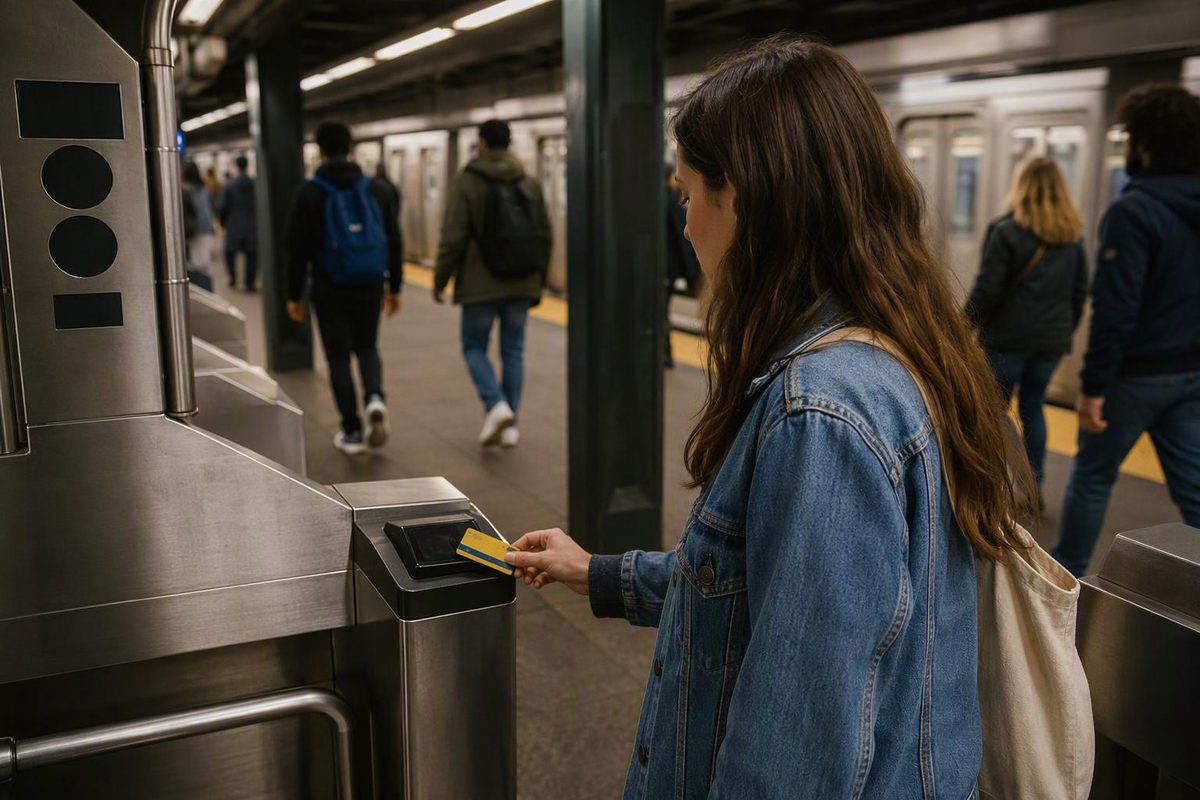
Yes. As of September 27, 2026, an existing MetroCard is still accepted on New York City subways and buses. What ended on January 1 was the ability to buy or refill a MetroCard—not the ability to spend its remaining value.
The MTA has not announced the final acceptance date. Its current guidance says MetroCard and cash bus payments will stop at the same time later in 2026, with the exact date still to come (MTA subway and bus fare guidance). An old MetroCard may therefore work today without being dependable for a trip several weeks or months away.
Choose your card status, trip timing and balance; the tool will show the safest option.
MetroCard Balance Decision
Spend the balance, with OMNY as backup.
A valid MetroCard with at least one base fare is still accepted on MTA subways and buses, but the final cutoff date has not been announced.
Source: MTA subway and bus fare guidance. PATH stopped accepting MetroCard on September 1, 2026.
MetroCard Acceptance Has Not Ended Yet
The distinction between MetroCard sales and MetroCard acceptance matters. You can no longer buy a new MetroCard or add money to an existing one, but an unexpired card with usable value can still pay for an MTA subway or bus ride while the acceptance period remains open.
At a subway station, swipe the MetroCard at the turnstile as before. On most buses, dip it into the farebox when boarding. If you are using MetroCard on Select Bus Service, use the sidewalk kiosk before boarding and retain the paper receipt.
This does not mean every old card will work. A card can be expired, damaged or short of the $3 base fare. Because refills have ended, you cannot solve a low balance by adding enough money for another ride. That is one reason the MTA’s balance-transfer and reimbursement options now matter.
The other uncertainty is timing. The MTA says acceptance will end later in 2026 but has not provided the final date. A visitor riding soon can make a different decision from someone saving a card for a future trip. Until the agency publishes a firm cutoff, there is no reliable way to promise that a MetroCard will remain usable on a particular later date.
Check the MTA’s current MetroCard page shortly before traveling if you plan to rely on an old card. That check is especially worthwhile when the card represents your only intended way to pay.
Spend a Valid Balance on an Imminent Trip
Spending the balance is the simplest choice when three conditions are true: the card has not expired, it contains enough value for the rides you expect to take, and the trip is soon enough that you can confirm MetroCard is still being accepted.
Find the expiration date in the upper-left corner on the back of the card. Then compare the available value with the $3 standard subway and local-bus fare. A card with less than one full fare cannot be refilled, so it should not be treated as a complete payment method for the next ride.
A usable card can still be worth bringing even if it will not cover an entire visit. You can spend the balance while it remains accepted and use OMNY for later rides. Keep another accepted payment method available so that a low balance, expiration problem or newly announced cutoff does not leave you without a way to enter the subway or board a bus.
Do not count on replacing a lost Pay-Per-Ride MetroCard. The MTA does not replace one if it is lost or stolen, so handle it like cash. If the card contains a balance you care about, carrying it loosely through a trip creates a risk that does not exist when the value has already been transferred.
A MetroCard is also no longer a practical choice for a visitor who does not already have one. Sales and refills have ended, so there is no reason to search station machines, stores or another neighborhood for a new card. Go directly to OMNY instead.
Transfer a Balance You Do Not Want to Risk
A transfer is the more cautious choice when the MetroCard has expired, contains less than the $3 base fare or holds enough money that you do not want to risk the acceptance period ending before you can use it.
Bring both the MetroCard and an OMNY Card to an MTA Customer Service Center. The balance goes to the dedicated OMNY Card, not directly to a contactless bank card, phone or wearable.
Subway-station Customer Service Centers are staffed 24/7. Locations that may fit readily into a visitor’s route include Times Sq–42 St, Grand Central–42 St, Fulton St and Atlantic Av–Barclays Ctr. Choosing a center already near your hotel, arrival station or sightseeing route avoids making a separate cross-city trip solely for the transfer.
An expired card is not necessarily a lost balance. The MTA says remaining MetroCard balances are eligible for transfer or reimbursement for two years from the card’s expiration date (MTA transition announcement). That two-year period is tied to the expiration date printed on the individual card; it is not a general promise that MetroCard will continue to be accepted at turnstiles for two more years.
Those are separate timelines. The acceptance window determines whether a card can still pay for a ride. The transfer or reimbursement window determines how long the remaining balance may be recoverable after the card expires. A card can therefore be unsuitable for travel while its value is still eligible to be moved or reimbursed.
Ask the MTA about reimbursement when transferring the balance is impractical. That may be more suitable for someone who does not want a dedicated OMNY Card or cannot conveniently visit a Customer Service Center. The MTA guidance establishes eligibility, but the amount recoverable depends on the actual remaining balance; the draft sources do not provide a universal reimbursement amount or processing time.
OMNY Is the Direct Choice for New Visitors
You do not need an OMNY Card to use OMNY. A contactless credit or debit card, phone or wearable can be tapped at a subway turnstile or bus reader. No OMNY account or app is required.
Use the same physical card or the same device for every eligible ride. The standard subway and local-bus fare is $3, and eligible spending is capped at $35 over a rolling seven-day period when the same payment method is used consistently (MTA OMNY guidance).
Consistency matters because the payment method identifies the rides that count toward the cap. Switching between a physical bank card and a phone can prevent those rides from being treated as one continuous set, even if the phone is connected to that card. Pick one and keep tapping it.
Each traveler should use a separate payment method if each person wants to earn an individual fare cap. One person’s tap history does not create a separate cap for everyone traveling with them.
Visitors who prefer cash or want to keep transit spending on a dedicated card can buy and reload an OMNY Card at vending machines in every subway station. That option also gives someone a card that can receive a transferred MetroCard balance at an MTA Customer Service Center.
The $35 cap should not be treated as a prediction of what every visitor will spend. It is the maximum eligible subway and local-bus spending under the rolling seven-day cap when the same method is used. A visitor taking fewer rides pays only for the rides taken. The cited MTA guidance does not establish that every regional train, airport connection or non-MTA service counts toward that cap.
A Mixed MetroCard and OMNY Trip Can Work
There is no requirement to choose one payment system for the entire visit while MetroCard remains accepted. Someone with a valid old card can use its remaining value first and then tap OMNY for later rides.
The tradeoff is that MetroCard spending does not become OMNY spending. If you want eligible rides to count toward OMNY’s rolling seven-day cap, begin using one OMNY payment method and continue with that method. Rides paid from the old MetroCard balance do not build that payment method’s OMNY history.
For a short, imminent visit, using a small MetroCard balance first may be reasonable. For a later trip or a card with substantial value, transferring the balance avoids relying on an acceptance date that has not been announced. If the remaining balance is unknown, check the card before treating it as your fare for the first ride and carry an OMNY-compatible backup.
Groups should make the decision per traveler. One person may have a usable MetroCard while another goes straight to OMNY. If several people want their own OMNY fare caps, each should keep using a separate card or device rather than repeatedly changing payment methods.
PATH No Longer Accepts MetroCard
The MTA rules cover New York City subways and buses. They do not establish the payment rules for every rail system in the region.
PATH stopped accepting MetroCard on September 1, 2026. A MetroCard that still works at an MTA subway turnstile will not pay for a PATH trip between New York and New Jersey. PATH now requires TAPP or a contactless bank card, phone or wearable (Port Authority advisory).
That difference is easy to miss when a route includes both systems. A trip from a New York subway station to a PATH station involves separate payment rules even if the journey feels continuous. Do not preserve a MetroCard balance for the New Jersey portion of the route, because PATH’s MetroCard acceptance has already ended.
See the separate guide to OMNY, PATH and TAPP before crossing the Hudson. For an MTA-only trip, the present answer remains yes: an existing MetroCard is accepted until the MTA announces and reaches its final cutoff. For a future trip, OMNY is the safer payment plan because that cutoff is still unspecified.