 New York Know
The short answer: choose the view or choose the icon
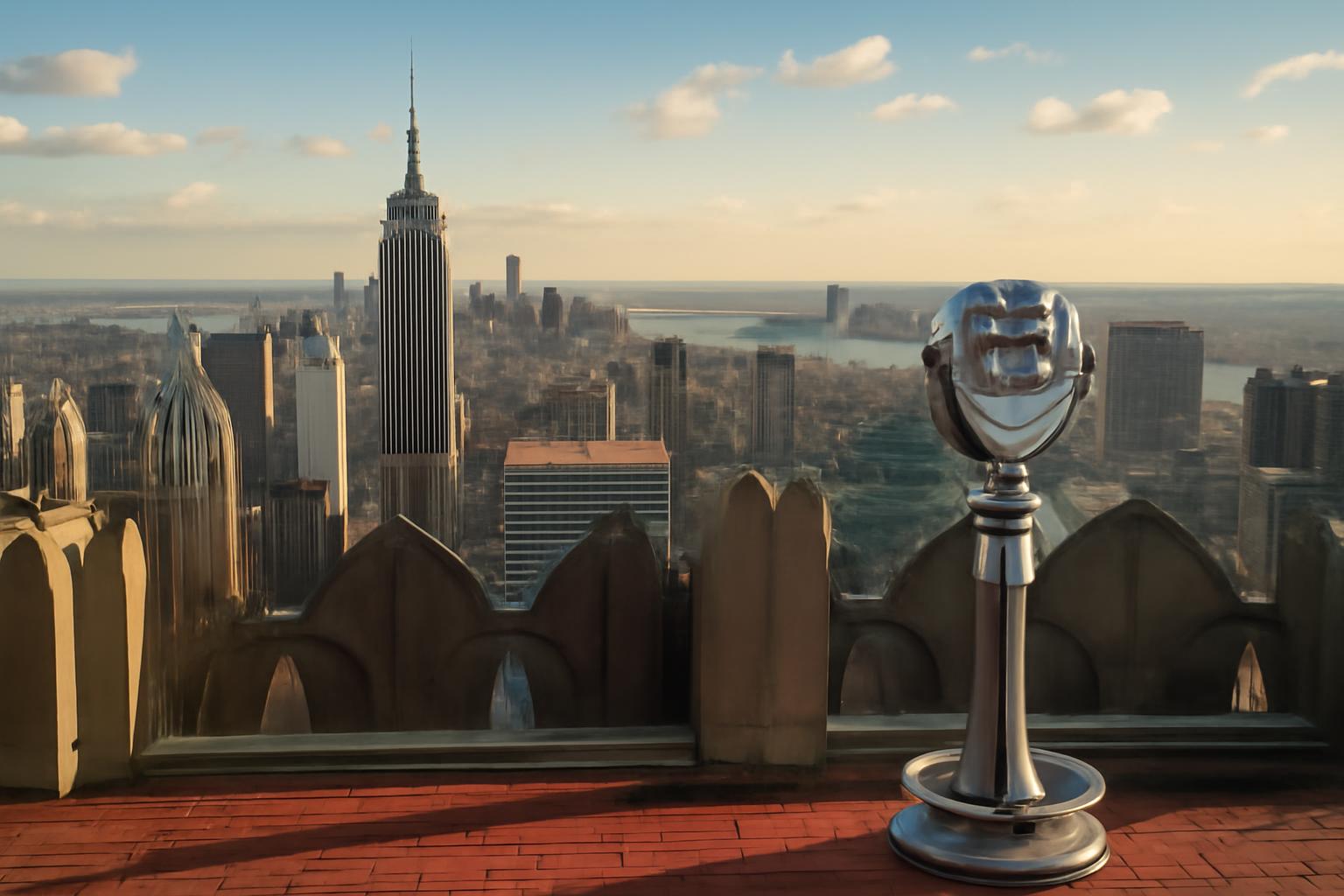
Choose Top of the Rock if you want the Empire State Building to dominate your skyline photographs or if a clearer perspective over Central Park is one of your priorities.
Choose the Empire State Building if you want to enter the landmark itself, stand substantially higher above Manhattan, and explore exhibits about the building’s history, architecture, construction, and cultural identity.
Neither attraction is the objective winner for every visitor. The central question is simpler:
Do you want the Empire State Building in front of you—or beneath your feet?
If the building must appear in your photograph, choose Top of the Rock. If walking into the Empire State Building is the New York experience you have imagined, choose the Empire State Building.
| Comparison | Top of the Rock | Empire State Building |
|---|---|---|
| Best fit | Recognizable skyline compositions, Empire State Building photographs, and Central Park views | Height, history, Art Deco character, and entering the landmark |
| Signature views | Empire State Building and a clearer north-facing Central Park perspective | Lower Manhattan, the Financial District, One World Trade Center, and potentially the Statue of Liberty |
| Standard viewing levels | Floors 67, 69, and 70 | Primarily the 86th-floor observatory (firsthand level comparison) |
| Maximum listed deck height | Approximately 850 feet on floor 70 | Approximately 1,250 feet on floor 102, sold as an upgrade (listed height comparison) |
| Outdoor access | Terraces on floors 67 and 69, plus an open-air upper level on floor 70 | Open-air, wraparound 86th floor; the higher 102nd floor is enclosed |
| Historical content | Welcome gallery, theater, and Rockefeller Center context | More substantial exhibits about the building’s history, architecture, construction, and popular culture |
| Photography constraints | Clear barriers can create reflections and smudges, although some gaps may help | Metal fencing may enter the frame, although some cameras can use gaps in the fence |
| Starting-price snapshot | Timed admission from $42 (official Top of the Rock ticket page) | The 86th floor from $44; combined 86th- and 102nd-floor access from $79 (official Empire State Building site) |
The prices in this article were checked on July 30, 2026. They are dated starting-price snapshots, not quotations for every date or entry time.
The fairest initial comparison is Top of the Rock timed admission versus Empire State Building 86th-floor admission. Do not compare one attraction’s basic ticket with the other’s premium package and conclude that one is dramatically more expensive or comprehensive.
For most travelers with limited time or money, one observation deck is enough. Both provide broad Manhattan panoramas, elevators to the viewing areas, outdoor exposure, and the experience of looking across Midtown from above. A second deck becomes worthwhile only if you value the differences—history and height at the Empire State Building versus skyline composition at Top of the Rock—enough to buy two tickets and reserve two parts of your itinerary.
What can you see from each observation deck?
There is no useful universal answer to “Which has the better view?” The better choice depends on the landmarks and compositions you care about.
The Empire State Building itself
This is Top of the Rock’s defining advantage. From Rockefeller Center, the Empire State Building becomes the principal subject rather than the platform beneath you. It sits within a layered Midtown composition, with Lower Manhattan extending behind it when visibility permits.
That matters more than it may initially seem. The Empire State Building is one of the shapes many visitors associate most immediately with New York. Photographing it from Top of the Rock gives the image an obvious focal point and a strong sense of place.
From the Empire State Building, you naturally cannot photograph the entire building within the skyline. You are buying a different experience: looking outward from the icon rather than looking toward it.
Central Park
Top of the Rock is generally the stronger choice for Central Park. Its north-facing perspective allows the park’s long rectangular form to become part of the composition, although nearby development can affect the precise sightline.
Central Park may also be visible from the Empire State Building in suitable conditions, but intervening Midtown towers obstruct more of it. A photographer who compared both attractions reported clear park views from Top of the Rock but only part of the park from the Empire State Building because of surrounding buildings (see the firsthand photography comparison).
If Central Park is your main priority, Top of the Rock is the safer choice. If it is only one landmark among many, consider the entire direction of the view rather than treating park visibility as the sole deciding factor.
Lower Manhattan and the Financial District
The Empire State Building has the stronger position for looking south toward Lower Manhattan. Its higher viewpoint can align Midtown rooftops with the Financial District and One World Trade Center farther down the island.
Top of the Rock also looks south, but the Empire State Building occupies the foreground and becomes the dominant subject. That often produces the more recognizable photograph, although it is not necessarily the clearest perspective for studying the southern end of Manhattan.
Choose the Empire State Building when you want a broader elevated view toward downtown. Choose Top of the Rock when you want the Empire State Building to organize that southern composition.
The Statue of Liberty
The Statue of Liberty may be visible from the Empire State Building when haze, clouds, precipitation, and other atmospheric conditions cooperate. The building’s height and position make it the more logical of these two choices if that distant view matters to you.
Do not, however, buy either ticket on the assumption that a small landmark near the horizon will be clearly visible. Even on an otherwise pleasant day, haze can reduce contrast. The same warning applies to distant bridges, rivers, and far-off buildings.
The Chrysler Building
The Chrysler Building may be visible from the Empire State Building, although surrounding towers can affect the quality of the sightline. From Top of the Rock, firsthand comparisons have described it as partially obscured rather than cleanly isolated (review the reported landmark sightlines).
That makes the Empire State Building the better of these two options when the Chrysler Building is a priority. It still should not be treated as a guaranteed unobstructed photograph: the result depends on your position, the surrounding skyline, light, and atmospheric conditions.
Why the highest deck does not automatically produce the preferred view
The Empire State Building’s observation areas are substantially higher. That creates a broader, more elevated sense of Manhattan and can make the city’s street grid and scale more apparent.
Top of the Rock’s lower position offers a different advantage. You remain close enough to surrounding towers for individual buildings to feel prominent, while the Empire State Building gives the southern view a strong visual anchor. A lower viewpoint can therefore create the more recognizable composition even when it does not provide the widest panorama.
Height answers, “How far above the city do I want to feel?” Composition answers, “What do I want my view to contain?” Decide those questions separately.
Deck heights, viewing levels, and what standard admission includes
Top of the Rock and the Empire State Building are not configured in the same way, so floor numbers alone can be misleading.
Top of the Rock has observation levels on floors 67, 69, and 70, listed at approximately 820, 840, and 850 feet. Floors 67 and 69 have terraces with clear protective barriers. Floor 70 is the upper open-air level, creating a different relationship with the skyline and fewer overhead visual interruptions.
The Empire State Building’s standard experience centers on its open-air, wraparound 86th-floor observatory, listed at approximately 1,050 feet. Its 102nd-floor observatory, at approximately 1,250 feet, is enclosed and sold as an upgrade rather than included with ordinary 86th-floor admission. The listed heights and ticket distinctions are summarized in a repeatedly updated firsthand comparison of the two attractions (compare the deck configurations).
That creates two important distinctions:
- The Empire State Building’s observation decks are substantially higher.
- Its highest public observatory is enclosed, while the lower 86th floor provides the principal open-air experience.
More height and more outdoor exposure are not the same purchase. Someone who cares most about standing in the open air may prefer the 86th floor to the 102nd even though it is lower. Someone seeking the highest of these listed observation areas may value the enclosed 102nd floor.
At Top of the Rock, standard admission provides the core observation-deck experience across multiple levels. It should not, however, be described as automatically including The Beam Experience or SKYLIFT. The operator identifies those features as inclusions in higher-priced packages rather than as guaranteed components of every basic ticket.
Elevators carry ordinary visitors to the observation areas at both attractions, so a normal visit does not require climbing dozens of floors by stairs.
There is not enough equivalent firsthand evidence to declare whether the Empire State Building’s 102nd-floor upgrade offers good value for everyone. It adds height and an enclosed viewpoint, but whether that justifies the extra cost depends on your budget, the weather, your interest in elevation, and how satisfied you would be with the open-air 86th floor.
Which deck is better for photography?
For photography, separate what appears in the frame from how easy it is to capture that frame.
Top of the Rock usually wins on composition for visitors who want the Empire State Building. It provides a clear central subject to the south and a separate north-facing perspective toward Central Park. After dark, the illuminated Empire State Building can become the visual anchor of the entire scene.
That does not make every photograph easy. The clear barriers on the lower terraces provide some protection from wind, but shooting through them can introduce:
- Reflections from deck lighting
- Glare from low-angle sunlight or nearby buildings
- Distortion through the barrier
- Fingerprints and smudges
- Reflections of people standing behind the camera
Some barriers have small gaps that may allow certain phones, lenses, or compact cameras to avoid shooting through the clear surface. Whether a gap is useful depends on crowding, your equipment, your position, and current on-site restrictions.
Never force equipment through a space, lean beyond a barrier, or obstruct another visitor’s viewing position.
The Empire State Building presents a different constraint. The 86th-floor deck uses metal fencing rather than uninterrupted clear barriers. That fencing can enter the frame, particularly in wide-angle photographs. Firsthand photographers have nevertheless reported gaps through which some cameras can be positioned, making it possible to reduce the obstruction in suitable spots (compare the reported barrier designs).
Neither design is universally better. Top of the Rock’s barriers can seem transparent to the eye but cause problems for a camera. The Empire State Building’s fence is visually obvious but may allow a lens to shoot through a gap. A phone, a large camera body, and a lens with a wide front element will not interact with those barriers in the same way.
Choosing by photographic subject
Choose Top of the Rock for:
- A skyline centered on the Empire State Building
- A distinct north-facing Central Park composition
- Night photographs featuring the illuminated Empire State Building
- Multiple elevations and angles during the standard observation-deck visit
Choose the Empire State Building for:
- South-facing views toward Lower Manhattan
- A higher perspective over the street grid
- Photographs in which the Empire State Building does not need to appear
- The experience of photographing the city from inside the landmark itself
Sunset and nighttime photography
Sunset can provide several types of light during one visit: daylight, warm low-angle light, twilight, and illuminated buildings. It also creates tradeoffs. Popular entry periods may be harder to secure, viewing positions can be contested, and low-angle sunlight can increase reflections and glare.
At Top of the Rock, reflections may become particularly noticeable when you shoot through a barrier with bright light in front of you or deck lighting behind you. Move slightly, shade the lens where practical, avoid positioning a strong light directly behind the camera, and hold a phone or lens close to—but not dangerously against—the surface.
At the Empire State Building, moving around the wraparound deck may help you work with the direction of the light. The fence remains a compositional constraint, but it does not create the same broad reflective surface.
After dark, Top of the Rock gains a distinctive subject: the Empire State Building itself. Daylight is usually more useful for identifying distant landmarks, while nighttime emphasizes illuminated towers, traffic lines, and Midtown’s density.
The practical verdict is therefore qualified: Top of the Rock generally offers the more recognizable skyline subject, while the Empire State Building may provide stronger southern views and a different set of workable photography positions. Results vary with light, haze, weather, equipment, crowd levels, and access to a useful spot.
Tickets, starting prices, and premium upgrades
Compare equivalent tickets before deciding which attraction offers better value.
As checked on July 30, 2026, the Top of the Rock operator displayed:
- Timed admission from $42
- All-inclusive admission from $72
- VIP admission from $185
The higher packages listed features such as The Beam Experience and SKYLIFT, while the VIP product added guided, photographic, and hospitality elements. Basic timed admission should not be assumed to include those premium features (compare the operator’s current ticket categories).
On the same check date, the Empire State Building operator displayed:
- 86th-floor access from $44
- Combined 86th- and 102nd-floor access from $79
- A $5 booking charge per transaction
The wording “per transaction” matters. It does not necessarily mean a separate $5 charge is applied to every individual ticket. Its per-person effect can differ between a solo purchase and one transaction containing several tickets (check the operator’s displayed ticket structure).
The apparent $2 difference between the two standard starting prices does not establish what either attraction will cost for your visit. Starting or variable prices can change with the selected date, entry time, demand, availability, taxes, and upgrades. A sunset comparison may differ from an early weekday comparison.
For a fair value check:
- Select the same date.
- Compare similar entry times.
- Start with Top of the Rock timed admission and Empire State Building 86th-floor admission.
- Inspect taxes, booking charges, and other additions.
- Confirm which observation levels are included.
- Compare the final checkout totals.
- Only then consider premium experiences.
A premium Top of the Rock package and an Empire State Building 102nd-floor ticket are not exact equivalents. One can add attraction-style experiences around the observation deck; the other principally adds access to a higher, enclosed observatory. Value depends on which enhancement you genuinely want.
Do not assume that a multi-attraction pass will save money. Calculate the cost of your full itinerary and check current reservation rules, included levels, exclusions, and availability. A pass covering only a standard deck may not include the premium feature you had in mind.
Because prices, packages, and inclusions can change, verify the live checkout total immediately before paying.
The experience beyond the view
The Empire State Building is the stronger history-focused destination.
Its visitor route adds context about the building’s planning, construction, elevators, lighting, architecture, and place in popular culture. The Art Deco setting is part of the attraction rather than simply an entrance to a viewing platform. Historical displays, photo installations, and a King Kong-related feature give visitors reasons to slow down before or after looking over the city.
A commercial visitor guide describes exhibits on the second and 80th floors covering planning, construction, elevators, lighting, and cultural prominence (review its overview of the Empire State Building experience). Individual installations and the precise route can change, but the important distinction is stable: this is a building visit as well as a skyline visit.
That makes the Empire State Building especially suitable if you are interested in:
- Art Deco design
- New York architectural history
- Skyscraper construction and operation
- The building’s role in films and popular culture
- Spending meaningful time inside the landmark itself
Top of the Rock is more skyline-oriented, but it is not a bare platform. Its experience is connected to Rockefeller Center and includes a welcome gallery, immersive theater, elevators, terraces, and multiple observation levels. Optional premium features add a more attraction-led component for visitors who want it.
The Top of the Rock operator also lists The Weather Room, serving drinks and light bites on the 67th-floor terrace. Comparative accounts have reported seating areas as well. Availability and service can change, so treat these as supporting amenities rather than the principal reason to choose the attraction.
The useful contrast is:
- Empire State Building: a historical landmark experience culminating in high observation decks.
- Top of the Rock: a multi-level skyline experience embedded within Rockefeller Center.
Both offer more than an empty rooftop, but their emphasis differs. If poor visibility would leave you disappointed by a predominantly view-led attraction, the Empire State Building’s exhibits may preserve more of the visit’s value. That is a planning judgment, not a guarantee of a better bad-weather experience.
A complete comparison of restrooms, seating, indoor shelter, mobility arrangements, and other amenities would require equivalent current information from both operators. Check the attractions’ visitor information directly if any of those details will determine whether the visit works for you.
When to visit: daylight, sunset, nighttime, crowds, and weather
Reserve timed admission in advance if your itinerary depends on a particular period, especially sunset. Popular slots can sell out, and high-demand entry times may cost more.
One traveler reported arriving at Top of the Rock during a September afternoon and finding it fully booked for the rest of that day. This is an example of what can happen, not evidence that same-day tickets are normally unavailable (read the firsthand account).
Daylight
Daylight is the most practical choice for identifying landmarks, understanding Manhattan’s shape, and photographing distant parts of the city. It also suits the Empire State Building if you want to spend time in the exhibits and then examine the southern skyline.
The tradeoff is that midday light can be flat or harsh. Haze also becomes more apparent when you are trying to distinguish distant landmarks.
Sunset
Sunset provides the greatest variety of atmosphere during a single visit. You may see the city in daylight, warmer evening light, blue hour, and the beginning of nighttime illumination.
It is also the least forgiving period for a relaxed plan. Possible disadvantages include:
- Scarcer ticket availability
- Demand-based price increases
- More competition for preferred viewing positions
- Strong glare
- Reflections in clear barriers
- Greater pressure around elevators and interior transition areas
Do not assume either deck will be quiet at sunset.
Nighttime
Night emphasizes illuminated towers, street grids, traffic, and Midtown’s density. Top of the Rock has a particular advantage after dark because the Empire State Building becomes part of the illuminated skyline.
The cost is reduced landmark recognition. Central Park becomes a dark area rather than a detailed landscape, and distant features can be difficult to distinguish.
Crowds and queues
Claims that Top of the Rock is always less crowded are not supported by systematic evidence. Some firsthand visitors have found it less crowded than the Empire State Building during their visits, while others have reported long Top of the Rock queues. Date, season, weather, entry time, ticket type, security flow, elevator operations, and temporary conditions can all change the experience.
Early morning or later evening may feel less pressured than the main sunset period, but neither time guarantees a short wait. Avoid scheduling a tightly timed dinner, show, train, or airport journey immediately after an observation-deck visit.
Weather and visibility
The forecast should be central to your decision. Clouds, haze, precipitation, and low visibility can erase the distant views that justify either ticket. A cloudy day does not automatically make the visit worthless, but it may remove the Statue of Liberty, distant bridges, or a clear Lower Manhattan outline from the view.
If possible, preserve some flexibility in your itinerary rather than assigning the deck to the least changeable day. Before booking, investigate the operators’ current rescheduling and weather terms rather than assuming poor visibility entitles you to a refund or exchange.
Outdoor levels can feel colder and windier than street level, so dress for exposure, particularly outside summer. Top of the Rock’s clear barriers may provide some protection on the lower terraces, while its open upper level feels more exposed. The Empire State Building’s 86th-floor deck is also open to the conditions despite its fencing. Firsthand visitor guidance likewise recommends preparing for cold or windy deck conditions (see the comparative visitor advice).
Immediately before paying, verify:
- Current hours and last entry
- Available time slots
- Final checkout prices
- Included observation levels
- Rescheduling terms
- Weather-related operating information
- Restrictions relevant to your group or equipment
Use the operators’ current visitor-information and booking pages rather than relying on old opening hours or policy summaries in third-party articles.
The best choice by traveler type—and how to fit it into Midtown
Choose Top of the Rock if you are a skyline-focused photographer
Top of the Rock is the clearer choice when your essential photograph includes the Empire State Building. It also suits visitors who want two distinct subjects: Central Park to the north and the Empire State Building to the south.
Plan around the barriers. A strong composition does not eliminate glare, reflections, smudges, or competition for a useful gap.
Choose Top of the Rock if Central Park is a priority
Top of the Rock generally provides the more legible perspective over Central Park. The park reads as a major landscape feature rather than a partly hidden strip beyond intervening towers.
Visibility can still deteriorate in haze or low cloud, and development around the park can alter specific sightlines.
Choose Top of the Rock if you want several standard viewing levels
The core observation experience spreads the visit across floors 67, 69, and 70. That creates changes in height, barrier design, and exposure without requiring an upgrade to a separate higher deck.
Premium features remain separate and should not be confused with the standard observation levels.
Choose the Empire State Building if entering it is part of the dream
For some first-time visitors, substituting another deck misses the point. If you have imagined entering the Empire State Building, seeing its Art Deco details, learning its story, and looking out from the 86th floor, choose it.
A technically preferable skyline composition will not compensate for skipping the landmark you actually wanted to experience.
Choose the Empire State Building for history and architecture
Its displays and architectural identity make it the stronger attraction for visitors who want context rather than only a panorama. Allow time for the interior route instead of treating it as an obstacle between the entrance and the elevators.
Choose the Empire State Building for height and southern views
The 86th floor is substantially higher than Top of the Rock’s observation levels, and the optional 102nd floor goes higher still. The location is also more favorable for looking toward Lower Manhattan, the Financial District, and potentially the Statue of Liberty.
Remember that the 102nd floor is enclosed and separately priced. Do not buy it merely because the floor number is larger; buy it if the additional elevation and enclosed viewpoint matter to you.
Families with a busy itinerary
One deck is usually enough for a family trying to balance major sights, meals, rest, and travel time. One family travel writer who paid for both attractions preferred Top of the Rock based on that family’s experience of the views, lines, and crowd levels, while still regarding the Empire State Building as an iconic visit worth considering.
That is a useful firsthand perspective, not a universal family verdict. Choose according to what will hold your group’s interest: multiple viewing levels and skyline photographs at Top of the Rock, or exhibits and landmark history at the Empire State Building.
Budget-conscious visitors
Do not base your decision on the displayed $2 difference between starting prices. Compare the standard products for the same date and a similar time, then inspect the final totals.
Consider the cost of what you would genuinely select. If you want the 102nd floor, The Beam Experience, or SKYLIFT, your real comparison is no longer between the two basic tickets.
Poor-visibility days
If you must visit despite a poor forecast, the Empire State Building’s historical content may provide more to do when distant views disappear. Top of the Rock remains connected to the wider Rockefeller Center experience, but its main comparative advantage is the composition of the skyline.
This does not guarantee that the Empire State Building will be better in rain, cloud, or high winds. Operating conditions and access to outdoor areas can change, so check directly before leaving.
Fit the deck into the right part of Midtown
The Top of the Rock entrance is 50 West 50th Street, between Fifth and Sixth Avenues. The Empire State Building observatory entrance is 20 West 34th Street, also between Fifth and Sixth Avenues. A detailed comparison lists both entrances and confirms that ordinary visitors reach the decks by elevator (check the location and access comparison).
Sources place the attractions roughly two kilometres apart or within approximately a 20-minute walk, but the actual journey depends on your route, crossings, crowds, pace, and mobility needs (see the reported walking estimate).
Rather than crossing Midtown repeatedly, follow New York Know’s area-based planning philosophy:
- Pair Top of the Rock with Rockefeller Center and nearby Fifth Avenue or Midtown sights.
- Pair the Empire State Building with the 34th Street area and activities farther south in Midtown.
- Avoid visiting one nearby sight in the morning, crossing the city, and then returning for a timed deck reservation.
If you decide to visit both
A complementary strategy is to visit the Empire State Building in daylight, when you can engage with the exhibits and examine the southern skyline, and then visit Top of the Rock near sunset or after dark, when the Empire State Building itself becomes part of the scene.
That is not the only correct order. Weather, price, ticket availability, and your wider itinerary may make the reverse sequence more practical.
Visiting both is worthwhile only if you value the differences enough to justify two tickets and two timed visits. Treat them as complementary experiences, not interchangeable versions of the same panorama.
For most visitors, the decision returns to one question: Do you want the Empire State Building in front of you or beneath your feet? Choose Top of the Rock for the classic Empire State Building skyline composition and clearer Central Park perspective. Choose the Empire State Building for greater height, Art Deco history, exhibits, and the experience of entering the icon.
Frequently asked questions
Can you see the Empire State Building from Top of the Rock?
Yes. It is one of Top of the Rock’s defining views and the principal reason many photographers choose it. Looking south, the Empire State Building becomes a dominant skyline subject, with more of Midtown and Lower Manhattan extending behind it when visibility permits.
Clouds, haze, precipitation, light, and your exact viewing position will affect the result. At night, the building’s illumination can make it an especially strong focal point.
Is the Empire State Building’s 102nd-floor upgrade worth it?
It is worth considering if you specifically want the highest of these listed observatories, prefer an enclosed viewpoint, or regard the additional elevation as an important part of the experience.
It is not automatically the better purchase. The standard 86th-floor observatory is already substantially higher than Top of the Rock and provides the Empire State Building’s principal open-air experience. The 102nd floor is enclosed and costs more.
Because the available evidence does not provide a strong equivalent firsthand test of the upgrade, compare the live price difference and decide whether height and enclosure matter more to you than budget.
Which observation deck is better at sunset?
Top of the Rock often has the composition advantage because the changing light surrounds a skyline containing the Empire State Building. The transition into nighttime can also leave you with a compelling illuminated landmark.
The Empire State Building provides a higher perspective and strong views toward Lower Manhattan, so it may suit you better if elevation and southern views matter more.
Neither is a guaranteed sunset winner. Both may have scarce availability, demand-based prices, crowded viewing positions, and weather-dependent results. Top of the Rock’s clear barriers can also create glare and reflections in low-angle light.
Is Top of the Rock less crowded than the Empire State Building?
Sometimes, but not reliably. Some firsthand visitors have found Top of the Rock less crowded or faster to navigate, while others have reported long queues there. Those accounts reflect individual dates and conditions rather than a dependable rule.
Assume that either attraction can be busy, particularly around sunset, on weekends, during holidays, and in peak travel periods. Early morning or later evening may reduce pressure, but neither guarantees a quiet deck or short line.
Is it worth visiting both Top of the Rock and the Empire State Building?
Yes, if you value their differences. The Empire State Building combines greater height, exhibits, architecture, and the experience of entering the landmark. Top of the Rock provides multiple viewing levels, a skyline containing the Empire State Building, and a clearer Central Park perspective.
For limited budgets or short trips, one is normally enough. If you visit both, consider using different times of day: the Empire State Building in daylight for history and southern views, followed by Top of the Rock near sunset or after dark for the skyline composition.