 New York Know
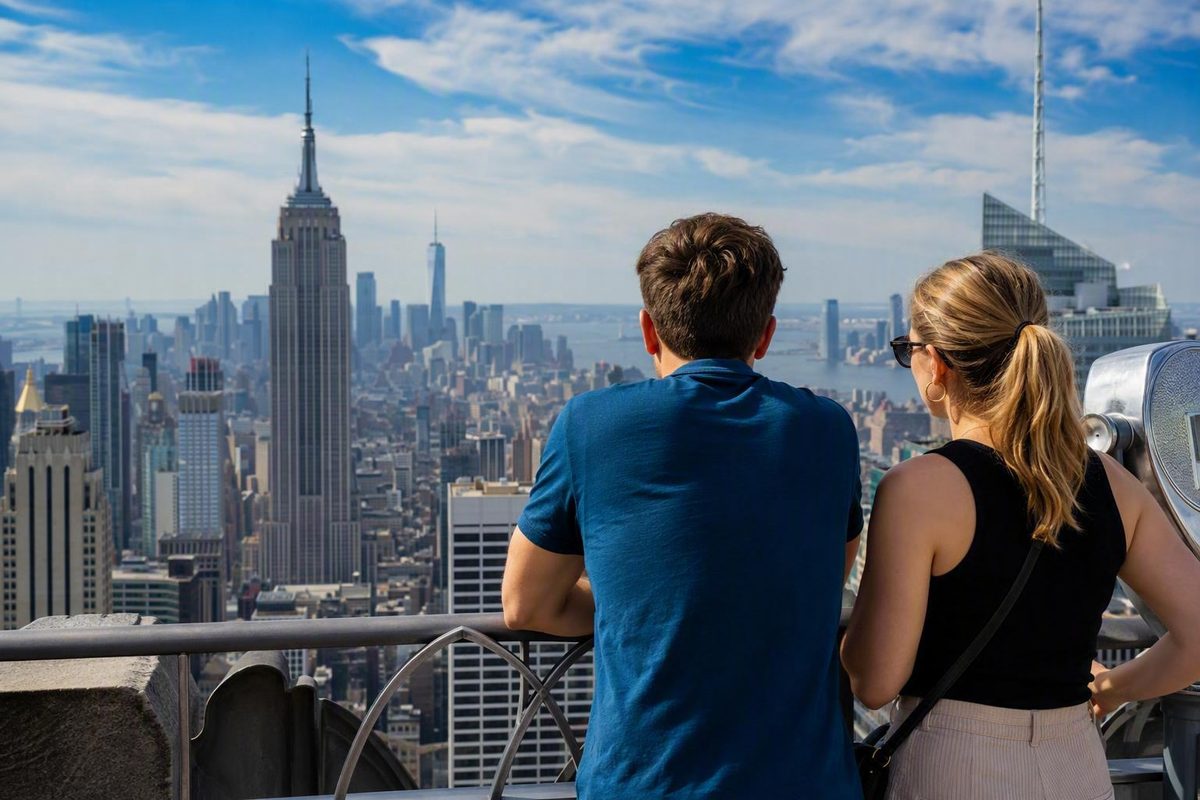
New York viewing platforms are not interchangeable windows onto the same scene. Each frames the city differently, and each asks you to spend your time in a different way.
Top of the Rock places familiar Midtown architecture—including the Empire State Building—inside the photograph. The Empire State Building lets you enter the landmark and explore its history. SUMMIT One Vanderbilt incorporates the skyline into mirrored, multisensory rooms. Edge emphasizes physical exposure through a projecting outdoor platform and glass floor. One World Observatory provides an enclosed Downtown panorama focused more strongly on the harbor, rivers, and bridges.
Choosing by height alone is therefore rarely useful. Start with the view and experience you want, then consider weather, timing, total ticket cost, and the neighborhood already on your itinerary.
Editorial approach: this comparison uses official information where it is available in the supplied research and third-party comparison guides for broader context. Features, upgrades, prices, hours, and admission terms can change, so operator-controlled details should be confirmed directly before purchase.
The short answer: choose by experience, not by height
If you only have time for one New York viewing platform:
- Choose Top of the Rock if you want the Empire State Building in your skyline photographs, with Central Park visible in the opposite direction.
- Choose the Empire State Building for historical context, Art Deco character, exhibits, and a classic open-air observatory visit.
- Choose SUMMIT One Vanderbilt if mirrored rooms, visual effects, glass ledges, and playful photographs matter as much as the skyline itself.
- Choose Edge if you want a projecting outdoor platform, a glass floor, angled walls, or the possibility of a separately ticketed exterior climb.
- Choose One World Observatory if you prefer a fully enclosed experience and want Downtown, harbor, river, bridge, and Statue of Liberty views.
This is a preference decision, not a contest with a demonstrable winner. Third-party guides—many of them supported by affiliate sales, ticket marketplaces, passes, or tour businesses—rank the same venues in sharply different orders. One local tour-company comparison declines to rank them at all, arguing that the answer depends on interests, budget, and available time. That disagreement is useful: “best” means best for a particular visitor, not best under a universal standard. The local-guide comparison explains why it does not name one winner.
Ask three questions in order:
- What do I want to see? A close Midtown composition, the Empire State Building and Central Park, the Chrysler Building, or the harbor and Statue of Liberty?
- How do I want to experience it? In open air, behind climate-controlled glass, through historical exhibits, inside immersive installations, or with a thrill element?
- Where will I already be? Rockefeller Center, Midtown South, Grand Central, Hudson Yards, or Lower Manhattan?
Location can settle a close decision. Top of the Rock, the Empire State Building, and SUMMIT fit different versions of a Midtown day. Edge belongs naturally with Hudson Yards and the High Line. One World Observatory fits the World Trade Center, Financial District, waterfront, or Seaport.
Maximum elevation matters less than it initially appears. A very high observatory can place your preferred landmark far away, while a lower platform may create a stronger photograph because of its position and sightline. View composition is more useful than a ranking that mixes building heights, floor numbers, deck elevations, and exterior-climb heights.
New York’s five major observation decks compared
This article focuses on the five established skyscraper observatories repeatedly compared across the supplied sources. Newer, lower, or structurally different attractions are not treated as direct equivalents where their current status or comparability is insufficiently verified.
| Viewing platform | Neighborhood | Viewing format | Principal view emphasis | Signature feature | Best-fit visitor | Likely drawback | Planning time |
|---|---|---|---|---|---|---|---|
| Top of the Rock | Rockefeller Center, Midtown | Indoor and outdoor areas on floors 67, 69, and 70, including an open upper roof as reported in this comparison | Empire State Building to the south; Central Park to the north | Multi-level Midtown compositions without entering the Empire State Building | Skyline photographers and visitors who want open air | Popular photo positions may feel busy | One comparison estimates roughly 45–60 minutes; allow longer for queues or photography |
| Empire State Building | Midtown South | Exhibits and an open-air 86th-floor deck; an enclosed 102nd-floor observatory with an applicable ticket, according to the official venue site | Broad Midtown panorama without the building itself in the picture | Historic setting and Art Deco identity | Visitors who value history and standing inside the landmark | Higher ticket tiers can increase the total cost | Allow more than a quick deck visit if you plan to explore the exhibits |
| SUMMIT One Vanderbilt | Midtown East, beside Grand Central | Mirrored and multisensory indoor rooms, glass ledges, and an outdoor terrace; third-party sources place the experience across floors 91–93 and recommend two to three hours | Chrysler Building, Empire State Building, Central Park, and Midtown | Installations that make the room part of the view | Visitors seeking an immersive attraction and staged photographs | Reflections, sensory intensity, crowds, and reported one-way circulation | Roughly 1.5–3 hours across the supplied third-party estimates |
| Edge | Hudson Yards | A 100th-floor outdoor deck with indoor viewing, a glass-floor section, angled walls, and Eastern Point as detailed by this repeat-visitor guide | Hudson River, New Jersey, Midtown, and Lower Manhattan | A platform that projects outward from the building | Visitors seeking outdoor exposure and a physical thrill | Reflections, wind, crowding, and distant or partly obstructed landmarks | One source reports about 45 minutes for a straightforward visit |
| One World Observatory | World Trade Center, Lower Manhattan | Fully enclosed viewing areas reported on levels 100–102 in this multi-venue comparison | Lower Manhattan, harbor, Statue of Liberty, rivers, and bridges | Enclosed Downtown panorama and elevator presentation | Visitors prioritizing weather protection or a Downtown view | No open-air deck; Midtown landmarks are farther away | Plan around an hour as a starting point, then add time for queues or dining |
These durations are planning guidance, not promises. Queues, photography, sunset, exhibits, food, and optional experiences can all extend a visit. SUMMIT generally warrants more time because its rooms and installations are central to the attraction rather than incidental decoration.
Do not treat a price found in an old comparison, marketplace listing, or search result as the amount you will pay. Check each operator’s current ticket page for the selected date and time, including fees, premium-slot supplements, admission inclusions, rescheduling terms, and upgrades. Compare final checkout totals rather than advertised starting prices.
For Top of the Rock, Edge, and SUMMIT in particular, the supplied research relies on third-party descriptions rather than current first-party operating documentation. Treat named features and upgrades as reported offerings and confirm that they remain available before booking.
Top of the Rock or the Empire State Building: the two classic Midtown choices
This decision comes down to composition versus setting.
Choose Top of the Rock if you want the Empire State Building to appear in your skyline photographs. Choose the Empire State Building if being inside the landmark matters more than including it in the picture.
Why Top of the Rock works for skyline composition
Multiple comparison sources describe Top of the Rock as having observation areas on floors 67, 69, and 70, with indoor space and outdoor viewing. Its upper roof is reported to be open air and free of glass panels. This comparison documents the three levels and unglazed upper area.
That distinction matters to photographers. Glass can introduce reflections, especially after dark, while an unglazed sightline makes it easier to photograph the skyline cleanly.
Location is the larger advantage. Looking south places the Empire State Building prominently within the Midtown skyline. Looking north opens the view toward Central Park. That two-direction composition explains why Top of the Rock receives recurring photography recommendations even though it is not necessary to rank the platforms by height.
The tradeoff is popularity. Open air does not mean unlimited room at every railing, and preferred photo positions may require patience. If photography is the priority, leave enough time to move among the levels rather than assuming the first opening will provide the strongest angle.
Top of the Rock fits naturally into a Rockefeller Center and Fifth Avenue day. It can also sit before or after nearby Midtown sightseeing, avoiding a separate journey solely for the view.
Why the Empire State Building works as a landmark experience
The Empire State Building is the history-led choice. Its Art Deco identity, exhibits, architecture, and place in New York’s skyline are part of the attraction rather than merely a route to an elevated window.
The official venue site confirms that the main observatory experience includes an open-air 86th-floor deck. Access to the enclosed 102nd-floor observatory requires a ticket that includes that additional level. Current observatory and ticket information is available from the Empire State Building.
Whether the upper-level ticket is worthwhile depends on its current price and your priorities. It may appeal when reaching the additional level is part of the occasion. It may be unnecessary when the exhibits, open air, and main deck already satisfy the reason for visiting.
There is one unavoidable photographic limitation: the Empire State Building cannot appear in a skyline photograph taken from its own observatory. For many first-time visitors, that is the decisive difference. The compensation is atmosphere—you are standing inside the building that would otherwise anchor the image.
Allow more time than you would for a bare viewing terrace if you want to engage with the exhibits. Compare ticket tiers carefully, because an additional observatory level or other premium experience can materially increase the checkout total.
Geographically, the Empire State Building works with Herald Square, Fifth Avenue, Koreatown, and Midtown South. If your day already passes through that area, it may be the more coherent choice even when Top of the Rock offers your preferred skyline composition.
SUMMIT One Vanderbilt: skyline view or immersive attraction?
SUMMIT One Vanderbilt is better understood as an immersive attraction combined with elevated Midtown views than as a conventional observation deck with unusual decoration.
Third-party sources consistently describe mirrored surfaces, floor-to-ceiling windows, digital or multisensory elements, glass Levitation ledges extending beyond the facade, and Affinity, a room containing inflatable silver balls. An outdoor terrace changes the atmosphere near the end of the experience. This independent travel guide describes Levitation, Affinity, the mirrored rooms, and the separately priced Ascent feature.
Its position near Grand Central creates reported views that include the Chrysler Building, Empire State Building, Central Park, and the surrounding Midtown skyline. Yet visitors wanting a quiet, visually simple panorama should recognize the tradeoff: at SUMMIT, the designed environment is often as prominent as the city outside.
Choose SUMMIT when you want:
- A multi-room experience rather than a quick elevator-and-railing visit
- Mirrors, digital effects, and staged photographs
- Glass ledges and a pronounced sense of spectacle
- A location beside Grand Central and Midtown East
- An attraction where the group can interact with installations as well as identify landmarks
It may be a weaker fit if you dislike intense reflections, visually busy interiors, or constrained visitor flow. Third-party accounts report crowding and one-way movement between some levels, which may prevent visitors from returning to an earlier room. Reflected light and other guests can also complicate straightforward skyline photography.
The supplied third-party estimates range from roughly 1.5 hours to as much as three hours, depending on pace, crowds, photography, and sunset timing. One detailed comparison recommends allowing two to three hours. Unlike a simple deck, rushing through SUMMIT can undermine the reason for choosing it.
Some third-party sources describe Ascent as an extra-cost glass-elevator experience. Its current operation, price, and ticket inclusion are not established by first-party evidence here, so verify those details directly with SUMMIT before treating it as part of the visit.
Families should assess the actual features rather than rely on a categorical label. Mirrored rooms and floating silver balls may delight one child and overwhelm another; glass ledges and sensory effects may be exciting to one visitor and uncomfortable to the next.
Edge: the choice for open-air height and glass-floor thrills
Edge is at 30 Hudson Yards, making it the straightforward viewing-platform choice for a day involving the High Line or the surrounding Hudson Yards area.
Third-party sources describe an outdoor deck on the 100th floor that projects from the building, along with indoor viewing, a triangular glass-floor section, angled glass walls, skyline steps, and the pointed Eastern Point. This repeat-visitor guide documents the location, deck features, view directions, and reported average visit time.
Views extend across the Hudson River and New Jersey, with Midtown and Lower Manhattan visible in different directions. The western position creates breadth, but familiar landmarks may look farther away than expected. Edge is therefore not automatically the right choice for a tightly framed photograph of classic Midtown towers.
Choose Edge if the appeal is:
- Walking onto a platform that visibly projects beyond the building
- Looking down through a glass floor
- Leaning toward angled glass walls
- Standing at a pointed outdoor corner
- Combining the visit with Hudson Yards and the High Line
- Potentially adding a more demanding exterior-building experience
City Climb is described in the supplied sources as a separately sold, tethered exterior-building experience rather than part of standard deck admission. Because participation rules and operations are controlled by the venue, confirm the current ticket, restrictions, weather terms, clothing requirements, and admission arrangements directly before booking.
Edge also has photographic compromises. Repeat-visitor accounts report that glass can create reflections, signature positions may require a wait, and some landmarks can appear distant or partly obstructed. The experience is strongest when exposure and perspective matter more than obtaining the cleanest possible landmark portrait.
One source reports an average Edge visit of about 45 minutes. Treat that as a baseline for a straightforward look around, not a schedule guarantee. Queues, sunset, photography, drinks, or City Climb can extend the visit.
One World Observatory: an enclosed panorama for a Lower Manhattan day
One World Observatory is in One World Trade Center at West and Vesey Streets in Downtown Manhattan. The venue’s official site lists the address as 117 West Street and provides separate routes for tickets, visit planning, and restaurant reservations. Consult the official One World Observatory site before visiting.
The observatory is consistently described as fully enclosed, with viewing areas reported across levels 100 through 102. A detailed comparison documents the indoor format and those levels. This makes it the clearest option for visitors who do not want prolonged exposure to rain, wind, cold, or heat.
Enclosure solves comfort, not visibility. Low cloud, fog, or heavy haze can still erase the panorama even when the attraction remains open.
The composition differs from the Midtown platforms:
- Lower Manhattan fills the foreground.
- New York Harbor and the Statue of Liberty become more prominent.
- The Hudson and East rivers help reveal the shape of the island.
- The Brooklyn and Manhattan Bridges fit naturally into the view.
- Midtown landmarks appear at a greater distance rather than dominating the scene.
That last point can be an advantage or a drawback. If you want to understand Manhattan’s southern edge and its relationship to the water, the distance provides useful context. If you want a close, layered Midtown skyline, choose a platform farther north.
Multiple comparisons also describe an elevator presentation showing New York’s development over time during the ascent. It contributes an introductory narrative without making the entire visit a museum-style experience.
The official venue promotes ONE Dine and provides a separate restaurant-reservation route. Before using dinner as your admission strategy, confirm whether the reservation includes observatory entry, requires a separate ticket, or carries other conditions. Do not assume one booking grants the other.
One World Observatory works best as part of a compact Downtown day: the World Trade Center, Financial District, Battery waterfront, or Seaport. It can also fit a generally north-and-east route toward Chinatown. New York Know’s walking-first Lower Manhattan itinerary shows how those areas can form one continuous day without repeated cross-city transit.
When to book: daylight, sunset, weather, crowds, and ticket upgrades
Timing affects the view almost as much as platform choice.
Daylight is best for reading the city. Street grids, parks, waterways, neighborhoods, and individual landmarks are easier to identify. It also makes Manhattan’s relationship with Brooklyn, Queens, New Jersey, and the harbor more legible.
Sunset provides a sequence rather than one fixed scene: daylight, changing color, blue hour, and city lights. That makes it desirable, but comparison sources report that sunset periods may sell out or cost more. Book in advance if that transition is important, but do not rely on a universal reservation window. Demand varies by date, season, weather, and events.
Night reduces neighborhood detail and emphasizes illuminated towers, bridges, traffic, and the wider pattern of the city. It can be dramatic, but reflections matter more behind glass. Clothing, phones, interior displays, and room lighting may all appear in photographs.
Timed admission is common across the five venues according to the supplied comparisons. That does not guarantee entry at the exact moment printed on the ticket or establish a standard wait. Read the operator’s current arrival instructions and leave schedule flexibility around a timed visit.
Check visibility, not just rain
Near the visit date, check:
- Cloud ceiling and low-cloud risk
- General visibility and haze
- Rain
- Wind
- Temperature at the scheduled time
Exposure and visibility are separate issues. One World Observatory protects visitors from the elements because it is enclosed. Top of the Rock, the Empire State Building, Edge, and SUMMIT have reported outdoor components where wind and temperature may be more noticeable. All five still require sufficiently clear air for a worthwhile long-distance view.
A rainy day with reasonable visibility may work from an enclosed observatory. A dry day with a low cloud layer may not. Greater elevation does not help when the viewing area is inside the cloud.
Compare the total ticket, not the headline price
Prices can vary by date, time, seller, ticket tier, and selected extras. A sunset supplement, processing charge, express option, flexible-entry ticket, or premium experience can widen the gap between venues.
Reported add-ons include:
- The Empire State Building’s 102nd-floor observatory
- Top of the Rock’s The Beam
- Edge City Climb
- SUMMIT Ascent
These are different experiences rather than directly comparable upgrades. The supplied research confirms the Empire State Building’s additional observatory through its official site, but current first-party verification is missing here for The Beam, City Climb, and Ascent. Confirm that each reported add-on is operating and determine whether it is included, separately ticketed, or subject to restrictions.
Immediately before purchasing, use the relevant operator’s official ticket and visitor-information pages to check:
- Current hours and available time slots
- Final fees and premium-time pricing
- Rescheduling and cancellation terms
- Poor-visibility or weather policies
- Age or participation restrictions
- Sightseeing-pass reservation requirements
- What standard admission includes
Opening slots and later evening visits are reasonable times to investigate if you prefer easier circulation, but neither guarantees low crowds.
Fit the platform into the neighborhood instead of building a day around transit
The most efficient choice is often the platform already located inside your day.
That does not mean accepting a view you do not want merely to avoid a subway ride. It means using neighborhood fit as the tiebreaker after identifying the experience that appeals to you. New York Know’s stated planning approach is to group sights by area and build days that work on foot, reducing repeated crossings that fragment an itinerary. The site explains this walking-first planning philosophy.
Use these pairings:
- Top of the Rock: Rockefeller Center, Fifth Avenue, and the streets of central Midtown
- Empire State Building: Herald Square, Koreatown, Fifth Avenue, and Midtown South
- SUMMIT One Vanderbilt: Grand Central, the Chrysler Building area, and Midtown East
- Edge: Hudson Yards, the High Line, and the far west side
- One World Observatory: World Trade Center, Financial District, Battery, and Seaport
The three broadly central choices do not occupy exactly the same itinerary. Top of the Rock is the natural attachment to Rockefeller Center. SUMMIT fits Grand Central and Midtown East. The Empire State Building sits farther south and works well when the day already passes Herald Square or Koreatown.
Combining two Midtown platforms may duplicate part of the skyline. Their interiors and experiences can still differ—history at the Empire State Building versus immersion at SUMMIT, for example—but a second ticket may not add enough visual contrast for a short first trip.
A Midtown platform combined with One World Observatory creates a clearer contrast: central skyline composition from one and a southern harbor perspective from the other. The cost is a transition between neighborhoods and another timed attraction in the schedule.
For most short first visits, one paid observatory is enough. Add a second only when you have a specific comparison in mind, such as:
- Daytime Midtown photography followed by a Downtown night panorama
- An open-air classic paired with a fully enclosed observatory
- A landmark-focused view paired with harbor and bridge views
- A conventional deck paired with an immersive or thrill-oriented attraction
Lower viewpoints belong in a separate category. The seasonal Cantor Roof Garden at The Met combines art, Central Park, and Midtown views from a much lower elevation. Vessel is an architectural climbing structure at Hudson Yards rather than an equivalent skyscraper observatory. Neither should be treated as a sixth entry in the same comparison.
Which New York viewing platform is best for photographing the Empire State Building?
Top of the Rock is the strongest recurring recommendation. Its Rockefeller Center position places the Empire State Building prominently to the south, while the reported unglazed upper area helps avoid the reflections common behind windows or glass walls.
SUMMIT and Edge can also include the building in their views, but SUMMIT’s mirrored environment can complicate clean skyline photography, while the building may appear more distant or partly obstructed from Edge. It cannot appear in photographs taken from its own observatory.
Which NYC observation decks have open-air viewing areas?
Top of the Rock, the Empire State Building, Edge, and SUMMIT One Vanderbilt have reported outdoor components, although their formats differ.
Top of the Rock has outdoor terraces and an open upper roof. The Empire State Building’s main observatory is open air. Edge combines indoor viewing with a projecting outdoor platform surrounded by angled glass. SUMMIT is predominantly an indoor, installation-led attraction but is reported to include an outdoor terrace.
One World Observatory is fully enclosed.
Which viewing platform is best in rain, cold, or hot weather?
One World Observatory is the clearest choice when shelter from rain, wind, cold, or heat is the main requirement because its viewing experience is fully enclosed.
That does not make it immune to weather in the way that matters most for the view. Clouds, fog, and haze can still obscure the skyline. Check both comfort conditions and long-distance visibility before visiting.
How long should I allow for a New York observation deck?
Use about an hour as a starting point for a straightforward deck visit, then add time for queues, exhibits, detailed photography, sunset, food, or upgrades.
Published estimates vary by venue and source. Top of the Rock has been estimated at roughly 45–60 minutes, one Edge guide reports an average of about 45 minutes, and SUMMIT estimates extend from approximately 1.5 hours to three hours because its installations are central to the experience. These are planning estimates, not guaranteed durations.
Can I visit two New York viewing platforms in one day?
Yes, but two timed observatories can dominate the day and may duplicate views.
Pair nearby Midtown venues only when their different experiences are the reason for going—for example, Empire State Building history followed by SUMMIT’s installations. For stronger visual contrast, combine one Midtown platform with One World Observatory and allow for the journey to Lower Manhattan.
Most first-time visitors on a short trip will gain more from one carefully selected platform and a coherent neighborhood day than from rushing between two.
The compact decision rule is simple: choose Top of the Rock to place the Empire State Building in the skyline, the Empire State Building for history and a classic open-air landmark visit, SUMMIT for an immersive multi-room experience, Edge for outdoor glass-floor thrills, or One World Observatory for an enclosed Downtown and harbor panorama.
Then apply the walking-first test. The strongest choice is usually the platform that delivers your preferred view while fitting naturally into the neighborhood already planned for that day. Before booking, verify current tickets, hours, admission inclusions, upgrade availability, weather policies, and visibility.