 New York Know
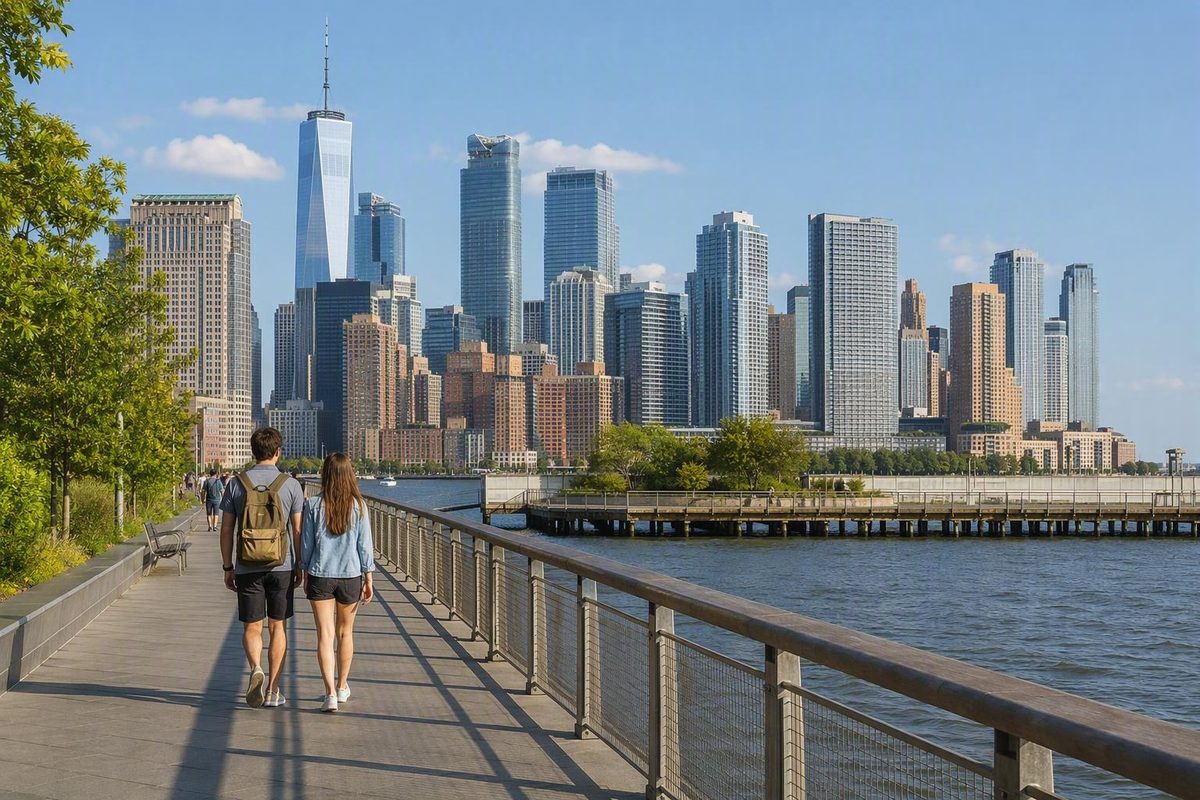
A useful New York travel itinerary is not a list of famous places arranged by popularity. It is a set of compact neighborhood days, each with one or two anchors and enough open time to walk, eat, rest, and notice where you are.
This five-day framework covers Midtown; Central Park and one museum; Lower Manhattan; Chelsea, the High Line, and Greenwich Village; and Brooklyn Bridge–DUMBO. With fewer days, remove or swap an entire module instead of compressing every landmark into an exhausting schedule. Three days provide a focused introduction, a fourth adds the West Side and Village, and a fifth gives Brooklyn room to become a neighborhood visit rather than a hurried extension (compare the three-, four-, and five-day framework).
The sequence is flexible. Change it for weather, attraction availability, operating days, performance schedules, and your interests. The goal is not to complete New York. It is to experience several distinct parts of the city without spending every day crossing it.
How this neighborhood-based New York itinerary works
This itinerary covers New York City, not New York State. It is designed primarily for a first-time visitor with three to five sightseeing days who expects to walk and use public transportation.
The central rule is simple:
- Choose one geographic area for the day.
- Use the subway for the larger move to or from that area.
- Walk between nearby sights.
- Treat secondary stops as optional.
That reflects New York Know’s practical approach to planning walkable days: group sights by area so that less of the trip is spent repeatedly crossing the city. The New York Know homepage also organizes its planning guidance around neighborhood selection and compact walking routes.
This method protects you from a common mistake. Two attractions may appear reasonably close on a citywide map while still requiring a subway ride, a transfer, a long station passage, and another walk. Repeating that pattern several times can make a day feel fragmented even when the total distance does not look extreme.
The five-day framework at a glance
| Day | Area | Anchor experience | Optional evening | Shorter-trip decision |
|---|---|---|---|---|
| 1 | Midtown | Grand Central, Bryant Park, the library, Rockefeller Center, Fifth Avenue, and one skyline view | Broadway or Times Square | Keep for most first visits |
| 2 | Central Park and one museum | A selective park walk plus the Met or American Museum of Natural History | Quiet dinner near the park or hotel | Keep if parks or museums matter |
| 3 | Lower Manhattan | Harbor edge, Financial District, 9/11 Memorial area, and Chinatown | Dinner in Chinatown or nearby | Keep for downtown history and harbor views |
| 4 | Chelsea, High Line, and Greenwich Village | Elevated park, market or waterfront stop, and neighborhood wandering | Comedy, jazz, or dinner | Omit on a three-day trip |
| 5 | Brooklyn Bridge and DUMBO | Bridge crossing, waterfront, and time in Brooklyn | Cobble Hill or a Brooklyn dinner | Omit on a four-day trip or swap with another module |
With three days, use Days 1 through 3 as the standard version. If Brooklyn matters more to you than museums, replace Day 2 with Day 5. An energetic traveler could extend the Lower Manhattan day toward Brooklyn Bridge or DUMBO, but that turns an already substantial walking day into a faster, less forgiving one.
With four days, add the Chelsea, High Line, and Greenwich Village module. It supplies something the first three days do not: an extended neighborhood day with fewer monumental attractions and more room for food, streets, and an evening activity.
With five days, give Brooklyn its own day or substantial half-day. That allows the bridge and waterfront to become the beginning of a neighborhood visit rather than a rushed photo stop attached to Downtown Manhattan.
This remains a walking-heavy plan. “Neighborhood-based” does not mean effortless. Museums are large, park paths are indirect, subway stations may involve stairs and long internal passages, and standing can be as tiring as walking.
When a day runs long, remove a stop. Do not compensate by racing through a museum, skipping a meal, or turning a neighborhood into a sequence of photographs. A delayed lunch, an interesting street, or an hour sitting in the park is not a planning failure.
Do not treat the numbered order as fixed, either. A rainy forecast may move the museum day forward. A clear evening may determine when you book an observation deck. A performance may make Midtown the logical choice on one particular night. Sketch the routes first, then assign dates after checking current conditions and reservations.
Choose a base and prepare for walking and subway travel
For a short, landmark-heavy first trip, Midtown is a practical base, not a universally superior one. Its advantages include proximity to many Day 1 stops and connections toward Uptown and Downtown. The trade-off is an environment that may feel busier and more commercial than a residential neighborhood.
Consider these alternatives according to your preferred trip style:
- Chelsea or Flatiron: useful for a trip divided between Midtown and Downtown, with access to the West Side.
- Upper West Side: convenient for Central Park and the American Museum of Natural History, with evenings that may feel more neighborhood-oriented.
- Greenwich Village or the West Village: appealing if historic streets, independent dining, bars, comedy, or jazz matter more than proximity to the largest concentration of headline attractions.
- Midtown: convenient if Broadway, Rockefeller Center, Times Square, and straightforward access to landmark areas are priorities.
The decision is a trade-off between convenience and atmosphere. A central hotel may reduce daily travel, while a Village or Upper West Side base may better match the environment you want after sightseeing. Accommodation guidance similarly distinguishes Midtown’s landmark access from Chelsea’s West Side position, the Villages’ dining and nightlife, and the Upper West Side’s park access and quieter evenings (compare the neighborhood trade-offs).
Before booking, examine the hotel’s exact location rather than relying only on the neighborhood name. Check its relationship to stations serving the routes you intend to use, nearby options for breakfast or late meals, and whether street noise, room size, or hotel facilities matter more than saving a transit ride.
How to move between the daily routes
Walk within each compact area and use the subway for the larger move between areas. In practice:
- Travel to Midtown, then walk the Day 1 cluster.
- Start on the chosen side of Central Park and keep the park-and-museum route there.
- Begin Lower Manhattan near the harbor and progress mostly on foot.
- Walk the High Line in the direction of your evening destination.
- Use transit for one leg of the Brooklyn day if you do not want a return bridge crossing.
Do not rely on an old article or screenshot for fares, fare caps, airport routes, payment methods, service patterns, or station accessibility. Verify current information through the relevant official transit operator shortly before departure and again on the day of travel. Weekend work, elevator outages, rerouting, and service changes can alter an otherwise sensible plan.
Pack for your own needs rather than an idealized daily distance. Useful items include comfortable, broken-in shoes, weather-appropriate layers, rain protection when needed, water, and a portable battery. A phone used for maps, tickets, photographs, and transit updates can lose power quickly.
If standing is difficult, identify seated meals and deliberate rest points in advance. Do not assume the same route length works for children, older adults, disabled visitors, or travelers with limited stamina.
Treat arrival day as a separate, light module. Airport or rail delays, luggage handling, check-in, and fatigue make it a poor time for a weather-sensitive observation deck or expensive nonrefundable booking. Walk near the hotel, have dinner, buy anything you forgot, and locate the most useful nearby station entrance. Begin the main itinerary after a night’s rest.
Day 1: Midtown landmarks, a skyline view, and an optional Broadway evening
Midtown contains enough first-trip landmarks for a coherent day without adding Downtown or Brooklyn. The route connects:
- Grand Central Terminal
- Bryant Park
- The New York Public Library
- Rockefeller Center
- Fifth Avenue landmarks
- Times Square
- One observation deck, if desired
- Broadway, if desired
A practical Midtown route
Morning: Begin at Grand Central Terminal and allow time to look around rather than treating it only as a transit entrance. From there, walk toward Bryant Park and the New York Public Library’s Fifth Avenue building. The park provides a natural pause between indoor architecture and the busier avenue.
Midday: Stop for a meal before continuing north along or near Fifth Avenue. Depending on your interests and current access, the walk can include exterior views of prominent buildings, shops, public spaces, and St. Patrick’s Cathedral.
Afternoon: Arrive at Rockefeller Center and decide how much of the complex you want to explore. Avoid turning every doorway into a mandatory stop; the route works because its landmarks are close enough to encounter naturally.
Late afternoon or evening: Finish with Times Square, an observation deck, dinner, or a performance. If your evening plans are elsewhere, Times Square can be a short detour rather than the final destination.
Times Square does not require a long visit. Walk through, take in the signs and crowds, and leave when you have seen enough. Travelers who enjoy spectacle, shopping, or street photography may want longer; everyone else can treat it as a transition into the Theater District.
Choose one skyline view
Do not stack several paid observation decks into the itinerary merely because each appears on a “must-see” list. They compete for money, time, and the same favorable-weather window.
Top of the Rock is a route-compatible example because it sits within the Rockefeller Center portion of this day. That does not make it objectively better than the Empire State Building, Edge, One World Observatory, or another viewpoint.
Choose according to:
- the view you want,
- where the attraction fits geographically,
- current price and ticket terms,
- indoor versus outdoor preferences,
- and expected visibility.
Place a timed reservation near the beginning or end of the route. A morning booking creates a fixed starting point. An evening booking lets the walk unfold toward it. A rigid reservation in the middle of the day is more likely to create pressure if lunch runs long or another stop holds your attention.
Before buying, confirm current entry procedures, change or cancellation policies, weather provisions, and any restrictions directly with the operator.
Add Broadway only if you want an evening anchor
A Broadway performance pairs naturally with Midtown, but it is optional. Check the selected production’s current performance schedule, venue rules, ticket terms, running time, and entry requirements directly. General assumptions about theater schedules do not apply to every production.
If you attend a show, have a seated meal and reduce late-afternoon sightseeing. The performance is not a minor add-on after a full day; it is another anchor requiring time and energy.
Alternative evenings include dinner near the hotel, a brief return to Times Square after dark, or an early night before Central Park.
Lower-energy Midtown version
Use this reduced route:
- Grand Central Terminal
- Bryant Park
- Library exterior or interior, as current access permits
- Rockefeller Center
- Seated meal
- Optional Broadway performance
Skip the observation deck, extended shopping, and a long Times Square visit. If you reserve a show, consider it the second half-day anchor.
Bad-weather Midtown version
Emphasize Grand Central, the library where access permits, indoor Rockefeller Center stops, a long meal, and a performance. Shorten the Fifth Avenue walk and postpone the skyline view if visibility is poor.
Confirm hours, interior access, security procedures, and performance details before setting out. The strength of the day is its compact geography: poor weather can shorten the outdoor portions without forcing you to replace them with an attraction across the city.
Day 2: Central Park and one major museum
The realistic structure for Day 2 is one section of Central Park plus one major museum. Attempting two large museums and a comprehensive park walk is likely to turn the day into a race.
Choose one side:
- East-side version: Central Park plus the Metropolitan Museum of Art
- West-side version: Central Park plus the American Museum of Natural History
This choice matters because the park is not a simple rectangular promenade. Paths curve, landmarks are dispersed, and repeatedly crossing from one side to the other adds effort.
East-side version: Central Park and the Met
Morning: Enter from the east and choose a compact park cluster that supports your museum visit. Depending on your starting point, interests, and energy, possibilities include:
- Conservatory Garden
- The Reservoir
- Bethesda Terrace and Fountain
- Bow Bridge
- A short stretch of east-side paths
These are alternatives, not a compulsory sequence. Conservatory Garden, the Reservoir, Bethesda Fountain, and Bow Bridge represent different possible versions of a park visit.
Midday: Stop for food before entering the museum, or plan a seated break during the transition from the park.
Afternoon: Make the Metropolitan Museum of Art the indoor anchor. Select a few departments, periods, or objects before arriving. The museum is too extensive to cover comprehensively during a combined park-and-museum day, and a geographically organized five-day guide likewise advises choosing a limited number of sections rather than trying to see everything (see the selective Met strategy).
A simple method is to choose:
- one collection you already care about,
- one unfamiliar area,
- and one flexible stop if energy remains.
This is more rewarding than moving rapidly through gallery after gallery simply to cover more of the building.
West-side version: Central Park and natural history
Morning: Enter from the west and choose nearby or central park stops such as:
- Strawberry Fields
- A nearby stretch of the Lake
- Bow Bridge, if it fits without a major detour
- The Reservoir
- A west-side lawn, playground, or path
Midday: Have a seated meal or substantial break before the museum.
Afternoon: Give the American Museum of Natural History the larger share of the remaining day. Choose exhibits according to your interests rather than treating every hall as mandatory.
Keep the park route on the west side or in the nearby central section. Zigzagging across the park for every named landmark undermines the geographic logic of pairing it with the museum.
Family-oriented version
For families, replace an adult-centered park checklist with one or two child-focused choices. Depending on age, interest, weather, and current operations, possibilities include:
- a playground,
- the carousel,
- the Central Park Zoo,
- a short wildlife or boating-area walk,
- the American Museum of Natural History,
- or another child-focused museum nearby.
Do not assume a long park walk plus a large museum will suit every child. Choose the experience most likely to hold attention, schedule food earlier than you might for adults, and keep the route back to the hotel straightforward.
Verify current opening information, reservations, age rules, and ticket requirements directly. Seasonal or weather-dependent attractions should remain optional.
Slower and rainy-day versions
For a slower day, use one short park section, one museum, and a seated meal. Make no distant evening commitment. If you still have energy, walk near your hotel rather than adding another major district.
In heavy rain, make the museum the principal anchor and treat the park as a short weather-dependent addition. Confirm current museum hours, timed-entry rules, gallery closures, and ticket conditions. Check seasonal access separately for any rooftop, garden, boating, zoo, or other outdoor feature.
The objective is not to “do Central Park.” It is to experience a coherent section of it, then give one museum enough time to be worthwhile.
Day 3: Walk Lower Manhattan from the harbor to Chinatown
Lower Manhattan works best as a progression through adjacent districts. Start near the water, move through the Financial District and memorial or civic spaces, turn east where useful, and finish around Chinatown.
New York Know’s walking-first Lower Manhattan route includes the Battery, Bowling Green, Wall Street, Trinity Church, downtown memorial and transportation areas, the Seaport, and Chinatown without requiring repeated cross-town moves.
Choose one of two openings
Harbor opening: Begin around the Battery. This gives the morning open space and waterfront views before the route enters narrower Financial District streets.
Seaport opening: Begin around the South Street Seaport if you prefer the East River side or want a slower waterfront start. From there, work toward the Financial District and civic core before continuing north.
For the Battery opening, use this broad sequence:
Morning
- The Battery and waterfront
- Bowling Green
- Wall Street and nearby streets
- Trinity Church
Midday
- The 9/11 Memorial and surrounding transportation or civic spaces
- Lunch or a deliberate rest
Afternoon
- An eastward turn toward the Seaport, if desired
- Chinatown for food and the end of the day
This is a route, not a contract. You do not have to enter every building, read every plaque, or remain at every landmark for an equal amount of time.
Decide whether the 9/11 Museum is an anchor
A brief, respectful visit to the outdoor 9/11 Memorial is different from visiting the associated museum. A thorough museum visit can occupy several hours, so it should be treated as the day’s principal attraction rather than a quick stop (compare the outdoor memorial and museum visit).
If you book the museum:
- reduce the Financial District walk,
- skip the Seaport if necessary,
- avoid adding Brooklyn,
- and leave emotional space afterward.
The subject matter may make another packed attraction undesirable even if there is technically time available.
Add a harbor view without confusing it with an island visit
The Staten Island Ferry is described in the supplied travel guidance as a free option for harbor and Statue of Liberty views, subject to current service conditions (review the harbor-view option). It is transportation rather than a guided sightseeing experience, and it is not equivalent to landing on Liberty Island or visiting Ellis Island.
If you add the ferry, allow for the complete out-and-back process and remove another part of the route. Do not treat it as a consequence-free addition.
A dedicated Liberty Island or Ellis Island visit is a different module requiring its own tickets, security procedures, operating checks, and time allocation.
Finish in Chinatown instead of chasing another landmark
Chinatown gives the day a natural endpoint and an opportunity for an unhurried meal. If energy remains, continue only into a nearby area such as Little Italy or the Lower East Side.
Do not cross town to add an Uptown museum, Central Park, or another observation deck. Finishing earlier is preferable to undermining the day’s coherent route.
For a three-day visitor determined to see Brooklyn, the Brooklyn Bridge or DUMBO can become an energetic extension. It is not part of the standard Lower Manhattan day. The bridge adds distance, exposure, and more time standing or walking, while DUMBO deserves more than a quick photograph. Save it for Day 5 whenever possible.
Weather adaptation
In poor weather, shorten the Battery and waterfront portions. Make one indoor museum, market-style destination, or other Downtown interior the anchor, then use short outdoor transitions between nearby districts.
Check current access, security arrangements, opening hours, reservations, and ferry operations directly. If the waterfront is unpleasant, ending early in Chinatown is more sensible than preserving the original checklist.
Day 4: Chelsea, the High Line, and Greenwich Village
Day 4 follows Manhattan’s West Side. The High Line is an elevated public park created along a former rail route and is commonly paired with Chelsea, the Meatpacking District, and Hudson Yards.
Its linear form makes one-direction planning possible, but the day can still involve considerable walking and standing. Choose the direction according to where you want to finish.
North-to-south route for a Village evening
Use this version if Greenwich Village, the West Village, dinner, comedy, or jazz is the evening priority.
Morning or early afternoon: Begin near Hudson Yards or a northern High Line entrance.
Afternoon: Walk south along as much of the High Line as you find enjoyable. Pause around Chelsea, then continue toward the Meatpacking District.
Late afternoon: Leave the High Line near its southern end. Add Little Island only if weather, current access, and energy permit.
Evening: Continue toward Greenwich Village and Washington Square Park for streets, food, and an evening activity.
This version stays directional. It does not require walking north on the High Line and then retracing the same ground to reach the Village.
Do not overprogram Greenwich Village. Choose a few streets or a general direction, then leave room for an unscheduled café, bookstore, shop, or meal.
South-to-north route for Hudson Yards
Use this version if Hudson Yards or a ticketed observation deck is the afternoon or evening anchor.
Morning or midday: Begin at Chelsea Market or in the nearby Meatpacking District.
Afternoon: Enter the southern High Line and walk north.
Late afternoon or evening: Finish around Hudson Yards, where a reservation or dinner can become the final anchor.
Do not then attempt to give Greenwich Village equal depth on the same short afternoon. You can briefly visit both ends, but exploring both well creates a long and less focused day.
The practical choice is:
- Hudson Yards and a possible skyline attraction, or
- Greenwich Village and the West Village at neighborhood pace.
Choose according to your interests, not because either is universally essential.
Evening options
A Village-focused evening can include:
- comedy,
- jazz,
- a guided neighborhood experience,
- an unstructured dinner,
- or more walking before returning to the hotel.
Check current schedules, age restrictions, minimum-purchase policies, reservation requirements, entry procedures, and performance times directly. If an evening event is a priority, reserve it first and design the route direction around it.
Rain and low-energy versions
For rain, center the day on Chelsea Market, a nearby museum, or another indoor West Side anchor. Use only a short High Line segment if conditions improve. Do not replace every outdoor stop with an indoor attraction in another part of the city.
For a lower-energy version:
- Begin with a seated food stop.
- Walk one short High Line segment.
- Explore either Chelsea or Greenwich Village—not both in depth.
- Finish with a seated dinner.
An elevated linear park may look easy on a map, but entrances, exits, standing, and the walk into adjacent neighborhoods all contribute to fatigue. Leave while the route is still enjoyable.
Day 5: Brooklyn Bridge and DUMBO at a neighborhood pace
Brooklyn works better as a dedicated day or substantial half-day than as an attachment to Midtown, Central Park, or a major museum schedule.
For a first visit, the accessible core is:
- Brooklyn Bridge
- DUMBO
- Brooklyn Bridge Park
- Waterfront and skyline viewpoints
- An optional nearby neighborhood extension
A practical Brooklyn sequence
Morning: Cross the Brooklyn Bridge in your preferred direction, or take transit to Brooklyn and walk toward Manhattan later.
Midday: Explore DUMBO’s streets and stop for a meal.
Afternoon: Continue into Brooklyn Bridge Park, sit by the waterfront, and decide whether you want more architecture, more waterfront, or a nearby neighborhood.
Late afternoon or evening: Return by transit or extend the day toward Cobble Hill or another nearby area.
This structure allows the bridge to lead into a Brooklyn visit rather than functioning as an isolated photo stop.
Cross the bridge in the direction that suits your day
You can walk from Manhattan to Brooklyn, walk from Brooklyn toward Manhattan, or use transit for one leg. No direction is inherently correct.
Walking toward Brooklyn creates a natural transition into DUMBO and the waterfront. Walking toward Manhattan can provide a city-facing conclusion. Using transit for one leg avoids an unnecessary return crossing.
Check current subway service and station accessibility independently. Do not assume a station is step-free, an elevator is operating, or planned service is unchanged. Bridge approaches, gradients, shared paths, crowding, and weather should also influence whether the crossing suits your group.
An early start can help manage crowds, but it does not guarantee an empty bridge. Weekends, weather, events, commuting patterns, and visitor demand all affect conditions.
Let DUMBO be more than a photo stop
After the crossing, allow time for DUMBO’s streets and the waterfront. Walk into Brooklyn Bridge Park, sit with the skyline, have a meal, and slow down.
A common planning mistake is to cross the bridge, take one photograph, and immediately return to Manhattan. That includes Brooklyn geographically but does not create a Brooklyn day. The value comes from what happens after the crossing.
For more neighborhood atmosphere, continue toward Cobble Hill or another nearby area that interests you. This extension should replace an unrelated distant attraction, not precede one.
Broader Brooklyn alternatives
If your interests extend beyond the bridge area, consider building the day around one of these instead:
- Prospect Park
- Brooklyn Museum
- Brooklyn Botanic Garden
- New York Transit Museum
These are alternatives, not additions that all fit comfortably after the bridge and DUMBO. A broader Brooklyn day requires a new route; attractions in the same borough are not necessarily close enough to combine casually.
The New York Transit Museum, for example, occupies a former subway station and includes historic transit exhibits, making it a relevant indoor alternative for travelers interested in transportation history.
No-ticket-attraction Brooklyn version
A Brooklyn day can be built around the bridge, DUMBO streets, Brooklyn Bridge Park, waterfront viewpoints, and a self-directed neighborhood walk without adding a ticketed attraction; similar first-visit guidance combines the bridge, DUMBO, and waterfront as the core of a Brooklyn route (see the Brooklyn route context).
Food and transportation remain separate expenses. Verify current access where events, construction, or operating conditions could affect public spaces.
Should a shorter trip include Brooklyn?
With only three or four sightseeing days, decide what you value most.
Choose Brooklyn over another module if you prioritize:
- skyline views,
- waterfronts,
- neighborhood atmosphere,
- photography,
- or seeing more than Manhattan.
Keep the Central Park and museum day if art, natural history, or a major park matters more. Keep Midtown if iconic first-trip landmarks and Broadway dominate your list.
This is a genuine trade-off, not a test of whether you have seen the “real” New York.
Make the itinerary fit your pace, weather, interests, and reservations
A strong itinerary is designed to lose stops gracefully. Use three pace rules throughout the trip:
- One anchor attraction per half-day. A museum, major viewpoint, performance, harbor trip, or substantial guided tour can occupy that slot.
- One geographic area at a time. Move between areas deliberately rather than whenever another attraction comes to mind.
- Optional means expendable. Remove optional stops when meals, queues, weather, fatigue, or an unexpectedly good experience consume more time.
Three-, four-, and five-day versions
Three days
- Day 1: Midtown and an optional Broadway evening
- Day 2: Central Park plus one museum
- Day 3: Lower Manhattan and Chinatown
Swap Brooklyn for Day 2 or Day 3 if it better matches your priorities. Adding it as an extension is possible for an energetic traveler, but it creates a faster itinerary with less recovery room.
Four days
Add Chelsea, the High Line, and Greenwich Village. This provides a less monument-focused day with more room for food, streets, and evening entertainment.
Five days
Add Brooklyn as a separate day or substantial half-day. Use the extra time for the waterfront and one nearby neighborhood rather than filling every open hour with more Manhattan attractions.
Interest-based swaps
For poor weather: emphasize one major museum, Grand Central, an indoor market-style stop, a performance, or another indoor attraction near that day’s route.
For skyline views: choose one observation deck, a harbor ride, Brooklyn Bridge Park, DUMBO, or another waterfront. You do not need every type of viewpoint.
For food and neighborhoods: replace a ticketed landmark with an unstructured meal and walk in Chinatown, Greenwich Village, Chelsea, Cobble Hill, or another area already on the route.
For evening entertainment: choose Broadway in Midtown or comedy, jazz, and neighborhood nightlife around the Village. Let the reservation determine the direction of the day.
For families: reduce transitions and choose one child-centered anchor rather than adding children’s attractions to an adult-paced schedule.
What may need advance planning
Categories that may require advance decisions include:
- observation decks,
- Broadway and other performances,
- cruises or harbor activities,
- limited-capacity museum tours,
- guided neighborhood experiences,
- and major ticketed attractions.
Booking requirements and useful lead times change. Check official operating days, hours, seasonal access, timed-entry rules, visibility considerations, ticket-change policies, and age or entry restrictions before finalizing the day order.
Keep weather-sensitive reservations away from arrival day where possible. If a particular performance or tour is non-negotiable, book it first and build the corresponding neighborhood day around it.
Evaluate attraction passes against the real itinerary
Do not evaluate a sightseeing pass using every attraction you might theoretically visit. Calculate its value using only the attractions that fit this schedule at a realistic pace.
For each included attraction, check:
- the current standalone price,
- whether a reservation is still required,
- whether your preferred time is included,
- whether premium times or experiences cost extra,
- and whether using the pass encourages you to add an attraction merely to justify the purchase.
Commercial trip planners may present attraction-heavy schedules, but pass value depends on current prices, realistic capacity, reservation restrictions, and exclusions—not a promotional savings figure (review an example of a commercial trip planner).
If a pass encourages multiple observation decks or rushed museum visits, it may weaken the itinerary even when the arithmetic appears favorable.
Reduce the physical demands deliberately
For children, older travelers, disabled visitors, or anyone with limited stamina:
- use fewer anchors,
- shorten Central Park and High Line segments,
- schedule seated meals,
- use transit between areas,
- avoid consecutive late evenings,
- and choose a hotel based on the exact route rather than neighborhood reputation alone.
Do not label a route accessible without current research into stations, elevators, bridge approaches, restrooms, seating, street conditions, and venue layouts. Walking distance alone does not reveal stairs, steep approaches, long station corridors, or how much standing an attraction involves.
Pre-trip checklist
Before departure:
- Reserve only your true priorities.
- Save each day’s route offline or in a map list.
- Identify one nearby indoor substitute for each outdoor day.
- Check official transit service, station information, accessibility, and payment guidance.
- Confirm attraction hours, operating days, ticket terms, and seasonal access.
- Review the weather before assigning the final day order.
- Mark every optional stop as expendable.
- Leave arrival day light.
- Protect time for meals and rest.
- Carry a portable battery and weather-appropriate layers.
The trip should remain recognizable after you remove several stops. That is a sign that the neighborhood structure is working.
How many days are enough for a first trip to New York City?
Three full sightseeing days can provide a focused introduction built around Midtown, Central Park and one museum, and Lower Manhattan. Four days add room for Chelsea, the High Line, and Greenwich Village. Five days allow Brooklyn to become a separate neighborhood visit rather than an extension of another full day (see one first-visit assessment of a five-day stay).
Arrival and departure days should not automatically count as full sightseeing days. The right length also depends on pace, mobility, interests, weather, and how much time you want inside museums or over meals.
More days should add depth, not simply more attractions.
Where should a first-time visitor stay for this itinerary?
Midtown is a practical choice for a short trip centered on landmarks and Broadway because it reduces travel for Day 1 and provides connections toward the other modules. It is not the only sensible base.
Choose Chelsea or Flatiron for a central position between Midtown and Downtown, the Upper West Side for Central Park and a more neighborhood-oriented evening, or Greenwich Village for dining, streets, and nightlife.
Compare the exact hotel location with the stations and daily routes you expect to use. The best base is the one that balances convenience, price, atmosphere, noise tolerance, and your preferred evening environment.
Which New York attractions should be booked in advance?
Consider advance planning for observation decks, Broadway performances, cruises, limited-capacity tours, guided museum experiences, and any ticketed attraction central to your trip.
Do not reserve everything. Too many fixed entry times make it difficult to adapt to weather, queues, meals, and fatigue. Book the true priorities, then leave the surrounding neighborhood route flexible.
Always confirm current schedules, entry rules, change policies, and reservation requirements directly with the operator.
What are good free alternatives to paid skyline and harbor attractions?
For skyline views without adding an observation-deck ticket, consider Brooklyn Bridge, Brooklyn Bridge Park, the DUMBO waterfront, the High Line, and public waterfront spaces. For harbor and Statue of Liberty views, the Staten Island Ferry is described by the supplied guidance as a free option under current service conditions, but it does not visit Liberty Island or Ellis Island.
Lower Manhattan’s waterfront, the outdoor 9/11 Memorial, Central Park, Bryant Park, Washington Square Park, and neighborhood walks can also support days that do not depend on stacking paid attractions. Confirm current access where construction, events, weather, or operating conditions may affect the experience.
How can I make this itinerary less physically demanding?
Reduce each day to one principal attraction, one short nearby walk, and a seated meal. Use the subway for the large move between areas, shorten park and High Line segments, and take transit for one leg of the Brooklyn Bridge day.
Avoid combining a major museum with a distant evening commitment. Alternate demanding days with lighter ones, and remove optional stops before fatigue becomes severe.
Research current station and venue accessibility for your exact route rather than assuming a neighborhood-based plan is automatically step-free.
A successful first New York trip is not measured by the number of landmarks completed. Choose one area, protect time for walking and meals, and allow the city to interrupt the schedule. Three focused days can be rewarding; four or five simply add neighborhood depth without requiring more frantic movement.