 New York Know
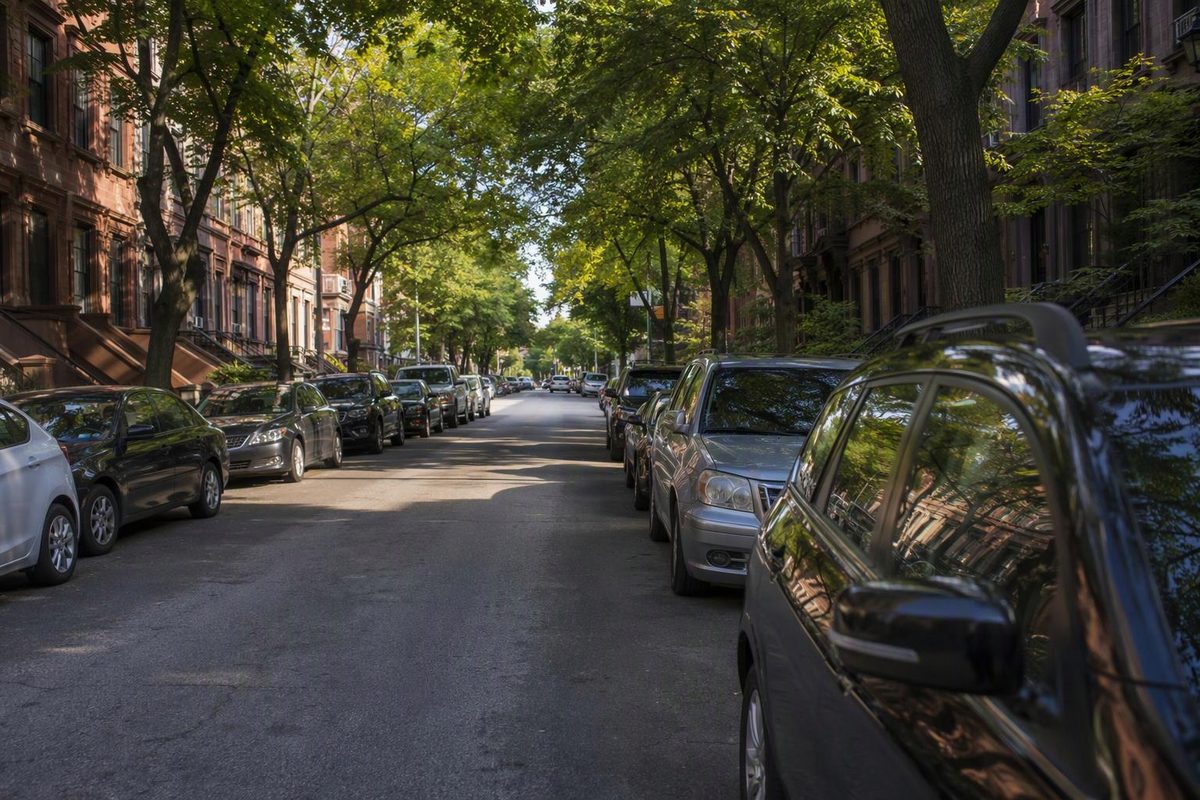
Alternate side parking (ASP) is New York City’s curb-clearing system for street cleaning. If an ASP sign applies to your space, you cannot leave the car there during the listed day and time. The restriction lasts for the entire posted window, even after the sweeper passes.
For a visitor, the safest routine is simple: read every sign on the block when you park, photograph the signs and car location, and check the official NYC311 status again on the morning the car must move.
How to read an alternate side parking sign
Look for a crossed-out P with a broom. The sign lists the days and hours when parking is prohibited on that side of the street. A sign reading “Tues & Fri 11:30 a.m.–1 p.m.,” for example, means the space is restricted throughout that window on those days.
Do not assume the closest sign is the only one that matters. NYC says traffic rules require only one sign per block, so drivers should check the whole block. Metered hours, loading zones and No Standing rules can overlap with ASP. The city’s parking-sign map can help with advance planning, but it may not reflect new or temporary changes; signs on the street remain the essential check. See the official NYC311 ASP rules and sign guidance.
A few details prevent common mistakes:
- The restriction continues after the street sweeper has passed.
- NYC provides a five-minute grace period when an ASP restriction begins, but it is better not to use that as a planning buffer.
- Passenger vehicles may not double-park during cleaning, even if other drivers appear to be doing it.
- Unless a sign imposes a shorter limit, a vehicle may not remain in the same spot for more than seven consecutive days. Motorcycles, scooters and mopeds follow the same parking rules as other vehicles.
The last two rules are covered in the city’s parking rules overview.
“Suspended” does not mean all parking is free
When the city suspends alternate side parking, only the street-cleaning restriction is lifted unless NYC expressly announces something more. Every other posted regulation still applies.
Meters generally remain in effect on religious and other ASP-suspension holidays. They are suspended on six major legal holidays: New Year’s Day, Memorial Day, Independence Day, Labor Day, Thanksgiving and Christmas. On those major holidays, certain weekday No Stopping, No Standing and No Parking rules are also suspended. Rules in effect seven days a week, such as “No Standing Anytime,” remain enforceable. On Sundays, ASP is not in effect and NYC311 says meters do not require payment. These distinctions appear in the city’s ASP guidance.
NYC publishes a 2026 alternate side parking suspension calendar. Weather and emergency suspensions can be announced separately, sometimes late in the day, so the annual calendar is not the final word. Check the dated status on the NYC311 homepage or app before relying on a suspension. DOT’s official ASP page also lists notification options and explains that some temporary suspensions affect only part of the city.
What visitors should do with a rental car
If the car will sit unused for a day or more, compare the garage price with the time and uncertainty of managing curb rules. Free curb parking can require an early return, a search for another legal space and another full sign check. A garage may be more practical when the day’s plans are in another neighborhood and moving the car would split an otherwise compact itinerary.
Before driving into Manhattan, also account for tolls, garage rates and the congestion-zone charge rather than treating curb parking as the only cost. Our guide to congestion pricing and Manhattan parking explains that wider tradeoff.
If you do use the curb, save the car’s exact location, set two alarms and allow time to find a legal replacement space. Do not plan to return at the final minute: traffic, unfamiliar one-way streets and a full block can turn a simple move into a missed restriction.
The working rule: the posted signs govern the space. NYC311 and DOT tell you whether an announced ASP suspension affects that day or location. Check both.