 New York Know
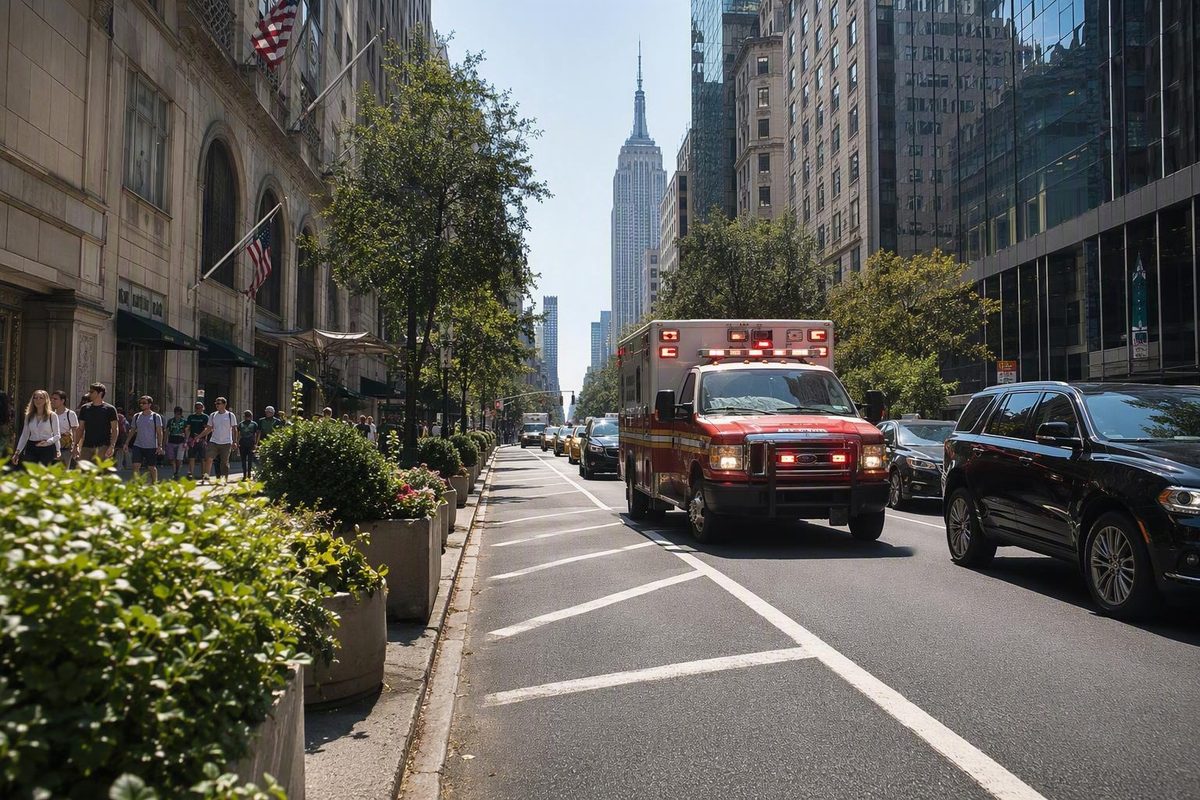
Eighteen months after congestion pricing began, a city-mandated study covering 4,319 block faces and hundreds of thousands of vehicle movements found that on-street parking below 60th Street was no easier to find. The toll coincided with faster ambulance trips, roughly 20% more cycling, and about 10% less double-parking, but visitors should still budget for a garage rather than count on a curb space.
That is the practical verdict for a Manhattan-based trip: reduced traffic and scarce parking can exist at the same time. Paying the toll gives a driver access to local streets. It does not reserve any part of the curb.
Why Less Traffic Seemed Likely To Free Parking
The received wisdom is reasonable. Congestion pricing discouraged some vehicle entries into Manhattan, so fewer arriving cars should have meant less competition for parking. Drivers might also have stopped north of 60th Street, parked near transit, and continued into the zone without paying the charge.
Early reports gave that concern a visible form. Shortly after tolling began, residents and workers described greater parking competition near Upper West Side and Washington Heights transit stops. One report counted more than 12 New Jersey-plated vehicles within two blocks of a subway station.
Those observations were worth investigating. They did not, however, establish why the vehicles were there or compare occupancy with conditions before tolling. An out-of-state plate can belong to a commuter avoiding the zone, but also to a resident, visitor, contractor, patient, shopper, or worker.
The broader intuition also treats moving traffic and parked cars as the same population. They are not. Fewer cars can pass through a neighborhood while residents, workers, delivery vehicles, service vehicles, and long-stay parkers continue occupying nearly all of its legal spaces.
Congestion pricing did improve several transportation measures. It simply did not produce the expected opening at the curb.
The Parking Study Found Scarcity Before And After Tolling
The parking research was required by New York’s Traffic Mobility Act. Observations occurred approximately nine to ten months before the January 2025 start of tolling and again nine to ten months afterward.
Researchers examined 4,319 block faces inside the Congestion Relief Zone, north of its boundary, and around selected transit-accessible locations in Manhattan, Brooklyn, Queens, and the Bronx. They used stationary or timelapse photography, vehicle-mounted cameras, mobile observations, and manual surveyors to record hundreds of thousands of vehicle movements, according to reporting on the DOT study.
The result was largely stable scarcity. Free on-street parking remained difficult to find, while metered availability was essentially unchanged overall inside and outside the zone. The study also found little evidence that drivers broadly shifted to parking outside the zone and taking transit downtown, the behavior DOT specifically set out to examine, as NY1 reported.
Across the study context, roughly 15% of curb space per block was unoccupied on average. In some surveyed areas outside the zone, more than 90% of free and metered spaces combined were occupied. Those numbers do not give an individual driver a precise probability of success, but they show why “unchanged” must not be read as “available.”
| Measure | Reported Finding | Visitor Meaning |
|---|---|---|
| Average open curb space | ~15% per block | Most curb capacity remained occupied |
| Free and metered occupancy | Over 90% in some areas | Free parking was not dependable |
| Double-parking in the zone | Down ~10% | Less illegal curb obstruction |
| Broad park-and-ride shift | Not found | North of 60th was not newly overwhelmed |
There were localized changes. Demand for metered spaces increased slightly just north of the boundary, and several Upper West Side blocks showed greater midday demand. Depending on grouping, increases in adjacent and transit-accessible areas were described as less than five percentage points or approximately five percentage points in aggregate.
Those increases appeared during daytime, evening, and overnight observations rather than only during peak toll periods. That timing weakens a simple explanation based entirely on peak-period drivers parking outside the zone to avoid the charge.
Localized pressure and little overall change can both be true. Several blocks near a subway entrance can become noticeably harder while an area-wide study finds no broad spillover wave.
Fewer Moving Cars Did Not Create New Curb Supply
A block with ten legal spaces can remain nearly full even after through traffic falls. If nine spaces are occupied for long periods, reducing passing traffic does not cause those nine vehicles to leave.
That distinction explains the central result. Congestion pricing changes the cost of entering the zone. It does not increase the number of legal spaces, shorten existing parking stays, alter every curb restriction, or guarantee that a newly vacated space remains open.
Inside the zone, commercial and all-vehicle categories exceeded 100% occupancy when illegally parked vehicles were counted. Occupancy above 100% means vehicles consumed more curb area than the legal capacity allowed, including through double-parking or parking outside authorized spaces. It does not mean there were more legal spaces than the block could hold.
Double-parking declined by approximately 10%. Commercial parking availability improved at midday but changed little at other times. These are meaningful changes, particularly for street visibility and obstruction, but the parking study did not establish that the double-parking decline caused a particular safety or emergency-response outcome.
The evidence therefore supports a narrow conclusion: traffic conditions changed more than parking availability did. It does not prove that every block stayed identical or that congestion pricing had no transportation benefits.
Test The Driving Math With A Garage Fallback
Enter your own garage, search-time, and transit costs; the result separates known tolls from parking assumptions.
Drive Versus Transit Cost Check
The default is a three-day stay with one peak entry and a hoped-for curb space. Unknown local prices remain blank rather than being invented.
Transit wins for the default plan on reliability: curb parking remained scarce, and no garage fallback is priced.
*The $9.00 driving floor excludes fuel, other tolls, parking, and search time. About 15% of curb space per block was open on average; that is not a guarantee of a legal space.
| Evidence or rule | Reported figure | Effect on your plan |
|---|---|---|
| Block faces surveyed | 4,319 | Broader than a single-neighborhood anecdote |
| Average open curb space | ~15% per block | Curbside remains an uncertain plan |
| Free + metered occupancy | >90% in some areas | Do not assume north of 60th is easy |
| Adjacent-area increase | <5 or ~5 percentage points | Localized pressure, not a broad surge |
| Double-parking | Down ~10% | Less obstruction did not create plentiful curb space |
| Peak E-ZPass toll | $9 | Apply per charged entry |
| Overnight E-ZPass toll | $2.25 | Apply per charged entry |
| Ambulance travel | Down >1 minute | A traffic benefit, not parking availability |
| Cycling | Up ~20% | A separate street-use result |
Sources: NYC DOT parking findings as reported by NY1 and Streetsblog; MTA toll rules; July 2026 NBER ambulance-response research as reported by Gothamist. Garage, meter, fuel, and transit prices were not supplied and must be entered by the reader.
The calculator leaves garage and transit prices for you to supply because the research did not report representative visitor prices. That omission matters. A comparison using an invented citywide garage rate would look precise while failing to describe a particular neighborhood, vehicle, date, or reservation.
For a curbside plan, the tool treats the toll as a known cost and the parking search as uncertain. Its default three-day stay demonstrates the evidence-based planning result: transit wins on reliability because only about 15% of curb space was open on average, and no garage fallback has been priced.
A garage changes the calculation from uncertain availability to a quoted cost. Enter the actual daily amount, including any taxes or fees shown by the operator. The study did not measure garage occupancy, prices, reservation availability, or price changes after congestion pricing.
The Toll Produced Benefits Without Fixing Parking
A separate July 2026 National Bureau of Economic Research working paper by six academics found that ambulance travel from incident locations to hospitals in the tolled zone fell by more than one minute after January 2025. It also reported an increase of about 20% in cycling.
The paper was not peer-reviewed at the time covered by the reporting. FDNY EMT union leadership disputed seeing an ambulance improvement of that scale operationally and called for further analysis, according to Gothamist’s coverage.
These findings should be kept separate from the parking study. Faster ambulance movement does not prove that curb spaces became easier to find. More cycling does not establish a measured reduction in pedestrian injuries. The approximately 10% decline in double-parking suggests less curb obstruction, but the study did not tie that change to a specific crash or response-time result.
What the combined evidence supports is a practical safety margin: ambulances moved faster in the separate analysis, cycling increased, and illegal double-parking declined, while legal parking remained scarce. The consensus is right that congestion pricing altered street conditions. It is wrong to convert that improvement into a promise of easier curb parking.
Free Spaces And Meters Remained Different Markets
“Parking availability” combines several products that are not interchangeable: unrestricted curb spaces, passenger meters, commercial loading areas, time-limited spaces, and curb segments where stopping or standing is prohibited.
Free spaces were generally the hardest category in the reported survey. In some areas, free and metered spaces combined exceeded 90% occupancy. A separately grouped result put metered occupancy below 70% in many locations.
Those figures can coexist because they cover different categories, places, times, or aggregation methods. A neighborhood can be nearly impossible for someone seeking free eight-hour parking while still having an open paid meter suitable for a short stop.
A physical gap also is not necessarily a legal space. Hydrants, bus stops, loading rules, curb markings, time restrictions, street-cleaning schedules, temporary notices, and posted signs continue to control. A space legal at noon may not remain legal that evening.
Private garages are a separate market. The supplied evidence contains no representative garage price and no finding on whether garage availability became better or worse. A garage offers more certainty than a curb search only after its access hours, vehicle limits, re-entry terms, taxes, and fees have been checked.
The Zone Toll And Parking Charge Are Separate
The Congestion Relief Zone covers Manhattan’s local streets and avenues at and south of 60th Street. The principal excluded routes are the FDR Drive, West Street/West Side Highway, and qualifying Hugh L. Carey Tunnel connections to West Street.
The reported standard charge for a passenger or small commercial vehicle with a valid E-ZPass was $9 during peak periods and $2.25 overnight. Peak periods were 5 a.m. to 9 p.m. on weekdays and 9 a.m. to 9 p.m. on weekends. Vehicle type, payment method, crossing credits, discounts, exemptions, and later program phases can alter the amount, so drivers should verify the current MTA zone rates and rules.
Remaining on an excluded roadway for qualifying through travel may avoid the toll. Leaving that roadway for a local street or parking location generally means entering the tolled network. An excluded road is not a blanket exemption for parking nearby.
A vehicle left parked inside the zone for several days does not receive a new charge merely because it remains there. Passenger vehicles and motorcycles are charged no more than once per daily tolling period under the reported rule, although entering again on a later day can generate another charge. The MTA’s congestion-zone FAQ explains the detection and daily-charging rules.
These rules determine toll liability, not parking availability. A driver can avoid a toll while continuing through on the highway but gain no useful access to the destination. A driver can pay the toll, reach the correct block, and still find every legal space occupied.
A Manhattan Trip Should Assume A Garage, Not A Lucky Space
For visitors who need a car because of mobility requirements, family logistics, equipment, or travel outside New York City, the parking study is not an argument against driving. It is an argument for pricing a dependable parking plan before arrival.
A workable calculation has three separate parts:
- Determine how many times the car will enter the zone on different tolling days.
- Obtain a garage or other legal parking quote suitable for the full stay.
- Compare that total with the actual subway, taxi, or car-service budget for the same itinerary.
If the plan depends on free parking, set a firm search limit and identify a garage fallback. The evidence does not provide the probability of finding a legal space within two blocks of a particular hotel at a particular hour. It also does not measure parking turnover or how long drivers circled before finding spaces.
Parking north of 60th Street is not a dependable park-and-ride system. The study found no widespread toll-avoidance surge, but it also found no plentiful new supply. A transfer from a distant curb can become impractical with luggage, children, equipment, or mobility needs, and street-cleaning or time restrictions may require an inconvenient return to the car.
A car becomes easier to manage when it stays parked. Grouping attractions by neighborhood reduces repeated entries, garage exits, and new parking searches. For a Manhattan-focused visit, that often means arriving once, storing the vehicle, and using walking or transit until departure.
The evidence may change when toll rates change. Gridlock Sam Schwartz suggested parking behavior could shift as the toll moves toward $15 in future years, but no follow-up parking study was scheduled in the reporting. Future effects require future measurement.
For the period studied, the answer is settled more narrowly: congestion pricing improved parts of the street environment, but it did not make Manhattan curb parking meaningfully easier. Build the trip around a garage quote or around not bringing the car at all.