 New York Know
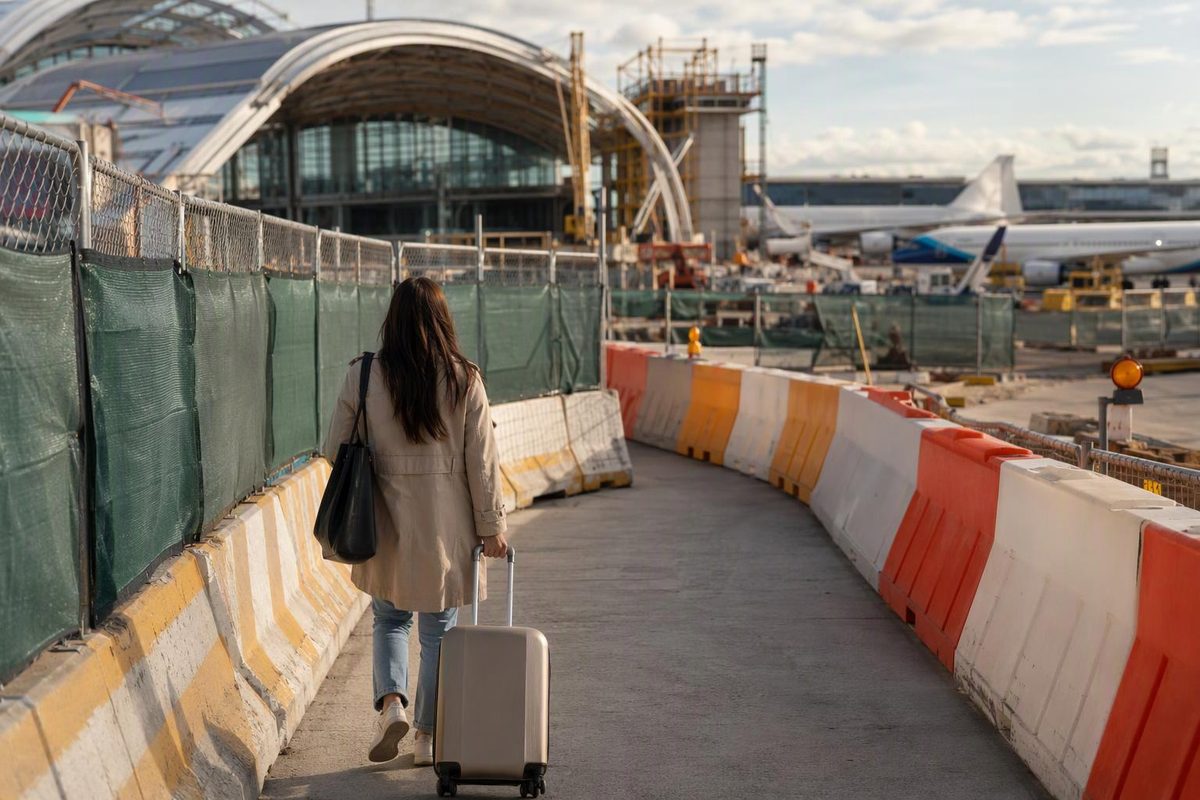
JFK’s New Terminal One is now expected to begin welcoming passengers in early 2027, not 2026. Until the first phase opens, use the terminal shown in your airline’s current flight details—not the future terminal footprint on a redevelopment map—and follow signs from that operating terminal for AirTrain, taxi, ride-app or connecting-flight transfers.
Choose your destination and rail preference to see which AirTrain connection fits.
Airport Rail Decision
Match the AirTrain gateway to the connection you need.
Suggested Gateway
For most riders, the standard total is the $8.75 AirTrain fare plus the $3 subway fare.
Sources: Port Authority/JFK and MTA guidance cited in the article. Fares and temporary pickup details are stated as of September 27, 2026.
The First Phase Is Targeting Early 2027
The official Port Authority project page says the first phase of New Terminal One is expected to open in 2027. That phase includes new arrivals and departures halls and 14 gates.
The terminal operator gave The Points Guy a narrower target: operations are planned for the first quarter of 2027. Its gate description counts 13 permanent gates and one temporary gate, rather than describing all 14 simply as gates. Those are two descriptions of the same initial phase, not evidence of a separate opening (The Points Guy).
The existing Terminal 1 is slated for demolition after that first phase opens. Removing it will clear the site for the next section of New Terminal One. Until that sequence begins, a traveler should distinguish among three things that can otherwise sound interchangeable: the operating Terminal 1, the New Terminal One construction project and the first phase scheduled for early 2027.
The early-2027 target also does not mean every part of the redevelopment will open at once. The cited schedule applies to the first phase, with its arrivals and departures halls and initial gates. It should not be read as a completion date for the entire New Terminal One project.
A 2026 Flight Still Uses An Operating JFK Terminal
For a flight before the first phase opens, do not enter “New Terminal One” into your arrival plan as though it were already a passenger destination. The useful terminal number is the one assigned to the actual flight.
JFK’s official directory currently lists passenger operations at Terminals 1, 4, 5, 7 and 8. Existing Terminal 1 serves international airlines including Air France, Turkish Airlines, Lufthansa, Swiss and Korean Air. Other international airlines operate from Terminals 4, 7 or 8 (JFK terminal directory).
That distribution is why “international flight” is not enough information to identify an arrival terminal. An airline alliance, route or previous JFK trip is not a substitute for the current assignment either. Check the airline app or JFK flight information when planning the transfer, then check again close to travel in case the assignment changes.
The terminal number affects the first part of an arrival: where you complete the required arrival formalities, where you enter the airport’s ground-transport system and which temporary construction directions apply. It does not require choosing a different city rail gateway solely because New Terminal One has been delayed.
Complete Arrival Formalities Before Following AirTrain Signs
International passengers should complete any required immigration, baggage and customs formalities before following signs for their onward transfer. The exact sequence depends on the flight and traveler, but the ground-transport decision comes after those required steps.
For rail, follow airport signs to AirTrain from the terminal where the flight actually arrives. AirTrain already serves the operating passenger terminals and connects them with the rail gateways at Jamaica and Howard Beach. The New Terminal One delay does not postpone that existing service.
A terminal number and an AirTrain gateway answer different questions. The terminal is where the flight operates. Jamaica or Howard Beach is where a passenger changes from the airport system to a subway or Long Island Rail Road service. Keeping those decisions separate prevents a redevelopment map from being mistaken for a current transit map.
Jamaica Connects With The E, J, Z And LIRR
Choose Jamaica when the useful onward service is the E, J or Z subway, or a Long Island Rail Road train. LIRR trains from this gateway serve Penn Station, Grand Central and Atlantic Terminal. Jamaica is generally the useful option for Midtown and Downtown Brooklyn.
For a Midtown trip, the choice at Jamaica is commonly between continuing by subway and using LIRR. The stated rail prices differ, so the practical comparison is not merely “public transportation versus car.” It is also which city station works for the final destination and whether the subway or LIRR fare applies.
For Downtown Brooklyn, Jamaica can also be useful because it provides the J and Z subway connection and LIRR service to Atlantic Terminal. The best of those listed services depends on the destination after reaching Brooklyn; the New Terminal One schedule does not alter the available airport gateway.
A hotel described only as being “in Midtown” or “in Brooklyn” may still be some distance from the named rail station. Match the city-side station to the hotel address before choosing between subway and LIRR. The sourced guidance establishes the available connections and fares, but it does not provide a universal fastest route for every address.
Howard Beach Is The Gateway For The A Train
Choose Howard Beach when the A subway is the useful line for the destination. This route is separate from the E, J and Z connections at Jamaica.
The branch matters when returning to JFK. An A train bound for Far Rockaway serves Howard Beach–JFK Airport, while a Lefferts Boulevard-bound A train does not. Check the destination displayed for the train rather than boarding any service marked only with the letter A.
That branch warning is principally a return-to-airport issue. On arrival at Howard Beach, passengers transfer from AirTrain to the A. On the trip back, they must first board an A train that actually reaches the AirTrain interchange.
Travelers whose destination is not clearly convenient to the A, E, J, Z or one of the named LIRR terminals need a more address-specific comparison. The available facts do not support declaring Jamaica or Howard Beach universally better for every neighborhood.
The Standard AirTrain-And-Subway Fare Is $11.75
As of September 27, 2026, AirTrain costs $8.75 when entering or exiting at Jamaica or Howard Beach. With the $3 subway fare, the standard combined trip is $11.75 for most riders.
LIRR plus AirTrain costs $14 or $16 from Manhattan or Downtown Brooklyn for most riders, depending on whether off-peak or peak pricing applies. Those figures should not be treated as a single fixed LIRR price; the applicable time category changes the stated total.
Contactless cards, phones, wearables and OMNY cards work at the AirTrain gates. The MTA JFK guide is the authoritative place to recheck the fare and payment details before traveling.
The $8.75 charge applies when entering or exiting the airport system at Jamaica or Howard Beach. It does not apply to a transfer made only between JFK passenger terminals. This distinction matters for someone connecting between flights or moving to a temporary airport pickup area rather than continuing directly into the city.
Terminal-To-Terminal AirTrain Trips Are Free
AirTrain travel between JFK passenger terminals is free. Trains generally run every 5–15 minutes, and the trip between terminals takes under 10 minutes. Station monitors may display service changes that alter what a passenger encounters on the day (JFK AirTrain guide).
The under-10-minute figure describes the train trip between terminals, not the entire connection between aircraft. It does not include walking, waiting for a train, security procedures or any immigration, baggage and customs requirements. A passenger making a flight connection should therefore use the operating terminal assignments and the airline’s connection instructions rather than treating the AirTrain ride time as the full transfer time.
The same free terminal service can be relevant when construction moves a ground-transport pickup away from the terminal. In that case, the AirTrain trip remains within the airport system even though the passenger is traveling to meet a car rather than another flight.
Construction Can Change Roads, Stations And Pickup Points
JFK is continuing its redevelopment while the existing terminals remain in operation. The airport warns that construction can cause roadway congestion, detours and possible AirTrain station closures. It recommends allowing extra time and using public transportation where practical (JFK construction guidance).
That warning is broader than the New Terminal One opening date. Even though the first phase has moved to early 2027, construction effects can apply before opening day. A flight can remain assigned to its normal terminal while the road route, pickup location or AirTrain access around that terminal changes.
Check the JFK alerts page shortly before traveling. An old screenshot or saved pickup instruction may not reflect a current closure or detour.
As of September 27, ride-app pickups from Terminals 5 and 7 have moved to the Howard Beach pickup lot until further notice. Passengers reach that lot by AirTrain. Terminal 7’s taxi stand is on the ground level of its garage (Port Authority advisory).
Those instructions are specific to the named terminals, pickup methods and advisory date. They do not establish that every ride-app passenger at JFK must go to Howard Beach, nor that the arrangement will remain unchanged through the New Terminal One opening. Use the current advisory for the terminal shown on the flight.
Plan The Transfer In The Right Order
For an arrival before New Terminal One opens, begin with the live flight assignment. After landing, complete the required arrival formalities and follow signs from that terminal. Then choose the onward mode: Jamaica for the listed subway and LIRR connections, Howard Beach for the A, a current terminal taxi location or the ride-app pickup instructions applying that day.
For a departure, reverse the process without assuming the old arrival terminal will still apply. Confirm the departing terminal, check construction alerts and, if using the A train to Howard Beach, board a Far Rockaway-bound train rather than one bound for Lefferts Boulevard.
For a connection between JFK terminals, use the free AirTrain service and distinguish its train time from the full flight-connection process. The available sources give a general 5–15-minute service interval and an under-10-minute terminal ride, but they do not provide a minimum safe connection time for a particular itinerary.
Once the airport transfer is settled, keep the arrival day geographically compact. A hotel near a useful subway or rail station can remove an additional transfer after the airport trip. Apply that station-first approach when deciding where to stay in New York City.