 New York Know
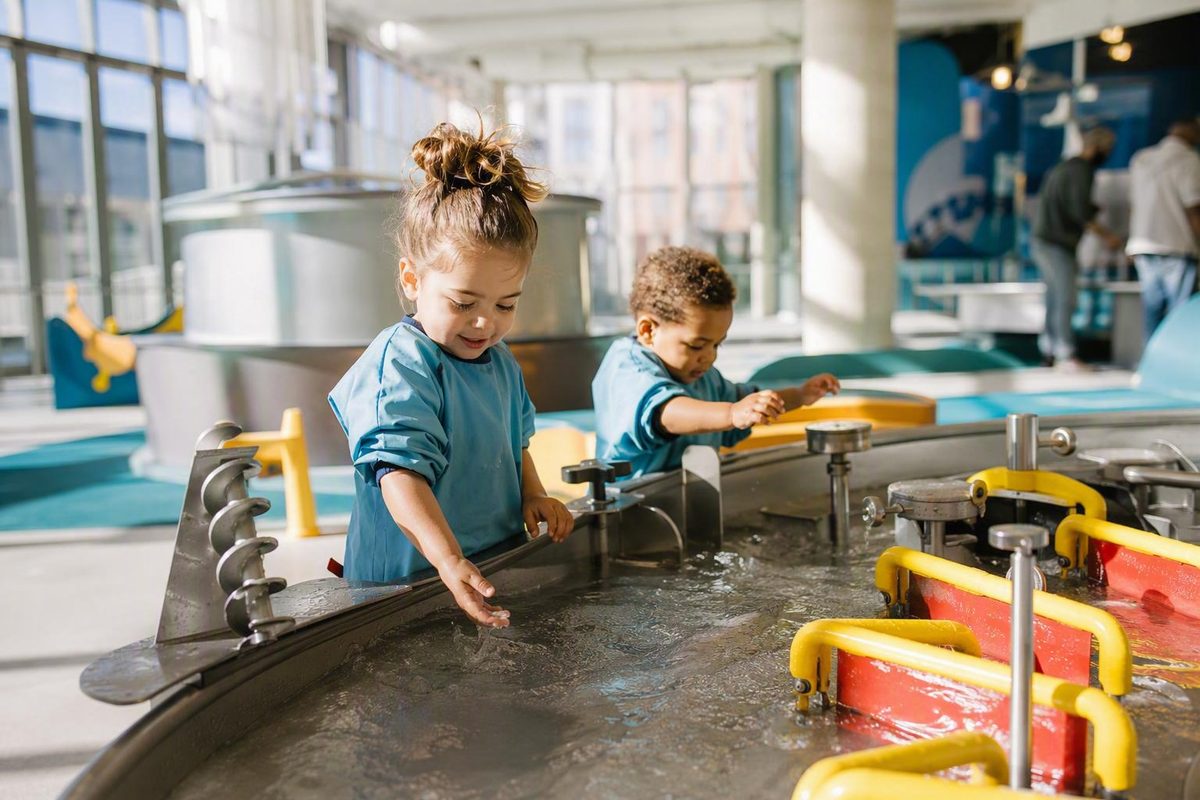
Within this limited five-venue shortlist, choose the Children’s Museum of Manhattan for hands-on early-childhood play, the American Museum of Natural History for dinosaurs and broad natural history, Intrepid for aircraft and space hardware, or Museum of Ice Cream and Color Factory for active, photo-friendly entertainment. This is a practical comparison of five options, not a comprehensive ranking of children’s museums across New York City.
The quick answer: choose by age, interest, and experience type
| Venue and established location | Best fit and experience type | Strongest interests | Main planning caution |
|---|---|---|---|
| Children’s Museum of Manhattan, Upper West Side | Children ages 0–6, according to the museum; hands-on children’s museum | Art, science, climbing, water play and early learning | The stated age range does not establish suitability for older children |
| American Museum of Natural History, Central Park West | Children motivated by a favorite subject; collection-based museum | Dinosaurs, animals, gems and space | The complex is large, so choose priority halls |
| Intrepid | Transportation- or space-focused children; museum aboard an aircraft carrier | Aircraft, naval history, submarines and spaceflight | Investigate submarine access and sensory conditions |
| Museum of Ice Cream | Families prioritizing movement and treats; immersive attraction | Slides, play structures and dessert-themed activities | Families with food allergies need current information directly from the venue |
| Color Factory | Families seeking shared activities and photos; immersive attraction | Colorful rooms, music, photo stations and physical play | One family travel writer found some areas more focused on photo backdrops than educational depth |
The distinctions matter more than any numbered ranking. American Museum of Natural History and Intrepid center their appeal on subject matter, while Museum of Ice Cream and Color Factory emphasize participation, movement and visual novelty.
Information about the latter four attractions comes primarily from a firsthand Wanderlux family travel account that includes affiliate links. Its observations are useful for comparing interests and identifying questions to ask, but they do not amount to systematic testing or establish current operating policies.
Prices, hours, exhibits, reservations, restrictions, tour availability and attraction-pass terms can change. Confirm all date-sensitive details on each venue’s official website before visiting.
Children’s Museum of Manhattan: the clearest choice for ages 0-6
For babies, toddlers, preschoolers and young children, the Children’s Museum of Manhattan offers the most clearly defined age fit in this comparison. The museum says its exhibits and programs are designed for children ages 0–6. That does not mean children older than six will necessarily dislike it, but the museum’s stated audience does not support a general recommendation for them.
The experience combines early-childhood development with art, science and culture through physical, hands-on play. PlayWorks supports active exploration, while Inside Art incorporates making, climbing and collaboration. Dynamic H2O adds water play, and Adventures With Dora and Diego uses familiar characters. Daily experiences and ongoing early-childhood activities can provide more structure than independent exhibit exploration alone.
This is the most straightforward option when the goal is an environment designed around young children rather than a large collection that requires them to adapt to adult-oriented displays. Its Upper West Side location also makes it a logical anchor when the rest of the day is already centered in that area.
Do not plan around hours or programs copied from an older guide or search result. Check the museum’s current opening days, ticket arrangements, exhibits and daily activities before leaving.
American Museum of Natural History: for dinosaurs and a choose-your-own-focus visit
Choose the American Museum of Natural History when a child’s enthusiasm starts with dinosaur fossils, animal specimens, gems or space. The Wanderlux family guide also describes a planetarium and butterfly conservatory, although families should confirm which experiences are open on their intended date.
The museum’s breadth is both its advantage and its main planning challenge. Its interconnected Central Park West complex contains more than most families will want to cover in one focused visit. Trying to see everything can turn an interest-led day into an exercise in moving between halls.
Use a simple priority system instead:
- Ask each child to select one must-see theme.
- Add one priority that the whole family can enjoy.
- Treat all other halls as optional.
- Reassess the group’s energy before moving to another part of the complex.
This approach leaves room to linger when a fossil, animal display or gem collection captures a child’s attention. It also avoids promising a fixed visit duration, which will vary according to age, energy and interests.
The museum can anchor a Central Park West or Upper West Side-centered day, but do not assume that admission arrangements, reservations or named experiences remain unchanged. Verify those details directly before visiting.
Intrepid: for aircraft, ships, submarines, and spaceflight
Within this shortlist, Intrepid is the most natural choice for children primarily interested in aviation, naval history, submarines or space hardware. The museum is housed on a decommissioned naval aircraft carrier, and the supplied family travel account describes aircraft, Space Shuttle Enterprise, the USS Growler submarine and Concorde.
The submarine requires particular attention. Wanderlux’s firsthand visitor report says guests had to negotiate tight openings without assistance and that strollers and mobility devices were not allowed inside. The writer also noted enclosed spaces, possible entry lines, and loud sounds and flashing lights elsewhere in the museum. These are one family’s observations, not a minimum-age rule or a guarantee that a particular child can manage the experience. Review the full Intrepid visitor account.
That report also says Concorde tours can sell out. Before booking, confirm whether tours are operating, whether separate reservations are required and what current restrictions apply.
The decision rule is simple: choose Intrepid when the machinery is the main attraction, but investigate access and sensory conditions first. Families can still value the carrier, aircraft and spacecraft even when the submarine is not appropriate for everyone in the group.
Museum of Ice Cream vs. Color Factory: play-first, not traditional museum visits
Museum of Ice Cream and Color Factory are immersive entertainment attractions in this comparison, not equivalents to collection-based museums. Both suit families who want to move, interact and take pictures more than they want to examine historical objects or scientific collections.
Choose Museum of Ice Cream for dessert-themed physical play and samples. The Wanderlux account describes a retro arcade, play structures, a two-story slide, a sprinkle pool and ice-cream samples. The same writer reported inadequate allergen signage during her family’s visit. That is an anecdote rather than proof of current conditions, so families managing food allergies should request up-to-date ingredient, preparation and cross-contact information directly from the venue. Read the firsthand comparison and allergy account.
Families should ask questions based on their own needs and decide whether the venue’s current information is sufficient.
Choose Color Factory for color-focused group activities and staged photographs. Its described experiences include color-themed exhibits, a music room, a silent disco, photo stations and a large ball pit. It may work better when several family members want to participate together rather than follow one child’s specialized subject interest.
The tradeoff is educational depth. The Wanderlux writer felt that some areas functioned mainly as photo backdrops and that not every artistic element resonated with her family. That is a personal assessment, not a universal verdict. It may be irrelevant if the goal is colorful shared play, but it matters if the family expects a traditional educational museum.
Build the museum day without crossing Manhattan repeatedly
Choose one venue as the day’s anchor rather than stacking several unrelated attractions. Grouping sights by area, leaving room for walking and avoiding repeated cross-city movement can make a family day easier to manage.
Children’s Museum of Manhattan and the American Museum of Natural History can both fit an Upper West Side-centered plan, with the latter specifically located on Central Park West. That geographic compatibility does not mean families need to visit both on the same day. One well-chosen anchor often creates more flexibility than an itinerary built around multiple timed entrances.
For the other attractions, confirm the current venue address before arranging the rest of the day. Do not rely on an outdated listing, and avoid committing to nearby activities until the primary attraction’s location, entry time and booking conditions are settled.
Before visiting, verify:
- Current opening hours and admission arrangements
- Reservation or timed-entry requirements
- Which exhibits and experiences are open
- Stroller, mobility and other access restrictions
- Loud effects, flashing lights, darkness or enclosed spaces
- Current food-ingredient and cross-contact guidance
- Availability and booking rules for add-on tours
- The exact terms of any attraction pass
- The venue’s current address
Are Museum of Ice Cream and Color Factory traditional museums?
Not in the sense used in this comparison. They are immersive, play- and photo-oriented attractions rather than collection-based museums. Choose them for active participation, colorful environments and shared pictures—not as substitutes for natural-history, transportation or artifact-focused collections.
Can children, strollers, or mobility devices enter the USS Growler submarine?
Do not make the decision based on a child’s age alone. The firsthand constraints described in the Intrepid section may affect children and visitors using strollers or mobility devices, but the account does not establish today’s rules. Ask Intrepid to confirm current entry requirements and consider whether tight, enclosed spaces are suitable for each person in your group.
What should families check before booking an NYC museum?
Confirm current prices, hours, admission procedures, reservation rules, open exhibits, access restrictions and tour availability. Families should also investigate sensory conditions and obtain direct ingredient and cross-contact guidance when food allergies are involved. Finally, verify the venue’s address and use it as the geographic anchor for the day.