
Feature
What It Really Means When Parking Is “Off the Street”
By Elena Hart · · 11 min read
The short definition of off-street parking
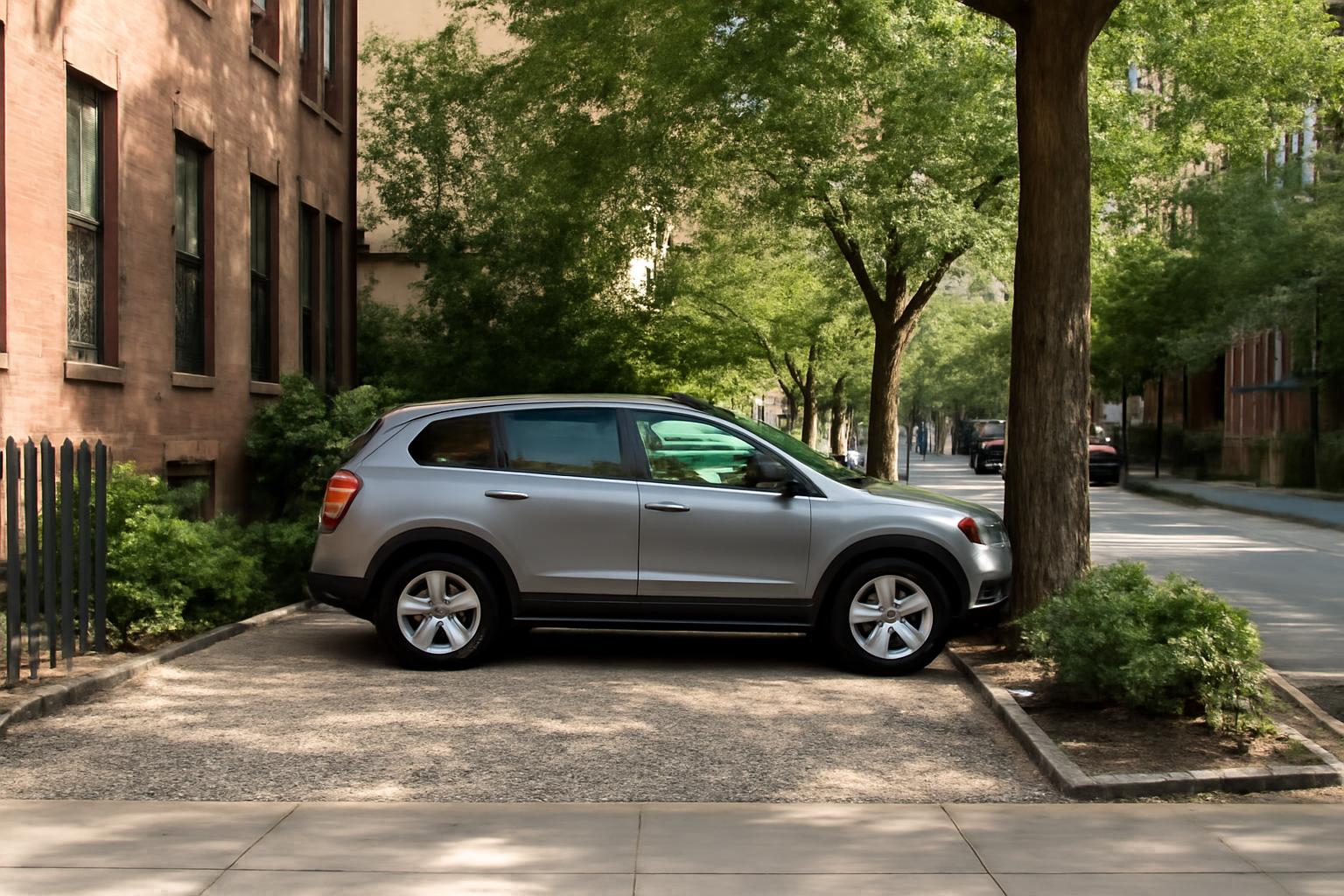
Off-street parking is space for leaving a vehicle somewhere other than on a public road or street. The defining factor is location: the vehicle is parked outside the public roadway rather than along its curb or edge. This matches the general definition in the Cambridge English Dictionary.
The simplest comparison is:
- A car in a home’s driveway is off-street.
- A car parked at the curb in front of that home is on-street.
The same distinction applies elsewhere. A curbside space beside a store is on-street parking, while a space in the store’s separate lot is off-street parking.
The term does not, by itself, tell you who owns the space, whether parking is free, whether the area is covered or gated, or whether everyone may use it. Some commercial parking explainers use a narrower description focused on lots or garages, but the ordinary meaning also covers open driveways and surface lots.
Formal documents may be more specific. A zoning code, lease, permit, development approval, sign, or booking agreement may define the parking arrangement or impose additional conditions. For a property-specific or legal question, the general definition is only the starting point.
Common examples of off-street parking
Common residential examples include:
- A private driveway
- An attached or detached home garage
- A designated outdoor space in an apartment or condominium complex
- A resident parking court
- An underground residential garage
Commercial and public examples include:
- A shopping center’s surface lot
- An office or hotel lot
- An airport parking lot
- A hospital or university parking facility
- A municipal parking lot
- A freestanding parking garage
Off-street parking can also take a structured form, including an above-ground multilevel garage, an underground garage, or an automated system that mechanically stores or moves vehicles. Parking-industry descriptions recognize lots, garages, structures, and facilities serving residential, commercial, office, and airport uses as forms of off-street parking.
A space does not have to be roofed, walled, enclosed, or gated. An uncovered driveway and an open surface lot can both qualify because they are outside the street.
Paired examples make the boundary clear:
- At a restaurant: A marked curb space is on-street; a space in the restaurant’s lot is off-street.
- At an apartment building: Parking on the adjoining road is on-street; parking in the resident garage is off-street.
- At a hotel: A street meter outside is on-street; a space in a separate hotel lot or garage is off-street.
- At a house: Parking at the curb is on-street; parking within the driveway is off-street.
However, not every area outside a road is necessarily a designated or approved parking space. A lawn, loading area, fire lane, access aisle, landscaped area, storage area, or vehicle-display area may be physically outside the roadway without qualifying as parking for a particular property or regulatory purpose.
That creates two separate questions:
- Is the vehicle outside the public street?
- Is the area recognized or authorized for parking under the applicable signs, property terms, approvals, or local rules?
For ordinary conversation, the first question usually answers whether parking is off-street. For compliance or property-use questions, the second may also matter.
Off-street parking versus on-street parking
On-street parking is located along the side of a public road or street. It can include marked curb spaces, metered spaces, permit zones, and lawful unmarked curb areas. Off-street parking is provided in a separate driveway, lot, garage, or parking structure outside the roadway.
The comparison is easiest to understand by separating four factors:
| Factor | On-street parking | Off-street parking |
|---|---|---|
| Physical location | Along or within a road or street | In a separate driveway, lot, garage, or structure outside the roadway |
| Ownership or control | Commonly controlled by a municipality or road authority | May be controlled by a homeowner, business, municipality, public authority, landlord, or parking operator |
| Access | May be open to the public or restricted by permits, hours, vehicle type, or other conditions | May be public, customer-only, resident-only, permit-only, reserved, or otherwise restricted |
| Applicable rules | Often communicated through signs, meters, curb markings, permits, and local regulations | Often communicated through posted facility terms, tickets, permits, reservations, leases, or access systems |
Location is the defining distinction. Ownership, payment, and access vary in both categories.
On-street parking is not necessarily free or available to every driver. A curb space may require payment, impose a time limit, operate only during certain hours, or require a permit. Drivers should check the signs, meters, curb markings, and other instructions applying to that part of the road.
Likewise, off-street parking is not necessarily private or unrestricted. A city may own a paid garage, while a privately owned shopping-center lot may be free for customers. An apartment garage may be limited to registered residents, and a university facility may admit different users under different permits.
The label also does not establish that one form of parking is safer, easier, closer, or more convenient. Those qualities depend on the individual street or facility, its operating terms, the destination, and the driver’s needs.
Location, ownership, and public access are separate questions
“Off-street” describes where the parking is located. It does not identify the owner or determine who may use it.
An off-street facility may be:
- Privately owned and restricted to a homeowner or resident
- Owned by a landlord or condominium association
- Owned by a business and reserved for customers
- Operated by a commercial parking company
- Owned by a municipality or another public body
- Privately owned but open to paying members of the public
A paid municipal garage is publicly owned off-street parking: it is separate from the roadway even though the municipality controls it and drivers may have to pay.
A private driveway and a resident-only apartment garage are also off-street, but access is restricted. At a shopping center, the outdoor lot may be free and easy to enter while remaining private property intended only for customers.
When evaluating a space, ask three independent questions:
- Where is it? Is it along the roadway or in a separate driveway, lot, or garage?
- Who controls it? Is that a homeowner, landlord, business, municipality, public authority, or operator?
- Who may use it? Is it open to anyone, or only to customers, residents, guests, employees, permit holders, or another group?
Physical access is not the same as permission. An ungated office, apartment, hotel, or retail lot may still have restrictions. Posted signs, permits, lease provisions, booking terms, and operator instructions are practical sources to review before parking.
Fees, permits, reservations, and facility rules
Off-street parking may be free or paid. The definition does not determine the price.
Depending on the facility, payment may be hourly, daily, overnight, event-based, or monthly. Access may depend on:
- A prepaid permit
- A reservation
- A paper or digital ticket
- A validation
- An entry code or access card
- A registered license plate
- Status as a resident, tenant, customer, employee, guest, visitor, or permit holder
Facilities may use gates, meters, pay stations, mobile payments, cameras, tickets, or automated barriers. These are management tools rather than defining features of off-street parking. Commercial parking guidance confirms that facilities may be publicly or privately owned and may use paid, permit-restricted, customer, tenant, or visitor access arrangements and different parking-control systems.
Free parking may still have conditions. A business lot might allow parking only while the driver is visiting that business. A residential visitor space may require registration, and a free facility may impose operating hours or a maximum stay.
Before leaving a vehicle, check:
- Whether the facility serves the public or a particular property
- Whether payment is required and when it must be made
- Whether a permit, reservation, ticket, code, or validation is needed
- Whether authorization is linked to a license plate
- Which spaces are reserved
- The permitted hours and maximum stay
- Whether overnight parking and re-entry are allowed
- Whether the facility closes or locks
An apparently open or empty lot should not automatically be treated as public parking. Being off the street changes the location and possibly the administrator of the space; it does not eliminate facility rules or access restrictions.
What an off-street parking claim does not guarantee
When a hotel, rental, apartment, or property listing says “off-street parking available,” it generally indicates that parking is offered somewhere outside the public roadway. The phrase alone does not promise that the parking is:
- Assigned or guaranteed
- Free or included in the advertised price
- Covered, indoors, gated, or monitored
- Immediately beside the entrance
- Available at all hours
- Suitable for every vehicle
- Accessible without advance registration or a reservation
“Available” could describe a dedicated space, a shared first-come lot, a space limited to certain users, or a garage with vehicle-size restrictions. Those are possible arrangements, not universal features.
Before booking accommodation or entering a property agreement, verify:
- Availability: Is a space guaranteed or first-come?
- Reservation: Must it be reserved or registered in advance?
- Cost: Is there a separate charge, and what period does it cover?
- Eligibility: Who may use the facility?
- Location: Is it on the property, across the street, or in another facility?
- Hours: Is overnight parking allowed, and can the vehicle remain for the full stay?
- Access: Is a code, card, ticket, permit, or registered plate required?
- Re-entry: Can the driver leave and return without losing the space?
- Vehicle limits: Are there height, width, length, or weight restrictions?
- Cover: Is the space indoors or outdoors?
Travelers should not assume that “off-street” means parking at the building entrance or even on the same property. Ask for the facility’s location, access hours, walking distance, and re-entry terms.
For a rental or property purchase, review whether the space is included, assigned, shared, or offered under a separate arrangement. A general definition cannot settle what a particular advertisement, lease, permit, sign, or booking confirmation promises. Review all applicable wording and seek clarification when parking is important to the decision.
When local zoning and legal definitions matter
The everyday meaning of off-street parking is broad, but zoning codes and technical standards may be more precise because they regulate how parking is located, designed, counted, accessed, and maintained.
Depending on the jurisdiction and project, local rules may address:
- Stall dimensions
- Drive aisles and maneuvering space
- Driveway placement
- Surfaces and drainage
- Striping
- Accessible spaces and access routes
- Setbacks, landscaping, screening, or lighting
- The location of required spaces
- Whether tandem, shared, or remote arrangements qualify
- Whether loading, storage, display, repair, or servicing areas count as parking
These requirements may determine whether an area satisfies a specific development or zoning obligation, even when the area is physically outside the street.
St. Johns, Michigan, provides one local example. Its zoning provision keeps required off-street parking outside a road or street right-of-way and generally places it on the same or an adjoining lot, subject to stated exceptions. It also says that loading spaces do not count as required off-street parking and restricts using required spaces for storage, merchandise display, repair, or servicing. These are St. Johns-specific zoning requirements, not universal rules.
Salt Lake City offers another local illustration. Its off-street parking manual addresses stalls, drive aisles, driveways, surfaces, accessibility, tandem parking, and automated garages. The cited manual is Version 2, dated November 18, 2025, and warns that its standards can change, so users should verify the current Salt Lake City off-street parking standards before relying on them.
Neither example creates a nationwide definition or establishes a rule for another city. The same caution applies to private documents: a lease may identify a tenant’s space, a condominium declaration may regulate guest parking, and booking terms may distinguish on-site parking from a separate garage.
For a development, permit, lease, or compliance question, review:
- The current municipal code and relevant technical standards
- The property’s approvals or site plan
- The applicable lease, deed, permit, or booking terms
- Current signs and facility instructions
- Guidance from the appropriate local authority or a qualified adviser when an authoritative interpretation is needed
Do not assume that tandem spaces, shared spaces, loading areas, remote lots, storage areas, or vehicle-display areas always qualify—or never qualify. Their status can depend on the jurisdiction, governing documents, and the purpose for which the parking is being evaluated.
Frequently asked questions
Does a private driveway count as off-street parking?
Yes, in ordinary usage. A vehicle parked within a private driveway is outside the public roadway and is therefore using off-street parking.
Whether every part of the driveway is approved for parking is a separate property-specific or local compliance question.
Can a municipal or publicly owned parking lot be off-street parking?
Yes. Public ownership does not make parking on-street. A municipal lot or publicly owned garage is off-street when it is a separate facility outside the roadway.
It may be free, paid, permit-only, time-limited, or subject to other conditions.
Does off-street parking have to be free, enclosed, or gated?
No. Off-street parking may be free or paid, open-air or enclosed, and gated or ungated. A driveway or uncovered surface lot can qualify just as a structured garage can.
What does off-street parking mean in a hotel or property listing?
It generally means that parking is offered somewhere other than along the public street. It does not necessarily mean the space is free, assigned, guaranteed, covered, on the same premises, or available without a reservation.
Confirm the price, exact location, hours, eligibility, access method, vehicle limits, and re-entry terms.
Does a loading bay count as a required off-street parking space?
Not necessarily. A loading bay may be outside the street while remaining legally distinct from a required parking space.
For example, the St. Johns, Michigan, provision discussed above states that a loading space does not count as required off-street parking. That is a local rule, not a universal one. Check the current code and property approvals for the location in question.
The practical takeaway
The basic test is simple: parking along the curb or roadway is on-street, while parking in a separate driveway, lot, or garage is generally off-street.
The label tells you where the parking is located—not whether it is free, private, assigned, covered, unrestricted, or guaranteed. Before booking accommodation, signing a lease, or addressing a zoning issue, confirm the facility’s actual terms and the local rules that apply.