 New York Know
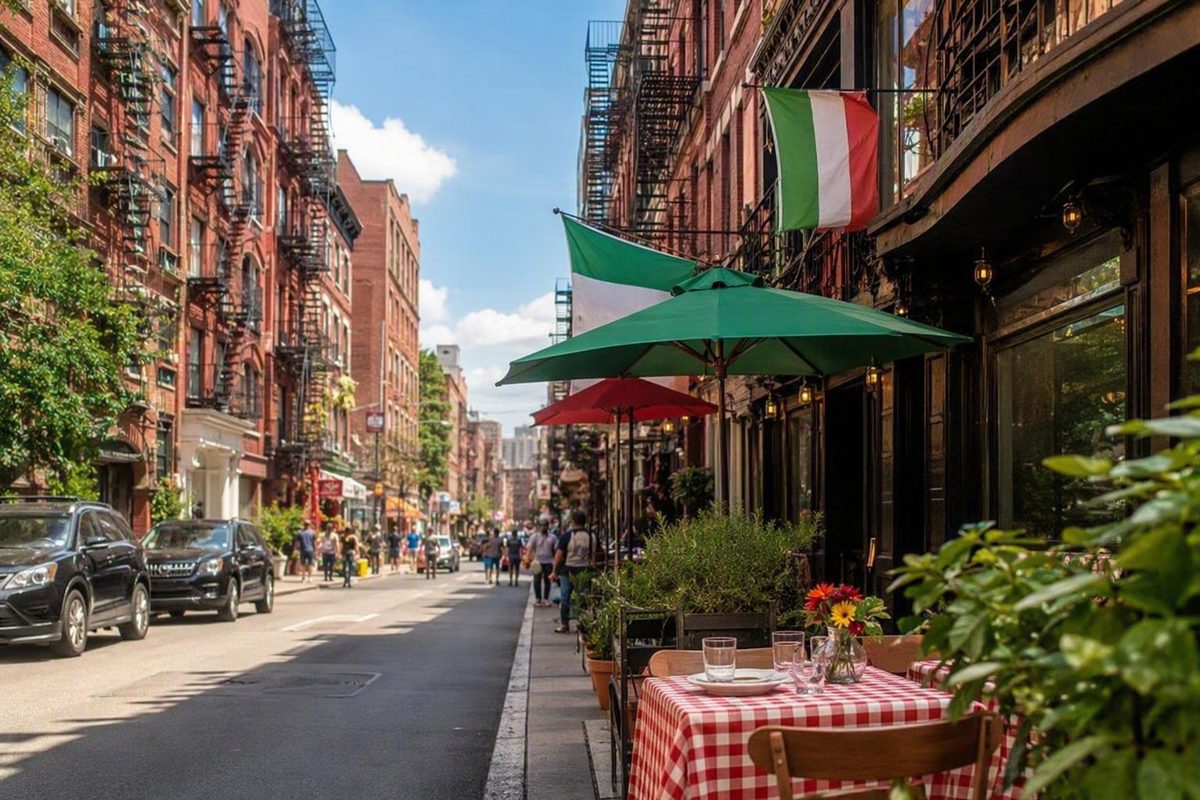
Manhattan’s Little Italy is not the large, predominantly Italian residential enclave its name may suggest. Today, it is better understood as a compact Italian-American heritage and tourism district: a few lively Lower Manhattan blocks where immigrant history, longstanding food traditions, religious observances, restaurants, shops, and neighboring cultures overlap.
That smaller scale is not necessarily a drawback. Little Italy works best as a focused walk rather than a full-day checklist. Follow Mulberry Street through the modern visitor core, explore Grand and Hester Streets, choose one or two food or cultural stops with purpose, and then continue naturally into Chinatown, NoLIta, or SoHo.
Planning note, updated August 17, 2026: Mutable details such as business hours, menus, admissions, reservations, subway service, accessibility, and festival operations have not been established by the historical and tourism sources used here. This guide therefore avoids publishing them as current facts. Check first-party venue information and official transit or city notices shortly before traveling.
Is Little Italy worth visiting?
Little Italy is worth considering if you are interested in immigrant history, specialty-food shopping, bakeries, street life, old commercial buildings, and neighborhoods that can be explored without extensive transit. It is less compelling if you expect a large residential Italian quarter or want an entire day of major attractions within its present-day core.
The honest description lies between two common extremes. Little Italy is neither an untouched ethnic enclave nor a meaningless tourist set. Its central restaurant corridor is heavily oriented toward visitors, but tourism and cultural significance can coexist. Longstanding food businesses, religious traditions, architecture, and the Feast of San Gennaro still connect the district to its Italian-American history. NYC Tourism presents the neighborhood through that combination of dining, specialty shopping, cultural institutions, and annual tradition in its visitor guide to Little Italy.
For most first-time visitors, Little Italy alone suits a stop of roughly one to two hours. That allows time to walk the central streets, look at the buildings and storefronts, and make one bakery or specialty-shop stop. A seated meal, museum visit, guided tour, or extension into Chinatown can turn it into a longer outing.
Its compactness is especially useful when the rest of your itinerary is already concentrated in Lower Manhattan. Instead of crossing the city for a single meal or photograph, Little Italy can become one chapter of a day that also includes Chinatown, NoLIta, SoHo, the Civic Center, or the Financial District.
A sensible first visit has three parts:
- Walk the Mulberry Street corridor between Canal and Grand Streets, paying attention to Hester Street along the way.
- Make one or two deliberate stops rather than choosing the first restaurant or solicitation you encounter.
- Continue into one adjacent neighborhood instead of trying to make Little Italy fill a day by itself.
Where Little Italy is—and why its boundaries seem confusing
Little Italy is in Lower Manhattan, with Mulberry Street serving as both its historic axis and present-day visitor spine. For practical planning, concentrate on Mulberry Street and the nearby portions of Canal, Hester, and Grand Streets.
These are useful orientation points, not fixed official borders. New York neighborhood boundaries are informal, and published descriptions often combine three different geographies:
- The modern visitor core: the compact restaurant, bakery, shop, and festival area most visitors recognize around Mulberry, Grand, and Hester Streets.
- The historic Italian enclave: a substantially larger residential and commercial area whose extent changed over time.
This distinction explains why one guide may describe Little Italy as a handful of blocks around Mulberry Street while another extends it north toward Houston Street or south toward Worth or Chambers Street. Those descriptions may refer to different periods or purposes rather than contradicting one another. Time Out, for example, describes a historic enclave running from Canal to Houston Streets between Lafayette Street and the Bowery, while noting that the neighborhood visitors encounter today is concentrated mainly around Mulberry Street in its Little Italy neighborhood guide.
A simplified planning sketch looks like this:
                              NORTH
                                ↑
                    NoLIta / Houston Street
                                │
              ┌─────────────────────────────┐
              │ Approximate historic area   │
              │                             │
SoHo ← Lafayette St.    Mulberry St.    Bowery → Lower East Side
              │              │              │
              │        Grand Street         │
              │      ┌──────────────┐       │
              │      │ Modern core  │       │
              │      │ Mulberry /   │       │
              │      │ Grand /      │       │
              │      │ Hester       │       │
              │      └──────────────┘       │
              │        Canal Street         │
              └─────────────────────────────┘
                                │
                            Chinatown

     The jointly designated historic district is a separate,
     broader preservation geography that overlaps these areas.
Map note: This is an editorial orientation aid, not a legal or preservation map. It distinguishes the compact visitor core from the larger historic enclave, but it does not reproduce the official historic-district boundary.
Chinatown adjoins Little Italy to the south and east, NoLIta lies to the north, and SoHo is to the west. The transition is gradual rather than marked by a clean dividing line. Storefronts, languages, products, and restaurant identities can change within a block.
The same ambiguity affects restaurant listings. A venue marketed as a Little Italy destination may sit north of the narrow visitor core, in NoLIta, or elsewhere within the broader historic geography. That does not automatically make the description misleading, but it does mean that you should check the address before building a walking route.
How the historic Italian enclave became today’s compact district
Large-scale Italian immigration helped establish Little Italy during the late 19th century. Immigrants from southern Italy, including Naples and Sicily, arrived in substantial numbers during the 1880s, and Mulberry Street became a center of Italian-American residential, commercial, and cultural life. Contemporary neighborhood guides still identify the street as the historic axis of the enclave.
The community was once much larger than the visitor district visible today. A historical summary reports almost 10,000 Italian residents in 1910, which it identifies as the community’s population peak; that old figure provides historical context and should not be used to describe the present population. The same summary records the Chinatown and Little Italy Historic District’s addition to the National Register of Historic Places on February 12, 2010 in its overview of Little Italy’s changing population and footprint. Because this is a collaboratively edited source rather than the underlying registry record, both facts would benefit from primary-source confirmation in any future historical expansion of this guide.
Little Italy did not contract for one simple reason. Several changes occurred over decades:
- Italian-American families moved to other parts of New York City, Long Island, New Jersey, and surrounding suburbs, particularly after World War II.
- Rising property costs and redevelopment changed residential and commercial patterns.
- Infrastructure and urban-renewal projects altered the surrounding area.
- Chinatown expanded northward as immigration patterns and federal immigration law changed.
- The area north of the surviving visitor core developed the later commercial and residential identity now associated with NoLIta.
Chinatown’s growth was part of this transformation, but it should not be treated as the sole cause or reduced to a story of one ethnic group simply replacing another. Housing, mobility, law, redevelopment, infrastructure, and economic opportunity all shaped the change.
What survives is not an unchanged immigrant settlement. It is a smaller landscape of inherited names, architectural traces, food businesses, religious sites, commercial traditions, and public celebrations. Cultural continuity does not require pretending that the neighborhood has remained frozen in its early-20th-century form.
A focused Little Italy walking route
The following sequence is an editorial itinerary, not an officially designated trail. It is designed to avoid retracing Mulberry Street and to leave you with clear options for Chinatown, NoLIta, or SoHo.
1. Begin at Canal and Mulberry Streets. Use this southern approach to orient yourself. The combination of Italian restaurant signage, nearby Chinese businesses, dense traffic, and pedestrian activity immediately shows that Little Italy and Chinatown do not have a clean dividing wall.
2. Walk north on Mulberry Street to Hester Street. This is only the first short segment, so move slowly. Look beyond menus and restaurant hosts to the brick façades, fire escapes, storefront proportions, murals, and low-rise scale of the street.
3. Continue north from Hester Street to Grand Street. Grand Street is the most useful point for a deliberate bakery or specialty-food stop. Decide beforehand whether you want provisions, coffee and a pastry, or a more substantial dish. A defined goal helps prevent the walk from becoming a series of impulsive purchases.
4. Choose your continuation at Grand Street.
- For Chinatown without retracing Mulberry Street: turn east on Grand Street, then use Mott Street for a southbound continuation toward Hester and Canal Streets.
- For NoLIta: keep walking north on Mulberry Street toward the broader historic area.
- For SoHo: turn west on Grand Street toward Lafayette Street and continue west.
This route uses Hester Street as a visual transition point while preserving a logical northbound walk through the Little Italy core. Visitors who want to spend more time on Hester can turn east there and enter Chinatown immediately rather than continuing to Grand.
Choose a pace that fits the rest of your day:
- About one hour: walk through the core without a seated meal.
- One to two hours: add a bakery or specialty-shop stop.
- Several hours: include a meal, cultural site, tour, or neighboring district.
These are editorial planning estimates, not measured guarantees. Crowds, queues, shopping, and restaurant service can change the timing. For comparison, one published combined Chinatown and Little Italy itinerary is listed as 1 mile and 1 hour, although most of its seven stops extend into Chinatown rather than remaining in Little Italy alone, as shown in the GPSmyCity walking route.
For a cultural-history detour, consider the Italian American Museum or nearby Old St. Patrick’s Cathedral, but verify current location, admission, access, and hours through the institution before visiting. If Little Italy follows the Financial District or Chinatown, it can also serve as the optional finish to a walking-first Lower Manhattan day.
Where to eat without relying on tourist-strip guesswork
Little Italy presents a genuine food-planning problem. Tourism guides celebrate the atmosphere, specialty shops, bakeries, and familiar Italian-American dishes along Mulberry Street. Some experienced restaurant critics are far less enthusiastic about many restaurants in the central tourist corridor.
Both perspectives can inform a visit. A restaurant may be enjoyable because of its setting, convenience, family associations, or menu even if it is not a citywide dining destination. Conversely, an old-looking dining room does not guarantee strong food or good value. Evaluate heritage, menu appeal, price, atmosphere, and convenience separately.
Longstanding institutions
Di Palo’s Fine Foods is historically identified by tourism sources as a family-owned Italian specialty grocer associated with imported cheeses, pasta, and olive oil. NYC Tourism describes the business as family-owned since 1910, but its guide does not establish current hours, inventory, payment arrangements, or operating status. Treat it as a potential shop stop and confirm those details before going.
If available when you visit, the most useful approach is to browse with a purpose: look for a practical provision, identify a type of cheese or pantry item you want, and ask focused questions when staff are able to help. Specialty shopping offers a different connection to Italian food traditions than sitting down for a restaurant meal.
Ferrara Bakery & Cafe is also identified by tourism sources as a long-tenured neighborhood business associated with cannoli and espresso. It can provide a defined bakery stop for visitors who want to experience the district without committing to a long meal. Historical reputation and popularity do not make every product an objective “best,” so order according to your own tastes and verify current details first.
Bakery, coffee, and casual stops
A bakery item and coffee may be enough to give the walk a destination. This is particularly useful if you plan to eat a larger meal in Chinatown, NoLIta, or elsewhere later in the day.
For casual Italian-American food, consider a slice, sandwich, or single dish rather than assuming that Little Italy requires a multi-course meal. Read the current menu and prices before sitting down, and do not let sidewalk pressure replace an actual decision.
Critic-recommended restaurants in and near the historic area
Eater critic Robert Sietsema recommends several restaurants associated with Little Italy’s broader historic geography while arguing that many businesses in the central tourist corridor can be expensive and disappointing. These are attributed critical opinions, not objective rankings.
At Emilio’s Ballato, Sietsema highlights fried zucchini, tripe marinara, tagliatelle alla Bolognese, and linguine with white clam sauce. At Torrisi, he points to hams with zeppole and linguine with pink Manhattan clam sauce while warning about expense, lines, and the limitations of standing snacks when seats are unavailable. At Parm, sandwiches are presented as the central reason to visit, with the meatball and eggplant parm versions singled out. Menus, prices, addresses, queues, reservation systems, and operating policies can change, so use the Eater Little Italy restaurant guide as editorial context rather than a substitute for checking the restaurant directly.
Some of these restaurants lie outside the narrowest Mulberry Street visitor core. That can be useful if you are continuing north into NoLIta, but it makes them less convenient for a short southbound walk into Chinatown.
A low-commitment tasting strategy
A practical tasting plan is:
- one small specialty-shop purchase;
- one bakery item or coffee;
- and one slice, sandwich, or restaurant dish.
This creates variety without making the whole visit dependent on a single expensive meal. It also leaves room to eat in Chinatown or NoLIta.
Before choosing any venue, confirm its current operating status, address, hours, menu, prices, reservation policy, dietary accommodations, allergen procedures, step-free access, and seating arrangements. The supplied neighborhood and restaurant guides do not establish those mutable details reliably.
What to do besides eat
Food may be Little Italy’s most visible attraction, but it does not have to dominate the visit.
The Italian American Museum is described by NYC Tourism as an institution dedicated to the Italian-American experience. It may provide context that storefront observation alone cannot, but this article does not establish its current location, admission arrangements, exhibitions, or opening schedule. Confirm those details directly before building it into a timed itinerary.
Specialty-food shopping is also an activity in its own right. Browsing cheeses, pasta, oils, or packaged provisions at a historically identified business such as Di Palo’s connects the neighborhood’s food identity to retail and household traditions rather than only to restaurant tourism.
For a free self-guided activity, study the streetscape. Look for:
- narrow blocks and low-rise brick façades;
- external fire escapes;
- tenement-era building forms;
- older storefront proportions;
- former commercial or manufacturing buildings;
- and later alterations at street level.
Little Italy and NoLIta reflect multiple periods of residential, manufacturing, retail, and restaurant use rather than one uniform architectural style.
Public art and murals provide another reason to look above and beside the storefronts. Neighborhood guides identify street art as part of the visitor experience, but individual works may be removed, painted over, or replaced. Treat murals as discoveries rather than guaranteed permanent attractions.
Nearby Old St. Patrick’s Cathedral adds religious and architectural history. CityNeighborhoods.NYC reports that it was completed in 1815 and served as the former seat of New York’s first Catholic diocese in its profile of Little Italy and NoLIta. Those details come from a third-party neighborhood profile, and current interior access should be confirmed directly. The cathedral also sits toward the northern side of the broader historic area rather than within a brief Canal-to-Grand walk.
Commercial walking experiences are available in history, food, cycling, and private formats. Selected listings show durations ranging from about 90 minutes to 3 hours, although routes, prices, included tastings, and schedules can change. A guide may help connect buildings and businesses to historical narratives, while a self-guided visit offers more flexibility.
A simple independent alternative is:
- Read a short history before arriving.
- Walk Mulberry Street from Canal through Hester to Grand.
- Choose two food or cultural stops.
- Observe the architecture, murals, and storefront transitions.
- Continue into Chinatown, NoLIta, or SoHo.
How to combine Little Italy with Chinatown, NoLIta or SoHo
Chinatown is usually the most seamless extension for visitors interested in food and immigrant history. It directly adjoins Little Italy, and the neighborhoods are frequently combined in walking and food itineraries.
For a straightforward loop, begin at Canal and Mulberry Streets, walk north through Hester to Grand Street, turn east on Grand, and then continue south on Mott Street into Chinatown. This avoids retracing Mulberry Street and makes the change in storefronts, products, languages, and street activity part of the route.
Choose NoLIta for a northbound continuation. The name means “North of Little Italy,” and the area provides a transition toward boutiques, contemporary restaurants, and a different commercial and residential atmosphere. It is also the logical option when your chosen restaurant or religious-history stop lies north of the compact visitor core.
Choose SoHo to the west if shopping, cast-iron streets, and a broader downtown walk matter more. From Grand Street, move west toward Lafayette Street and continue into SoHo rather than returning to the subway for a short cross-neighborhood journey.
If time is limited, choose only one substantial extension:
- Chinatown: best suited to food and immigrant-history continuity.
- NoLIta: best suited to a northbound route, boutiques, and contemporary dining.
- SoHo: best suited to shopping and a longer downtown streetscape walk.
Combining neighborhoods is not merely efficient. It helps explain Little Italy’s present form. Boundaries blur, commercial identities change block by block, and the area’s history becomes easier to understand when experienced on foot. That does not mean Chinatown’s growth alone caused Little Italy’s contraction; the relationship is part of a much broader history of migration, housing, development, and economic change.
Visiting during the Feast of San Gennaro
The Feast of San Gennaro is Little Italy’s annual September religious and street festival honoring the patron saint of Naples. Its established attractions include food, religious observances, live entertainment, outdoor dining, games, and concentrated street activity.
Festival Little Italy is materially different from Little Italy on an ordinary day. The celebration offers the district’s most visible annual expression of Italian-American tradition, but it also brings crowding, noise, altered street use, and less room for slow architectural observation.
2026 festival update — preliminary as of August 17, 2026
A third-party report dated August 10, 2026 gives planned centennial festival dates of September 17 through September 27, 2026 and places the main activity on Mulberry Street between Canal and East Houston Streets, with portions of Hester and Grand Streets involved. These are advance claims rather than official confirmation; reported hours, vendors, performers, ceremonies, contests, and affected streets may change. See the dated Secret NYC festival preview for the source of the preliminary information, then check the festival organizer and official city notices before traveling.
The same advance report describes more than 300 vendors, along with entertainment, contests, outdoor dining, and religious ceremonies. That number and all operational details should remain provisional until confirmed by the organizer or relevant city agencies.
Visit during the festival if your priority is celebration and high-energy street life. Choose a nonfestival date if you care more about studying façades, reading storefronts, browsing shops, or moving slowly through the neighborhood.
Public transit is generally the practical approach during a major street event, but do not assume ordinary traffic patterns, station access, entrances, or nearby bus service will operate exactly as expected. Check official transit and festival notices shortly before departure.
Practical planning before you go
Canal Street is commonly listed as an access point for Little Italy, but it is not universally the best station for every itinerary. The right approach depends on where your walk begins and ends.
If you are starting at the southern edge of Little Italy or combining it with Chinatown, Canal Street may be convenient. If you are approaching from SoHo or continuing north into NoLIta, another nearby station may produce a more logical route. If Little Italy is the final stop on a longer Lower Manhattan walk, you may not need to take the subway there at all.
Check official MTA service shortly before leaving. Subway lines, weekend schedules, station entrances, and accessibility arrangements can change, and the closest-looking station on a map may not be the most convenient for your direction of travel.
Use these time estimates as a starting point:
- One hour: a quick walk through the central streets.
- One to two hours: the compact core plus a bakery, shop, or casual food stop.
- Two to four hours: a meal, guided tour, museum, religious site, or extension into Chinatown, NoLIta, or SoHo.
A nonfestival day is preferable if your main interest is architecture, storefronts, and an unhurried route. The available evidence does not support promising a universally quiet hour, so plan around your own schedule and tolerance for restaurant and sidewalk activity.
Before setting out, verify:
- business operating status and hours;
- current address and entrance;
- menus, prices, and reservation policies;
- dietary needs and allergen procedures;
- step-free access and other accessibility requirements;
- restroom availability;
- museum or religious-site access;
- subway service and station accessibility;
- and official festival dates, schedules, and street impacts.
The available sources do not support detailed assurances about wheelchair routes, public restrooms, parking, family facilities, local safety conditions, or dietary accommodation at individual businesses. Contact the relevant venue when any of those factors will determine whether the visit works for you.
The central planning rule is simple: treat Little Italy as one compact part of a Lower Manhattan day, not as a reason to cross the city repeatedly.
Frequently asked questions
How much time do you need in Little Italy NYC?
Allow about one hour for a walk-through or one to two hours for the compact core with a bakery, specialty-shop, or casual food stop. Plan two to four hours if you are adding a seated meal, museum, tour, religious site, Chinatown, NoLIta, or SoHo.
Is Little Italy still an Italian residential neighborhood?
Not in the large, predominantly Italian sense suggested by its historical reputation. Present-day Little Italy is better described as a compact Italian-American heritage, food, and tourism district. Its cultural meaning survives through businesses, architecture, religious traditions, institutions, and festivals even though the historic residential enclave has substantially contracted.
Can you visit Little Italy and Chinatown together?
Yes. They directly adjoin one another and suit a continuous walking route. One simple sequence is Canal and Mulberry Streets, north to Hester and Grand Streets, east along Grand, and then south on Mott Street into Chinatown.
What are the most historic food stops in Little Italy?
Di Palo’s Fine Foods and Ferrara Bakery & Cafe are the two longstanding businesses most consistently identified by the supplied tourism sources. Di Palo’s is associated with imported cheeses, pasta, and olive oil; Ferrara is associated with cannoli and espresso. Their current operating status, hours, products, access, and prices should be confirmed directly.
When is the 2026 Feast of San Gennaro?
A third-party article dated August 10, 2026 reports preliminary festival dates of September 17–27, 2026. Those dates—and all schedules, ceremonies, performers, vendor details, hours, and street impacts—still require confirmation from the festival organizer and official city notices.
Little Italy is most rewarding when approached as a short, layered neighborhood visit rather than a full-day checklist destination. Walk the Mulberry, Hester, and Grand Street core, choose one or two purposeful food or cultural stops, and continue naturally into Chinatown, NoLIta, or SoHo. Its small size does not erase its immigrant history, surviving traditions, or annual celebrations, but current venue, subway, accessibility, and festival details should always be checked before setting out.