 New York Know
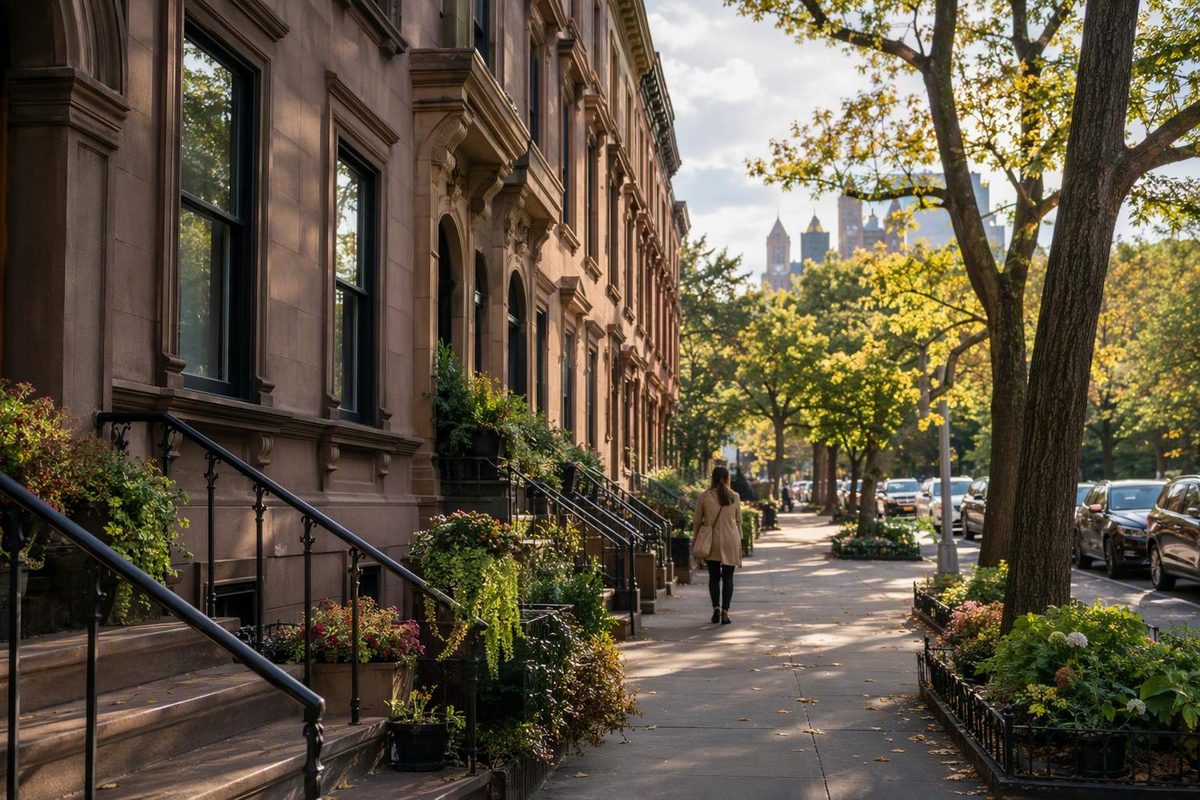
The Upper West Side is a strong Manhattan base if your trip revolves around parks, museums and performing arts. It is less convenient if you want to walk out of your hotel straight into the Theater District or spend most evenings downtown.
The useful distinction is which part of the neighborhood you choose. Lincoln Square puts you near Lincoln Center and Columbus Circle; the 70s and 80s work well for a museum-and-park trip; farther north, check your exact subway connection before booking.
Where is the Upper West Side?
For trip planning, use West 59th to West 110th Streets, between Central Park and the Hudson River—the area served by Manhattan Community Board 7. That is a useful working boundary, rather than a reason to treat every block as equally convenient.
Central Park forms the eastern edge, while Riverside Park provides a second park setting to the west. Lincoln Center and the American Museum of Natural History are two major draws identified by NYC Tourism’s neighborhood guide.
Think of the neighborhood in two directions: street numbers increase as you head north, while your east–west position determines whether you are closer to Central Park, Broadway’s subway stations or the river.
Which part should you stay in?
These are planning zones, not formal neighborhood boundaries.
| Area to search | Best fit | What to check before booking |
|---|---|---|
| Lincoln Square and the 60s | Lincoln Center performances, Columbus Circle and access toward Midtown | Whether your room faces a busy avenue, and the walk to your actual performance venue |
| The 70s and 80s | A balanced park-and-museum base with time for neighborhood meals | Whether Broadway or Central Park West is the more useful subway corridor for your itinerary |
| The 90s to 110th Street | Trips with more time devoted to the northern part of the neighborhood | The exact station and train—not simply a hotel description saying “near the subway” |
For a first trip centered on the Upper West Side, start your hotel search in the 70s and 80s, then compare room layout, total cost and station access. This is a planning recommendation, not a claim that those blocks have the cheapest rooms.
Broadway’s 72nd and 96th Street stations provide access to the 1, 2 and 3 trains. The 1 also serves intermediate stops, including 79th and 86th Streets; the 2’s standard weekday route skips those stops. That makes the exact station consequential when choosing a base. See the MTA’s 1 line map and 2 line map. Transit details here reflect information checked in October 2026; weekend, late-night and planned service changes can alter the route.
Choose Lincoln Square instead if returning from an evening performance on foot matters most. Our Lincoln Square guide focuses on that smaller area.
If Broadway shows dominate your schedule, compare this neighborhood with Midtown West. You can still visit the Upper West Side for a day without making it your overnight base.
Build a day around one main stop
Do not make Lincoln Center, a substantial museum visit and both parks compulsory parts of the same day. Choose the reason you came, then add nearby walking time.
A museum-led half day
Start at the American Museum of Natural History, then move west for food and Riverside Park rather than repeatedly crossing the neighborhood.
- Museum: Allow roughly two to three hours for a selective visit, longer if this is a major trip priority. The museum has entrances at Central Park West and 79th Street, the Rose Center on 81st Street, and the Gilder Center at Columbus Avenue and 79th Street. The latter two are accessible entrances. Check the museum’s visitor information when choosing your arrival point.
- Food stop: Continue west to Zabar’s, 2245 Broadway at 80th Street, for coffee, cheese, smoked fish or food shopping. Its official store page distinguishes main-store and café hours, so do not assume they close together.
- Park finish: Head toward Riverside Drive for a park walk. Riverside Park has several levels descending toward the Hudson; reaching the park edge is not the same as reaching the waterfront. Use the upper paths for a shorter outing, or allow extra time for the descent and return. NYC Parks describes the park’s terraced layout.
Budget about four to five hours overall, including lunch and a short park walk. If Central Park is your priority, finish east of the museum instead and save Zabar’s and Riverside Park for another outing.
For a longer route, use our walking-first Upper West Side things-to-do guide.
Subway details that prevent wrong turns
On the Upper West Side, there are two different 72nd Street stations: one at Broadway for the 1/2/3, and another at Central Park West for the B/C. Match the avenue as well as the street number when following directions. The MTA’s C line map shows the Central Park West stops.
For the natural history museum, the B—weekdays only—or C serves 81st Street–Museum of Natural History. The 1 serves 79th Street on Broadway. The museum notes that 81st Street station is not wheelchair accessible, an important distinction from the museum’s accessible entrances. See its transportation and accessibility guidance.
If you need step-free subway access, the Broadway 72nd Street station has elevators inside the station house between 72nd and 73rd Streets. Use the MTA’s accessible-station directory to plan the connection and check elevator status before traveling.
Check service changes on your travel day, especially at weekends. A nearby station only helps if the train you need is stopping there.