 New York Know
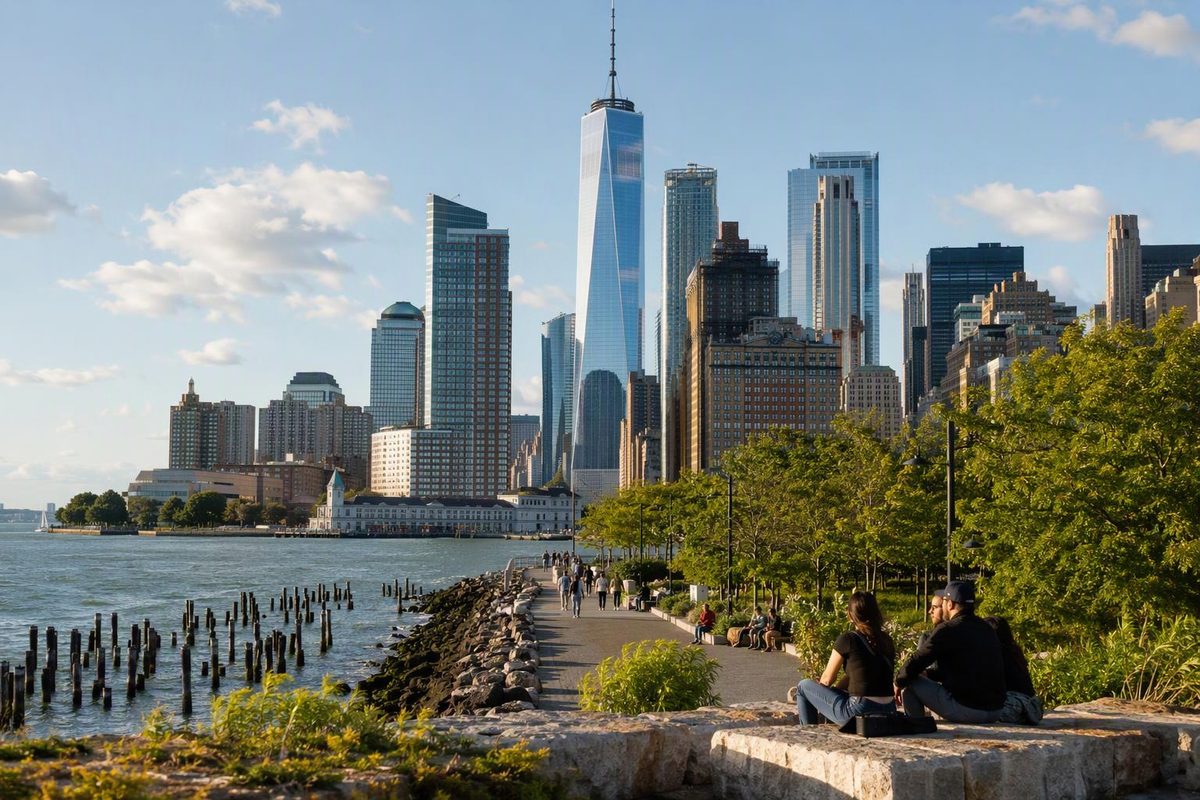
Lower Manhattan works best as a compact downtown day, not a queue of major attractions. Start with the harbor and Financial District, choose one substantial visit, then finish on one waterfront—or continue north toward Chinatown.
It can also make a good hotel base if downtown sights are central to your trip. If most of your plans involve Broadway, Midtown landmarks and Central Park, compare the actual subway journeys before booking downtown just for the room price.
Get oriented: four useful sightseeing areas
For this guide, the practical core runs from the southern tip of Manhattan to the City Hall area. Treat Chinatown and Tribeca as possible extensions, rather than assuming every place described as “downtown” belongs in the same walking day.
| Area | What to build around | Best planning use |
|---|---|---|
| The Battery and Financial District | Harbor views, Wall Street and Trinity Church | A compact introduction to the southern tip |
| World Trade Center | The 9/11 Memorial, Museum and One World Observatory | One substantial booked visit, with nearby outdoor stops |
| Battery Park City | Hudson River views, parks and Brookfield Place | A west-side finish with shopping or a meal |
| Seaport | Historic streets, maritime exhibits and ships at Pier 16 | An east-side finish focused on the waterfront and port history |
The city’s outdoor guide to Lower Manhattan groups these waterfront and historic stops together. The Battery’s visitor guide details its gardens and harbor connections, while the South Street Seaport Museum identifies its galleries and historic ships at Pier 16. Check the Museum’s schedule if boarding the ships is part of your plan, rather than simply walking the district.
The key choice is east or west. You can visit both waterfronts, but adding Seaport, Battery Park City and a northern neighborhood after a long museum visit leaves little room to stop.
What deserves your time?
The Battery, Wall Street and Trinity Church
Use these as the outdoor backbone of a first visit. The Battery gives you open harbor space; Wall Street brings you into the narrower streets of the Financial District; Trinity provides a historical stop at Broadway. The church dates its establishment to 1697 and identifies Alexander Hamilton’s resting place in its churchyard. Trinity’s visitor information is a useful starting point if you want to go inside rather than simply pass by.
If a bull photo matters to you, add it deliberately instead of letting it dictate the morning; our Charging Bull guide covers the stop and nearby walking options.
The World Trade Center: choose the kind of visit
The outdoor 9/11 Memorial is free. The Museum is a separate visit requiring advance timed tickets under its current admission policy. Don’t budget for both as though they were one quick stop. Check the Memorial and Museum’s admission information before booking.
One World Observatory is another separate ticketed attraction, not part of Museum admission. Its entrance is at West and Vesey Streets, and the operator suggests approximately 45 minutes to an hour for the experience. Add arrival and security time to that allowance. See the Observatory’s visit details for tickets and entrance information.
For a relaxed first day, choose the Museum or the Observatory as your main indoor visit. Both can fit if they are your priorities, but shorten the rest of the day accordingly.
A historical extension beyond Wall Street
The African Burial Ground National Monument offers a different perspective on the city’s beginnings: the lives and contributions of Africans, including enslaved people, in colonial New York. Its visitor center is at 290 Broadway, with an outdoor memorial at Duane and Elk Streets. The site is free; entry to the federal building involves airport-style security and may require photo identification. National Park Service visitor information explains the entrances and requirements.
As of October 2026, both the visitor center and outdoor memorial are scheduled to open Wednesday–Sunday, 10 a.m.–4 p.m., with holiday exceptions and weather-dependent winter access to the memorial. Check the NPS hours before building your day around it.
Pair it with City Hall and a northward finish. Our African Burial Ground visitor guide helps plan that stop in more detail.
Two ways to shape the day
These are planning allowances, not measured route times; meals, photographs, queues and indoor visits determine the pace.
For a first visit: allow roughly half a day for The Battery → Broadway and Wall Street → Trinity → the outdoor 9/11 Memorial. Afterward, choose Battery Park City for the Hudson side or Seaport for the East River side. A substantial Museum visit turns this into a fuller day.
For history and a neighborhood finish: start at the World Trade Center, walk north toward City Hall and the African Burial Ground during its opening hours, then continue to Chinatown for a meal and a separate neighborhood walk. Use our Chinatown guide rather than adding another downtown waterfront loop.
For a harbor-to-Chinatown route framework, see the walking-first Lower Manhattan day.
One current constraint affects the west-side option: as of October 2026, Battery Park City Authority warns of rolling Esplanade closures through 2030 for resiliency construction. Don’t assume an uninterrupted waterfront walk; check the Esplanade notice and follow posted detours.
Should you stay in Lower Manhattan?
Choose it when the Financial District, World Trade Center, harbor outings and nearby downtown neighborhoods account for several days of your trip. A hotel here makes those walks easier to begin and lets you return for a break without crossing Manhattan.
Choose Midtown when your fixed commitments are mostly there—especially repeated theater evenings—and Lower Manhattan is just one excursion. Neither choice eliminates subway travel; the question is which journeys you will repeat.
Check the exact hotel address, not only the neighborhood label. A room near Fulton Street and one beside the Hudson offer different walks to transit. Compare the routes to your booked attractions in our Midtown-versus-downtown stay guide.
Arrive near your first stop—and don’t squeeze in the islands
For a harbor-first day, Bowling Green serves the 4 and the 5 outside late-night service. For a World Trade Center or central Financial District start, Fulton Street provides several connections. The MTA’s 4-line map lists these stations and cautions that weekend and late-night service can differ. Check your day’s service before leaving.
A Statue of Liberty and Ellis Island visit is not a small add-on just because its ferry departs nearby. The National Park Service recommends an early departure to visit both islands and warns that security waits can exceed an hour at peak times. Statue City Cruises is the only authorized ferry provider landing at the islands, and the time on your ticket is for joining the security queue—not a reserved ferry departure. Follow the NPS planning guidance, then build a shorter mainland walk around that outing.