 New York Know
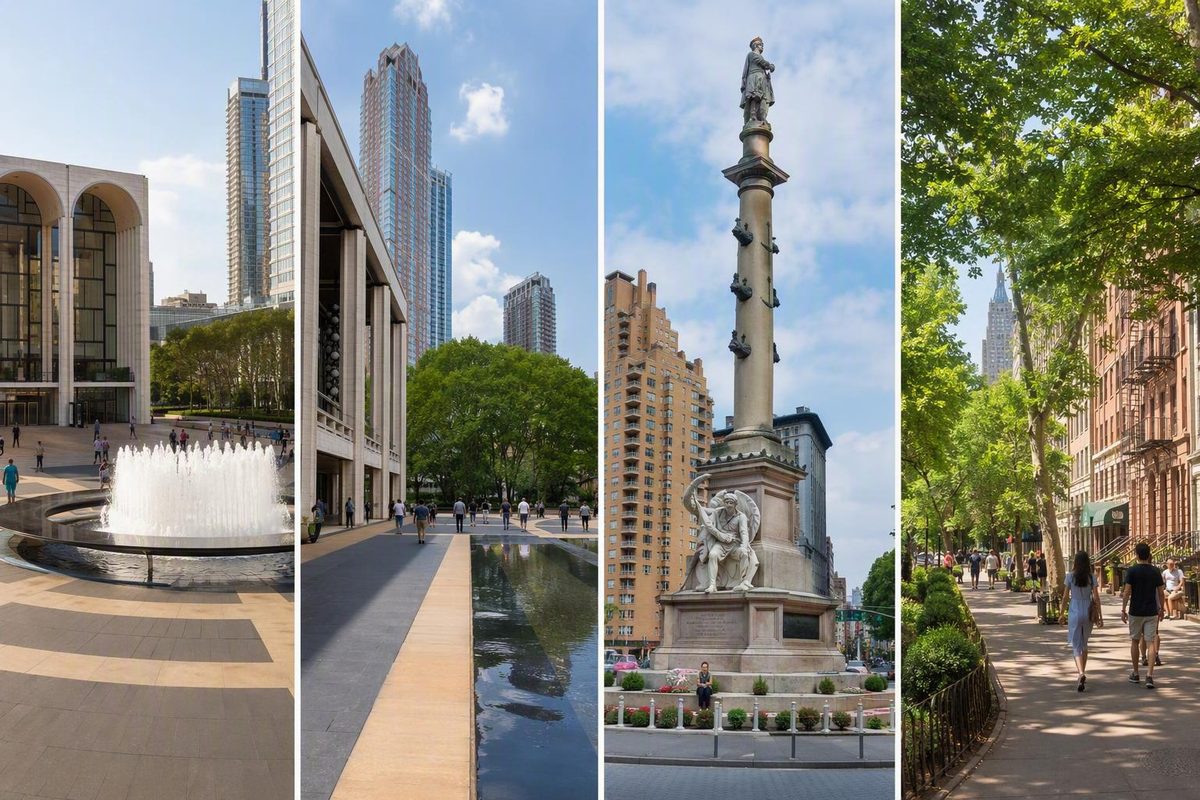
Lincoln Square works best as a compact cultural district, not a checklist of unrelated attractions. Begin with Lincoln Center, move through its plazas and surrounding streets in one direction, then add one logical extension—usually Columbus Circle, Central Park, or a longer Upper West Side walk.
That approach also reveals an important distinction: Lincoln Square is more than Lincoln Center, and its history did not begin with monumental performance halls. The present campus occupies land associated with San Juan Hill, where urban renewal displaced thousands of residents and disrupted established communities.
Last reviewed: September 2, 2026. Event schedules, transit service, ticket rules, opening conditions, and accessibility arrangements remain subject to change.
Related: Cool Things to Do in NYC Are Better Grouped by Area.
Where Lincoln Square Is—and Why Its Boundaries Are Confusing
Lincoln Square is on Manhattan’s Upper West Side, centered around Broadway, Columbus Avenue, and the blocks surrounding Lincoln Center. The name can refer to three related but different places:
- The named square or intersection around Broadway and Columbus Avenue.
- The compact cultural core surrounding Lincoln Center.
- A broader neighborhood used in travel, commercial, and real-estate descriptions.
Under a narrow definition, Lincoln Square covers roughly West 63rd through West 66th Streets between Columbus and Amsterdam Avenues. Broader descriptions may extend approximately from West 59th to West 72nd Street. These are useful orientation boundaries, not official limits accepted by everyone; published descriptions vary depending on whether they mean the square, cultural district, modern neighborhood, or historical renewal area. A Lincoln Square neighborhood overview documents both the narrow core and broader usage.
Lincoln Square and Lincoln Center are therefore not interchangeable names. Lincoln Center is the defining cultural campus within Lincoln Square. The surrounding district also includes homes, schools, university buildings, cinemas, businesses, restaurants, streets, parks, and transit facilities. A visitor may spend most of the day at Lincoln Center without having explored the entire neighborhood.
Columbus Circle and the southwestern corner of Central Park lie toward the southern and eastern side of the wider area. The Hudson-side Upper West Side lies to the west. Depending on the boundary being used, Columbus Circle and Central Park may be described as edges, neighbors, or nearby itinerary additions rather than parts of Lincoln Square itself.
A simple walking diagram
The labeled diagram is schematic and not to scale. It distinguishes the compact Lincoln Center core from nearby additions that do not fit every definition of Lincoln Square.
For an accessible text equivalent, read the route from north to south: optional AMC stop, 66th Street arrival, Welcome Center, Lincoln Center plazas, Juilliard, performing-arts library, Damrosch Park, Dante Park, Columbus Circle, and the Central Park edge.
Treat these boundaries as layers rather than fences. The compact core is enough for a Lincoln Center visit. For a half day, connect it to Columbus Circle and Central Park. For a full Upper West Side day, use Lincoln Square as the southern conclusion rather than the whole itinerary.
What Makes the Neighborhood Worth Visiting
Lincoln Square concentrates several forms of city life within a short walk: performing arts, cinema, arts education, library resources, public space, residential streets, and ordinary neighborhood activity. Its appeal comes not only from the institutions themselves but from being able to understand their relationship to one another on foot.
Lincoln Center is the principal anchor. Institutions associated with the campus include the Metropolitan Opera, New York Philharmonic, New York City Ballet, Juilliard, Film at Lincoln Center, and the New York Public Library for the Performing Arts. Collectively, they support opera, orchestral music, dance, theater, film, research, archives, education, and public programming.
The atmosphere shifts during the day. Students, library users, residents, workers, filmgoers, and sightseeing visitors share the area during daytime hours. Before evening performances, more people approach individual venues, arrange meeting points, collect tickets, and look for food. This is a planning observation rather than a promise about crowd levels: an ordinary afternoon, festival day, and evening with several major performances can feel very different.
That rhythm makes Lincoln Square useful even without a live-event ticket. An architecture-focused visitor can examine the campus plan and its relationship to Broadway. A filmgoer can compare current programs at Lincoln Center and a commercial cinema. Someone exploring the Upper West Side can use the plazas as a pause between residential streets and Columbus Circle.
AMC Lincoln Square 13 is a separate cinema at 1998 Broadway, north of the central Lincoln Center plazas; it is not part of the Lincoln Center campus. Availability may differ by auditorium or screening, so confirm the format and requested accommodation on the official AMC Lincoln Square 13 page.
Central Park, Columbus Circle, the wider Upper West Side, and the Hudson-side parks all make natural itinerary partners. They need not be absorbed into the Lincoln Square label. Keeping the distinction clear produces a more coherent day: Lincoln Square supplies the cultural anchor, while one adjoining area supplies the extension.
Exploring Lincoln Center Without a Performance Ticket
You do not need a performance ticket merely to orient yourself around Lincoln Center or investigate its visitor-facing resources. That does not mean every lobby, auditorium, exhibition, library service, or building is freely accessible at all times. Events, rehearsals, security arrangements, private functions, and venue policies can change what is available.
Begin at the Welcome Center, at the southeast corner of David Geffen Hall. It serves as an information point for the campus and includes a box office. Lincoln Center also offers bookable campus tours, while its visitor information covers venues, transportation, food, accessibility, visual art, and box-office services. Verify current schedules, prices, and entry requirements through Lincoln Center’s official visit guidance.
A structured tour is the clearest choice for visitors who want more than an exterior overview. It provides interpretation and a deliberate route through the complex, but it also fixes part of the day and may require advance booking. If flexibility matters more, use Lincoln Center’s free Bloomberg Connects digital art guide as a self-guided framework.
Some services may be available on a walk-in basis and others by appointment. Treat a library visit as a separate planned activity, not as guaranteed casual entry to every collection or research area.
For a no-performance campus walk, investigate:
- the main plaza and fountain area;
- the arrangement and exterior architecture of the principal venues;
- visible artworks and campus design details;
- Juilliard and the library’s place within the complex;
- pedestrian connections among Broadway, Columbus Avenue, and Amsterdam Avenue;
- and Damrosch Park on the campus’s southwest side.
Some art may be visible while moving through public-facing areas; other works may depend on a building being open. Check at the Welcome Center or consult the digital guide instead of planning around an assumed indoor route.
Dining and grab-and-go choices exist on the campus, but hours and event-day arrangements can vary. If you are attending a timed performance, prioritize a meal that leaves a substantial buffer before curtain rather than choosing solely by proximity.
Productions, inventory, discount levels, eligibility, and operating arrangements can change, so consult the current Lincoln Center discounts and offers information before building an evening around a hoped-for ticket.
A Walking Route Through the Lincoln Square Area
The most efficient core route moves generally south from the 66th Street–Lincoln Center station area. It keeps the campus sequence together instead of sending you repeatedly in and out of the same blocks.
1. Begin at the Welcome Center
Start at the southeast corner of David Geffen Hall. Confirm your tour, performance, ticket, entrance, or accessibility details if the relevant service is available. Without a booking, use this stop to identify which visitor-facing spaces and artworks can be accessed that day.
2. Walk the campus as one connected complex
Move through the principal public spaces and observe how the buildings face the plaza. Rather than trying to enter every venue immediately, begin with the campus plan: approaches, sightlines, gathering spaces, façades, stairs, ramps, and the fountain zone.
Include Juilliard and the New York Public Library for the Performing Arts in this sequence. They help explain why Lincoln Center is not merely a group of performance stages but also a center for education, research, and archives. Admission rules vary, so regard any interior visit as a planned addition.
Continue toward Damrosch Park. Its role and appearance may change with seasonal programming, construction, or event infrastructure, so do not assume it will function as quiet open space on a particular date.
3. Continue to Dante Park
Move toward Broadway and Columbus Avenue, where the institutional campus meets the surrounding streets. Dante Park makes a useful transition point: from here, Lincoln Center reads less like an isolated monumental complex and more like an anchor within an active neighborhood.
Pause to notice the street geometry. Broadway crosses Manhattan’s street grid diagonally, helping create the irregular junctions and small public spaces that distinguish this part of the Upper West Side.
4. Finish at Columbus Circle and Central Park
Continue south along Broadway toward Columbus Circle. This gives the walk a clear endpoint at a larger transit and public-space node. From there, the southwestern edge of Central Park offers an open-space finish.
Columbus Circle and Central Park fit the route naturally even though narrower definitions of Lincoln Square may exclude them.
Optional northern film stop
If the day centers on commercial film, begin farther north at AMC Lincoln Square 13 and then head toward the campus. Add it when you have a screening, need to inspect the theater location, or want to compare film programs. Otherwise, starting near 66th Street creates a cleaner southbound route.
Route summary
- Arrive near 66th Street.
- Begin at the Welcome Center.
- Examine David Geffen Hall and the principal plazas.
- Include Juilliard and the performing-arts library.
- Cross the main plaza and fountain area.
- Continue to Damrosch Park.
- Walk toward Dante Park and Broadway.
- Finish at Columbus Circle or the Central Park edge.
This is a planning framework, not a promise that each building, park section, box office, library area, or visitor service will be open.
A longer approach from the north
For a fuller Upper West Side day, approach Lincoln Square from near Columbia University and finish at Columbus Circle. One published route follows a 4.2-mile course, passes Juilliard and Lincoln Center, and ends at Columbus Circle. Its estimated 1.5–2 hours represents walking time; museums, meals, shopping, campus exploration, and performances would extend the day considerably. Consult the mapped Upper West Side walking route and timing.
This north-to-south version works because Lincoln Square becomes a culmination rather than an interruption. You can explore the Upper West Side progressively, reach the cultural district later, and avoid repeated uptown and downtown trips.
Choose a One-Hour, Half-Day, or Evening Visit
There is no universal ideal length for Lincoln Square. An exterior orientation, formal campus tour, library research session, feature film, and opera performance require different schedules. Choose the primary activity first, then decide what the surrounding walk can realistically hold.
Itinerary card: One-hour orientation Estimated walking and looking time: About one hour Indoor venue time: None assumed
- Start at the Welcome Center.
- Cross the principal plazas and examine the exterior architecture.
- Pass the fountain area and walk toward Damrosch Park.
- Continue to Dante Park.
- End with a short stretch of Broadway.
This is an orientation, not a deep campus visit. If an indoor public-facing space is available, treat it as a bonus rather than forcing it into an already tight hour.
Itinerary card: Half day Estimated outdoor walking: Roughly one to two hours, depending on pace and extension Indoor or structured time: Add separately
- Begin at the Welcome Center.
- Choose either a bookable campus tour or the digital art guide.
- Visit eligible areas of the performing-arts library if they suit your interests and access conditions.
- Include the main plaza and Damrosch Park.
- Walk south through Dante Park to Columbus Circle.
- Finish at the Central Park edge.
Do not count tour, library, meal, and browsing time as part of the walking estimate. A half day works only if you select among the options rather than attempting all of them.
Itinerary card: Performance evening Estimated campus walk: 30–60 minutes before venue procedures Event time: Determined by the performance
- Eat before entering the immediate venue area or near the start of the route.
- Arrive early enough to locate the correct building and entrance.
- Confirm or collect tickets as required.
- Walk through the main campus spaces.
- Allow time for security, seating, coat checks where relevant, and heavier pedestrian activity before curtain.
Lincoln Center contains multiple venues. “Meet me at Lincoln Center” is not precise enough when time is tight; establish the building and entrance in advance.
Itinerary card: Film-focused visit Estimated neighborhood walking: About one hour for the core connection Screening time: Add the listed runtime and arrival time
- Compare current programs at Film at Lincoln Center and AMC Lincoln Square 13.
- Select the film first.
- Build the campus-and-Broadway walk around its start time.
- Confirm auditorium format, assigned seating, ticket rules, and requested accessibility services.
Do not assume either cinema will carry a particular title or presentation format on your date.
Itinerary card: Upper West Side day Estimated walking: At least 1.5–2 hours for the cited longer route, before stops Indoor time: Potentially several additional hours
- Begin in the northern Upper West Side.
- Move south through selected neighborhood landmarks.
- Reach Lincoln Square later in the day.
- Finish at Lincoln Center, Columbus Circle, or a scheduled evening event.
This structure is more efficient than visiting Lincoln Square in the morning, traveling elsewhere, and returning for an evening performance.
Place a meal near the beginning or end of the chosen path. On performance nights, work backward from the event’s required arrival time. On film days, work backward from the screening. On an unticketed half day, eat where the route naturally changes from campus exploration to the Columbus Circle extension.
Getting There and Handling Accessibility
The 66th Street–Lincoln Center station is the principal subway access point associated with the cultural campus. Columbus Circle is another useful transit hub for visitors approaching from the south or finishing the walk there.
Do not treat train lines, station exits, elevator availability, or service patterns as permanent facts. Planned work, unplanned disruptions, and elevator outages can alter an otherwise sensible route. Check current MTA service status shortly before departure.
Lincoln Center provides travel guidance for subway, bus, and car, but each visitor should confirm the details relevant to the date and exact venue. A map showing a nearby station is not enough when the journey requires a particular elevator, step-free entrance, drop-off point, or lower-gradient approach.
Separate three accessibility questions:
- Can you reach the neighborhood by an accessible transit route?
- Can you travel from the station or vehicle drop-off to the correct entrance?
- Does the venue provide the accommodation required for the event?
A “yes” to one does not establish a “yes” to the others. A theater may provide wheelchair spaces, captions, assisted listening, or audio description even when a chosen subway route has a temporary elevator outage. Conversely, an accessible station does not prove that every campus doorway is a step-free entrance. Review the MTA’s current accessible-station information when step-free travel is required.
Those are venue-specific services. Confirm that the requested service applies to the particular screening and ask how to reach the appropriate auditorium.
For a Lincoln Center event, identify the exact venue first. Then verify its accessible entrance, seating arrangements, assistive services, captioning or interpretation where offered, companion policies, and recommended arrival time. If the journey depends on elevators, check their status shortly before leaving—not only when first planning the trip.
Pre-visit checklist
- Transit: Have service changes and elevator conditions been checked today?
- Destination: Do you know the exact venue, not merely “Lincoln Center”?
- Entrance: Have you identified the appropriate entrance and route from the station or drop-off?
- Timing: What are the start time, recommended arrival time, and late-seating rules?
- Tickets: Are tickets digital, held at a box office, or subject to identification or collection requirements?
- Accessibility: Have required seating, captions, listening devices, audio description, or other arrangements been confirmed?
- Weather: Is the outdoor part of the route comfortable and practical?
- Evening activity: Could multiple events increase pedestrian or vehicle activity around arrival time?
Build extra time into any trip where a missed connection or difficult entrance could cause a late arrival. Lincoln Square’s compact geography makes the area manageable, but it does not replace venue-specific planning.
Before Lincoln Center: San Juan Hill and Urban Renewal
A visit to Lincoln Square is incomplete if its story begins with Lincoln Center. Before the present cultural complex, parts of the area were associated with San Juan Hill, a community with a substantial Black population and, by the middle of the 20th century, a significant Puerto Rican presence in the wider district.
San Juan Hill should not be flattened into either of two convenient stories. It was not simply an empty or irredeemable “slum” awaiting clearance, nor was it a socially uniform, conflict-free lost community. It contained varied incomes, long-term residents, strong social networks, aging housing, discrimination, disinvestment, hardship, and conflict. That complexity matters because urban-renewal arguments often presented demolition as the obvious solution while minimizing the policies and financing restrictions that had contributed to deterioration.
Construction of the Amsterdam Houses in the 1940s had already displaced working-class families before the later Lincoln Square renewal project, according to historian Samuel Zipp’s account of Lincoln Square and San Juan Hill.
The Lincoln Square urban-renewal plan began in the 1950s and was carried out into the 1960s. It replaced streets and buildings with cultural, educational, residential, and institutional developments, including Lincoln Center and campuses associated with Juilliard and Fordham University.
The scale of displacement requires careful wording because sources count different units and geographic areas. Those figures are not directly interchangeable. The defensible conclusion is that thousands of residents were displaced.
Displacement meant more than changing an address. Residents were dispersed, social networks were interrupted, and proximity to jobs, neighbors, businesses, churches, and familiar services could be lost. The effects were unequal, with people of color bearing a significant share of the burden. Even where replacement housing existed within a larger redevelopment scheme, that did not guarantee that former residents could return to the same community on acceptable terms.
The result is a dual legacy. Lincoln Center and the associated educational and residential projects created major institutions and a highly visible public district. Their construction also imposed substantial human costs that monumental architecture can obscure. Visitors do not need to reject the art to recognize the displacement; they should understand both at once.
That awareness changes the walk. The plazas are not merely an attractive foreground for performance halls. They are also evidence of a deliberate remaking of the street grid and urban life. The contrast between the campus’s broad open spaces and the remembered streets, stoops, apartments, and businesses of the earlier neighborhood is part of what Lincoln Square means.
Fact check: Was Lincoln Square named for Abraham Lincoln?
New York City adopted the Lincoln Square name in 1906, but the reason was not securely recorded. Some later neighborhood accounts attribute the name to President Abraham Lincoln; the historical summary in the Lincoln Square overview treats that connection as speculation. The careful conclusion is that an Abraham Lincoln connection is unconfirmed, not established fact.
The same caution applies to broad descriptions of San Juan Hill. “Predominantly Black” can appropriately characterize significant parts of the historic community, while the wider renewal area was more racially and economically mixed and included a growing Puerto Rican population. The history is not simpler than the present neighborhood; it is more layered.
How to Fit Lincoln Square Into a New York Trip
Lincoln Square is especially worthwhile for visitors interested in performing arts, film, architecture, public space, arts education, or Upper West Side neighborhood exploration. It is less effective as a quick detour inserted between geographically distant attractions.
Treat it as an area-based half day or day. The most natural pairings follow the map:
- South or east: Columbus Circle and the edge of Central Park.
- North: a broader Upper West Side walk.
- Within the core: a tour, library visit, film, or performance paired with the campus and Broadway.
- Evening: one ticketed event as the fixed point, with the walk and meal arranged around it.
A performance is a useful anchor because it supplies a nonnegotiable time and place. Once the ticket is booked, work backward: choose a nearby meal window, allow time to locate the venue, then add either a campus walk or one neighboring extension. Avoid scheduling another timed attraction across Manhattan immediately beforehand.
Filmgoers should compare the current program at Film at Lincoln Center with AMC Lincoln Square 13. The cinemas serve different programming needs, and neither should be assumed to have a particular title, format, or accommodation without confirmation. Select the screening first, then shape the route around it.
If you want only an exterior view of Lincoln Center, a short orientation may be enough. If you want a campus tour, library research, a film, or a live performance, Lincoln Square can occupy a half day or longer. The relevant question is not how quickly someone can cross the plaza but how much structured activity they intend to place around it.
Separate stable orientation from volatile logistics.
Relatively stable
- Lincoln Square’s location on the Upper West Side;
- Lincoln Center’s role as the cultural anchor;
- the relationship among Broadway, Columbus Avenue, the campus, Columbus Circle, and Central Park;
- the concentration of performing-arts, film, education, and library institutions;
- the history of San Juan Hill and urban-renewal displacement.
Check shortly before visiting
- train service and elevator status;
- venue and library opening conditions;
- tour times and prices;
- event and movie schedules;
- ticket availability and collection rules;
- TKTS inventory and discounts;
- accessible entrances and event accommodations;
- temporary closures, construction, and weather effects.
A simple planning sequence prevents unnecessary travel:
- Choose one primary event or campus activity.
- Confirm its current time, entrance, ticket rules, and accessibility details.
- Add one walking extension—Columbus Circle, Central Park, or the Upper West Side to the north.
- Place the meal near the beginning or end.
- Remove distant stops that force another Manhattan crossing.
Frequently Asked Questions
Where does Lincoln Square begin and end?
There is no universally accepted boundary. A narrow definition focuses on roughly West 63rd through West 66th Streets between Columbus and Amsterdam Avenues. Broader neighborhood usage may extend approximately from West 59th to West 72nd Street. The difference usually depends on whether someone means the named square, Lincoln Center’s cultural core, a real-estate neighborhood, or a wider historical district.
Are Lincoln Square and Lincoln Center the same place?
No. Lincoln Center is the major cultural campus anchoring Lincoln Square. Lincoln Square is the surrounding area, which also contains residential, educational, commercial, entertainment, transit, and public-space uses.
Can you explore Lincoln Center without buying a performance ticket?
Yes. You can orient yourself around the outdoor campus, begin at the Welcome Center, use the digital art guide, or book a campus tour without buying a performance ticket. Library services may be available under separate access conditions. Do not assume every building or indoor space is freely open; verify current visitor information first.
Which subway station is closest to Lincoln Square?
The 66th Street–Lincoln Center station is the principal subway access point associated with the cultural campus. Columbus Circle is also useful when approaching from the south or finishing the walk there. Train service, exits, elevator status, and step-free routing can change, so verify them with the MTA on the day of travel.
How long do you need to visit Lincoln Square?
Allow about one hour for a basic exterior orientation. A half day can accommodate a campus tour or digital art guide, eligible library spaces, the plazas, Damrosch Park, and a walk to Columbus Circle or Central Park. A film or live performance requires its full event time plus an arrival buffer. For a longer Upper West Side approach, count walking time separately from meals, museums, tours, and performances.
Walk Lincoln Square as One Connected District
Lincoln Square is easiest to understand when you choose one cultural anchor, move through the campus and surrounding streets in a logical direction, and finish with one nearby extension rather than another scattered checklist.
As you take in the plazas, fountain, schools, libraries, cinemas, and performance halls, recognize the older neighborhood of San Juan Hill and the residents displaced by urban renewal. The cultural institutions and the human cost of creating the present district are both part of the same landscape.
Before setting out, verify MTA service, venue access, event schedules, ticket rules, and any required accessibility arrangements.