 New York Know
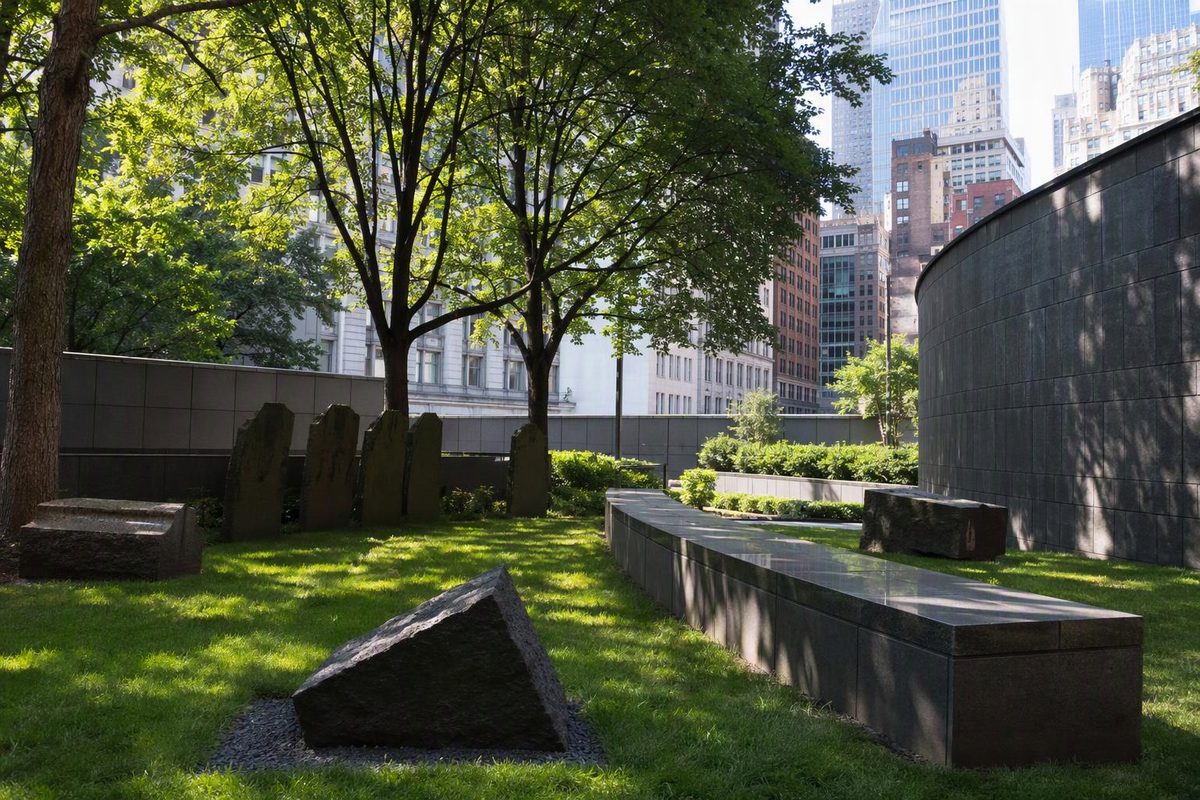
A visit to the African Burial Ground National Monument has two parts: an indoor visitor center at 290 Broadway and an outdoor memorial around the corner at African Burial Ground Way and Duane Street. Allow about 60 to 90 minutes for both.
The National Park Service describes this as the nation’s earliest and largest rediscovered African burial ground. The memorial occupies a small space among Lower Manhattan’s government buildings, but the historic burial ground covered about six acres and may have contained as many as 15,000 burials of free and enslaved Africans.
Visitor details
- Visitor center: 290 Broadway, first floor of the Ted Weiss Federal Building, between Duane and Reade streets
- Outdoor memorial: African Burial Ground Way at Duane Street
- Hours: Wednesday through Sunday, 10 a.m. to 4 p.m.
- Closed: Monday, Tuesday, Thanksgiving Day, Christmas Day and New Year’s Day
- Admission: Free; no entrance pass is required
- Time to allow: About 60–90 minutes for the exhibits, film and memorial
- Tours: Ranger-led tours require reservations, but a tour is not necessary for a self-guided visit
Both parts currently follow the same schedule. The outdoor memorial opens during winter when weather permits, according to the official NPS hours page, last updated in July 2026. Admission to the visitor center and memorial is free.
Why the burial ground matters
Construction of a federal office tower at 290 Broadway led to the burial ground’s rediscovery in 1991. Preliminary archaeological excavation found human remains about 30 feet below street level. The National Park Service dates the burial ground from the mid-1630s to 1795 and estimates that the larger site contained up to 15,000 burials of free and enslaved Africans who lived and worked in colonial New York (NPS history).
The discovery did not move quietly from excavation to museum display. Members of New York’s African American community, historians, archaeologists and public officials pressed for respectful treatment, research and memorialization. Following ceremonies that began at Howard University in Washington, D.C., the ancestral remains were returned to the site on October 4, 2003 (NPS reinterment history).
The site became a national monument in 2006. The designation protects an approximately 15,000-square-foot remaining portion of the much larger historic burial ground (presidential proclamation).
What to see, in the best order
1. Begin inside at 290 Broadway
Starting at the visitor center gives the outdoor memorial necessary context. Exhibits cover archaeology, colonial enslavement and the civic activism that shaped the site’s preservation. The center also has bathrooms, water fountains, a bookstore and a 20-minute park film (visitor-center details).
The entrance is inside a working federal building. Visitors undergo airport-style screening, which may include showing photo identification and removing shoes. Build in a few spare minutes rather than placing this visit immediately before a timed reservation elsewhere.
2. Continue to the outdoor memorial
From the visitor center, walk to Duane Street and turn toward African Burial Ground Way. The memorial’s Ancestral Chamber marks the place where the remains and artifacts associated with 419 Africans were reinterred. Its form and surrounding symbols reward a slow look, but this remains a place of burial and remembrance rather than a conventional photo stop (NPS memorial history).
Do not rely on a map search alone to find the museum. The NPS cautions that Google Maps may direct visitors only to the outdoor memorial; enter 290 Broadway when navigating to the visitor center (official directions).
Getting there by subway
The NPS lists several stations within four blocks:
- Chambers Street: 1, 2, 3, A and C trains
- City Hall: R train
- Brooklyn Bridge–City Hall: 4, 5 and 6 trains
- Chambers Street: J and Z trains
The agency discourages driving because nearby parking is difficult. Check current MTA service before leaving, particularly on weekends, when planned subway changes can alter the simplest route.
How to fit it into a Lower Manhattan day
Visit near the 10 a.m. opening, then keep the rest of the morning in the Civic Center rather than leaving the area:
- 10 a.m.: Visitor center — see the exhibits and 20-minute film.
- About 11 a.m.: Outdoor memorial — allow 15–20 quiet minutes.
- Late morning: Foley Square and City Hall Park — both are nearby and require no transit.
- Continue south: Follow Broadway toward St. Paul’s Chapel and the World Trade Center area.
From there, stop for lunch or continue south toward Wall Street and Bowling Green. This keeps the day geographically coherent instead of turning the monument into a detour between distant attractions. For a broader trip, follow the same one-area principle described in planning New York days by neighborhood.
Accessibility and final checks
The NPS says the visitor center and outdoor memorial are fully accessible, service animals are welcome, and wheelchairs are available on request. No accessible parking is available at the site; contact information for accommodation requests appears on the official accessibility page.
No reservation is needed for an ordinary self-guided visit. Ranger-led tours are available by reservation through Recreation.gov, as explained on the NPS permits and reservations page. Because the monument is closed two days each week and has limited daily hours, confirm the official hours and current conditions shortly before visiting.