 New York Know
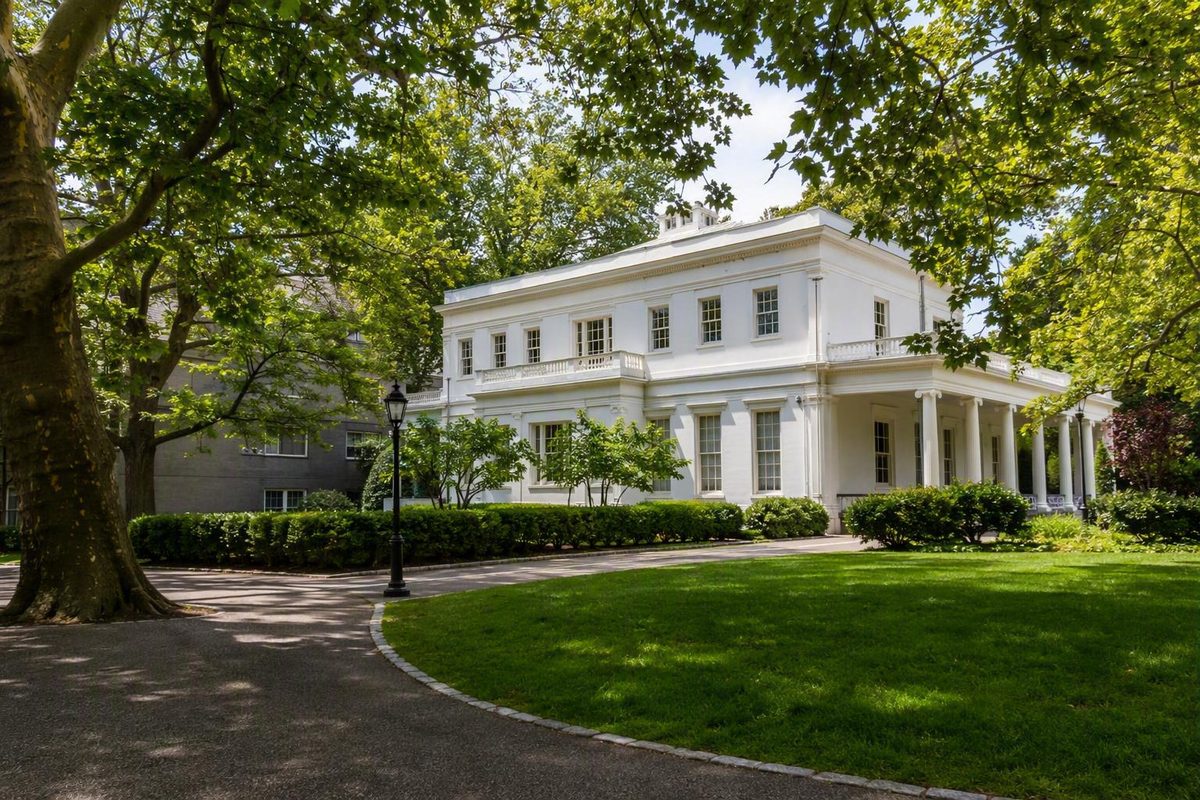
Gracie Mansion at a glance: what it is and whether you can visit
Gracie Mansion is the official residence of the mayor of New York City. Merchant Archibald Gracie built the Federal-style house in 1799 as a country residence overlooking the East River. Today, it stands inside Carl Schurz Park near East 88th Street and East End Avenue in Yorkville on Manhattan’s Upper East Side.
Visitor status — verified August 31, 2026
The latest notice on the official Gracie Mansion Conservancy website says all public tours are paused while the organization plans its next era of public programming. The notice does not give a reopening date.
Check the Conservancy again immediately before planning an interior visit.
Older map entries and travel guides continue to display Monday or Wednesday schedules, appointment hours, admission charges, and visitor rules. Those details may describe an earlier tour program or administrative hours. They do not confirm that visitors can currently enter the mansion.
NYC311 still directs readers to online tour information and reservations, but its captured page does not include the Conservancy’s newer pause notice. For current availability, treat the dated Conservancy announcement as controlling for the Conservancy’s programming, while using NYC311’s Gracie Mansion page as a secondary city reference.
It helps to distinguish three forms of access:
- Public park access: Visitors can use public areas of Carl Schurz Park, subject to current conditions, closures, hours, and posted rules.
- Exterior views: NYC Parks identifies Gracie Mansion as a historic attraction visible from the park’s East River promenade.
While tours remain paused, you can still plan around the mansion’s history, its Yorkville setting, and authorized public viewpoints in the park. What cannot yet be confirmed is a reopening date, visitor entrance, admission charge, reservation procedure, identification requirement, security process, accessibility arrangement, photography policy, or future tour route.
That makes Gracie Mansion different from a conventional historic-house museum. It has a public history and a prominent place in the park, but it remains an active civic property. For now, approach it as an exterior landmark within a riverfront walk rather than as a guaranteed indoor attraction.
Where Gracie Mansion is in New York City
Gracie Mansion is in Yorkville, on the eastern side of Manhattan’s Upper East Side. Use East 88th Street and East End Avenue as the most dependable location reference. That intersection brings you beside Carl Schurz Park without implying that a street address or map pin marks an authorized mansion entrance.
Carl Schurz Park extends from East End Avenue to the East River and from approximately East 84th Street to East 90th Street, according to the official NYC Parks profile. The mansion occupies one part of this larger public landscape.
The geography helps explain the site’s character. Gracie Mansion stands at the river’s edge above Hell Gate, farther east than the Upper East Side’s principal north–south avenues. Its setting reflects the property’s origins as a country estate created beyond the compact city of the late 18th century.
For navigation, request live directions to Carl Schurz Park near East 88th Street and East End Avenue. After arriving, follow current park signs and remain on clearly public paths. Do not assume that a driveway, gate, numerical address, or map route represents a visitor approach to the mansion.
Gracie Mansion works best as a Yorkville or Upper East Side stop. It is less practical as an isolated addition to a day centered on Lower Manhattan, Greenwich Village, or another distant area—especially while there is no confirmed interior access.
Instead, make the mansion and Carl Schurz Park the eastern end of a neighborhood walk, use the park as an outdoor pause between Upper East Side activities, or continue through Yorkville after visiting the promenade. This reflects New York Know’s advice to group sights by area and build days that make sense on foot. That guidance is a planning principle, not evidence about Gracie Mansion itself.
What visitors can do while public tours are paused
An exterior visit can include more than locating the house on a map. NYC Parks identifies Gracie Mansion as an 18th-century historic attraction visible from the East River promenade in Carl Schurz Park. The same park profile names views of the East River, Roosevelt Island Lighthouse, the Triborough Bridge, and Randall’s and Wards islands.
A simple walking-first visit can follow this sequence:
- Enter Carl Schurz Park from the Yorkville side through a clearly public entrance.
- Use current signs or park maps to orient yourself toward public viewpoints of the mansion.
- Observe all fencing, notices, temporary barriers, and closed areas.
- Continue toward the East River promenade rather than making the house your only objective.
- Walk as much of the public riverfront route as conditions and your interests allow.
- Return to Yorkville through a convenient public exit.
This plan remains useful if foliage, maintenance, or temporary restrictions limit the view. It also prevents a potentially brief exterior look from becoming an inefficient stand-alone journey across Manhattan.
Seeing the building from a park path is not the same as entering the property. Do not pass through a gate, enter a driveway or garden, or follow another visitor into a controlled area unless authorized staff or official signs clearly permit it.
Carl Schurz Park gives the outing a broader purpose. NYC Parks lists two dog runs, a playground, public restrooms, basketball and pickleball courts, roller hockey, spray showers, green space, and the riverfront promenade among its facilities and features. These directory listings describe what the park contains; they do not guarantee that every facility or path will be open when you arrive.
You can adapt the visit to your interests:
- Brief exterior look: Find an authorized public viewpoint, see what is visible, and return to Yorkville.
- Park-and-promenade visit: Add time beside the East River and explore the park’s public green space.
- Longer Yorkville outing: Use the mansion as a historical anchor within a broader neighborhood walk.
No fixed visit length is necessary. Someone interested mainly in the house may stay briefly, while a visitor drawn to river views, parks, civic history, or Yorkville can extend the walk naturally.
Because the practical visit is outdoors, check the weather before leaving. Heat, cold, rain, ice, wind, and seasonal vegetation can affect comfort and sightlines. Current maintenance or temporary closures can also alter the route.
Visitors with mobility requirements should consult current park information rather than assuming that every possible path is step-free. Accessibility within the public park also does not establish what accommodations would apply to any future mansion tour.
An exterior stop is most likely to suit travelers interested in New York government, historic houses, riverfront landscapes, or Yorkville. Visitors primarily seeking a substantial indoor attraction should wait for verified reopening information or choose a site with confirmed admission.
From country estate to public landmark: the Gracie Mansion timeline
The property’s history begins before the present mansion. Merchant Jacob Walton built a residence generally called Walton House or Belview on the site around 1770. It was damaged during the Revolutionary War, but surviving accounts disagree about the precise bombardment date and whether remains of that earlier building were later removed or incorporated into subsequent construction. The NYC Parks history of Gracie Mansion places the Walton house and its wartime destruction at the beginning of the site’s story.
Archibald Gracie acquired the property in the late 1790s and built the present country house in 1799. The estate stood several miles north of what was then the developed city, in an elevated position overlooking the East River.
That original context was fundamentally different from modern Yorkville. Rather than a residence enclosed by municipal parkland and city streets, the mansion belonged to a larger private estate. The river was not simply a view beyond urban development; it was a defining element of the property.
Financial difficulty associated with the War of 1812 eventually forced a change. NYC Parks says Gracie was forced to sell by 1819, while the Historic House Trust profile places the sale in 1823. These dates may refer to different stages of financial distress, departure, occupancy, or transfer, so the safest conclusion is that Gracie lost control of the estate in the postwar period rather than in one undisputed year.
The property then passed through other private owners, including the Foulke and Wheaton families. As Manhattan expanded northward, the once-remote country estate became part of an increasingly urban district.
The municipal chronology also developed in stages. NYC Parks reports that the City acquired the property by condemnation in 1891 for park purposes. The Historic House Trust identifies 1896 as the year New York City appropriated the estate and incorporated its 11 acres into the surrounding park. Rather than treating one account as necessarily mistaken, the two dates can be understood as potentially describing different legal, administrative, or physical stages of the transition.
Once associated with the park, the building did not immediately become a mayoral home. Institutional accounts describe several public and park-related uses, including service as a concession and public facilities.
The mansion later became the first home of the Museum of the City of New York. The available histories provide conflicting opening and departure years, so a single definitive occupancy range would be misleading. The supported broader conclusion is that the museum used Gracie Mansion during part of the 1920s and 1930s before moving elsewhere.
That museum chapter matters because it shows that the building already had a civic identity before becoming the mayoral residence. It had moved from private domestic use into park and institutional functions through which the city presented and managed public history.
In 1942, Fiorello La Guardia and his family moved into Gracie Mansion, making him its first mayoral resident. The house returned to residential use, but now as a property associated with municipal office rather than private ownership.
The broad sequence is clearer than every disputed date:
- A Revolutionary-era residence occupied the site before the present house.
- Archibald Gracie built the country house in 1799.
- Financial hardship after the War of 1812 preceded Gracie’s departure.
-
Other families owned the estate as Manhattan developed around it.
-
The mansion served park, institutional, and museum functions.
- It became the official mayoral residence in 1942.
This layered history is why Gracie Mansion can be understood simultaneously as a domestic building, park landmark, former museum, and symbol of city government.
Why the house matters architecturally
The original Gracie Mansion is a Federal-style house dating to 1799. Its form belongs to a period when prosperous merchants established country residences beyond the dense urban core. Although the property has been altered, expanded, and restored, it remains an important surviving wooden structure from the end of the 18th century.
Some profiles describe it as one of Manhattan’s or New York City’s oldest wooden houses. Such rankings depend on definitions, surviving fabric, and comparative documentation. It is more precise to describe Gracie Mansion as a significant surviving wooden historic house without assigning it a definitive place in an age ranking.
The original house is a designated New York City landmark and is listed on the National Register of Historic Places. A historical summary records the city designation in 1966 and the National Register listing in 1975, while also documenting the house’s Federal style and 1799 construction (Gracie Mansion historical profile).
The building visible today also includes the Susan E. Wagner Wing. Completed in 1966 and named for the wife of Mayor Robert F. Wagner, the addition created space for receptions, official events, and public gatherings.
That wing establishes an important functional contrast. The original house was conceived as a private country residence, even if entertaining formed part of estate life. The later addition answered the needs of a modern civic property that had to accommodate larger ceremonial occasions.
The expansion also demonstrates a recurring preservation challenge: keeping an old building useful without treating it solely as a static museum. At Gracie Mansion, the property evolved to support both an official residence and a setting for municipal hospitality.
Major restoration campaigns took place in the 1980s and again in 2002. Institutional accounts associate the earlier work with the Conservancy era and describe the 2002 project as an interior and exterior restoration. The available evidence supports that broad chronology but not room-by-room claims about which structural materials remain original.
NYC Parks has described the mansion’s main floor as displaying New York-made art and antiques, including objects associated with the Gracie family. That historical description helps explain how the interior has been interpreted, but it is not a promise about what visitors will see in the future. Tours are paused, displays can change, and no particular room or collection should be assumed to be part of a later tour.
For an exterior visitor, the most useful architectural insight is the building’s visible change in purpose. The original house reflects elite country living at the end of the 18th century; the later wing reflects its transformation into a ceremonial setting for city government.
How Gracie Mansion became the mayor’s residence
Gracie Mansion has served as New York City’s official mayoral residence since 1942, when Fiorello La Guardia and his family became its first mayoral occupants. That designation transformed a historic park property into a residential and ceremonial symbol of municipal government.
The designation does not prove where a particular officeholder sleeps every night, how continuously the building is occupied, or which private rooms are currently used.
Michael Bloomberg is a documented exception: he did not live at Gracie Mansion during his mayoralty. That example is sufficient to show why “official residence” should not be translated into “every mayor lives there.” It would also be inaccurate to infer from one exception that all other mayors occupied the house continuously.
The same distinction applies to any current officeholder. The mansion’s official status is stable, but a mayor’s personal living arrangements are a separate and potentially changing matter. Visitors should not infer those arrangements unless the city or officeholder confirms them.
Residential status also does not make private areas public. Even if tours resume, access should be expected only along the route explicitly authorized for that program. Bedrooms, family areas, gardens, collections, or entire wings should never be presumed open because they appeared in an older account.
The mansion’s civic role extends beyond housing. The Wagner Wing provides spaces associated with official receptions, events, and gatherings. That ceremonial function helps explain the property’s continuing relevance even when a mayor’s personal occupancy is uncertain or limited.
The historical transition is striking. Archibald Gracie’s estate represented the wealth and social world of an individual merchant. After passing into public ownership and serving park and museum functions, the house came to represent municipal office instead.
That shift did not erase its elite origins. Rather, Gracie Mansion illustrates how New York has repeatedly reassigned inherited spaces to new civic purposes. It functions as an official residence, event setting, preservation project, and physical link between the city’s early suburban landscape and modern government.
Who owns, operates, and preserves Gracie Mansion
Gracie Mansion is municipally owned and associated with the New York City Department of Parks & Recreation. It also belongs to the Historic House Trust network of significant historic properties in city parks.
The Gracie Mansion Conservancy is a separate nonprofit organization established in 1981 to preserve and enhance the property. Its website communicates information about the organization’s public programming, which is why its current tour-pause notice takes precedence over older tourism listings for the status of that programming.
No single entity should be treated as a conventional museum operator responsible for every aspect of the site. NYC Parks describes preservation as a cooperative undertaking involving the City, the Parks Department, the Historic House Trust, and the Gracie Mansion Conservancy.
A practical summary of the roles is:
- New York City: Municipal owner and government authority associated with the official residence.
- NYC Parks: Agency connected with the mansion and responsible for information about the surrounding public park.
- Historic House Trust: Institutional network and preservation partner for historic houses in city parks.
- Gracie Mansion Conservancy: Nonprofit dedicated to preserving and enhancing the mansion and communicating its own programming.
The Conservancy’s authority over its current programming notices does not make its website the sole source for every historical claim. NYC Parks is particularly useful for park geography, facilities, and municipal history, while the Historic House Trust provides context about the property as a historic house.
This multi-entity structure helps explain why a park profile, historic-house listing, map entry, and Conservancy announcement may not display identical visitor information. Pages may be updated on different schedules or describe different aspects of the property.
The supplied evidence does not establish exactly how expenses are divided, who funds each project, or which entity makes every operational, event, or access decision. Those details would require administrative, contractual, or financial records beyond general visitor information.
For travelers, the rule is straightforward: verify the specific activity you plan to undertake. Check NYC Parks for park conditions and the Conservancy for its mansion programming. Do not treat evidence that tours operated in the past as proof that a tour can be booked now.
A practical Gracie Mansion visit plan
Plan Gracie Mansion as one part of a compact Yorkville and Carl Schurz Park outing. While public tours remain paused, traveling across Manhattan solely for the house could result in a very brief exterior stop. Combining it with the park, promenade, and neighborhood gives the trip a purpose even if sightlines are limited.
Before leaving
Use this checklist on the day of your visit:
- Review the official Conservancy notice for any change in tour status.
- Check NYC311, while remembering that its reservation wording may lag behind the Conservancy’s current announcement.
- Review current Carl Schurz Park conditions, alerts, and facility information.
- Obtain live transit or walking directions to the park near East 88th Street and East End Avenue.
- Check the weather for an outdoor riverfront walk.
- Ignore map-listing admission hours unless an official source confirms that public programming has resumed.
- Do not assume that an old fee, reservation page, phone number, or visitor policy remains valid.
If seeing the interior is essential, wait until an official source clearly confirms that access has resumed and explains how to reserve. A listing marked “open,” “appointments only,” or showing weekday hours is not sufficient.
A flexible sequence on arrival
Begin near East 88th Street and East End Avenue. Enter through a clearly public park entrance and use posted maps or signs to orient yourself. Look for the mansion from authorized public paths rather than trying to reach the building itself.
After the exterior view, continue toward the East River promenade. This part of the outing does not depend on mansion programming, although it remains subject to current park conditions and closures. The river, islands, bridge views, and park landscape provide a second focus and help explain why a country estate was established here.
From the promenade, decide whether to:
- return directly to Yorkville;
- spend more time in the park;
- use a facility that is currently open;
- rest before continuing elsewhere on the Upper East Side; or
- make the park the endpoint of a longer neighborhood walk.
Keep the route flexible. Temporary barriers, landscaping, foliage, or maintenance may affect what can be seen. Do not expect the close or unobstructed view that might be available at a monument designed for unrestricted public approach.
Decide whether the stop fits your trip
History-focused travelers may value the exterior because the property connects several phases of New York history: a merchant’s country estate, the city’s northward growth, public park development, museum use, and the creation of an official mayoral residence.
Park-focused visitors can make the riverfront walk the main event. In that version of the outing, Gracie Mansion is a historical feature within the landscape rather than the sole destination.
Travelers with limited time should combine the stop with plans already centered on Yorkville or the Upper East Side. If reaching the park requires several unrelated transit moves, another attraction with confirmed indoor access may be a better fit.
Visitors seeking an indoor experience should not substitute hope for confirmation.
No future tour detail should be assumed. That includes admission price, visitor entrance, reservation procedure, identification rules, screening, bag policy, age restrictions, accessibility arrangements, photography rules, cancellation terms, included rooms, garden access, or reopening date.
The resilient approach is to make Carl Schurz Park and the promenade the publicly accessible focus of the outing, subject to current conditions and closures. If mansion programming resumes, rebuild the itinerary around the verified reservation instructions rather than reusing old tour information.
Frequently asked questions
Can you tour Gracie Mansion right now?
No public tour should currently be assumed. The latest official Gracie Mansion Conservancy notice says all public tours are paused while the organization plans future public programming. It does not announce a reopening date.
Check the Conservancy immediately before traveling. NYC311 and older listings may still mention reservations, weekday schedules, appointment hours, or charges, but those references do not override the current pause notice.
Where is Gracie Mansion in NYC?
Gracie Mansion is inside Carl Schurz Park in Yorkville on Manhattan’s Upper East Side, near East 88th Street and East End Avenue. The property overlooks the East River and Hell Gate.
Use the intersection and park as your destination reference. Do not assume that a numerical address, driveway, gate, or map pin identifies a public mansion entrance.
Can you see Gracie Mansion without taking a tour?
Yes, from authorized public areas when sightlines and park conditions allow. NYC Parks identifies Gracie Mansion as visible from the East River promenade in Carl Schurz Park.
The quality of the view can vary with foliage, maintenance, temporary barriers, and other conditions. Park access does not authorize entry into the mansion, gardens, driveway, or controlled grounds.
Does every New York City mayor live at Gracie Mansion?
No. Gracie Mansion is the official mayoral residence, but that designation does not establish that every mayor occupies it. Michael Bloomberg is a documented example of a mayor who did not live there.
The living arrangements of a current or former mayor should not be inferred from the building’s official status. Private residential areas are not automatically open to visitors.
Why is Gracie Mansion historically significant?
Gracie Mansion preserves a Federal-style country house created for Archibald Gracie at the end of the 18th century. Its later history reflects several stages of New York’s development: private estate, public park property, institutional space, museum home, official residence, and civic event setting.
Its landmark recognition reflects the original house’s architectural and historical importance. The Wagner Wing represents the property’s later ceremonial role, while successive restoration campaigns have supported its continued use.
Gracie Mansion remains a revealing Yorkville landmark even while its doors are closed. The Conservancy currently reports public tours paused, so verify any change before traveling. For now, pair an authorized exterior view with Carl Schurz Park and the East River promenade, then continue through Yorkville or the Upper East Side rather than building the day around an unavailable interior visit.