 New York Know
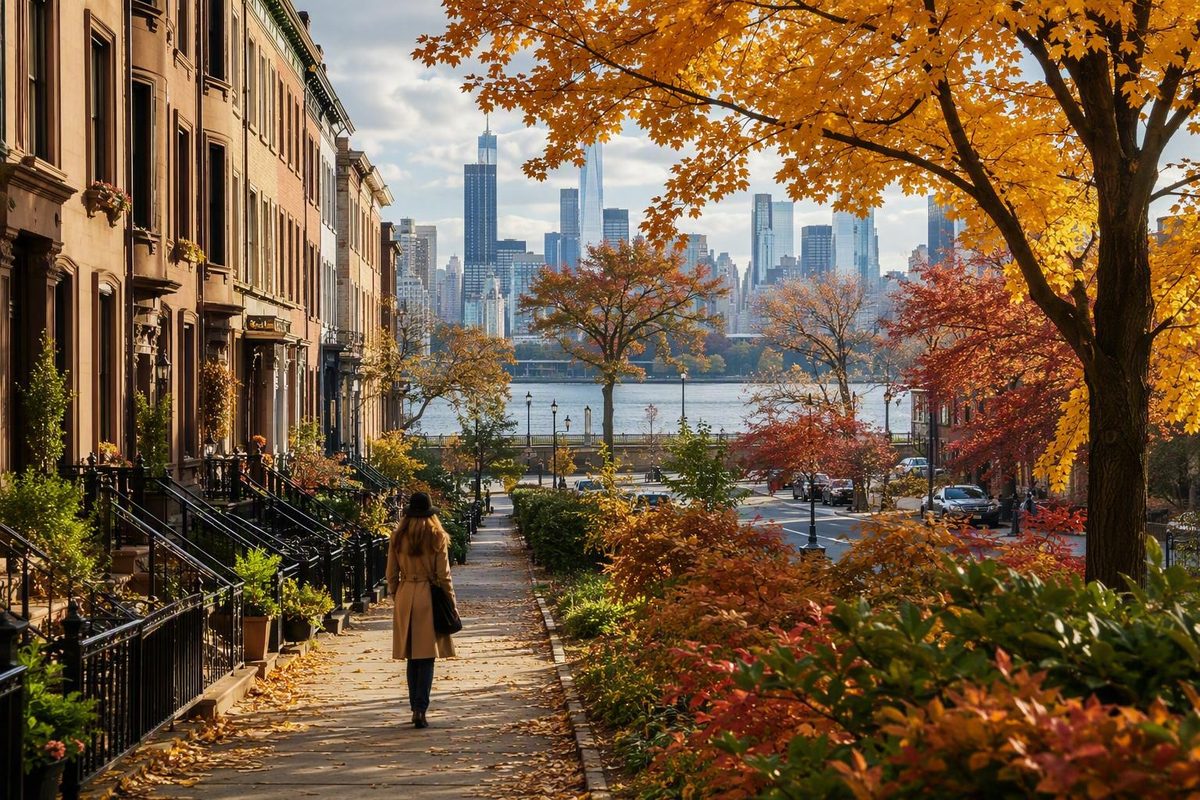
October in New York City rewards flexible planning. The month can bring comfortable walking weather, developing fall color, outdoor sightseeing, Halloween energy, and a full indoor cultural calendar. It can also bring sudden rain, cool waterfront wind, cloudy views, and foliage that refuses to follow a fixed timetable.
The most reliable approach is not to schedule every famous sight. Build each day around one compact part of the city, choose two or three priorities, and keep an indoor alternative close to the original route. That way, a change in weather does not force you to abandon the day or spend hours crossing New York.
Is October a good time to visit New York City?
October is generally a strong fit for visitors who want to explore New York on foot. One commercial travel guide reports typical maximum and minimum temperatures of approximately 64°F and 50°F, respectively (New York Tickets’ October weather overview). Another says daytime highs during the first half of October can reach or exceed 68°F on some days (New York Welcome’s fall weather guide). These figures are broad planning context, not a forecast for any particular week.
The appeal comes from the combination of seasons rather than one attraction. Outdoor sightseeing usually remains practical, leaves begin changing across parks and residential streets, and Halloween becomes increasingly visible as the month progresses. If rain or poor visibility interrupts the outdoor plan, museums, Broadway, jazz, markets, and other indoor attractions offer substantial alternatives.
October is not uniformly warm, colorful, quiet, or inexpensive. Days are cooling and getting shorter. An observation deck may be open but offer little visibility; a cruise may feel much colder than a sheltered street; and a park selected for foliage may still be mostly green. Major events can also affect accommodation demand, street access, and transit in particular areas.
Think of October as adaptable rather than predictable. Avoid making a rooftop, cruise, sunset viewpoint, and long park walk all depend on the same afternoon of good weather. Spread weather-sensitive activities across the trip where possible.
Use five simple planning rules:
- Choose one geographic area for most of each day.
- Set two or three anchors rather than building a long checklist.
- Leave open time for walking, meals, and unexpected stops.
- Pair the main outdoor activity with a nearby indoor alternative.
- Use transit for major transitions rather than repeatedly crossing the city.
This neighborhood-first method also reflects New York Know’s practical trip-planning approach: spend less time moving between disconnected attractions and more time understanding the area you are already in. The New York Know homepage collects related guides to choosing a base and grouping sights into walkable days.
Early, mid, or late October: choosing the right week
October does not feel the same from beginning to end. Choose your week according to whether you value comparatively warmer conditions, city foliage, or Halloween most.
Early October is generally the better fit if outdoor comfort matters more than peak color. Afternoons may be warmer, but there is a lower chance that New York City’s trees will have reached their strongest autumn display. Individual trees and landscaped areas may be changing while large sections of a park remain green. Early October can still feel seasonal, but it is risky to choose those dates solely for city foliage.
A regional excursion becomes more relevant at this point in the month. Color commonly develops earlier in parts of Upstate New York and the Hudson Valley than it does in the five boroughs. Conditions still vary annually, so a current foliage report matters more than a general calendar.
Mid-October is a transition period. Cooler evenings become more noticeable, seasonal decorations and programming may be expanding, and more color may begin appearing across city parks. It offers a compromise for travelers who want autumn atmosphere without making Halloween night the focus.
However, “mid-October” is not a promise of peak leaves. Different tree species, parks, and boroughs can progress at different rates. Exposed waterfront plantings may also look different from sheltered woodland areas.
Late October is the clearest choice if Halloween is the priority. Decorations are more established, recurring seasonal attractions may be operating, and October 31 brings the Village Halloween Parade. Late October often also offers a better chance of substantial foliage within the city, balanced against cooler evenings and possible event-related demand or disruption.
That window is deliberately broad. Sources vary on whether meaningful peak conditions begin in the middle or latter part of October, and individual parks can look different on the same day. A storm can also remove leaves quickly after strong color develops.
Do not book a trip around a fixed peak prediction made months ahead. Instead:
- Choose the part of October that best fits your broader priorities.
- Check a current foliage report shortly before departure.
- Review the short-range weather forecast.
- Choose the park or regional outing after current conditions become clearer.
Apply the same caution to festivals and seasonal programs. Exact dates for many 2026 pumpkin displays, garden events, haunted experiences, cruises, and installations are not established by the available evidence. Treat an activity that usually returns each year as expected, not confirmed, until its organizer publishes current operating dates.
October weather and a practical packing list
October weather in NYC is changeable enough that packing for one fixed temperature is a mistake. Travel sources place broad daytime temperatures around the mid-to-upper 60s Fahrenheit, with nighttime temperatures near 50°F (New York Tickets’ reported October ranges). Averages cannot tell you whether your visit will bring a warm afternoon, cold rain, or both.
Layers work better than one heavy outfit. A cool morning may become comfortable once you have walked for an hour, while conditions can feel noticeably colder after sunset. You should be able to remove a layer during an active park or neighborhood walk and put it back on when sitting outside, waiting in line, or returning to your hotel.
A practical October packing list includes:
- A medium-weight jacket
- Lightweight sweaters, fleeces, or overshirts
- Comfortable, broken-in walking shoes
- Socks suitable for long walking days
- Compact rain protection, such as a small umbrella or waterproof shell
- A day bag large enough to hold a removed layer
- A scarf, hat, or warmer extra layer for late October
- A portable battery for navigation and mobile tickets
Water resistance is often more useful than maximum insulation. Wet shoes can disrupt a walking itinerary even when the temperature itself is moderate. If you bring only one pair, choose shoes you already know remain comfortable after several hours rather than new footwear purchased specifically for the trip.
Conditions also vary within the city. Sheltered streets can feel comfortable while waterfront areas, bridges, rooftops, ferries, cruises, and outdoor observation decks feel much colder or windier. A jacket left at the hotel because Midtown felt warm at noon may be missed during an evening beside the Hudson or East River.
Add an extra warm layer if you plan to:
- Cross the Brooklyn Bridge near sunset
- Spend substantial time in Brooklyn Bridge Park
- Take a harbor or Hudson River cruise
- Visit an outdoor observation deck
- Wait outdoors for a parade
- Walk through a park late in the day
Do not rely on a reported monthly number of rainy days as though it predicts your trip. The available evidence does not include a clearly cited meteorological dataset sufficient to make such a number authoritative.
Check the forecast once before leaving home so you can adjust your luggage, then check it again each morning. The morning review is more actionable: use it to decide whether the park, bridge, cruise, rooftop, or skyline view should happen that day.
Where to see fall foliage without building the whole trip around Central Park
Central Park is the obvious Manhattan foliage anchor, but it does not need to consume the entire autumn itinerary. New York also has woodland landscapes, formal gardens, waterfront parks, elevated plantings, and residential streets that show the season in different ways.
Central Park and Museum Mile
Central Park works well because it can support a short stroll or most of a day. Rather than trying to cover the entire park, choose one section and one or two landscape features. Then pair the walk with the Metropolitan Museum of Art or another Museum Mile institution.
This gives you a built-in weather plan. If conditions are pleasant, spend longer outside. If rain arrives or the park has less color than expected, shift more time to the museum without traveling to another part of Manhattan.
Do not treat “Central Park” as one stop. Before arriving, choose a north, central, or southern section based on the park features you want to see and the museum you plan to visit. This reduces unnecessary walking inside a very large landscape.
Fort Tryon Park and the Cloisters area
It is useful for travelers who want a quieter-feeling park day or have already visited Central Park. Both Fort Tryon Park and the Cloisters area appear among the fall locations highlighted in a locally written seasonal overview (Adventurous Kate’s New York seasonal guide).
Treat this as its own northern Manhattan outing rather than an add-on between Lower Manhattan and Midtown. The transit time makes more sense when the park and museum area are the day’s main anchors.
Prospect Park and Brooklyn Botanic Garden
Prospect Park and Brooklyn Botanic Garden belong in one coherent Brooklyn outing. They complement each other while offering different experiences: a large park landscape and a more curated garden setting.
Do not schedule them as separate items on days otherwise based in Manhattan. Choose one as the primary destination and the other as an optional second anchor, subject to current opening hours, ticket requirements, and how much walking you want.
This cluster is also a practical substitute for Central Park if you are staying in Brooklyn or want one full day outside Manhattan. Add a nearby museum or neighborhood meal rather than turning the day into a cross-borough checklist.
Brooklyn Bridge Park, DUMBO, and Brooklyn Heights
This cluster offers urban autumn scenery rather than dense woodland foliage. Trees and plantings provide seasonal color, but the defining elements are the waterfront, bridges, skyline, converted industrial streets, and brownstone blocks.
A practical route can move through DUMBO, continue along Brooklyn Bridge Park, and finish in Brooklyn Heights. Alternatively, walk the Brooklyn Bridge from Lower Manhattan and continue into the waterfront area.
Avoid crossing the bridge, returning immediately to Manhattan, and then traveling back to Brooklyn later that day. If you want both sides of the river, make the crossing part of a one-direction route.
Staten Island Greenbelt
The Staten Island Greenbelt is an option for visitors willing to spend more time reaching a less central natural setting. Treat it as a deliberate borough outing, not a small addition to a Manhattan sightseeing day.
Before choosing it, confirm the exact trail or park destination, onward transportation, available daylight, route difficulty, facilities, and return plan.
Other urban fall settings
Several locations can add autumn planting, waterfront light, or seasonal atmosphere without becoming the central foliage destination:
- The High Line
- Little Island
- Pier 57 and the surrounding Hudson River waterfront
- Battery Park City
- The Battery
- Bowling Green
- Hunters Point South Park in Queens
- Socrates Sculpture Park in Queens
These places serve different purposes. None needs to be declared the single best fall location.
The important distinction is between in-city foliage walks and regional foliage excursions. Central Park, Prospect Park, Fort Tryon Park, Brooklyn Botanic Garden, and the Greenbelt fit within a New York City itinerary. Bear Mountain, Hudson Valley cruises, Cold Spring, and similar destinations require meaningful travel outside the city and should be evaluated as day trips.
Seasonal things to do: Halloween, culture, cruises, and evenings
October activities fall into two categories: recurring events with a stable seasonal identity, and programs that may return annually but require current confirmation.
The Village Halloween Parade is the month’s clearest recurring seasonal event. It is associated with Greenwich Village on October 31 and draws both costumed participants and spectators. A hotel-published 2026 guide lists the event for approximately 7–11 p.m. on Saturday, October 31, 2026 (The Wall Street Hotel’s 2026 fall guide). Treat those hours as preliminary until the parade organizer publishes current operational details.
Before attending, check the organizer’s current information for:
- Start time and route
- Spectator viewing guidance
- Rules for costumed participation
- Participant entry or formation locations
- Street closures and crowd controls
- Accessibility information
- Nearby subway service changes
- Weather-related updates
If Halloween is central to your trip, leave most of October 31 geographically light. A full daytime schedule on the opposite side of the city creates unnecessary pressure. Greenwich Village, the West Village, SoHo, Chelsea, or Lower Manhattan are easier daytime companions than northern Manhattan or a distant borough outing.
Beyond the parade, pumpkin displays, garden programs, haunted attractions, neighborhood decorations, and seasonal installations may appear throughout the month. Keep these plans conditional until current dates are published. Past operation does not prove that an attraction will return in the same location or on the same schedule.
Fall cruises are another weather-sensitive option. They may provide harbor, skyline, or Hudson River views, but “fall cruise” can mean either a short city sightseeing trip or a much longer regional foliage journey. Check the route, departure point, duration, outdoor exposure, reservation rules, and weather policy before purchasing.
October also works without Halloween. Alternatives include:
- Broadway or Off-Broadway performances
- Art, history, science, and specialty museums
- Live jazz
- Skyline views
- Food-focused neighborhood walks
- Indoor markets
- Architectural and cultural attractions
- An unhurried evening in one neighborhood
October theater listings include long-running productions as well as shows with seasonal or darker themes. Inclusion on a marketplace page does not prove that every production performs on every date, remains at the listed venue, or has tickets available. Use the New York Theatre Guide’s October 2026 listings to generate ideas, then check the selected production’s current calendar, venue, and ticket terms for your exact evening.
Live jazz can be a practical finish after a walking day because it moves the evening indoors without adding another major sightseeing block. Choose the venue based on where the afternoon ends. A West Village jazz set makes more geographic sense after the High Line and West Village than after a late finish in northern Manhattan.
Observation decks, rooftops, cruises, rowboats, bridge sunsets, and park evenings all depend on current conditions. Ask four separate questions:
- Is the attraction operating?
- Is visibility good enough to justify it?
- Will wind or rain make the outdoor portion unpleasant?
- What happens to the ticket if conditions deteriorate?
Booking early may reduce the risk of a sold-out slot, while waiting preserves weather flexibility. There is no universal answer. Compare expected demand with the change, refund, and cancellation terms before committing.
A three-day walking-first October itinerary
This itinerary uses three compact geographic clusters. It is intentionally not a list of everything a first-time visitor might want to see. Each day has two or three anchors, nearby optional stops, and room for ordinary walking.
Walk between nearby places. Use transit for major moves, bad weather, luggage, limited walking tolerance, or a tight schedule. Check route length, attraction hours, reservations, and mobility requirements for your dates.
Day one: Central Park and Museum Mile
Make the park your outdoor anchor and one museum your indoor anchor. Start by deciding which part of Central Park you actually want to explore. A targeted route is more satisfying than trying to cover the whole park while constantly checking a map.
Possible priorities include:
- A foliage-focused park walk
- One lake, garden, bridge, or overlook
- The Metropolitan Museum of Art
- Another Museum Mile institution
- Lunch on the Upper East or Upper West Side
If the weather is clear, begin in the park and continue to the museum later. If the morning is wet, reverse the order and reassess the park after lunch. Because the indoor and outdoor elements are close together, you do not lose the day to transit.
Resist adding Lower Manhattan simply because the museum closes before dinner. Stay uptown or make one purposeful evening transition. Dinner on the Upper East or Upper West Side, an evening near Lincoln Center, or an early finish may be more useful than forcing in another major attraction.
Day two: High Line, Chelsea, Little Island, and the West Village
Start near one end of the High Line and move generally south rather than walking part of it, leaving for lunch, and returning later. Chelsea Market provides a nearby indoor break, while the surrounding Chelsea streets allow for less structured walking.
Continue toward Little Island and the Hudson River waterfront if weather and current operating conditions make sense. From there, move into the West Village for late-afternoon walking and dinner.
A sensible order is:
- High Line
- Chelsea Market or another nearby indoor stop
- Little Island and the waterfront
- West Village
- Optional evening performance
Not every stop is mandatory. On a wet day, shorten the High Line and give more time to Chelsea Market or another confirmed indoor destination. On a clear afternoon, spend longer by the river and reduce the number of interior stops.
Choose the evening according to location. A Broadway theater requires a Midtown transition, so allow enough time rather than treating the show as if it were next door. A West Village jazz venue preserves the day’s geography more effectively.
If your visit includes October 31, replace the normal evening plan with the Greenwich Village Halloween Parade. Keep the afternoon flexible, eat before the busiest period, and check access, closures, and transit conditions that day.
Day three: Lower Manhattan to the Brooklyn waterfront
Begin at the Battery and move generally north. The key is to treat nearby landmarks as clusters rather than separate destinations that require repeated loops.
A workable sequence is:
- The Battery and harbor edge
- Bowling Green
- Wall Street and Trinity Church as one compact area
- The memorial area
- The civic area and Brooklyn Bridge approach
- Either the Seaport or a Brooklyn Bridge crossing
- DUMBO and Brooklyn Heights, if time and walking tolerance allow
The first half of the route is geographically compact, but individual attractions can absorb more time than expected. Decide in advance whether the memorial area will be a brief outdoor stop or include a museum visit. That choice may determine whether there is enough time to continue into Brooklyn.
Keep Wall Street and Trinity Church together rather than walking east and west multiple times. After the memorial area, continue toward the civic district. From there, choose one finish:
- Turn toward the Seaport for an East River waterfront ending.
- Approach the Brooklyn Bridge and continue to DUMBO.
- End downtown and use transit to begin a shorter Brooklyn waterfront walk.
Trying to give the Seaport, a museum visit, the full bridge crossing, DUMBO, Brooklyn Bridge Park, and Brooklyn Heights equal weight will undermine the walking-first plan. Choose a primary finish and make the rest optional.
The New York Know Lower Manhattan route applies the same general principle: begin near the harbor, move through the Financial District and civic core, and make one clear turn toward the East River.
If crossing the bridge, remember that reaching its Manhattan entrance, walking across it, and continuing through DUMBO adds more effort than the map may suggest. Visitors with limited walking tolerance can use transit for the river crossing and begin the Brooklyn portion closer to the waterfront.
Across all three days, apply the same editing rule: choose two or three anchors and leave the rest optional. A satisfying day might be Central Park, one museum, and dinner—not Central Park, three museums, Fifth Avenue, Rockefeller Center, Times Square, and a late observation deck.
Rainy-day swaps that stay near the original route
A useful backup preserves the geography of the day. Replacing Central Park with a distant Brooklyn museum or abandoning Chelsea for Midtown creates extra transit at the moment weather is already making movement harder.
For a Central Park day, shift more time toward the Metropolitan Museum of Art or another Museum Mile institution. If the rain is intermittent, use dry periods for a shorter park segment rather than cancelling the outdoor component entirely. Confirm admission arrangements and current hours before arrival.
For the High Line and Chelsea, use Chelsea Market as the principal indoor stop. You can retain the West Side route by taking shorter outdoor sections between covered destinations. Little Island and the exposed waterfront become optional rather than forcing a change of neighborhood.
For Midtown, combine Grand Central Terminal, the New York Public Library area, Rockefeller Center interiors, MoMA, or a performance, subject to current public access, admission requirements, and hours. Choose an east-to-west or west-to-east direction rather than bouncing repeatedly across Midtown.
For Lower Manhattan, expand a planned visit to the 9/11 Museum if tickets and opening hours work for your day. If rain continues, drop the exposed Brooklyn Bridge crossing rather than replacing the entire downtown route with a distant attraction.
Broadway and other performances are useful evening options, but they are not guaranteed same-day rain solutions. The production must be performing that night, suitable tickets must remain available, and the terms must work for you. Treat a show as a planned or conditional evening, not an emergency assumption.
Observation decks require a separate calculation. Rain may stop while low cloud remains, and an open attraction can still offer poor visibility. Before booking, compare the risk of limited availability with the value of waiting for a reliable short-range forecast.
Use the same caution with cruises. Understand whether bad weather triggers cancellation, rescheduling, credit, or no remedy. Unpleasant conditions do not necessarily mean an operator will cancel.
The best fallback is not the most impressive indoor attraction in New York. It is the one that saves the day already in progress.
When to leave the city for fall color
A regional foliage trip can be worthwhile, but it should not be confused with visiting a park in another borough.
Bear Mountain, Cold Spring, Milton, and the Great Jack O’Lantern Blaze at Van Cortlandt Manor in Croton-on-Hudson are outside New York City. Reaching them requires a dedicated transportation plan, and the day may be shaped by fixed outbound and return schedules.
This distinction matters most on a short first visit. A regional trip can consume a full day or a substantial part of one, reducing the time available for Central Park, Lower Manhattan, Brooklyn, museums, and neighborhood walks.
It is also stronger for travelers who consider foliage a primary purpose of the trip rather than a seasonal enhancement to city sightseeing.
Car-free concepts include cruises and rail travel, but do not assume that a route operates every day or throughout the entire month. New York State’s tourism guide identifies Circle Line outings toward Hook Mountain or Bear Mountain, Seastreak trips associated with Cold Spring, Milton, and Bear Mountain, Classic Harbor Line foliage sails, and scenic rail possibilities involving Metro-North, Amtrak, or the Long Island Rail Road (I LOVE NY’s statewide fall guide).
These examples establish possible trip formats, not current schedules, fares, departure points, or availability. Some cruises may be long excursions rather than ordinary sightseeing trips.
Before committing to a regional day, verify:
- The latest foliage report for the exact destination
- Departure point and check-in time
- Total journey or sailing duration
- Reservation requirements
- Final return time
- Food arrangements
- Weather and cancellation policy
- Walking required after arrival
- Accessibility and restroom information
- The consequences of missing the return service
Use this decision rule: on a short first visit, stay in NYC unless regional foliage is a central trip goal. If you have an extra day and current conditions are substantially better outside the city, consider the excursion. Do not surrender a large portion of a three-day visit merely because an older article labels a regional destination essential.
What to verify before your October trip
October planning becomes more accurate as the trip approaches. Weather, foliage, performance schedules, operating hours, and event logistics do not all become reliable at the same time, so divide your checks into two stages.
During the week before travel, verify:
- The short-range weather forecast
- Current city and regional foliage reports
- Official event-organizer announcements
- Attraction and museum hours
- Performance calendars for your exact dates
- Timed-ticket availability
- Change, refund, and cancellation terms
- Planned transit advisories
- Restaurant or venue reservations that matter to the itinerary
For Halloween, confirm the Village Halloween Parade’s official route, timing, participation instructions, crowd controls, street closures, accessibility information, and expected subway impacts. A recurring date does not establish the details of that year’s operation.
For theater, verify that the selected production performs on your exact date. Confirm the venue, start time, admission conditions, and ticket terms; future productions can change schedule, theater, or availability.
For an observation deck or cruise, compare two risks rather than following a universal booking deadline. Booking early may protect against a sellout. Waiting may preserve flexibility if visibility, wind, or rain looks unfavorable. The appropriate balance depends on how important the activity is and whether the ticket can be changed.
On the morning of each sightseeing day, check:
- Rain timing
- Wind
- Temperature after sunset
- Visibility and cloud level
- Outdoor attraction status
- Cruise, rowboat, or rooftop operations
- Subway and bus service changes
- Parade or street closures
- Last-minute venue notices
Do not present expected annual events or typical seasonal operations as confirmed until an organizer publishes current details. This applies to pumpkin displays, garden programs, cruises, haunted experiences, rooftop arrangements, museum late hours, rowboats, and temporary installations.
Accessibility also requires direct confirmation. The available evidence does not establish reliable elevator access, step-free routes, seating, restrooms, bridge conditions, or accessible parade viewing for every location in this guide. Visitors who need those features should review current venue information or contact the operator before finalizing the route.
What is the weather usually like in NYC in October?
October generally brings mild-to-cool walking weather. Commercial travel sources report broad daytime temperatures around the mid-60s Fahrenheit and nighttime temperatures near 50°F (New York Welcome’s October weather overview). Early October may be warmer, while late-October evenings can feel distinctly cool.
These ranges do not predict your travel week. Rain, wind, sunshine, and temperature can change quickly, and waterfront or elevated locations may feel colder than sheltered streets. Check the forecast before packing and again each morning.
When does fall foliage usually peak in New York City?
Late October into early November is a cautious typical window for stronger New York City foliage, but it is not a guaranteed peak period (Vivere New York’s foliage planning guide). Some color may appear earlier, and different parks or tree species progress at different speeds.
NYC foliage also commonly develops later than color in much of Upstate New York. Use a current foliage report rather than planning around one predicted peak date.
What should I wear in New York City in October?
Wear removable layers with comfortable, broken-in walking shoes. A medium-weight jacket, light sweater or fleece, and compact rain protection will cover many typical conditions. Add a scarf, hat, or warmer layer for late October, waterfront walks, bridges, cruises, rooftops, and outdoor evenings.
Avoid packing only for the daytime high. The same outfit that feels warm during an active afternoon walk may feel inadequate after sunset.
Is the Village Halloween Parade held on October 31?
The Village Halloween Parade is consistently associated with Halloween night, October 31, in Greenwich Village. One available 2026 listing gives an approximate time of 7–11 p.m. (The Wall Street Hotel’s 2026 fall guide), but the event organizer’s current instructions should govern your plans.
Before attending, check the official route, start time, participation rules, spectator information, street closures, accessibility guidance, and transit changes.
Should I take a foliage day trip or stay in NYC?
Stay in the city on a short first visit unless regional foliage is one of your main reasons for traveling. Central Park, Prospect Park, Fort Tryon Park, Brooklyn Botanic Garden, and Staten Island Greenbelt offer in-city autumn options without consuming a full day in regional transit.
Consider a Hudson Valley or Upstate excursion when you have additional time, current foliage reports favor the region, and the journey itself appeals to you. Confirm the departure point, duration, reservation rules, return schedule, local transportation, and weather policy before giving up a city day.
Ultimately, an October trip comes down to three decisions. First, choose early, mid, or late October according to whether you prioritize comparatively warmer conditions, developing color, or Halloween. Second, assign one neighborhood cluster to each day. Third, keep one nearby indoor fallback.
Weather, foliage, and seasonal operations will remain variable. The strongest itinerary is not the one with the most reservations. It is the one compact enough to survive a change of plan and current enough to reflect what is actually happening during your visit.