 New York Know
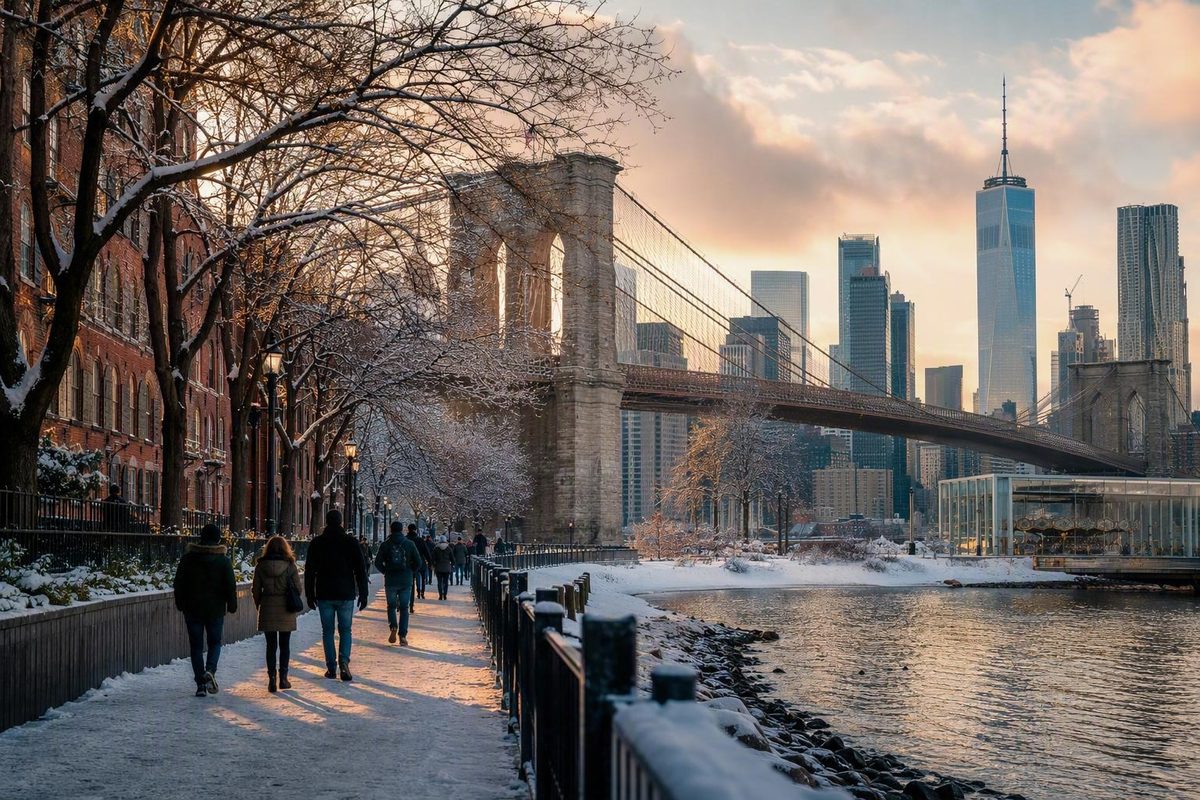
The most useful list of things to do in NYC in winter is not really a list. It is a way to build a day that still works when the temperature drops, a rink closes, snow turns to slush, or the skyline disappears into cloud.
Start with three pieces:
- One outdoor priority worth dressing for.
- One substantial indoor anchor in the same area.
- One nearby evening activity that does not require crossing the city again.
That structure leaves room for skating, park scenery, bridges, and holiday lights without making the entire day dependent on good weather. It also prevents a common planning mistake: treating Midtown, Central Park, Lower Manhattan, and Brooklyn as though they were adjacent stops.
Seasonal dates and venue rules can change, so use it to shape the day, then confirm current operations with the attraction, park, rink, transit provider, or event organizer.
Start With the Kind of Winter Trip You Are Actually Taking
“Winter in New York” describes several different trips. A December visit may revolve around lights, decorated windows, markets, public displays, and holiday performances. By January, many of those attractions have ended or are approaching their closing dates. February and early March require a different plan built around culture, food, performances, skating that remains open, and shorter outdoor intervals.
Do not build a February itinerary from a generic Christmas list. Likewise, do not assume a late-December trip will feel like a quiet off-season visit. Claims that winter is always cheaper, quieter, or less crowded are too broad to guide a real itinerary. Hotel rates, theater demand, school breaks, major events, and holiday crowds can all change the experience.
After the holidays, dependable activity categories include:
- major and specialist museums;
- Broadway, jazz, cabaret, and comedy;
- libraries and historic interiors;
- indoor markets and dining complexes;
- observation decks with indoor viewing areas;
- bookstores, creative classes, and interactive attractions;
- neighborhood meals and food-focused outings;
- ice rinks confirmed open during your dates.
The practical rule is simple: choose one outdoor priority, one substantial indoor anchor, and one nearby evening plan. The outdoor priority might be skating, a short park walk, or a waterfront view. The anchor should be substantial enough to carry the day if conditions deteriorate. The evening plan might be theater, jazz, comedy, dinner, or another ticketed indoor experience.
Four weather paths
Clear and cold: Keep the outdoor highlight, but define its limits. Skate for one session, walk a selected park section, or visit a viewpoint, then move indoors before discomfort begins to control the day.
Manageable snow: Treat snow as scenery first and recreation second. Check park and transit alerts, wear footwear suited to wet or potentially slippery surfaces, and expect some sidewalks to become slushy rather than photogenic.
Rain or freezing rain: Make the museum, market, historic interior, or performance the main event. Avoid forcing an exposed bridge, terrace, or elevated walk when surfaces or conditions are poor.
Severe cold: Build an almost entirely indoor day. Choose stops that are close together, use the subway or another suitable transportation option for longer gaps, and limit outdoor time to necessary transitions.
Snow scenery cannot be promised, and neither can sledding, cross-country skiing, snowshoeing, or natural-ice skating. Those activities depend on accumulation, ice thickness, park rules, and official safety decisions.
Before leaving your hotel, check the forecast, precipitation, wind, park alerts, transit conditions, attraction closures, rink status, visibility, reservation details, and performance schedules. Venue and agency pages should have the last word on current dates, prices, rules, accessibility, and weather closures.
Choose an Outdoor Winter Highlight That Fits the Conditions
Ice skating is the signature outdoor winter activity, but the right rink depends on the setting you want, the location of the rest of your day, and the current operating terms.
Recurring options named in winter guides include:
- The Rink at Rockefeller Center: a recognizable Midtown setting that pairs naturally with Fifth Avenue, Rockefeller Center, MoMA, and nearby theaters.
- Wollman Rink: a Central Park setting convenient to the park’s southern portion and surrounding museums or shopping.
- Bryant Park: a Midtown rink that can be combined with seasonal shopping and dining when those features are operating.
- The Rink at Brookfield Place: a Lower Manhattan option suited to a Financial District or waterfront day.
- Glide at Brooklyn Bridge Park: a Brooklyn waterfront rink that belongs in a DUMBO plan rather than being added to a Midtown itinerary.
Use the list for orientation, not as confirmation that a particular rink is operating during your trip.
No rink is universally best. Rockefeller Center offers the most recognizable city backdrop of the group, but visitors should compare current session terms, availability, and total costs. Wollman Rink makes sense when Central Park is already the day’s focus. Bryant Park fits neatly into a Midtown plan. Brookfield Place avoids an unnecessary trip uptown when you are exploring Lower Manhattan. Glide belongs in a Brooklyn waterfront itinerary.
Bryant Park needs an important cost qualification. Travel guides have described rink admission as free for visitors who bring their own skates, with skate rental charged separately. That does not mean the complete outing costs nothing: reservations, rentals, storage, bag services, or other terms may affect what your party pays. Treat the claim as a description of the admission model, not a promise of zero cost, and verify the current rules before visiting. One longstanding NYC winter guide describes the free-admission and paid-rental distinction, but current prices and booking requirements require direct confirmation.
Walks are conditional, not mandatory
Central Park, the High Line, and the Brooklyn Bridge can be worthwhile on a clear winter day. They can also feel considerably more exposed than a street map suggests. Wind, ice, freezing rain, and personal cold tolerance matter more than the fact that an attraction is technically open.
Use a winter walk as a flexible addition:
- Choose a defined section instead of committing to the entire route.
- Identify the nearest useful indoor destination before starting.
- Avoid treating a bridge crossing as required transportation.
- Move indoors when surfaces become slippery or wind makes the route unpleasant.
- Keep a transit alternative available at both ends.
Central Park’s ordinary winter possibilities include walking, wildlife observation, the zoo, the Carousel when operating, and other park attractions. Snow recreation is different. The Central Park Conservancy says sledding at Pilgrim Hill and Cedar Hill requires at least six inches of snow and suitable conditions. It also says skating on Conservatory Water is permitted only when conditions allow and the ice remains consistently at least six inches thick; visitors must bring their own skates. Check current alerts before attempting either activity in the Conservancy’s winter guide to Central Park.
Replace an exposed walk with an indoor stop when paths are icy, freezing rain is falling, or wind makes a bridge or observation terrace uncomfortable. This is not giving up on the itinerary. It is using a weather-flexible itinerary correctly.
Use Museums, Performances, and Historic Interiors as Indoor Anchors
An indoor anchor should be more than a place to escape the cold for 20 minutes. It should give the day structure and remain worthwhile even if every optional outdoor stop disappears.
Choose by experience and geography rather than trying to rank every institution.
For a broad, major-museum day
Consider the Metropolitan Museum of Art, Museum of Modern Art, American Museum of Natural History, Brooklyn Museum, or Whitney Museum. Each can support a substantial visit, so avoid pairing two large museums unless that is genuinely how you want to spend the day.
The most practical choice is often geographical:
- The Met fits an Upper East Side and Central Park day.
- The American Museum of Natural History fits the Upper West Side.
- MoMA works within Midtown.
- The Whitney belongs naturally with the Meatpacking District, Chelsea, and a conditional High Line walk.
- Brooklyn Museum works best as the cultural anchor for a Prospect Heights day, not as though it were next door to DUMBO.
For history and a focused visit
The National September 11 Memorial & Museum can anchor a Lower Manhattan day. The Tenement Museum suits a Lower East Side plan and is known for guided experiences focused on immigrant families and tenement life. Because that format differs from wandering through a conventional gallery, review the current tour program, ticket requirements, and visitor policies before arriving. The museum’s tour-based subject matter is described in this winter museum overview, though present-day operations require confirmation.
For books, manuscripts, and historic rooms
The Morgan Library & Museum is a practical Midtown East anchor. Its holdings include rare books, manuscripts, drawings, and other works. It can support a focused cultural visit without necessarily requiring the time commitment of one of the city’s largest museums.
Grand Central Terminal and the New York Public Library can function as shorter architectural or civic-interior stops where visitor access is permitted. Chelsea Market and indoor shopping or dining complexes serve a similar warm-up role. They may fill an hour or provide a meal break, but they are not automatically substitutes for a museum, tour, or performance.
For an evening indoors
Broadway is the obvious choice, but not the only one. Jazz, cabaret, and comedy can be easier to fit into a neighborhood-specific day. Birdland, 54 Below, and Broadway Comedy Club are examples rather than guarantees of a particular program or ticket arrangement. Check current calendars, age policies, food or beverage terms, seating arrangements, and performance times directly with the venue.
For something more social or active, consider karaoke, board-game cafés, creative classes, climbing gyms, interactive attractions, or indoor games. These categories are more durable than lists of individual businesses. Venues can close, relocate, or change format, so verify any business before making it the centerpiece of the day.
Fix the museum, tour, or performance first. Treat nearby outdoor stops as movable pieces. If you have a timed museum ticket at 1 p.m., a morning walk can shrink or disappear without harming the day. If the walk is the only plan, poor weather can erase the entire itinerary.
Treat Holiday New York as a Separate, Date-Specific Season
Holiday New York is a distinct season within winter, not a reliable description of January, February, or early March.
The holiday category includes:
- the Rockefeller Center tree and rink;
- department-store windows;
- holiday markets;
- Dyker Heights decorations;
- the Radio City Christmas Spectacular;
- seasonal botanical-garden programming;
- limited-run dance and music performances.
Holiday markets have been reported at Bryant Park, Union Square, Columbus Circle, and Grand Central Terminal. Their dates and formats vary, and some end before the close of the calendar year. Check the current organizer’s schedule instead of assuming that every market operates throughout your visit.
For the 2026–27 season, NYC Tourism lists the Radio City Christmas Spectacular from November 4, 2026, through January 4, 2027. It also lists Alvin Ailey at New York City Center from December 2, 2026, through January 3, 2027; George Balanchine’s The Nutcracker from November 27, 2026, through January 3, 2027; and The Brooklyn Nutcracker from December 12–20, 2026. These are dated seasonal listings rather than permanent attractions, and schedules can change; review the official NYC Tourism winter guide before booking.
Keep a holiday Midtown day compact
Rockefeller Center, selected Fifth Avenue displays, Radio City, and the Theater District can form one concentrated day. That is enough. Holiday-period Midtown can attract substantial crowds, and adding a distant museum, Brooklyn lights, and a downtown dinner can turn a festive outing into a sequence of cold transfers.
A workable pattern is:
- Outdoor component: Rockefeller Center and selected Fifth Avenue displays.
- Indoor anchor: MoMA, the Morgan, or another nearby reserved attraction.
- Warm-up stop: Grand Central, a café, or an indoor shopping or dining space.
- Evening: Radio City, Broadway, jazz, cabaret, comedy, or dinner nearby.
Dyker Heights should be treated as a separate Brooklyn commitment. It is not a quick extension of Rockefeller Center. If the decorations are a priority, build the evening around the journey and avoid stacking it onto an already full Manhattan day.
Times Square on New Year’s Eve also requires a deliberate decision. In a dated travel account, presenter Sarah Funk describes long outdoor waits, checkpoints, dense crowds, limited bathroom access, and no re-entry. Those reported conditions make the experience unsuitable for many visitors, particularly anyone who cannot comfortably stand outdoors for an extended period. Treat the account as practical perspective and verify current access and security rules separately before attending through the linked NYC winter travel video.
Plan January, February, and Early March Without Holiday Decorations
A post-holiday winter trip does not need to imitate December. Build it around experiences that remain valuable without a tree, market, or Christmas show.
Strong categories include:
- museums and historic interiors;
- Broadway and other theater;
- jazz, cabaret, and comedy;
- observation decks with indoor viewing areas;
- indoor markets and bookstores;
- creative classes and social activities;
- neighborhood meals;
- skating venues confirmed open for your dates;
- short outdoor walks when conditions allow.
Broadway Week and NYC Restaurant Week may create useful opportunities in some winters. Treat them as promotions to investigate, not guaranteed bargains. Dates, participants, ticket or table inventory, exclusions, and terms change. A promotion is useful only when the show or restaurant fits your schedule, budget, and neighborhood plan.
Food can be part of the itinerary rather than an afterthought. Ramen, hot chocolate, afternoon tea, or a long neighborhood meal all create natural warming intervals. Instead of traveling across the city for an establishment mentioned in an old list, choose the neighborhood first and then verify a current restaurant, café, or tea service near your fixed attraction.
Central Park also has non-holiday and non-snow possibilities. The Conservancy describes the Central Park Zoo as a year-round attraction, although current hours, tickets, closures, and weather comfort still require checking. A short park loop, wildlife observation, architecture, or an operating park attraction can work without snowfall.
A no-snow plan
Choose indoor culture as the core: a museum, historic tour, class, or matinee. Add a short park, waterfront, or neighborhood walk only if surfaces are clear and the wind is tolerable. Finish with a meal or performance nearby.
For example, spend the main part of the day at the Whitney, walk only a manageable High Line section if conditions are comfortable, warm up over food in Chelsea Market, and end with dinner in Chelsea or the Meatpacking District.
A snow-day plan
Check park and transit alerts before leaving. Make sledding, snowshoeing, or snow scenery optional. Keep a museum, café, market, or performance as the primary plan—not as a desperate replacement you must locate after becoming cold and wet.
For example, use the Met as the anchor, with a short Central Park snow walk if paths and conditions are suitable. If the park is uncomfortable, extend the museum visit and move to a nearby café or meal without changing neighborhoods.
Build Compact Winter Days by Neighborhood
The New York Know trip-planning approach is walking-first but not walking-at-all-costs: choose a base, group sights by area, leave room for walking, and avoid more than one substantial transit move in a day. Its broader editorial philosophy favors practical neighborhood days over disconnected checklists.
The clusters below are practical editorial groupings, not objectively perfect routes. Each identifies an outdoor component, an indoor anchor, a warm-up category, and an evening option.
Midtown
Outdoor component: Bryant Park, Rockefeller Center, or a short Fifth Avenue segment.
Indoor anchor: MoMA or the Morgan Library & Museum.
Warm-up stop: Grand Central Terminal, the New York Public Library where visitor access is permitted, a café, or an indoor dining complex.
Evening option: Broadway, comedy, jazz, cabaret, or dinner in Midtown.
One version begins at Grand Central or Bryant Park, continues to the Morgan, and then moves toward Rockefeller Center or MoMA before an evening performance. Do not try to include every option. Select one substantial indoor attraction and let the weather determine how much outdoor Midtown you add.
Central Park and one side of the park
Choose the Upper East Side or the Upper West Side rather than repeatedly crossing Central Park.
Outdoor component: a short park walk or Wollman Rink.
Indoor anchor on the east: the Met or Guggenheim.
Indoor anchor on the west: the American Museum of Natural History or another nearby cultural destination.
Warm-up stop: a café, bookstore, museum restaurant, or neighborhood lunch.
Evening option: a performance, dinner, or another indoor activity on the same side of town.
Wollman Rink is in the southern portion of the park, so it can also lead into a Midtown evening. If your museum is farther north, keep the park segment selective. Crossing from the Met to the American Museum of Natural History and back adds effort without improving the structure of the day.
Chelsea and Hudson Yards
Outdoor component: a short High Line segment when surfaces, wind, and temperature cooperate.
Indoor anchor: the Whitney or another reserved attraction.
Warm-up stop: Chelsea Market or an indoor Hudson Yards stop.
Evening option: dinner, a performance, or an indoor observation experience.
Do not make completing the full High Line the test of whether the day succeeded. Enter near the section that best connects your chosen anchor and warm-up stop. Observation attractions may include indoor viewing areas, but cloud, fog, snow, or terrace closures can reduce the value of a view-focused ticket.
Lower Manhattan
Outdoor component: a compact Financial District or waterfront segment.
Indoor anchor: the National September 11 Memorial & Museum or One World Observatory.
Warm-up stop: Brookfield Place, an indoor market, a café, or a substantial lunch.
Evening option: downtown dining, a performance, or one preselected transit move to a nearby district.
New York Know’s walking-first Lower Manhattan route favors a compact progression through downtown rather than repeated zigzagging. In winter, shorten its exposed waterfront portions. If conditions are comfortable, include the harbor edge or Brookfield Place rink; if not, take the most direct practical route between indoor stops.
Brooklyn
Brooklyn works better as two alternatives than as one supposedly walkable cluster.
DUMBO and Brooklyn Heights
- Outdoor component: DUMBO, Brooklyn Bridge Park, or an optional Brooklyn Bridge crossing.
- Indoor anchor: a currently operating cultural venue, gallery, interactive attraction, or other verified indoor destination in or near the waterfront area.
- Warm-up stop: a café, market, bookstore, or neighborhood meal.
- Evening option: Brooklyn dining, music, comedy, or another verified ticketed activity nearby.
The bridge walk should remain optional. Taking transit directly to DUMBO is a valid winter plan. If the wind is harsh or the walkway is uncomfortable, use a short waterfront view as the outdoor component and move indoors.
Prospect Heights
- Outdoor component: a short neighborhood or nearby park segment when conditions permit.
- Indoor anchor: Brooklyn Museum.
- Warm-up stop: a café or meal in the surrounding area.
- Evening option: dinner, music, a class, or another indoor Brooklyn activity.
Brooklyn Museum is not a next-door indoor fallback for DUMBO. Combining the two requires a planned transit move, so do it intentionally rather than presenting both as one compact waterfront itinerary.
Find Free and Lower-Cost Options Without Hiding Extra Charges
“Free” often describes admission, not the complete outing. Transportation, equipment rental, storage, food, booking fees, and optional services can still affect the budget.
A 2021 roundup describes the Staten Island Ferry as a free transportation and sightseeing option. Because that is a present-day operational and financial detail drawn from an older source, confirm the current fare and service information with the ferry operator before relying on it. Weather can also reduce visibility, so do not treat a particular harbor view as guaranteed. The dated claim appears in this roundup of fall and winter activities.
Other generally low-cost categories include:
- self-guided neighborhood walks;
- parks and public outdoor spaces;
- Grand Central Terminal;
-
public library interiors where visitors are permitted;
-
watching skaters without purchasing a session.
Free-to-enter does not mean cost-free. A holiday market can lead to spending on food and shopping. A display may require transportation or a paid tour. A skating rink may offer admission-free skating while charging for equipment or services.
Bryant Park is the clearest example. Published sources describe free rink admission for skaters bringing their own skates, with rentals charged separately. Current reservations, rental prices, bag policies, lockers, and service charges still need to be confirmed. Do not place “free skating” in the budget without checking what every member of your party actually requires.
Same-day theater discount channels, ticket lotteries, and seasonal promotions may help, but savings and availability are not guaranteed. If seeing a specific production matters more than reducing the ticket price, secure the performance first and treat a discount as a possible bonus.
A more honest budget framework is:
- One free outdoor or civic stop
- One paid indoor anchor
- A flexible meal allowance
- A buffer for rentals, storage, or weather-driven transportation
Obtain current prices directly from official venues before finalizing the day. This matters especially for families and groups, where a small equipment or service charge is multiplied across several people.
Prepare for Wind, Slush, Ice, and Last-Minute Changes
Winter comfort is not only about the temperature. Wind, wet pavement, slush, standing outdoors, and repeated transitions between heated interiors and cold streets can wear down a day.
Wear insulating or thermal layers, add a waterproof outer layer when precipitation is possible, and choose comfortable footwear with useful traction. No shoe eliminates slipping risk, but thin or poorly gripping footwear is a poor match for wet, slushy, or icy sidewalks and paths. A commercial winter-planning guide similarly recommends thermal layers, waterproof outerwear, traction-conscious footwear, morning forecast checks, and indoor alternatives, although its advice should be treated as general preparation rather than an official safety directive (winter preparation guidance).
Alternate short outdoor segments with indoor stops. If the next attraction requires a long exposed walk and conditions have deteriorated, use the subway or another suitable transportation option. Walking-first planning does not mean walking at all costs.
Morning checklist
Before leaving, verify:
- the forecast and expected temperature changes;
- precipitation and wind;
- park and transit alerts;
- attraction closures;
- rink status and session rules;
- observation-deck visibility and terrace status;
- timed-entry tickets;
- tour and performance schedules;
- the direct route between your anchor and backup.
Advance checking or booking may be worthwhile for seasonal performances, timed rink sessions, observation decks, popular museums, and ticketed tours. Reservation requirements are not universal, so review each venue’s current terms.
Observation decks can be useful winter attractions when they include indoor viewing areas, but poor visibility may make an expensive ticket disappointing. Check conditions before committing when the view is the main reason for visiting.
Do not assume that a venue has a coat check, locker, bag-storage service, public restroom, indoor waiting area, stroller access, or a particular accessible entrance. Those details can determine whether an attraction works for your party and require venue-level confirmation.
Use one final substitution rule: if the outdoor priority becomes unsafe or unpleasant, keep the neighborhood and replace the activity. Swap a High Line walk for more time at the Whitney or Chelsea Market. Replace a Brooklyn Bridge crossing with DUMBO and a verified indoor stop. Trade a park loop for a longer museum visit. Do not cross the city to start the entire itinerary over.
What are the best things to do in NYC in winter after Christmas?
Focus on museums, Broadway, jazz, cabaret, comedy, bookstores, historic interiors, creative classes, indoor markets, neighborhood meals, observation attractions with indoor viewing, and skating rinks confirmed open during your dates.
Add one short outdoor experience—Central Park, the High Line, a waterfront, or a neighborhood walk—only when conditions support it. January and February do not need holiday decorations; they need an itinerary built around durable indoor experiences.
Is ice skating at Bryant Park really free?
Published guides have described rink admission as free for people who bring their own skates. Skate rental costs extra, and reservations or other services may affect the total.
Check Bryant Park’s current official terms for your date before describing the outing as free. For budgeting purposes, distinguish free rink admission from zero total cost.
What should I do in NYC during snow, freezing rain, or severe cold?
During manageable snow, check transit and park alerts, make outdoor scenery optional, and keep a nearby indoor anchor as the main plan. During freezing rain, avoid forcing exposed walks or potentially slippery park paths. During severe cold, cluster museums, markets, libraries, dining, and performances with minimal outdoor transitions.
Do not assume snow recreation is available simply because snow is falling. Accumulation, ice thickness, park rules, and official safety decisions determine whether sledding or natural-ice skating is permitted.
Can I walk through Central Park or across the Brooklyn Bridge in winter?
Yes, when current conditions are suitable and the wind, precipitation, temperature, and surfaces are manageable for you. Neither walk should be treated as mandatory.
For Central Park, choose a defined section near your museum or rink instead of attempting an oversized route. For the Brooklyn Bridge, keep transit to DUMBO or Lower Manhattan as a backup. Skip either walk when current alerts or conditions make it uncomfortable or unsafe.
Which NYC winter activities should I reserve in advance?
Check booking needs for seasonal performances, Broadway shows, timed rink sessions, observation decks, popular museum entries, guided museum experiences, and ticketed tours. Holiday events and limited-run productions deserve particular attention because their schedules are short.
Not every attraction requires advance booking, and reserving too much can make a weather-sensitive day rigid. Secure the indoor anchor or highest-priority event, then leave the outdoor component flexible.
Choose one season-appropriate priority and build one compact neighborhood day around it: an outdoor experience if conditions cooperate, a substantial indoor anchor, and a nearby evening option. A successful NYC winter trip depends less on completing a long list than on preserving flexibility, checking current information, and replacing weather-sensitive activities without crossing the city to start over.